Artwork
No Title
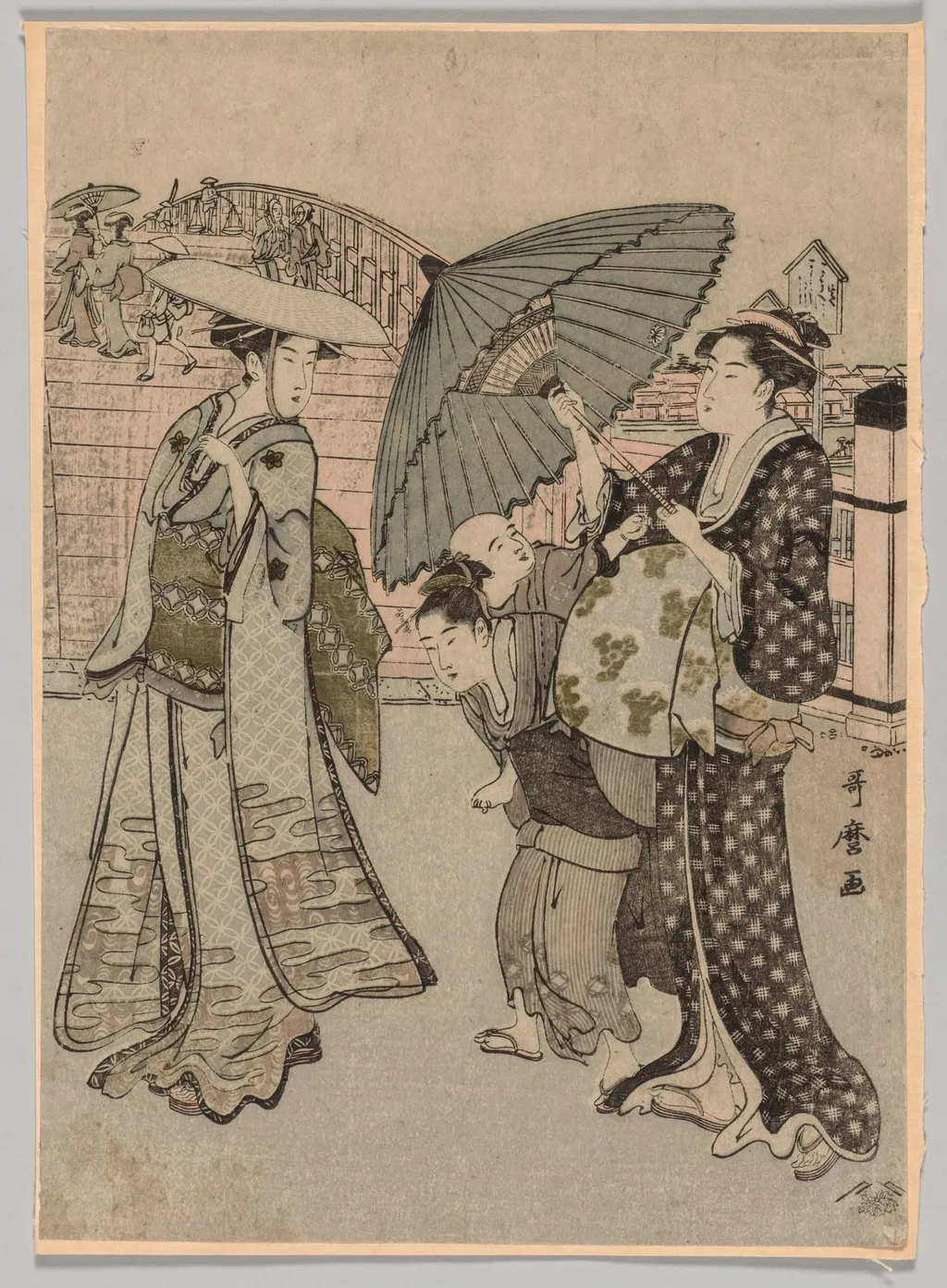
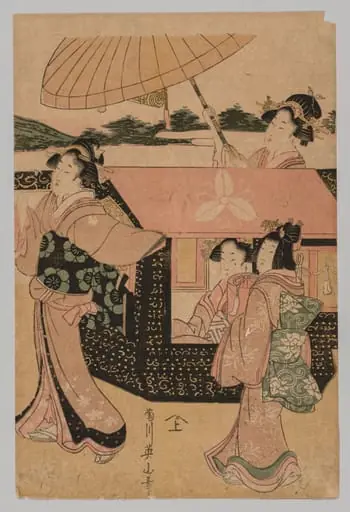
No Title is a print by the Romanticist artist Kitagawa Utamaro. It dates from 1780 and is held in the collection of the Cleveland Museum of Art.
About this work
Overview
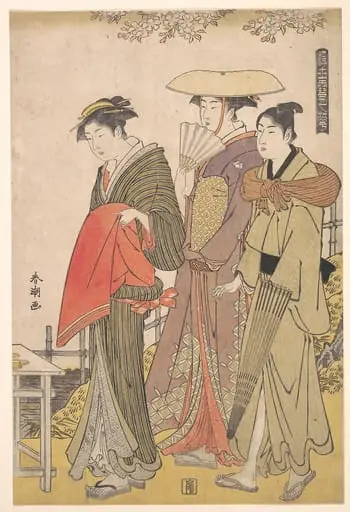
This woodblock print, attributed to Kitagawa Utamaro and dated to around 1780, is part of the collection at The Cleveland Museum of Art. It depicts a quiet scene of individuals in Edo-period attire gathered near a bridge. Though untitled, the composition reflects Utamaro’s focus on everyday life and subtle social interactions, characteristic of ukiyo-e prints from the late 18th century.
Subject & Meaning
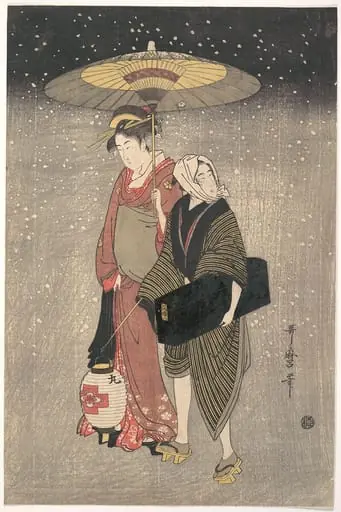
The figures, dressed in kimonos and obis, appear to be engaged in a moment of pause, some holding parasols against sunlight or rain. Their postures and grouping suggest a casual outing, possibly a stroll or a visit to a riverside location. The scene conveys a sense of quiet routine rather than dramatic narrative, aligning with ukiyo-e’s interest in transient, ordinary moments of urban life.
Technique & Style
The print employs the traditional ukiyo-e method of woodblock carving and printing, using bold outlines and areas of flat, unmodulated color. Details are minimized in favor of elegant silhouettes and rhythmic composition. This approach, typical of Utamaro’s early work, emphasizes form and gesture over depth or shading, reflecting the aesthetic priorities of Japanese printmaking at the time.
History & Provenance
The work entered the Cleveland Museum of Art’s collection as part of its broader acquisition of Japanese prints in the 20th century. While its exact provenance prior to museum acquisition is not fully documented, its stylistic features and signature elements align with Utamaro’s known output from the 1770s–1780s, placing it within his formative period as a printmaker.
Context
Created during the height of Edo-period urban culture, the print reflects the growing popularity of ukiyo-e as a medium for depicting civilian life. Utamaro, known for his portraits of women and scenes of daily activity, contributed to a visual culture that celebrated the pleasures and rhythms of the merchant class, distinct from aristocratic or religious themes.
Legacy
Utamaro’s prints, including this one, influenced later generations of artists both in Japan and abroad, particularly in the 19th century. His emphasis on intimate observation and refined line work helped define the aesthetic of ukiyo-e for Western collectors and artists during the Japonisme movement, though this particular print remains a quiet example of his broader contribution to the genre.
Own this work as a print
Artist & collection


 Untitled
 Untitled
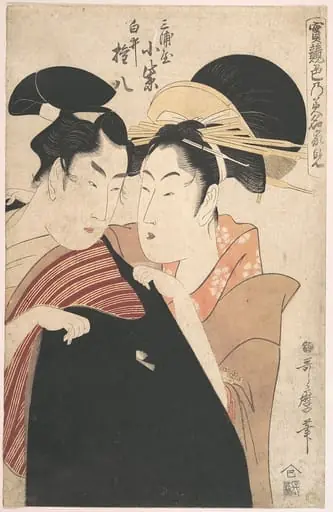 実競色乃美名家見 三浦屋小紫 白井権八|The Lovers Miura-ya Komurasaki and Shirai Gonpachi.
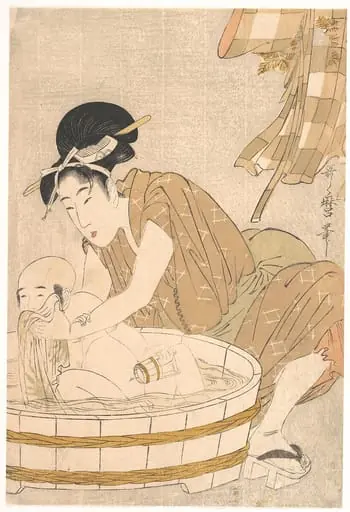 行水|Bathtime (Gyōzui)
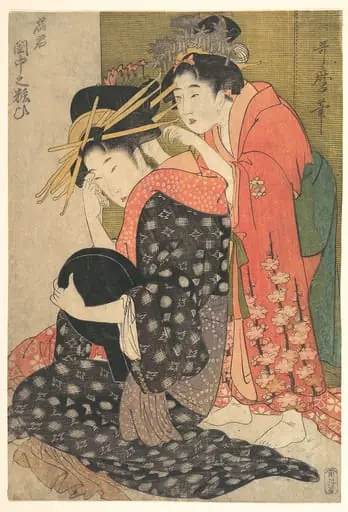 名君 閨中の粧ひ|The Oiran Yoso-oi Seated at Her Toilet
 Untitled
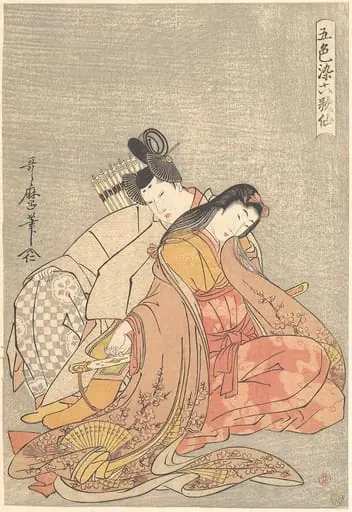 『五色染六歌仙』 在原業平と小野小町|“The Poet Ariwara no Narihira (825–880) and Ono no Komachi,” from the series Five Colors of Love for the Six Poetic Immortals (Goshiki-zome rokkasen)
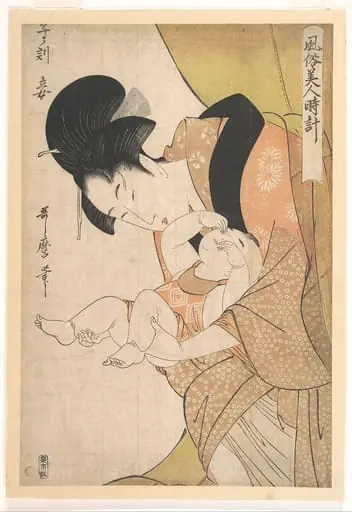 風俗美人時計 子ノ刻 妾|Midnight: Mother and Sleepy Child
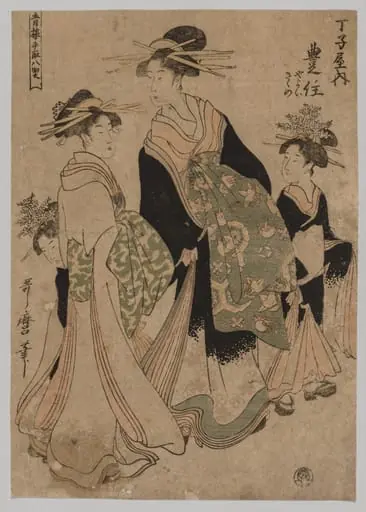 Courtesans and Attendants
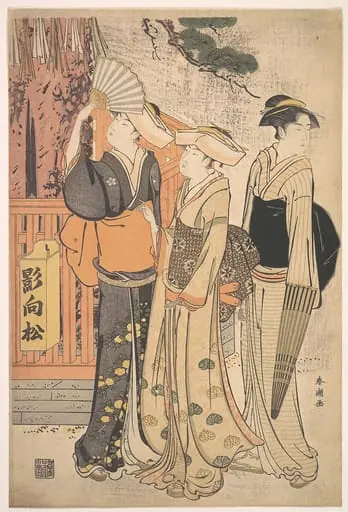 Untitled
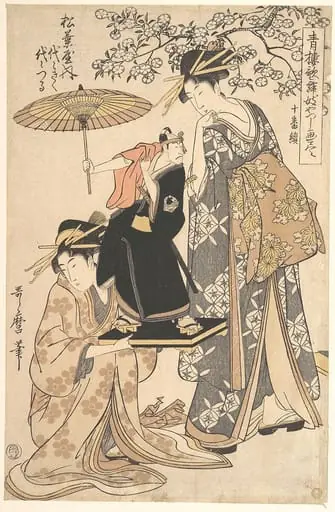 青楼歌舞妓やつし画尽 十番続|The Oiran Yoyogiku of Matsubaya Standing under a Cherry Tree
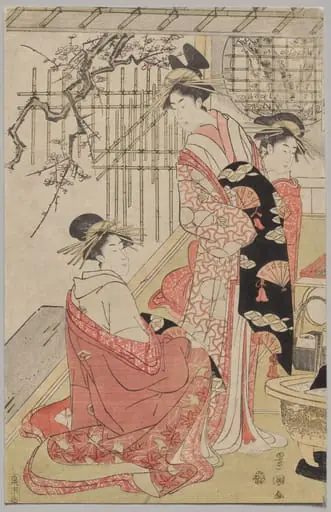 Courtesans of the Ōgiya on a Spring Outing
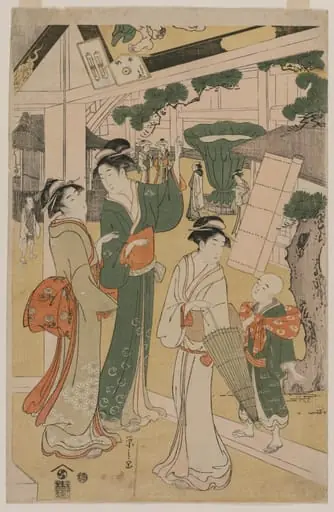 Print from Women Resting in the Votive Picture Hall at Asakusa
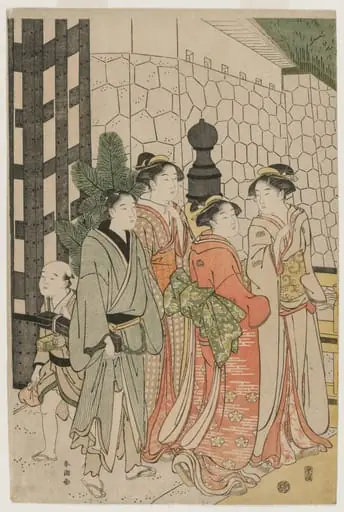 Young Man and Women on Tokiwa Bridge
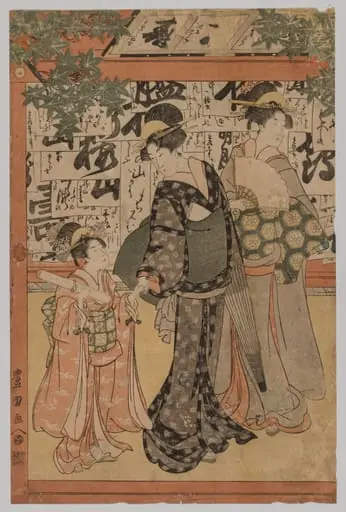 Examination for Writing
 Ukiyoe Ga|The Beauty of the Floating World
 Sawamura Sojuro III and Arashi Murajiro as Kusunoki Masatsura and Koto no Naishi
 Omu the Parrot (from the series Seven Elegant Episodes from the Life of the Poetess Ono no Komachi)
 Untitled
 No Title