Artwork
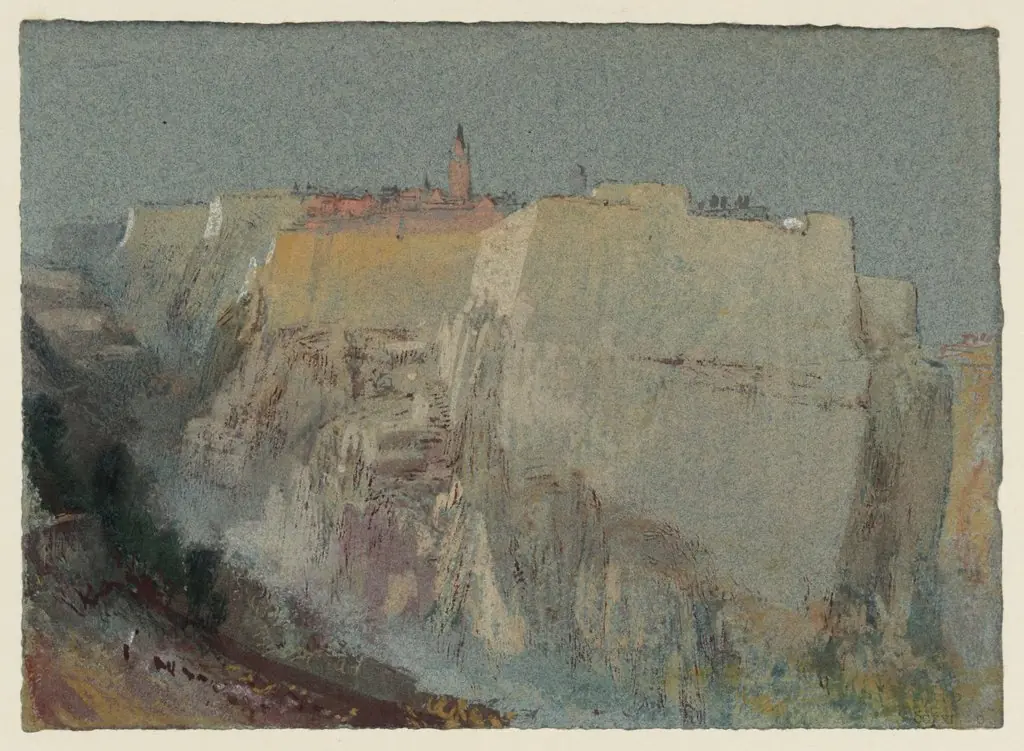
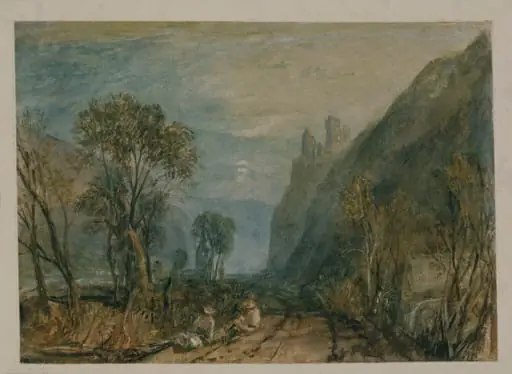
Luxembourg from the Alzette Valley to the North
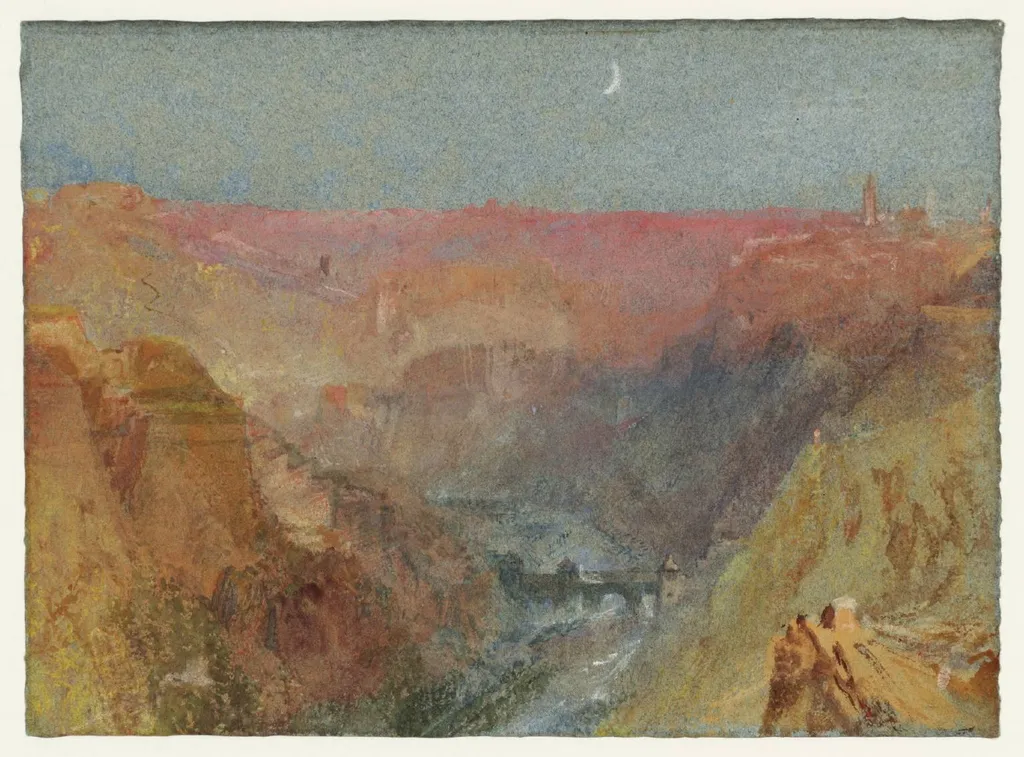
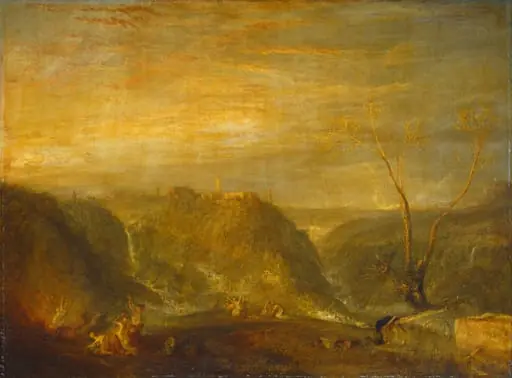
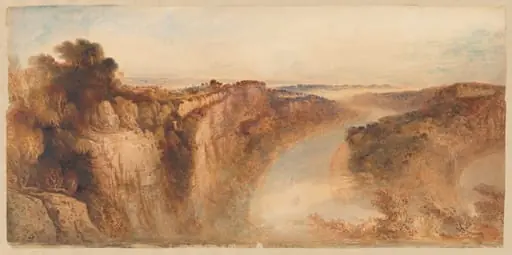
Luxembourg from the Alzette Valley to the North is a watercolor painting by Joseph Mallord William Turner. It dates from 1839 and is held in the collection of the Tate Britain. Created in 1839, this watercolor by J.
About this work
Overview
Its delicate washes and muted tonal shifts reflect his interest in capturing transient light and atmospheric conditions rather than topographical precision.
Created in 1839, this watercolor by J.M.W. Turner captures a view of Luxembourg as seen from the Alzette Valley looking north. Executed in transparent pigments, the work belongs to a small group of studies Turner made during his travels in the Low Countries. Its delicate washes and muted tonal shifts reflect his interest in capturing transient light and atmospheric conditions rather than topographical precision.
Subject & Meaning
The scene depicts the fortified city of Luxembourg perched on a hill above a winding river and wooded valley. Buildings and trees are rendered with suggestive brushwork, not detailed architecture. The composition emphasizes spatial depth and the soft diffusion of air between land and sky, suggesting a contemplative mood rather than a documentary record. The city appears distant and ethereal, integrated into the landscape rather than dominating it.
Technique & Style
Turner employed thin layers of watercolor to build subtle gradations of color—ochres, greens, and pale blues—allowing the paper’s white to suggest light. Wet-on-wet techniques create blurred edges between land, sky, and water, producing a hazy, luminous effect. His brushwork is loose and economical, prioritizing mood over detail, a hallmark of his mature style that moved away from topographical accuracy toward emotional resonance.
History & Provenance
The watercolor was acquired by the Tate Gallery in the 20th century as part of its collection of Turner’s works, many of which were bequeathed by the artist himself. It was likely made during Turner’s 1838–39 tour of the Rhine and surrounding regions, a period when he produced numerous sketches and watercolors of continental landscapes. The piece has remained in institutional hands since its acquisition.
Context
Turner’s Luxembourg views were part of a broader interest in European sites during the 1830s, a time when British artists increasingly traveled abroad for inspiration. While other contemporaries focused on classical ruins or dramatic vistas, Turner favored quiet, atmospheric perspectives. His approach here aligns with Romantic ideals of nature’s sublimity, yet anticipates later movements through its emphasis on light and abstraction.
Legacy
This watercolor exemplifies Turner’s influence on later generations of painters who sought to dissolve form in favor of light and color. His handling of atmospheric haze and tonal modulation prefigured techniques adopted by the Impressionists and, indirectly, early abstract artists. Though not widely exhibited, such works remain key to understanding his evolution from topographical drafts to lyrical, almost non-representational compositions.
Artist & collection
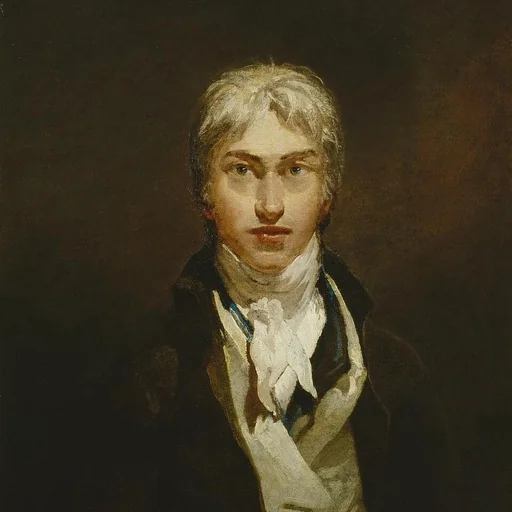
Artist
Joseph Mallord William Turner was born in 1775 at Maiden Lane, Covent Garden, where his father kept a barber and wig-making shop.