Artwork
Citadel of St.-Esprit, with the Louis and Beck Bastions
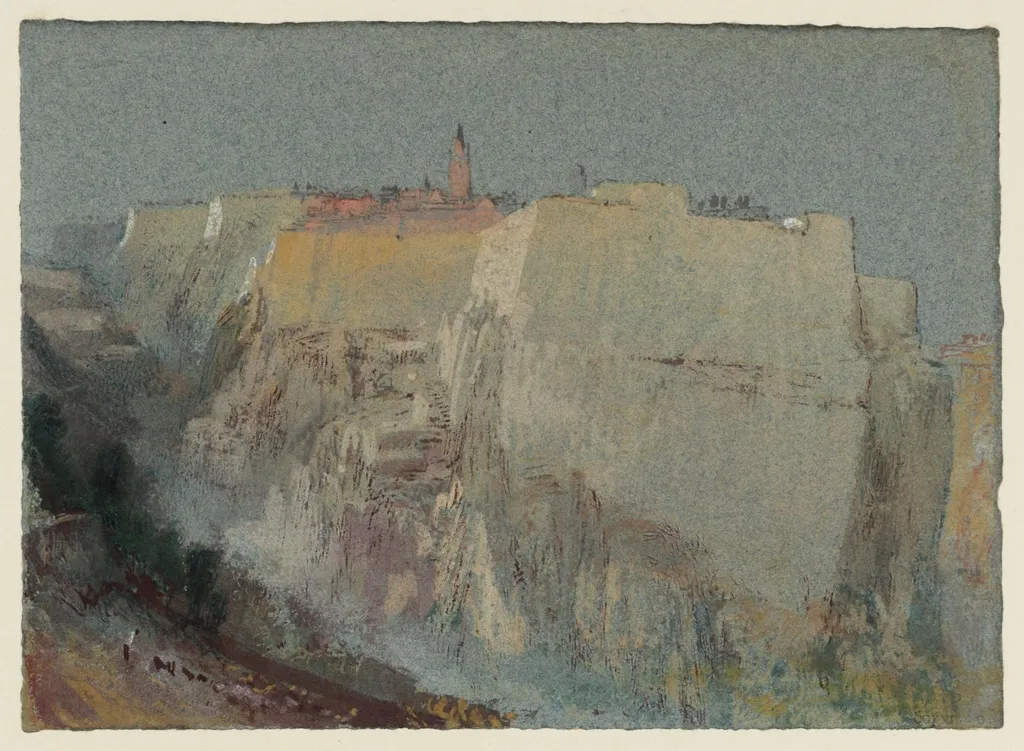
Citadel of St.-Esprit, with the Louis and Beck Bastions is a watercolor painting by Joseph Mallord William Turner. It dates from 1839 and is held in the collection of the Tate Britain. Painted in 1839, this watercolor by J.
About this work
Overview
Executed during the final phase of his career, the work reflects his deepening focus on atmospheric effects and structural form.
Painted in 1839, this watercolor by J.M.W. Turner captures the Citadel of St.-Esprit, a coastal fortification on the French Riviera. Executed during the final phase of his career, the work reflects his deepening focus on atmospheric effects and structural form. Turner’s use of watercolor allowed for subtle gradations of tone, emphasizing the interplay between light, weather, and stone. The piece is one of many late watercolors that reveal his move away from detailed representation toward evocative suggestion.
Subject & Meaning
The painting portrays the fortified walls and bastions of St.-Esprit, emphasizing their imposing presence against a muted sky. The architecture, though rendered with precision in places, is softened by atmospheric haze, suggesting the passage of time and the weight of history. Turner does not depict human activity; instead, the fortress stands as a silent monument, its endurance implied through texture and scale rather than narrative. The absence of figures heightens the sense of solitude and permanence.
Technique & Style
Turner employed thin washes and layered glazes to build texture in the stone walls, allowing the paper’s surface to contribute to the effect of weathered masonry. His brushwork is deliberate yet fluid, with edges blurred by damp pigment to suggest cloud cover and distant forms. Colors are restrained—grays, ochres, and pale browns—creating a somber, unified tonality. The composition directs attention to the fortress’s mass, with the sky acting as a neutral field that amplifies its solidity.
History & Provenance
Created during Turner’s travels along the southern coast of France, this watercolor was part of a series documenting fortified sites. It remained in his personal collection until his death in 1851, after which it entered the Turner Bequest, a vast archive of his works donated to the nation. The piece has since been held in public collections, primarily at Tate Britain, where it is studied for its technical innovation and its role in the evolution of British watercolor practice.
Context
In the late 1830s, Turner increasingly turned to watercolor as a medium for experimentation, distancing himself from the expectations of oil painting exhibitions. His interest in architectural subjects coincided with broader European fascination with historical fortifications and Romantic notions of ruins. This work aligns with contemporaneous travel literature and topographical studies, yet transcends mere documentation through its emotional resonance and formal abstraction.
Legacy
Turner’s late watercolors, including this one, influenced later artists seeking to capture light and atmosphere with greater immediacy. Their emphasis on mood over detail, and their willingness to dissolve form into pigment, prefigured aspects of Impressionist and even abstract approaches. Though not widely exhibited in his lifetime, these works gained recognition in the 20th century as pivotal in redefining the potential of watercolor as a serious artistic medium.
Artist & collection
Artist
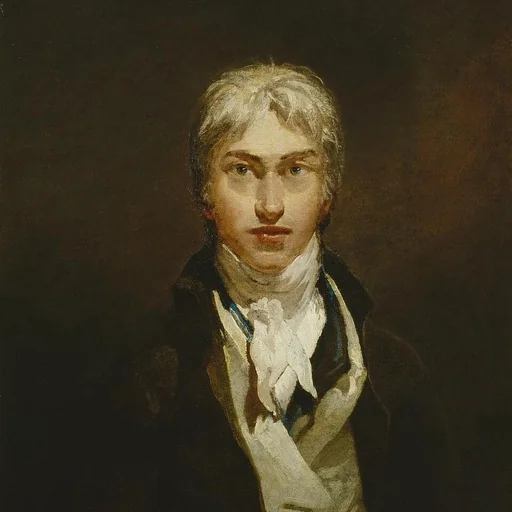
Joseph Mallord William Turner was born in 1775 at Maiden Lane, Covent Garden, where his father kept a barber and wig-making shop.

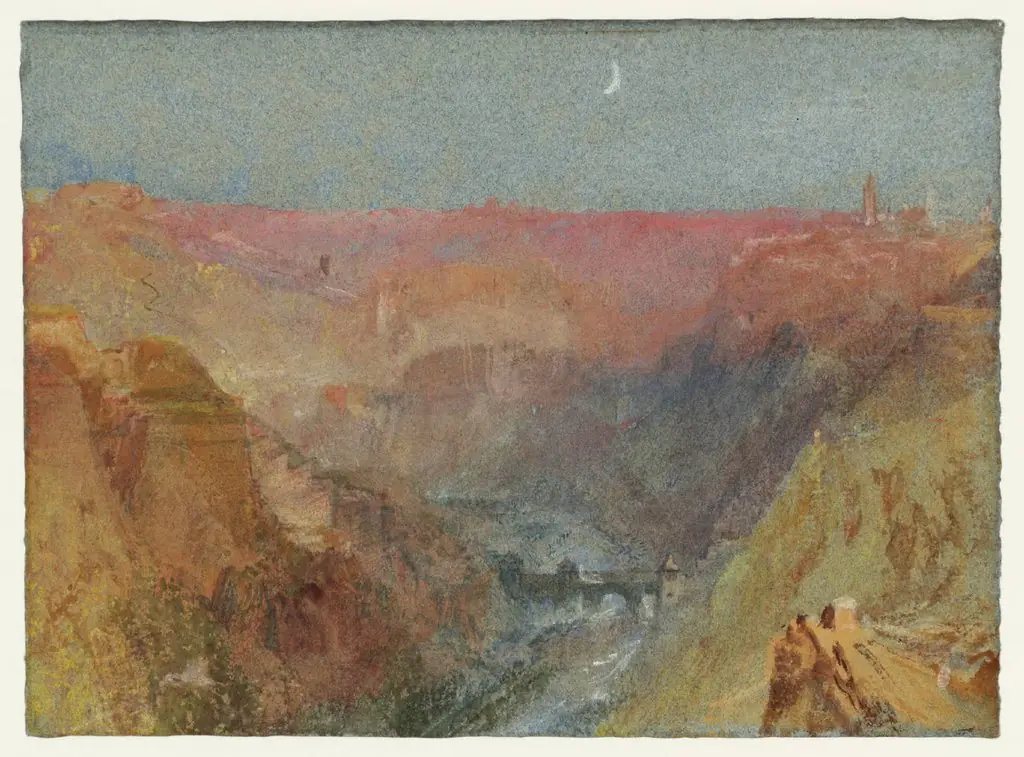 Luxembourg from the Alzette Valley to the North
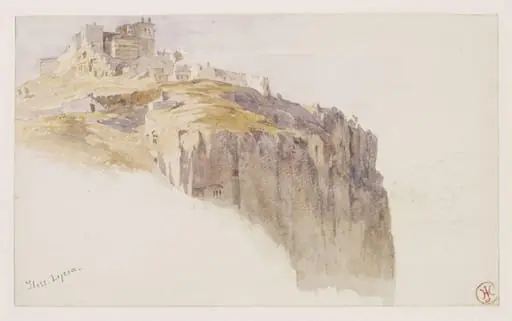 Tloss
Tloss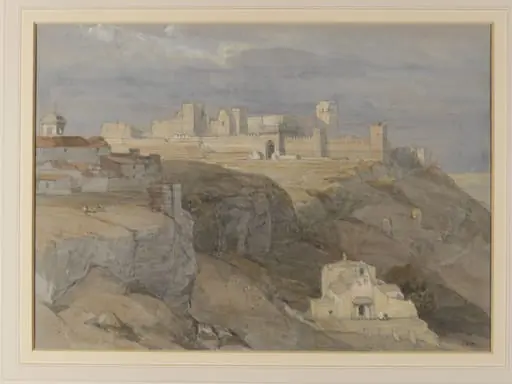 The Alcazar of Carmona, Andalusia
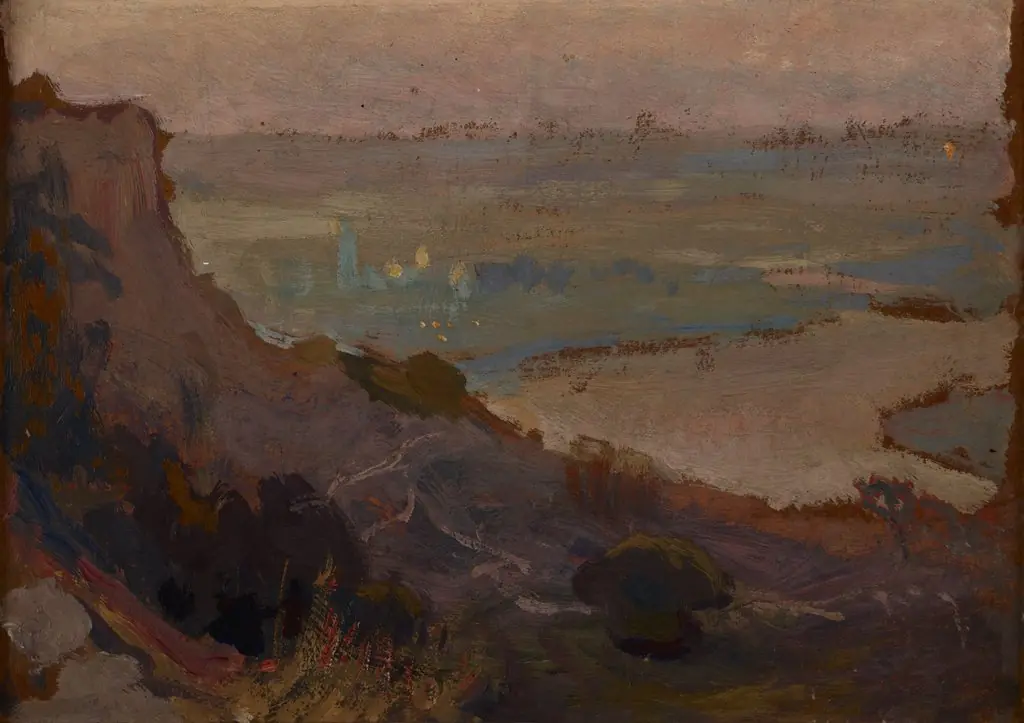 Kyiv (Imperial Garden)
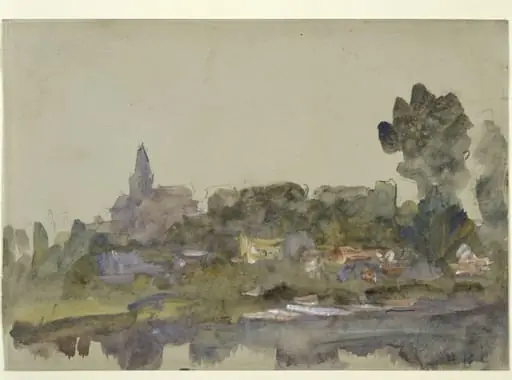 Picquigny
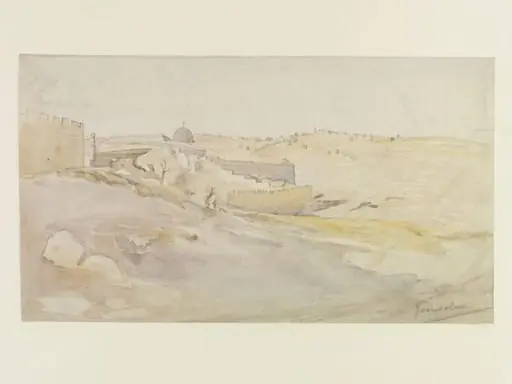 Jerusalem
 Herodias: Page 3, The citadel of Machaerus rose from the eastern side of the Dead Sea, on a peak of basalt, having the shape of a cone
 Distant View of Winchester and St. Croix
 A Seated Man Contemplating a Sunlit Mountain Valley
 A sandbank with trees beyond
 The Fort, Srinagar
 Sketch in Portugal