Artwork
The Ponte Delle Torri, Spoleto
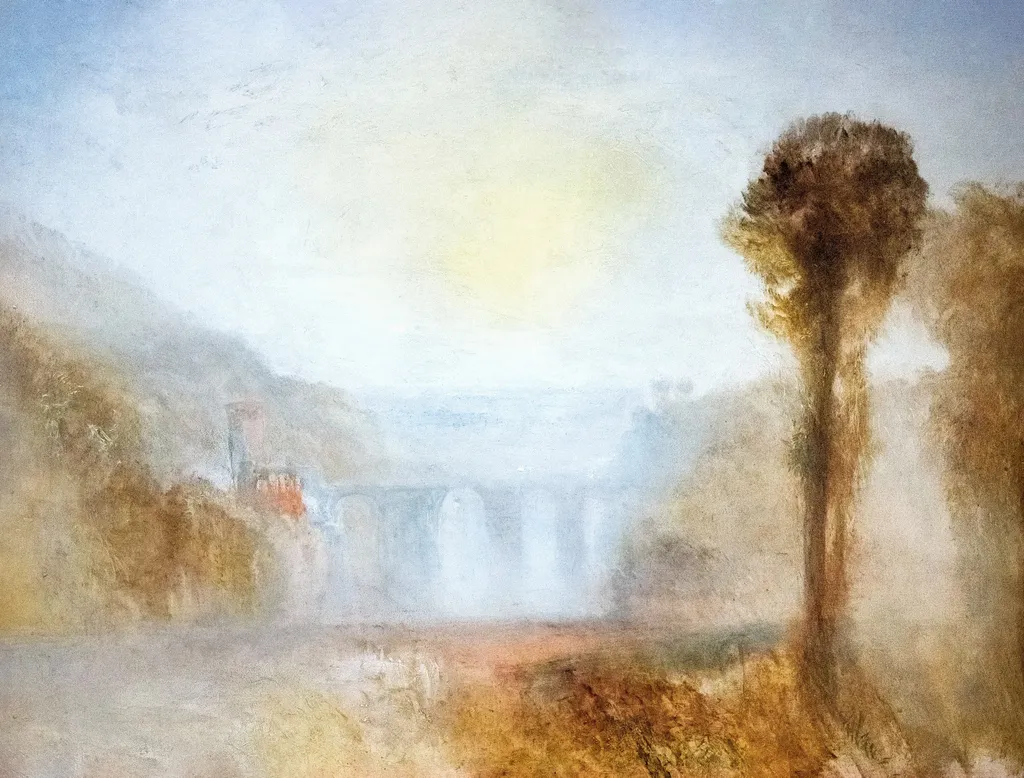
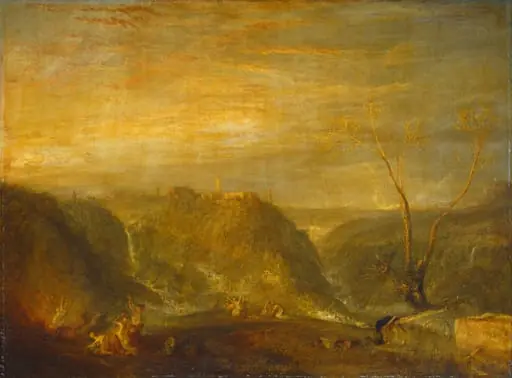
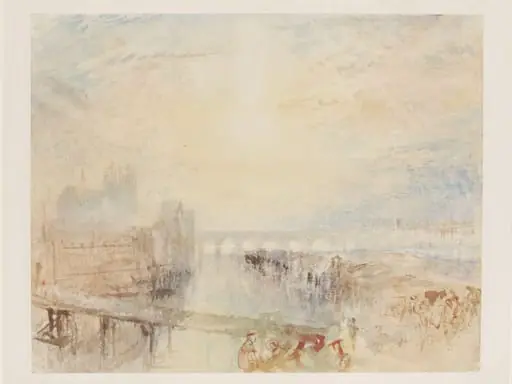
The Ponte Delle Torri, Spoleto is an oil painting by Joseph Mallord William Turner. It dates from 1840 and is held in the collection of the National Gallery.
About this work
Overview
Painted in 1840, Joseph Mallord William Turner’s *The Ponte Delle Torri, Spoleto* is an oil landscape depicting an ancient aqueduct in central Italy.
Painted in 1840, Joseph Mallord William Turner’s *The Ponte Delle Torri, Spoleto* is an oil landscape depicting an ancient aqueduct in central Italy. Turner, known for his evolving approach to light and atmosphere, rendered the structure not as a precise architectural study but as a poetic element within a broader natural environment. The work reflects his mature style, where form dissolves into luminous haze, emphasizing mood over topographical accuracy.
Subject & Meaning
The Ponte delle Torri, a Roman-era aqueduct spanning a valley near Spoleto, serves as a quiet anchor in the composition. Turner does not emphasize its historical function but instead integrates it into a tranquil, almost ethereal landscape. The bridge becomes a symbol of endurance and connection—between land and sky, past and present—rather than a monument to engineering. Its subdued presence invites contemplation rather than admiration.
Technique & Style
Turner employed thin glazes and layered washes to achieve a luminous, atmospheric effect. Brushwork is loose and fluid, with soft transitions between sky, land, and water. He minimized sharp outlines, allowing colors to blend optically, creating depth through tone rather than line. The delicate handling of light suggests early experiments with perception that would later resonate with Impressionist painters, though his intent remained rooted in Romantic sensibility.
History & Provenance
Turner painted this work during a period of extensive travel in Italy, inspired by classical ruins and natural scenery. It entered the collection of the British nation through his bequest to the nation in 1856, forming part of the Turner Bequest. The painting has remained in public ownership since, housed at Tate Britain since the gallery’s founding, where it is preserved as a key example of his late period.
Context
In the 1840s, Turner was increasingly focused on the emotional and sensory impact of landscape over literal representation. While contemporaries documented architecture with precision, he sought to convey the feeling of place—its light, air, and quiet grandeur. This work aligns with his broader shift away from topographical accuracy toward abstraction, reflecting a growing interest in nature’s transient qualities over fixed forms.
Legacy
Though not widely exhibited as a standalone highlight, *The Ponte Delle Torri, Spoleto* exemplifies Turner’s influence on the trajectory of modern painting. His dissolution of form into light and color prefigured later movements, offering a model for artists who prioritized perception over representation. The painting endures as a quiet testament to his ability to transform observed reality into an immersive, meditative experience.
Own this work as a print
Artist & collection

Artist
Joseph Mallord William Turner was born in 1775 at Maiden Lane, Covent Garden, where his father kept a barber and wig-making shop.

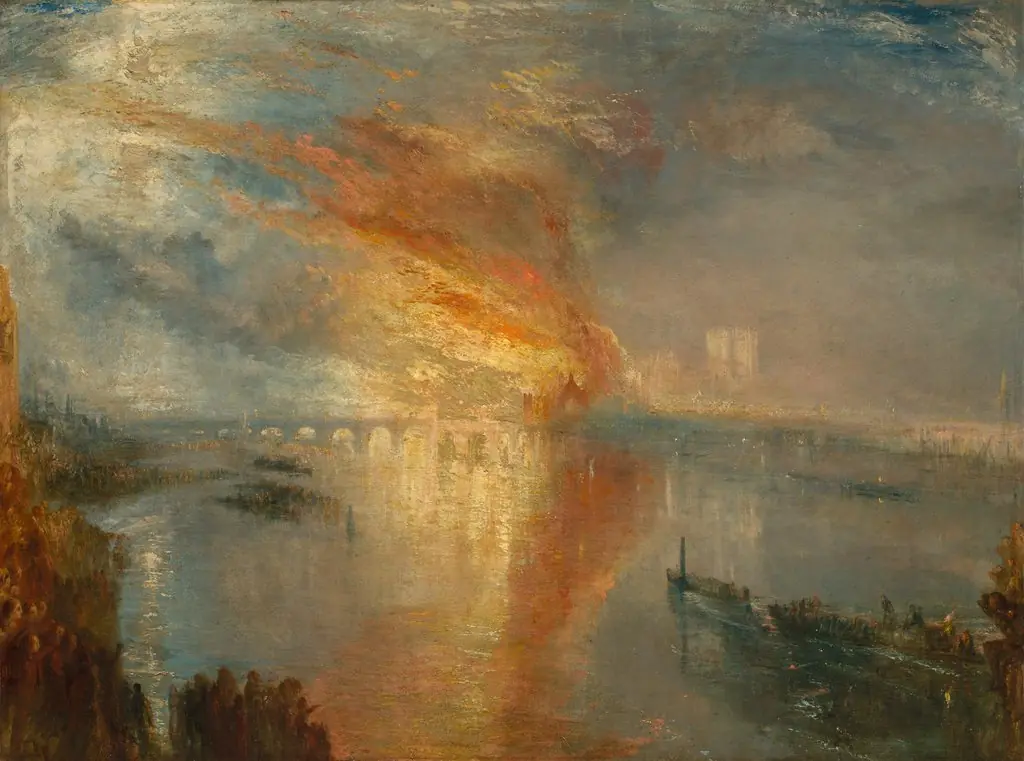
 Lauerzersee with the Mythens
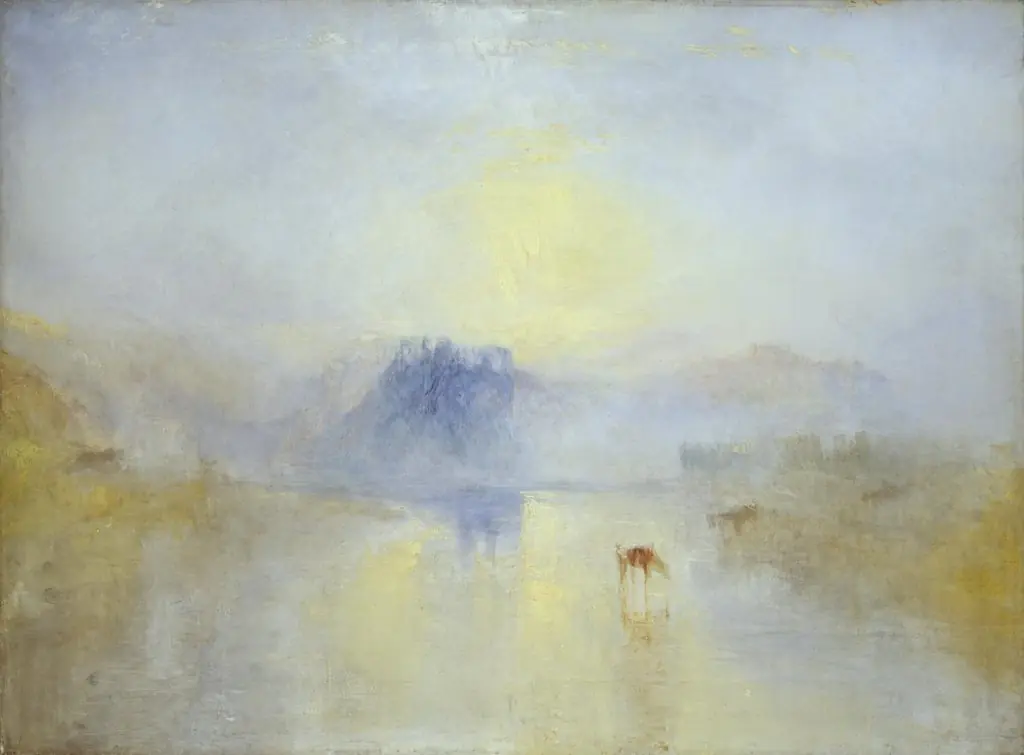 Norham Castle, Sunrise
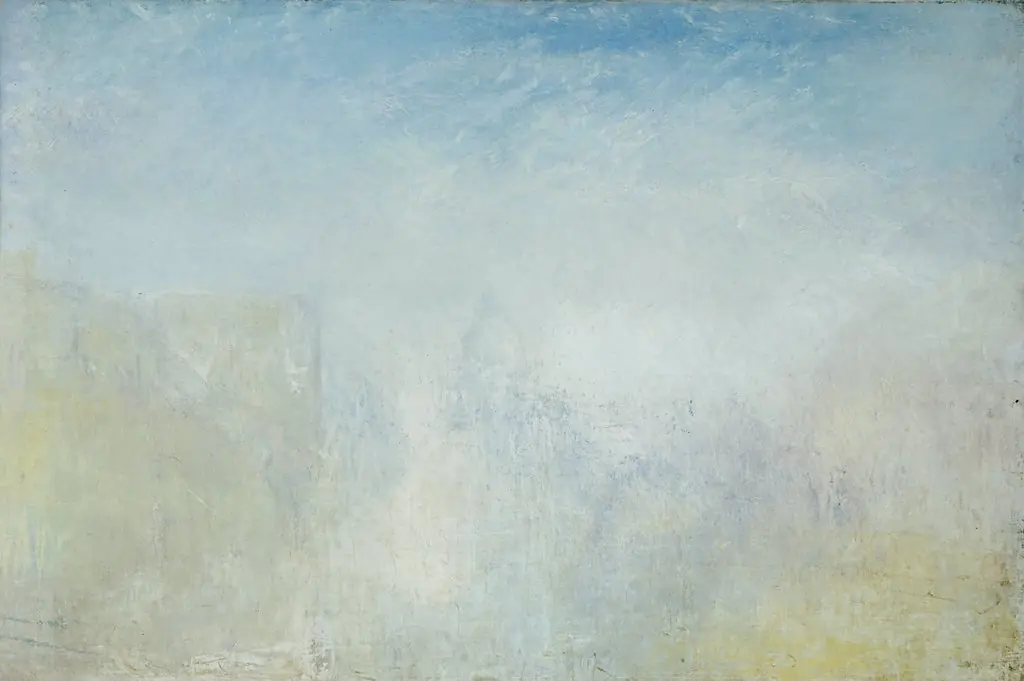 Venice with the Salute
 Mountainous Landscape
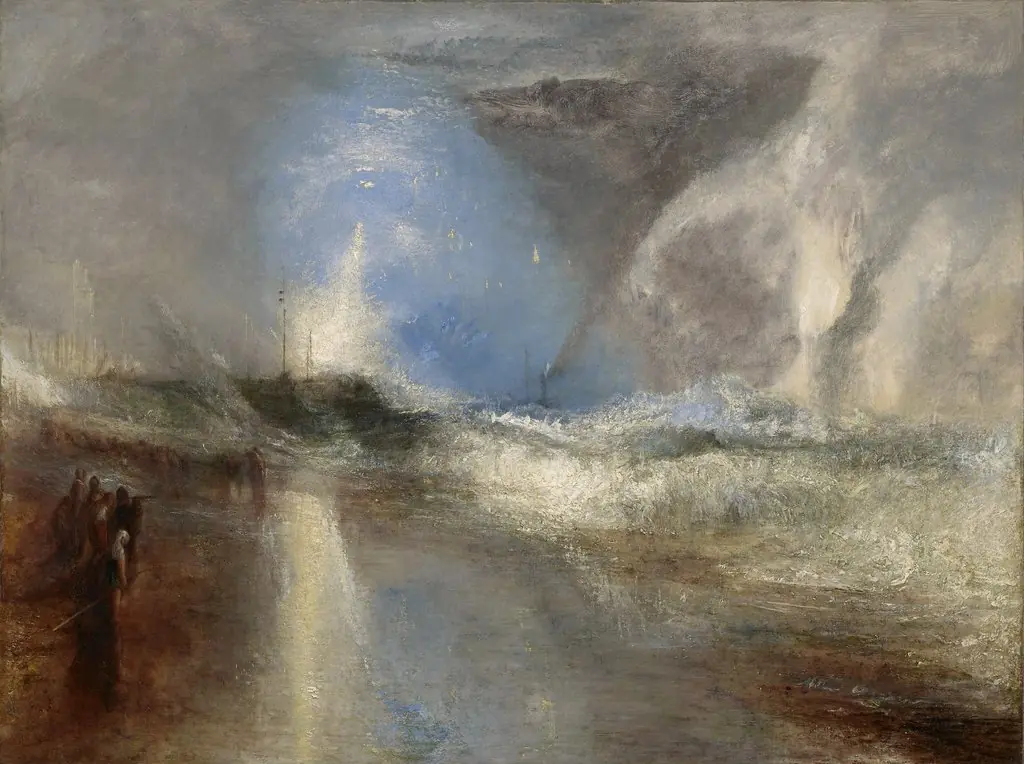 Rockets and Blue Lights (Close at Hand) to Warn Steamboats of Shoal
 A Swiss Pass
 Landscape with Water
 The Thames above Waterloo Bridge
 Lucerne: Moonlight
 Falls of Schaffhausen (Val d’Aosta)
 Flüelen, from the Lake of Lucerne
 View of the Danube and Regensburg cathedral at sunset