Artwork
Breu, Jörg
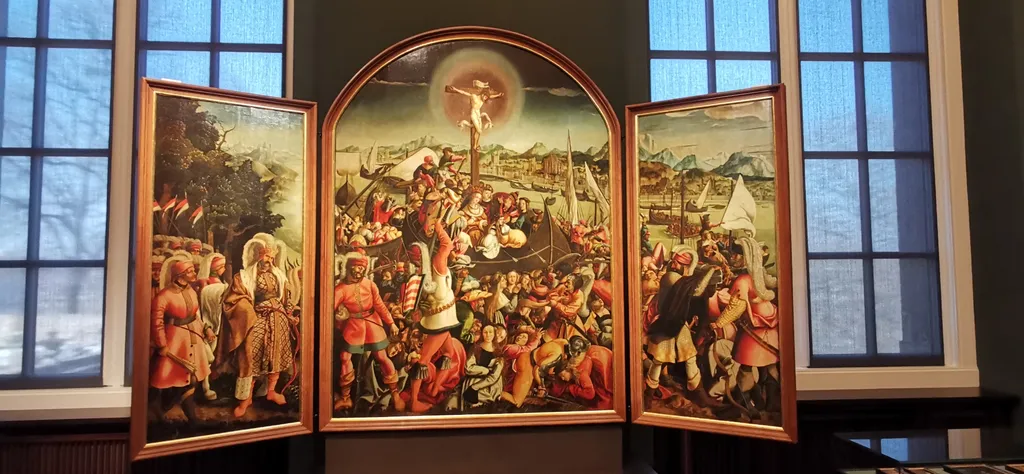
Breu, Jörg is an oil painting by the Early Baroque Italian artist Jörg Breu the Younger. It dates from 1524 and is held in the collection of the Staatliche Kunstsammlungen Dresden.
About this work
Overview
The work reflects the transitional artistic climate of southern Germany, blending Northern European detail with emerging Renaissance sensibilities.
Jörg Breu the Younger, an artist active in Augsburg during the early 16th century, completed this oil-on-panel triptych in 1524. It presents a multi-scene religious composition centered on the Crucifixion, flanked by two subsidiary panels. The work reflects the transitional artistic climate of southern Germany, blending Northern European detail with emerging Renaissance sensibilities. It is now held in the Gemäldegalerie Alte Meister in Dresden.
Subject & Meaning
The central panel portrays the Crucifixion of Christ, surrounded by mourners and onlookers, while the side panels likely illustrate episodes from the life of Saint Ursula, a popular subject in German devotional art. The inclusion of Ursula suggests a devotional purpose, possibly commissioned for private or ecclesiastical use. The scenes emphasize suffering, faith, and martyrdom, aligning with late medieval piety still prevalent in Protestant regions before full Reformation shifts.
Technique & Style
Rendered in oil paint, the triptych features precise brushwork and layered pigments, particularly in the drapery and facial expressions. Earth tones dominate the landscape and garments, contrasted by muted blues and reds in the figures’ clothing. The figures are rendered with anatomical care and spatial depth, showing influence from Italian Renaissance models, yet retain the linear precision and narrative clarity characteristic of German late Gothic traditions.
History & Provenance
Created in 1524, the triptych likely originated in Augsburg, where Breu maintained a workshop. It remained in regional collections before entering the Gemäldegalerie Alte Meister in Dresden, possibly through 18th-century acquisitions from southern German ecclesiastical sources. Its survival through the Reformation suggests it was valued for artistic merit over doctrinal alignment, as religious imagery faced increasing scrutiny in Protestant territories.
Context
In 1524, Augsburg was a center of commerce and artistic production, with artists absorbing both Italian innovations and Northern traditions. While the Reformation challenged religious imagery, many patrons still commissioned devotional works. Breu’s triptych reflects this tension: its iconography remains Catholic in theme, yet its composition and naturalism show alignment with broader European trends moving beyond medieval stylization.
Legacy
Jörg Breu the Younger’s triptych stands as an example of how German artists navigated religious change through visual continuity. Though not widely known outside regional collections, the work illustrates the persistence of traditional iconography in Protestant regions and the enduring influence of Renaissance naturalism on Northern European painting during a period of profound theological upheaval.
Artist & collection
Artist
Jörg Breu the Younger (c. 1510 – 1547) was a painter of Augsburg. He was the son of Jörg Breu the Elder, and collaborated with his father on some works. In the 1540s, he was involved with the creation of the…

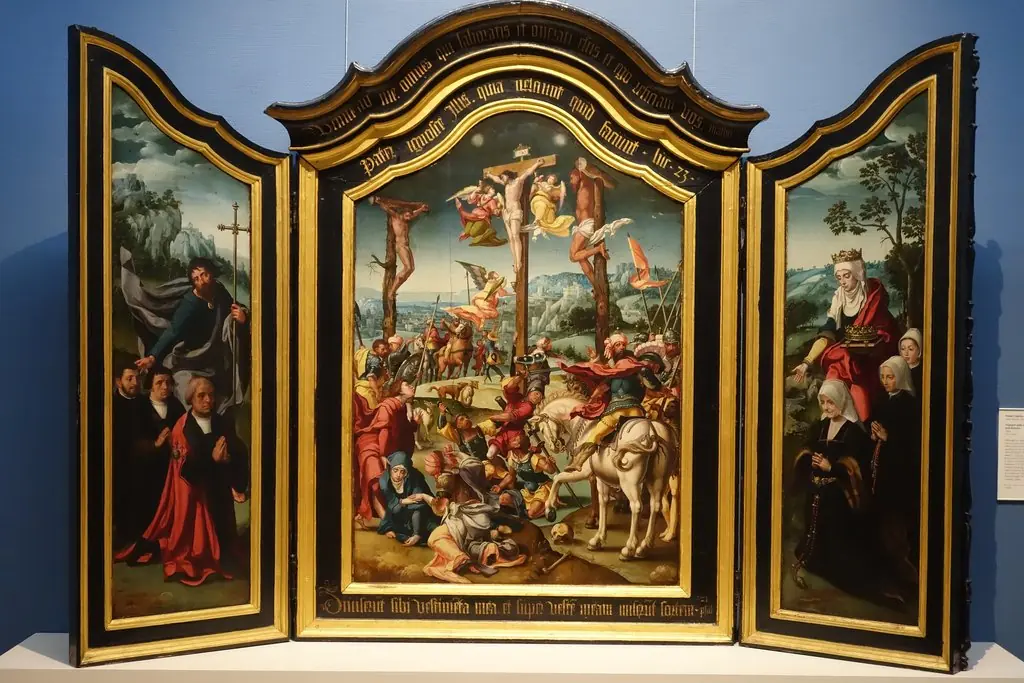 Triptych with the Crucifixion and Donors
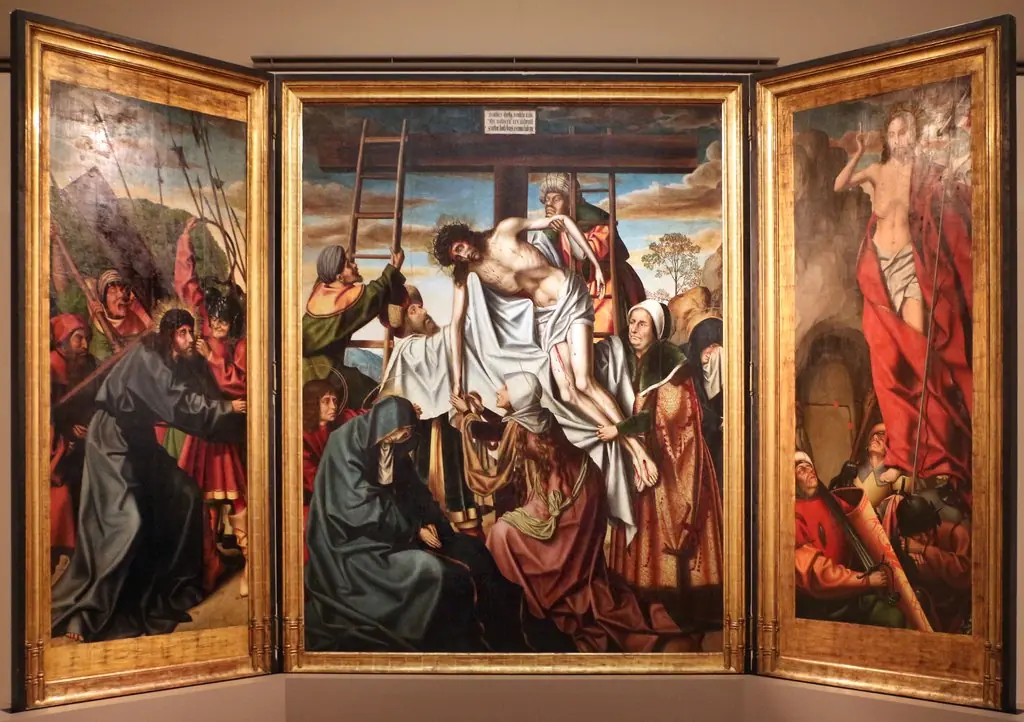 trittico della discesa dalla croce
![St Barbara Altarpiece [right wing], by Unknown](https://artifactworldgallery.com/img/unknown--st-barbara-altarpiece-right-wing--57723c6727765b11-w320.webp) St Barbara Altarpiece [right wing]
St Barbara Altarpiece [right wing]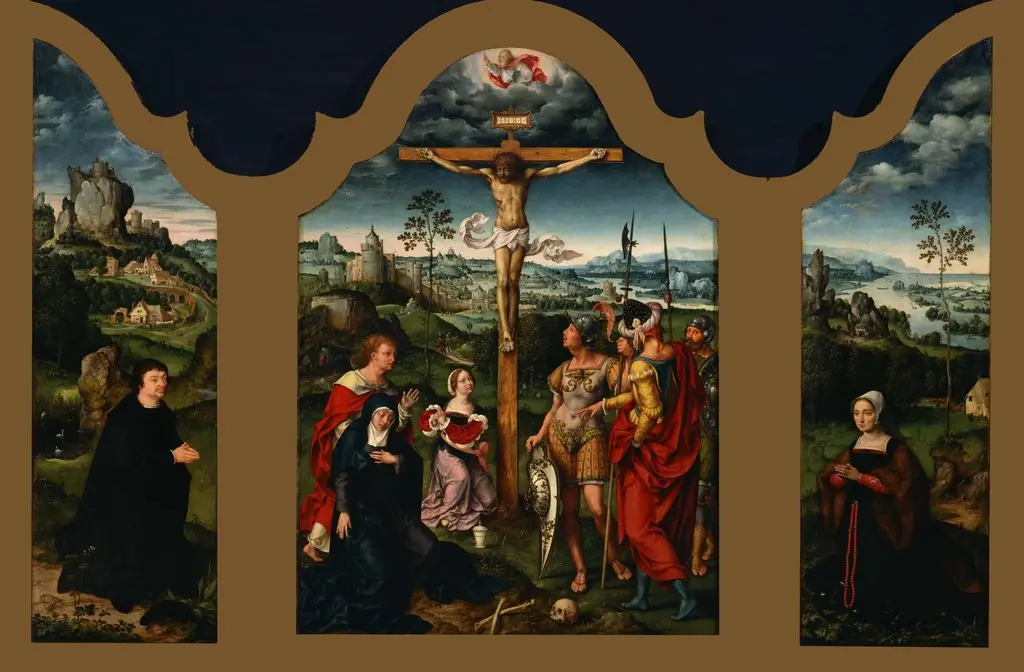 Triptych: The Crucifixion Flanked by the Kneeling Donor and His Wife
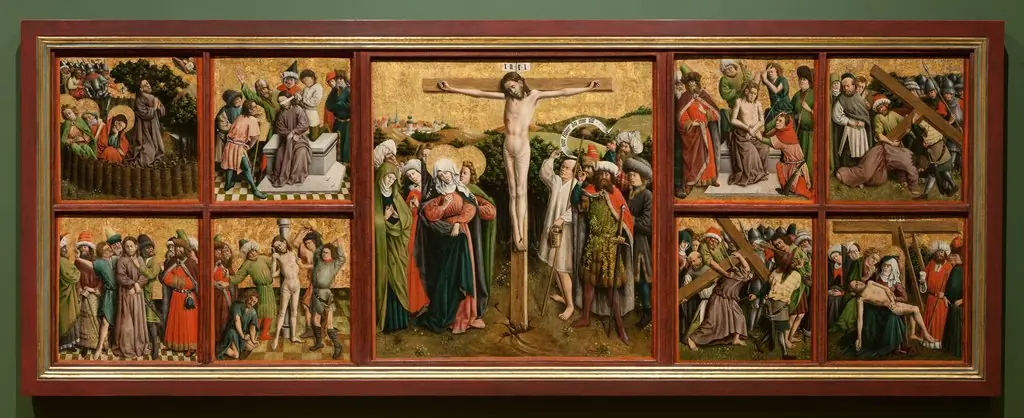 Altarpiece with The Passion of Christ
 Altarpiece with The Passion of Christ
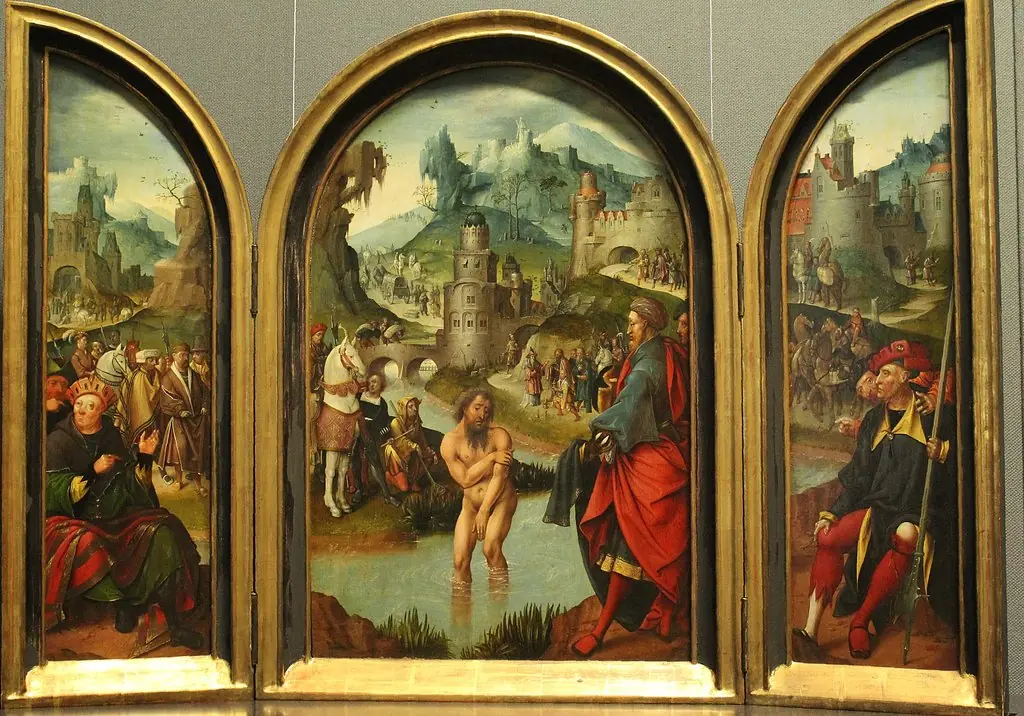 Flügelaltärchen (Flügel): Naam badet im Jordan; Seitenflügel: Hll. Cosmas und Damian
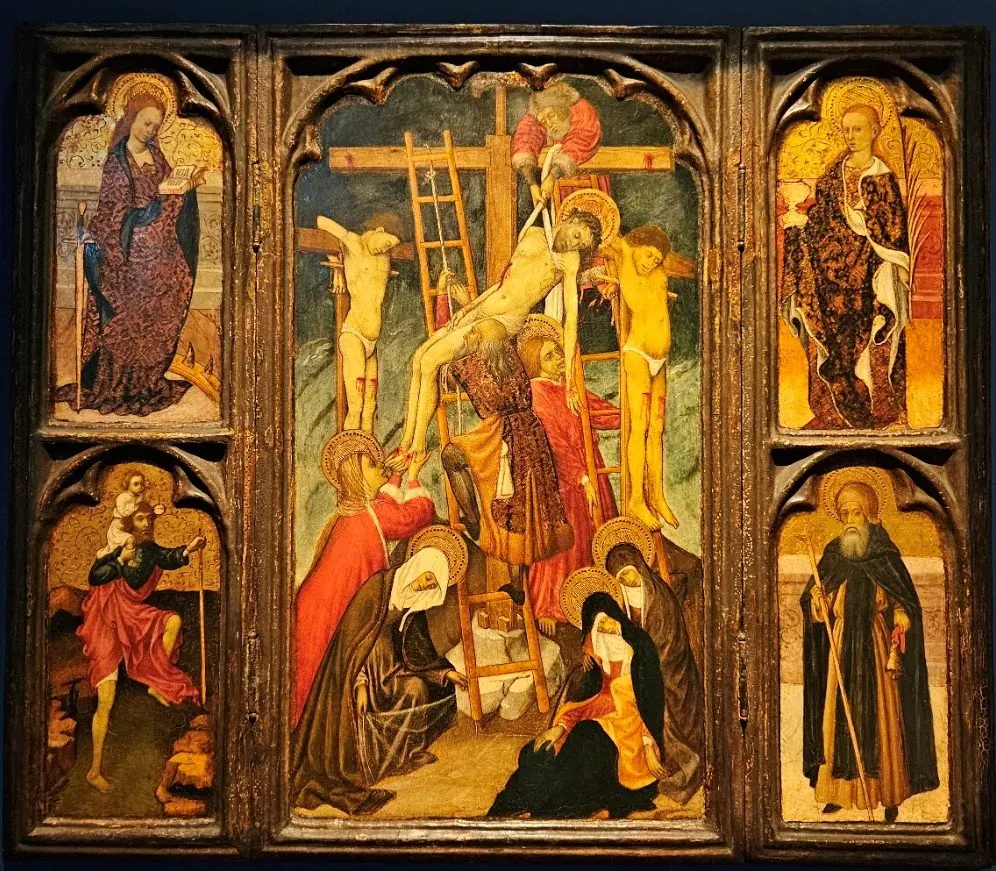 Triptych of the Descent from the Cross
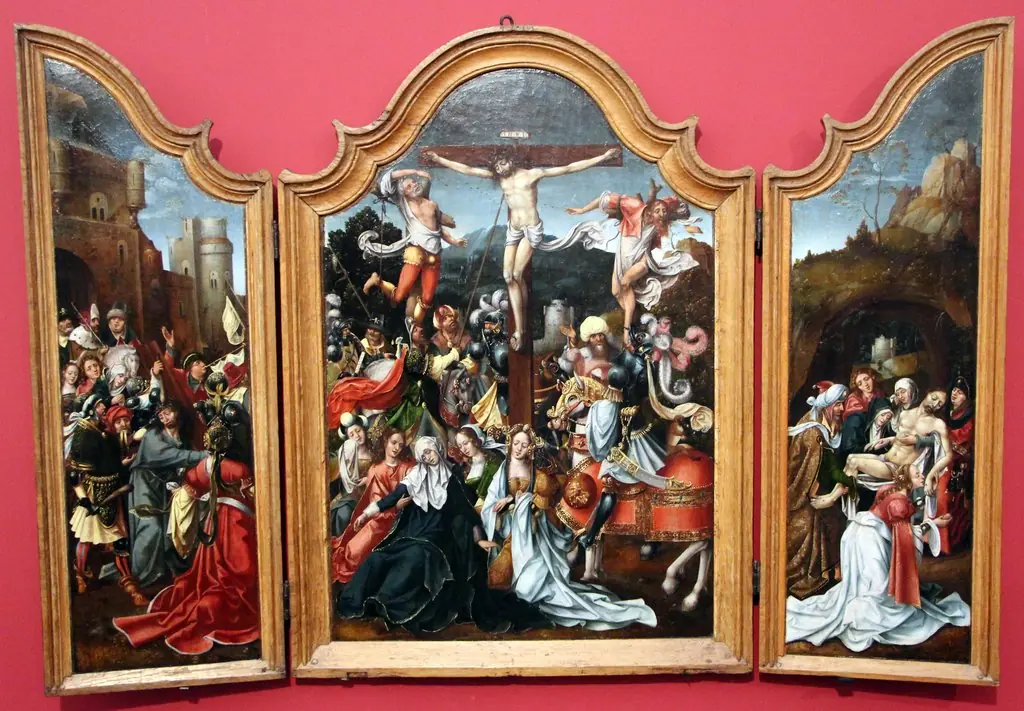 Triptych with the Crucifixion
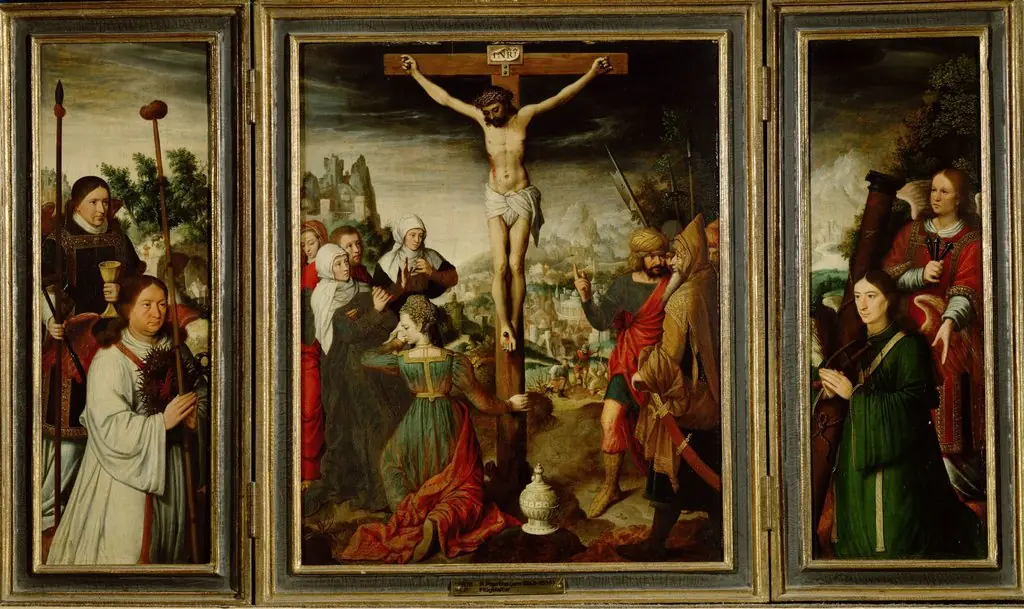 Kreuzigungstriptychon
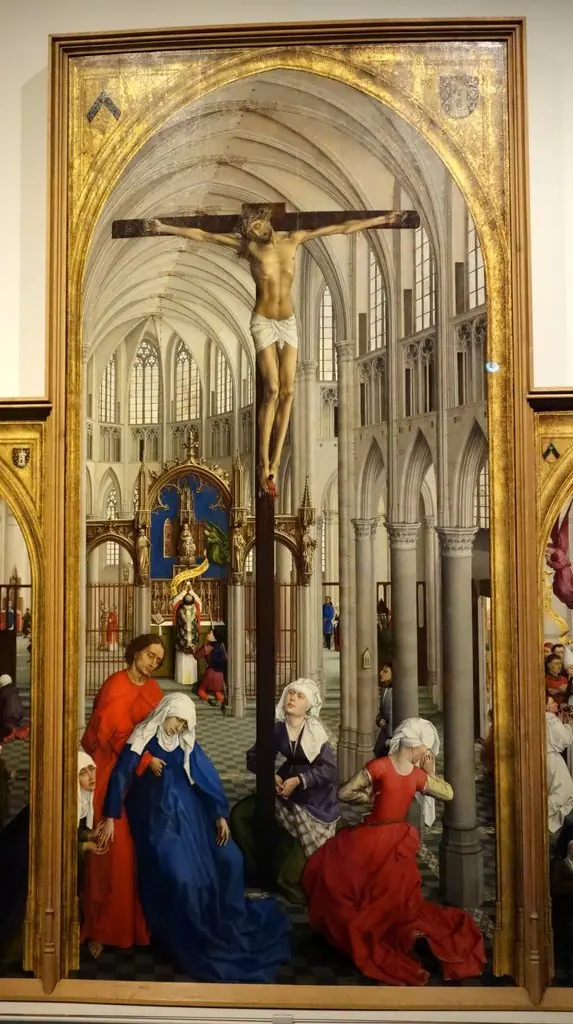 The Seven Sacraments (central panel)
![The Raising of the Cross [center, left, and right panels], by Master of the Starck Triptych](https://artifactworldgallery.com/img/master-of-the-starck-triptych--the-raising-of-the-cross-center-left-and-right-panels--5f0053e23b45aff7-w320.webp) The Raising of the Cross [center, left, and right panels]
The Raising of the Cross [center, left, and right panels]