Artwork
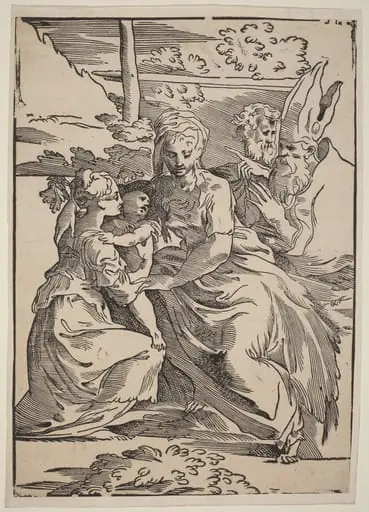
Holy Family and Four Saints
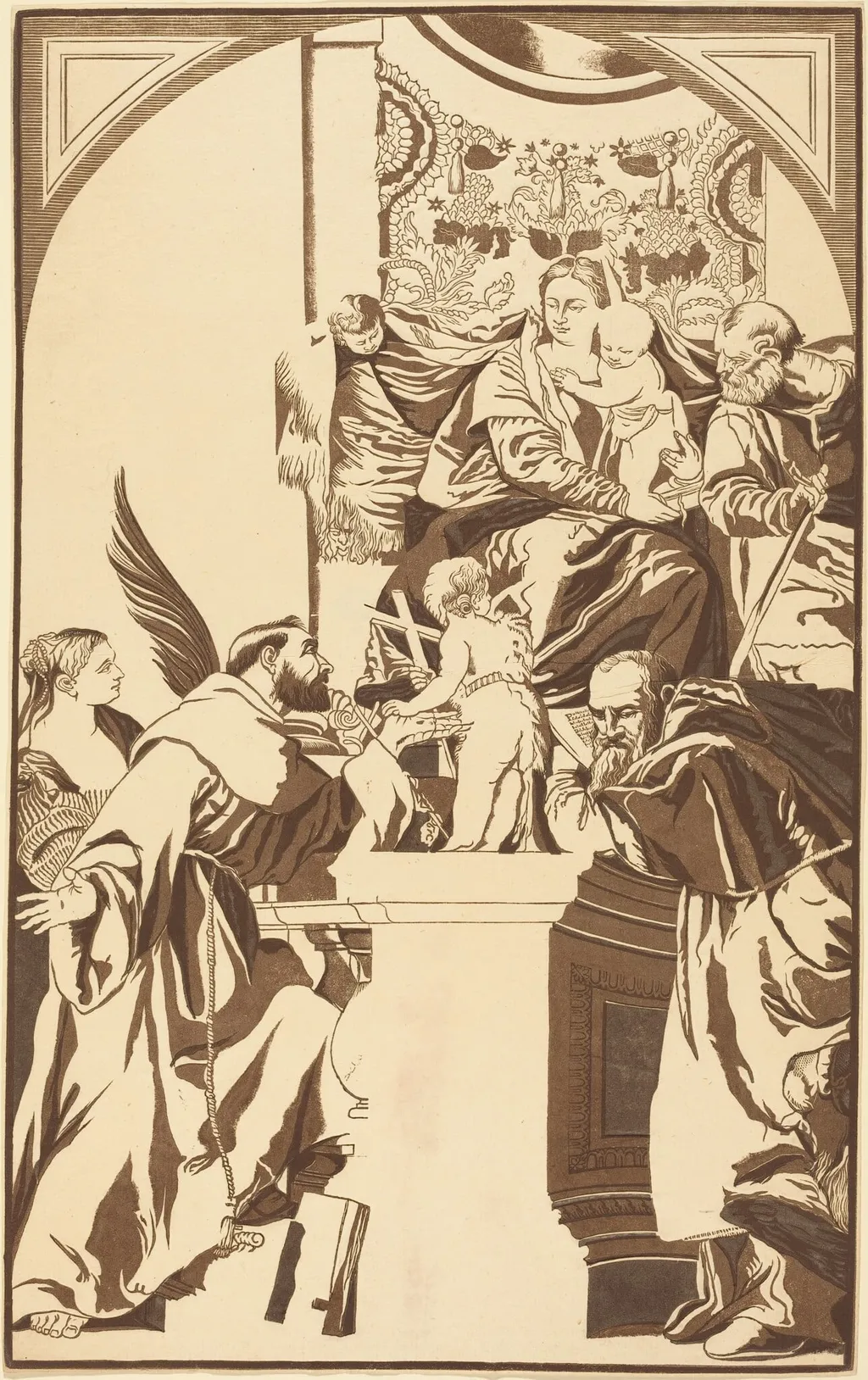
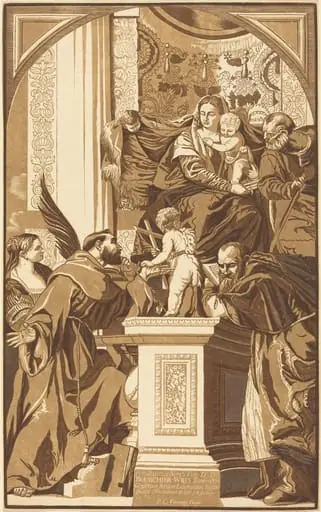
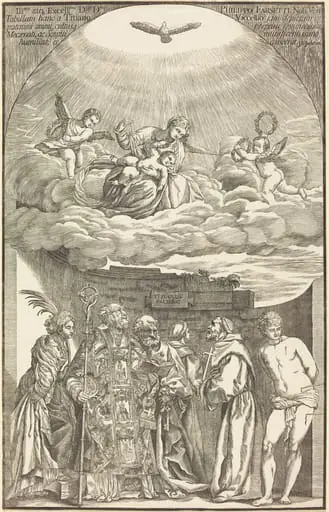
Holy Family and Four Saints is an ink print by the Baroque artist John Baptist Jackson. It dates from 1739 and is held in the collection of the National Gallery of Art.
About this work
Overview
Jackson, active in Paris and Venice, adapted the technique to reproduce the tonal depth of oil paintings rather than emulate drawn studies.
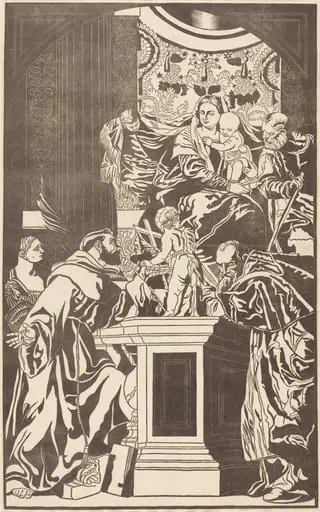
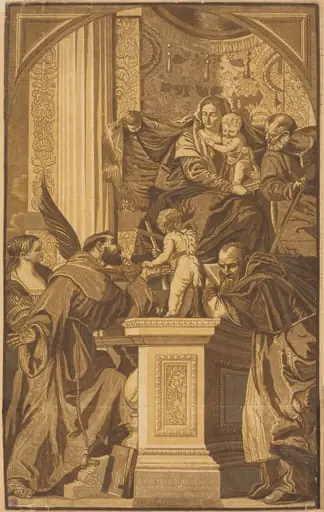
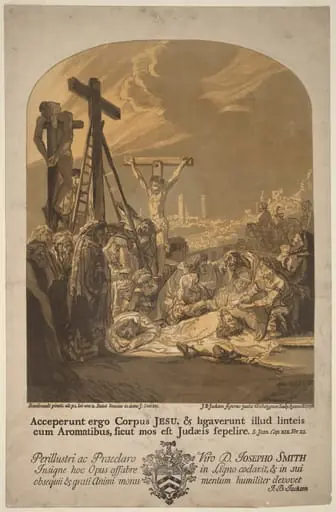
Created in 1739 by British printmaker John Baptist Jackson, this trial proof is a chiaroscuro woodcut in brown and gray on laid paper. Jackson, active in Paris and Venice, adapted the technique to reproduce the tonal depth of oil paintings rather than emulate drawn studies. The work reflects his technical innovations, particularly in layering ink and using oil-based pigments to achieve nuanced gradations uncommon in woodcut printing of the period.
Subject & Meaning
The composition depicts the Holy Family—Mary, Joseph, and the infant Jesus—accompanied by four saints in a formal, hieratic arrangement. Figures are arranged in a stable, triangular grouping, emphasizing spiritual solemnity. The subdued palette and restrained gestures convey reverence rather than theatricality, aligning with devotional traditions of the time while avoiding overt emotionalism typical of later Baroque works.
Technique & Style
Jackson employed multiple woodblocks to layer tones of brown and gray, achieving a chiaroscuro effect through careful overprinting. He developed oil-based inks to enhance richness and durability, distinguishing his prints from water-based predecessors. The trial proof retains heavy embossing along contours, likely to accentuate relief and guide final printing decisions, revealing his methodical approach to achieving painterly depth in relief printing.
History & Provenance
Jackson produced this print during his time in continental Europe, where he studied Italian and French printmaking traditions. As a trial proof, it predates the final edition and offers insight into his working process. Its survival is rare; most early impressions were either discarded or absorbed into private collections, making this an important document of 18th-century print experimentation outside mainstream British practice.
Context
In the early 1700s, woodcut was largely seen as a reproductive or popular medium. Jackson’s pursuit of tonal subtlety challenged this perception, aligning his work with the broader European interest in elevating printmaking to the status of fine art. His engagement with Italian models, particularly the chiaroscuro tradition of artists like Caravaggio, situates him within a transnational network of printmakers seeking to bridge painting and print.
Legacy
Jackson’s technical refinements influenced later printmakers interested in expanding the chromatic and tonal possibilities of woodcut. Though his name faded from mainstream art history, his methods contributed to the revival of chiaroscuro printing in the 19th century. This trial proof remains a key example of how 18th-century artisans reimagined traditional techniques to achieve new expressive ends.
Artist & collection

Artist
John Baptist Jackson (1701–1780) was a British artist, a woodcut printmaker of the eighteenth century.

![The Marriage at Cana [left plate], by John Baptist Jackson](https://artifactworldgallery.com/img/john-baptist-jackson--the-marriage-at-cana-left-plate--22bae83d46cc40b5-w320.webp)