Artwork
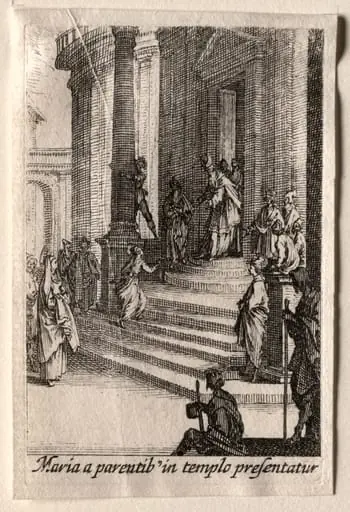
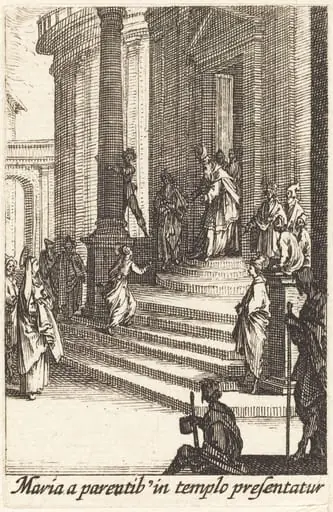
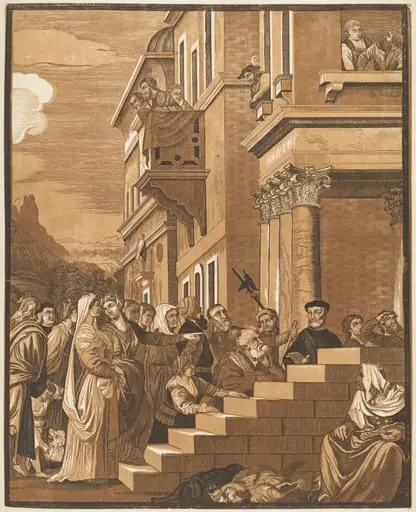
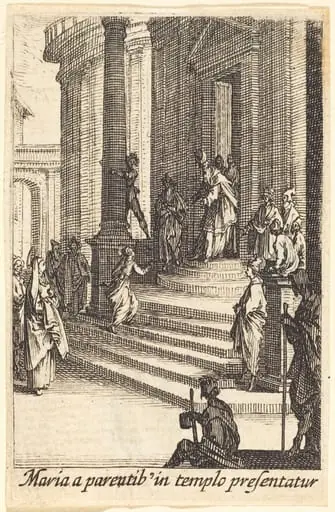
Presentation of the Virgin in the Temple
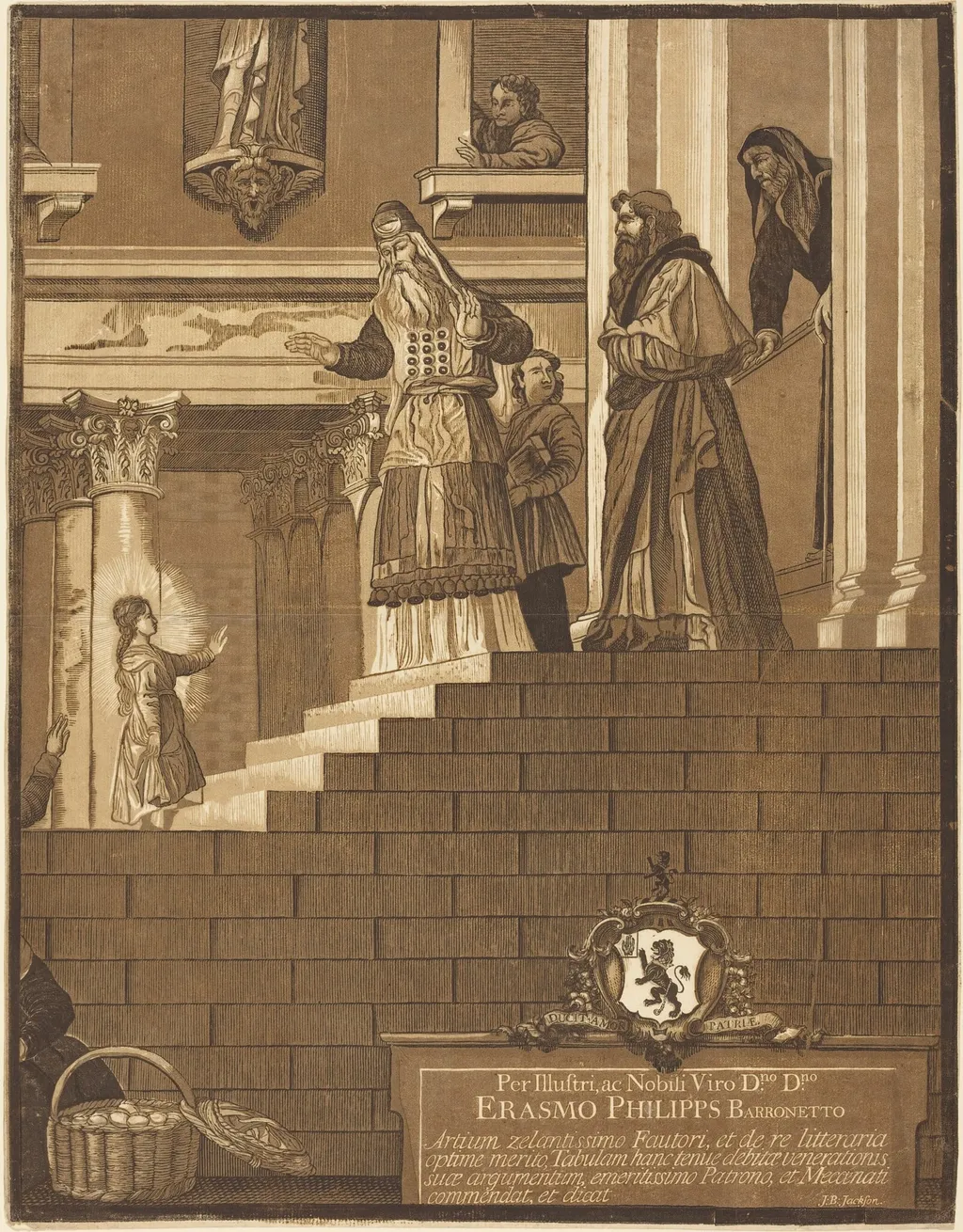
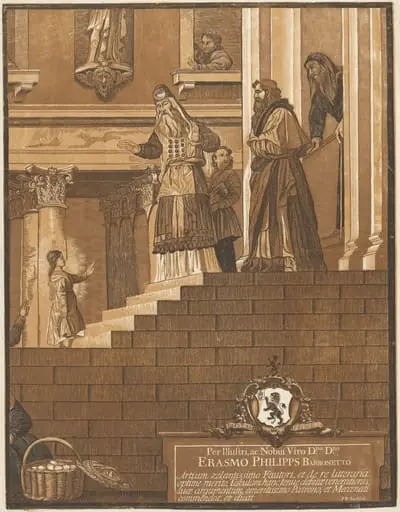
Presentation of the Virgin in the Temple is an ink print by the Baroque artist John Baptist Jackson. It dates from 1742 and is held in the collection of the National Gallery of Art.
About this work
Overview
A young girl reaches toward two robed figures on a raised platform, while a boy and a cloaked woman observe the scene.
Created in 1742, this chiaroscuro woodcut depicts the Presentation of the Virgin in the Temple. Executed on laid paper, the image presents a dim interior with stone flooring and richly carved architecture. A young girl reaches toward two robed figures on a raised platform, while a boy and a cloaked woman observe the scene. A beam of light entering from the left illuminates the girl's face and hands, emphasizing the ceremonial moment.
Subject & Meaning
The composition illustrates the traditional episode in which the Virgin Mary is presented to the temple authorities, a rite that underscores her purity and future role. The central girl’s upward gesture and the solemn expressions of the priests convey reverence and ritual significance. Peripheral figures, including a curious boy and a hooded woman, add narrative depth, suggesting a communal witness to the sacred event.
Technique & Style
The work employs the chiaroscuro woodcut method, using multiple blocks to achieve tonal contrast between light and shadow. Jackson’s approach includes subtle overprinting to broaden the limited palette and heavy embossing that raises architectural details, enhancing the sense of depth. The dramatic lighting and dynamic arrangement reflect Baroque sensibilities, using illumination to focus attention on the central figures while maintaining a cohesive spatial atmosphere.
History & Provenance
British printmaker John Baptist Jackson, active in the eighteenth century, produced the piece while working in Paris and Venice. Known for translating oil paintings into prints rather than mimicking ink drawings, Jackson applied his innovative techniques to this religious subject. The print bears a dedication at its base, indicating a patronage context, and it remains a documented example of his cross‑cultural printmaking activity during the mid‑1700s.
Artist & collection

Artist
John Baptist Jackson (1701–1780) was a British artist, a woodcut printmaker of the eighteenth century.

![The Marriage at Cana [left plate], by John Baptist Jackson](https://artifactworldgallery.com/img/john-baptist-jackson--the-marriage-at-cana-left-plate--22bae83d46cc40b5-w320.webp)
![Presentation of the Virgin in the Temple [right plate], by John Baptist Jackson](https://artifactworldgallery.com/img/john-baptist-jackson--presentation-of-the-virgin-in-the-temple-right-plate--48ca663caf809597-w320.webp)
![Presentation of the Virgin in the Temple [center plate], by John Baptist Jackson](https://artifactworldgallery.com/img/john-baptist-jackson--presentation-of-the-virgin-in-the-temple-center-plate--ef15e741baf4b279-w320.webp)