Artwork
Holy Family and Four Saints
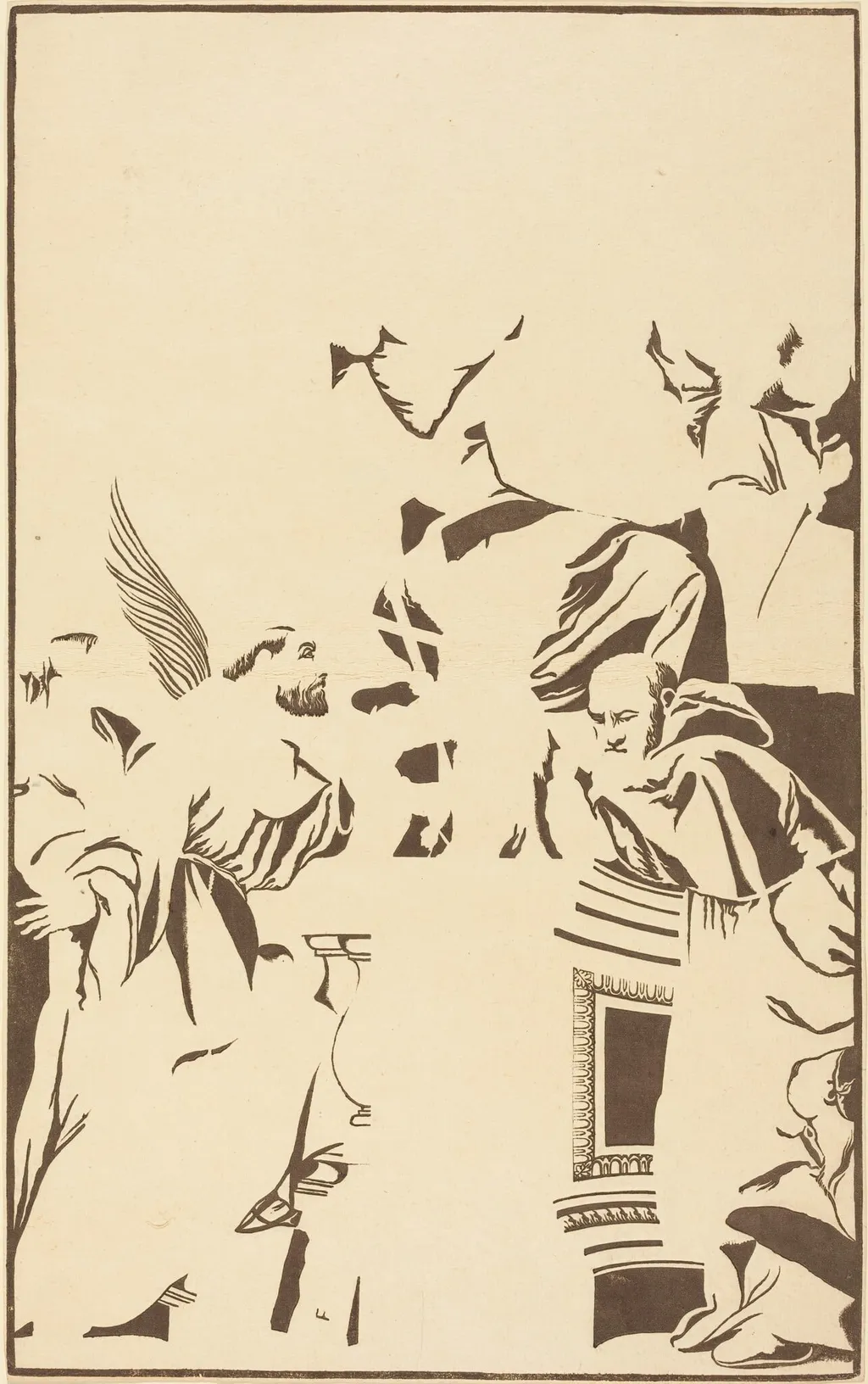
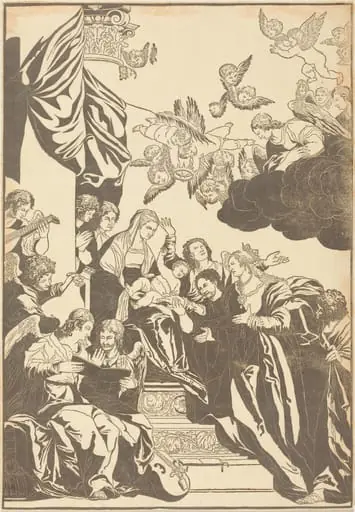
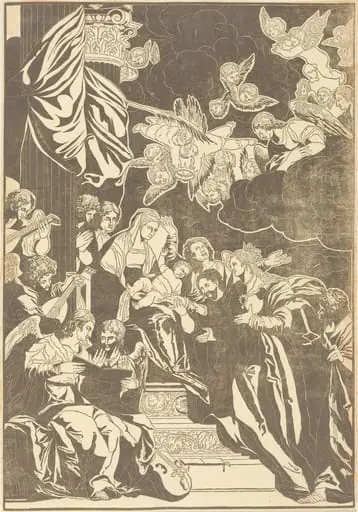
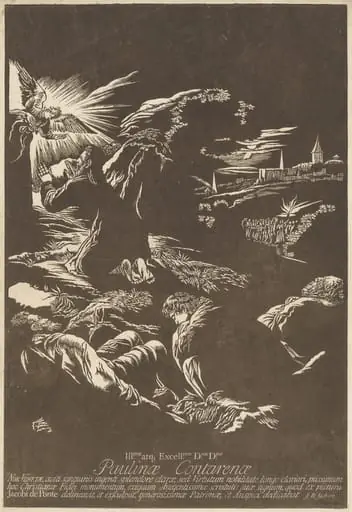
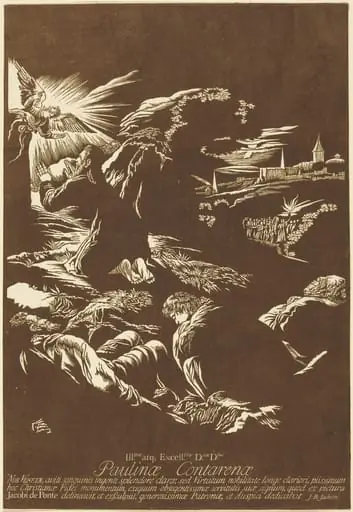
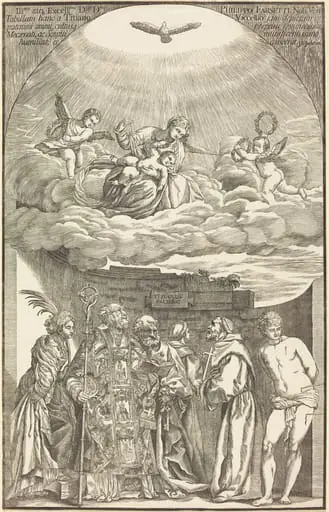
Holy Family and Four Saints is an ink print by the Baroque artist John Baptist Jackson. It dates from 1739 and is held in the collection of the National Gallery of Art.
About this work
Overview
The work appears as a brown‑toned trial proof on laid paper, presenting a compact group of figures rendered in stark contrast against an unadorned background.
Holy Family and Four Saints is a chiaroscuro woodcut executed in 1739 by the British printmaker John Baptist Jackson. The work appears as a brown‑toned trial proof on laid paper, presenting a compact group of figures rendered in stark contrast against an unadorned background. Its composition balances a central seated figure holding a child with a kneeling attendant, while a winged, bearded figure extends his arms on the opposite side.
Subject & Meaning
The image brings together the Virgin and Child with three additional saints, a configuration common in devotional art of the period. The seated figure in robes likely represents the Virgin, cradling the infant Jesus, while the kneeling figure may be a saint or donor. The winged, bearded man—identified as Saint John the Baptist—reaches outward, linking the celestial and terrestrial realms and emphasizing intercessory prayer.
Technique & Style
Jackson employed the chiaroscuro woodcut method, carving separate blocks for light and dark areas and printing them in successive layers. The brown ink and selective embossing create a tactile surface, while bold outlines and retained white of the paper generate dramatic chiaroscuro effects. Unlike many contemporaries who imitated ink drawings, Jackson derived his design from oil paintings, allowing richer tonal modulation and a sketch‑like immediacy.
History & Provenance
Active in the early eighteenth century, Jackson worked in artistic centers such as Paris and Venice, where he refined his multiblock printing process. The surviving impression is a trial proof, indicating it was likely produced to test color balance before a final edition. The print entered museum collections through 19th‑century acquisitions of British printmaking, reflecting the period’s interest in experimental graphic techniques.
Artist & collection

Artist
John Baptist Jackson (1701–1780) was a British artist, a woodcut printmaker of the eighteenth century.

![The Marriage at Cana [left plate], by John Baptist Jackson](https://artifactworldgallery.com/img/john-baptist-jackson--the-marriage-at-cana-left-plate--22bae83d46cc40b5-w320.webp)