Artwork
Romeo and Juliet
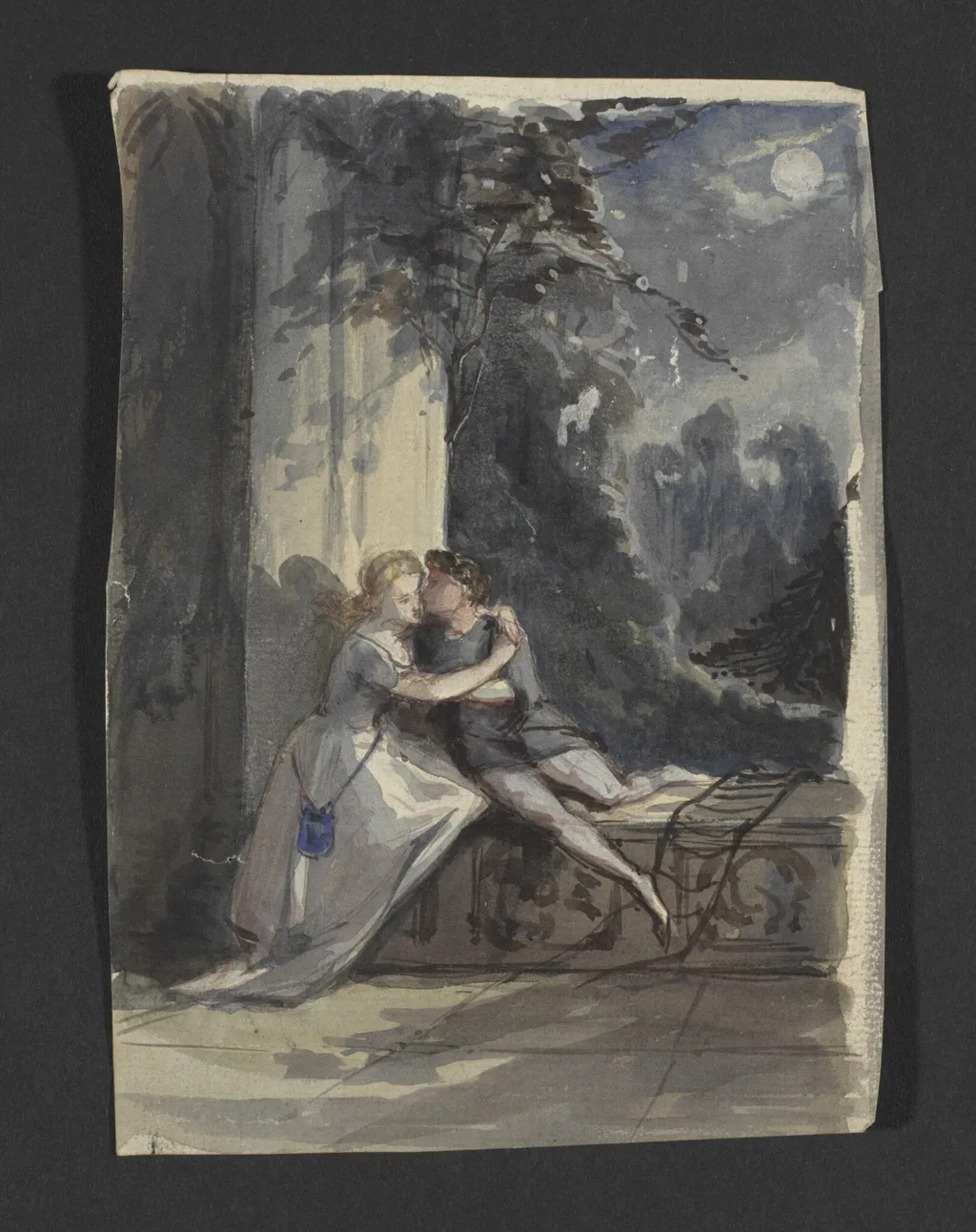
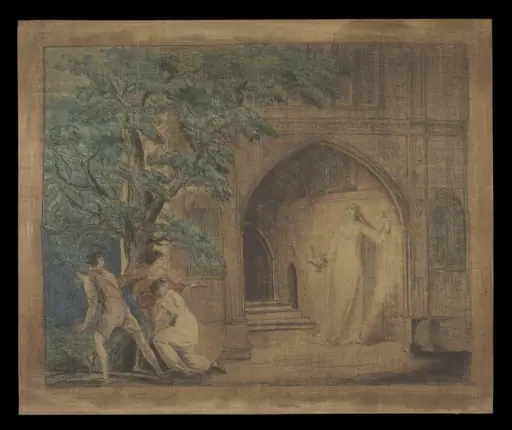
Romeo and Juliet is a watercolor drawing by Samuel Phillips Jackson. It dates from 1850 and is held in the collection of the Victoria and Albert Museum.
About this work
Overview
Executed in transparent washes and fine linear detail, the work captures a quiet, introspective scene rather than dramatic action.
A delicate watercolour drawing depicts a moment from Shakespeare’s Romeo and Juliet. Executed in transparent washes and fine linear detail, the work captures a quiet, introspective scene rather than dramatic action. The reverse bears a handwritten attribution linking it to Samuel Phillips Jackson, a 19th-century artist associated with the Royal West of England Academy, though this remains unconfirmed.
Subject & Meaning
The scene portrays a solitary moment between the two lovers, likely after their secret marriage or before parting. No overt violence or grand gesture is shown; instead, the focus is on stillness and intimacy. The composition invites contemplation of their doomed connection, rendered with restraint rather than theatricality, aligning with a more literary than sentimental interpretation of the play.
Technique & Style
The artist employed fine, controlled brushwork to define form through subtle gradations of tone. Watercolour was applied in thin layers, allowing the paper’s white surface to suggest light. Underlying pencil sketches are visible beneath the washes, indicating deliberate planning. The absence of bold outlines and the soft blending of hues reflect a preference for atmospheric nuance over dramatic contrast.
History & Provenance
The drawing’s origin is tied to a handwritten note on its reverse, identifying the artist as 'Jackson ARA RWEA'—a reference likely to Samuel Phillips Jackson (1830–1904), a watercolourist active in the West Country. No definitive documentation confirms authorship, and the work’s prior ownership remains undocumented. Its survival suggests it was privately held, possibly within the artist’s circle or a regional collector’s collection.
Context
In mid-to-late 19th-century Britain, literary subjects from Shakespeare were popular in domestic art, often rendered in watercolour for their intimacy and affordability. Jackson’s known works include landscapes and genre scenes, but this drawing aligns with a broader trend of artists translating classical narratives into quiet, contemplative images suited to private viewing rather than public exhibition.
Legacy
Though not widely published or exhibited, the drawing offers insight into how Shakespeare’s tragedies were interpreted in private artistic practice. Its emphasis on subtlety over spectacle reflects a quieter strand of Victorian illustration. As a surviving example of a lesser-known artist’s engagement with literary themes, it contributes to understanding the breadth of 19th-century watercolour practice beyond major public works.
Artist & collection
Artist
Samuel Phillips Jackson painted quiet watercolors in 19th-century England. See his soft, detailed *Romeo and Juliet* from the late 1800s, where the lovers’ balcony glows in pale washes. His *The Thames at Wargrave:…

 Two Figures in Classical Dress
 Burns and his Highland Mary
 Esquisse d’un tombeau (Sketch for a Tomb)
 La Declaration
 The Sybarite
 La Nuit (Night)
 La nuit
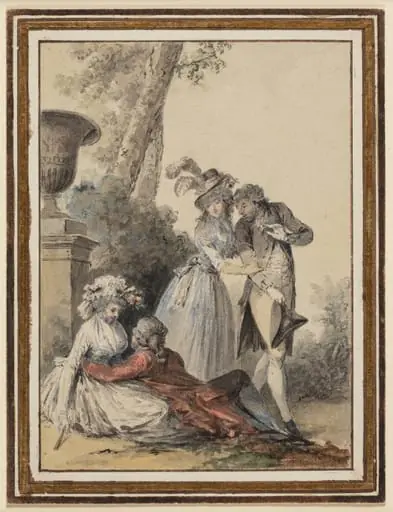 To galante par i en have, det ene liggende, det andet stående
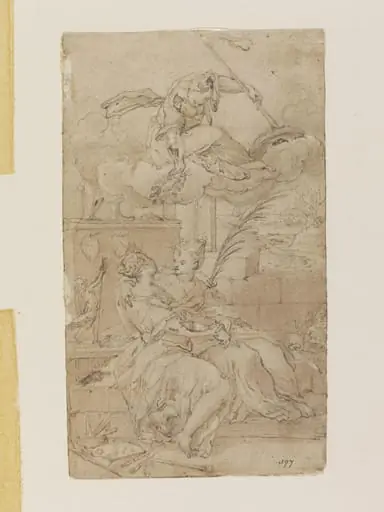 Allegory of the Union of Painting and Sculpture
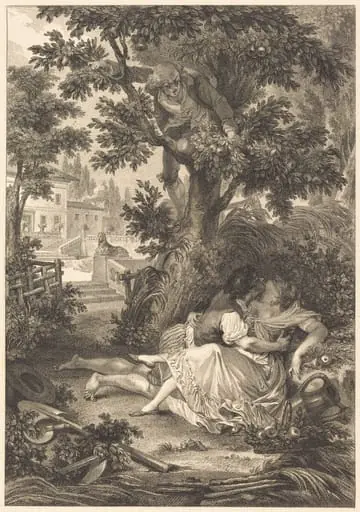 La gageure des trois commeres: Le poirier
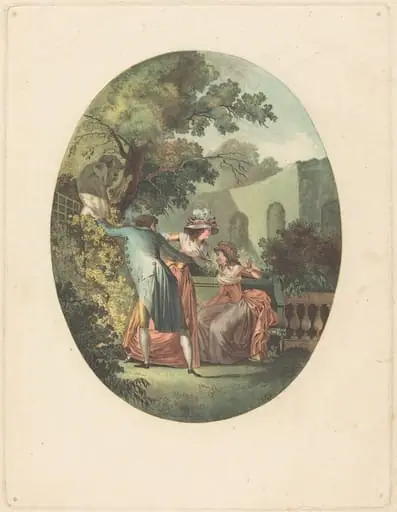 La statue du dieu Pan (Statue of the God Pan)
 H Beard Print Collection