Artwork
Niobe lässt die Bildsäule der Diana niederreißen
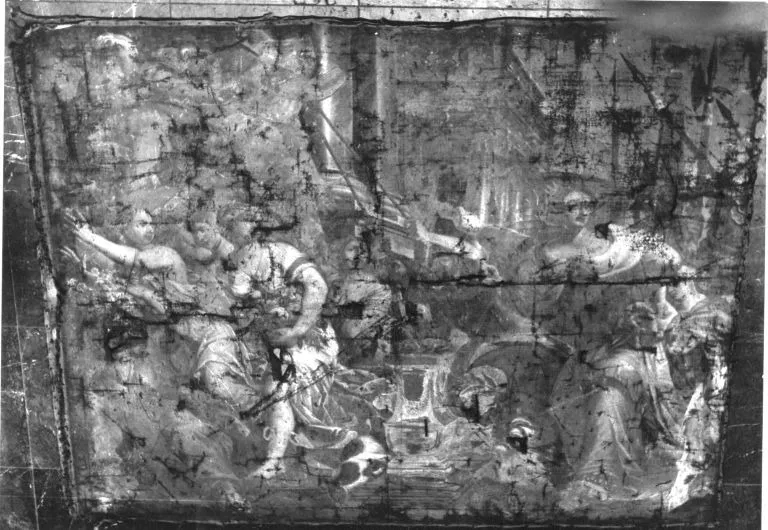
Niobe lässt die Bildsäule der Diana niederreißen is an unspecified painting by the Dutch Golden Age artist Jacob Potma. It dates from 1647 and is held in the collection of the Bavarian State Painting Collections.
About this work
If you're interested in learning more about the artist who created this work, you might want to look up Jacob Potma.
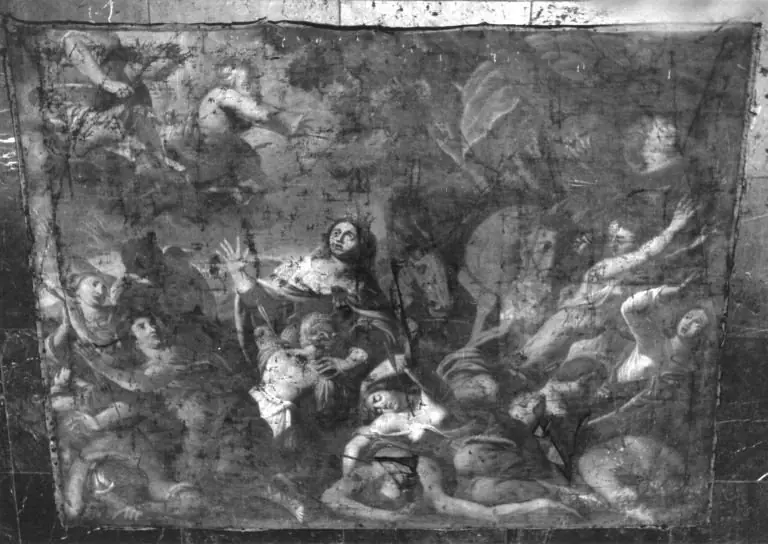
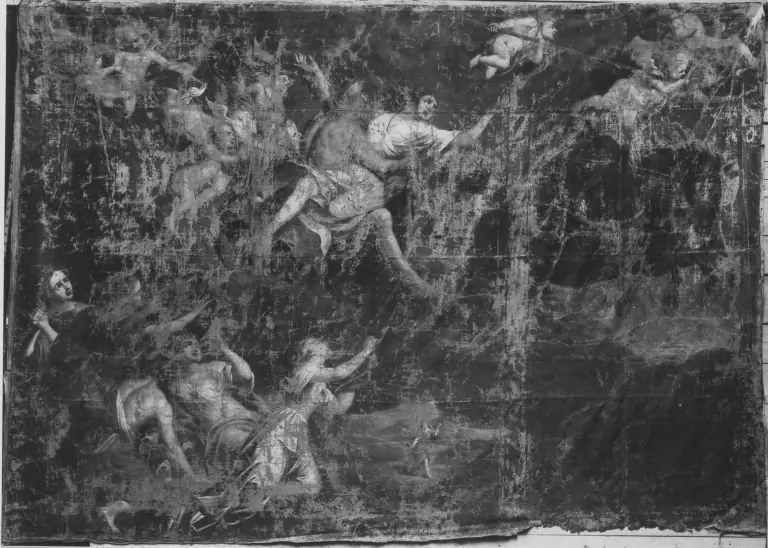
This painting is an allegory, a visual representation of an abstract idea. It features a group of people in a scene that seems to be set in a forest or a wooded area. The figures are dressed in clothing that appears to be from the 17th century.
The painting is quite worn and damaged, with visible cracks and fading of the colors. Despite this, the overall composition and the figures in the scene are still discernible. The artist's use of light and shadow creates a sense of depth and dimensionality in the painting.
If you're interested in learning more about the artist who created this work, you might want to look up Jacob Potma.
Overview
Jacob Potma’s 1647 canvas, titled *Niobe lässt die Bildsäule der Diana niederreißen*, belongs to the collection of Munich’s Alte Pinakothek. The work presents an allegorical scene populated by figures dressed in period costume, arranged within a wooded landscape. Though the surface shows age‑related wear, the overall composition remains legible, allowing viewers to discern the narrative intent and spatial arrangement.
Subject & Meaning
The painting depicts the mythic figure Niobe in the act of toppling a statue of Diana, an episode that traditionally symbolizes the consequences of hubris and the tension between mortal pride and divine authority. By situating the drama amid a forested backdrop, Potma underscores the natural world’s role as a silent witness to the moral lesson embodied in the classical story.
Technique & Style
Potma employs chiaroscuro to model the figures, using contrasts of light and shadow to generate a convincing sense of depth within the interior forest space. The palette, though muted by time, originally featured the earthy tones typical of mid‑17th‑century Dutch painting, while the brushwork suggests a careful rendering of drapery and foliage that aligns with the period’s realist tendencies.
History & Provenance
Created in 1647, the canvas entered the Alte Pinakothek’s holdings at an unspecified later date, becoming part of the museum’s broader collection of Baroque-era Dutch works. Its provenance prior to acquisition remains undocumented in public records, but the painting’s presence in the museum underscores its relevance to the institution’s representation of Northern European art.
Condition
The surface of the work exhibits significant aging: visible cracks traverse the varnish, and the original pigments have faded in several areas. Despite these degradations, the underlying drawing and compositional structure are still discernible, allowing scholars to study Potma’s handling of form and narrative even in its compromised state.
Artist & collection

 Küstenstück
 Pluto entführt Proserpina (zugeschrieben)
 Bear Family with Snake
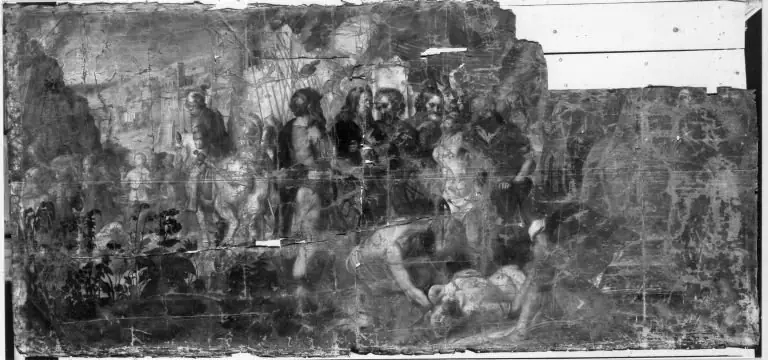 Wunder und Martyrium des hl. Johannes Evangelist
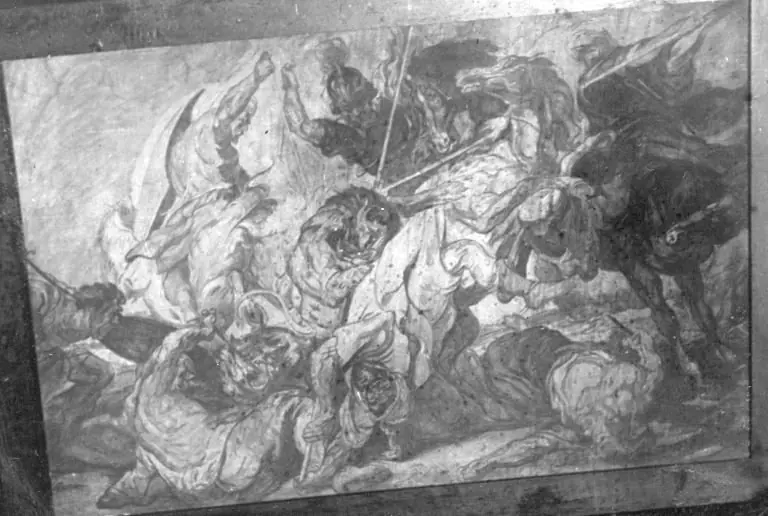 Löwenjagd (Kopie nach)
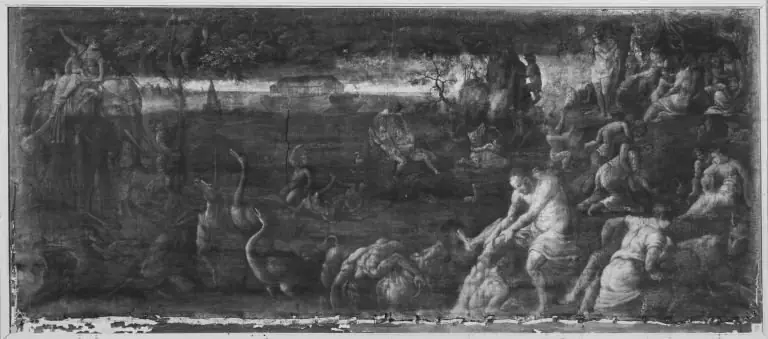 Die Sintflut (zugeschrieben)
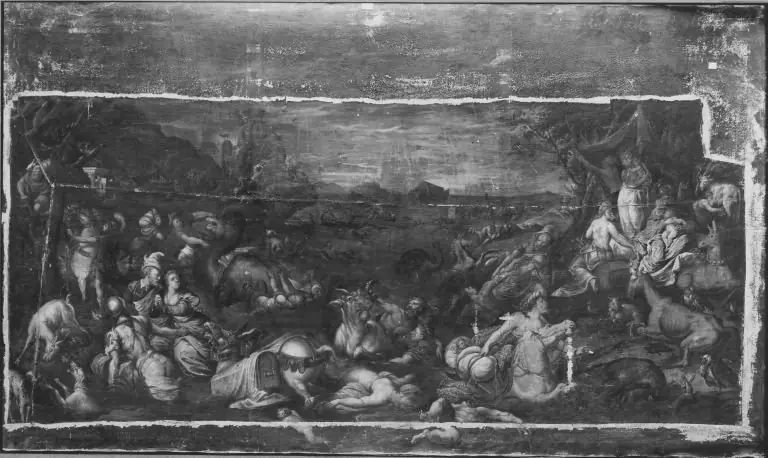 Die Sintflut (zugeschrieben)
 Der Mund der Wahrheit
 Predigt Johannes des Täufers
 Kurfürst Maximilian I. von Bayern und Henriette Adelaide
 Venus und Adonis (zugeschrieben)