Artwork
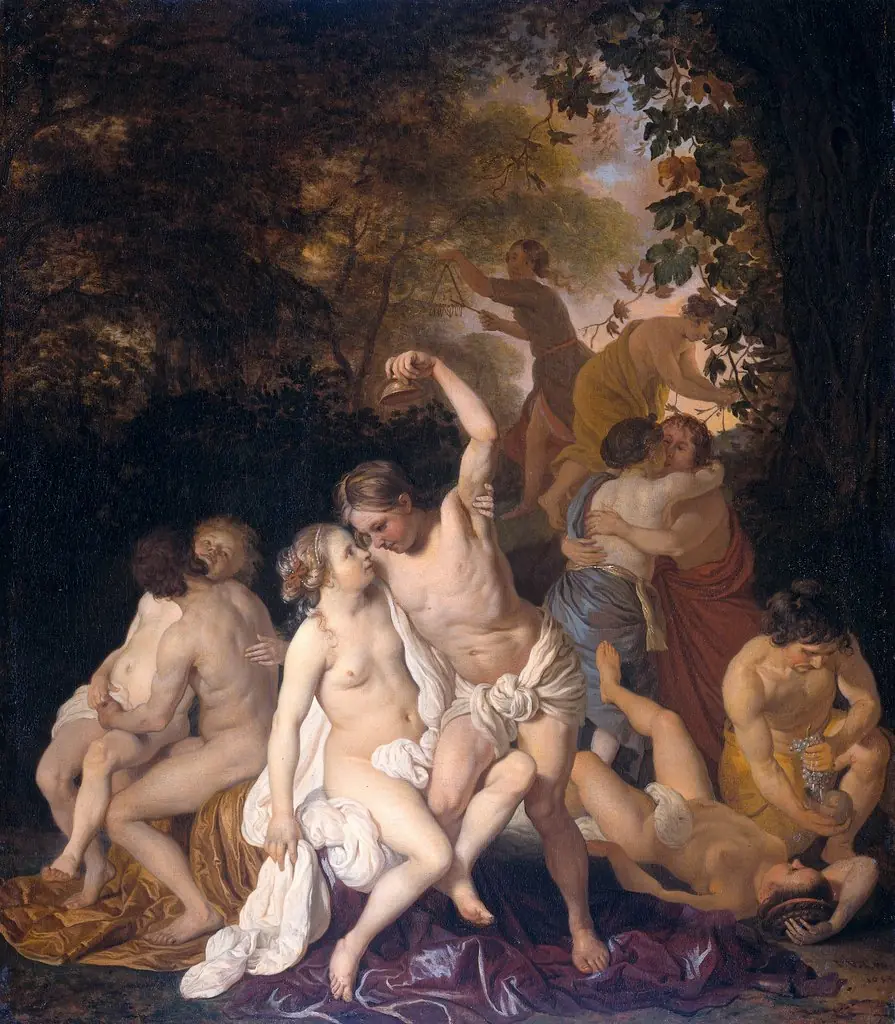
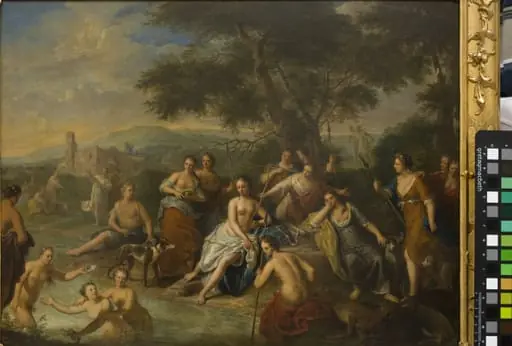
Diana and her nymphs, resting after the hunt
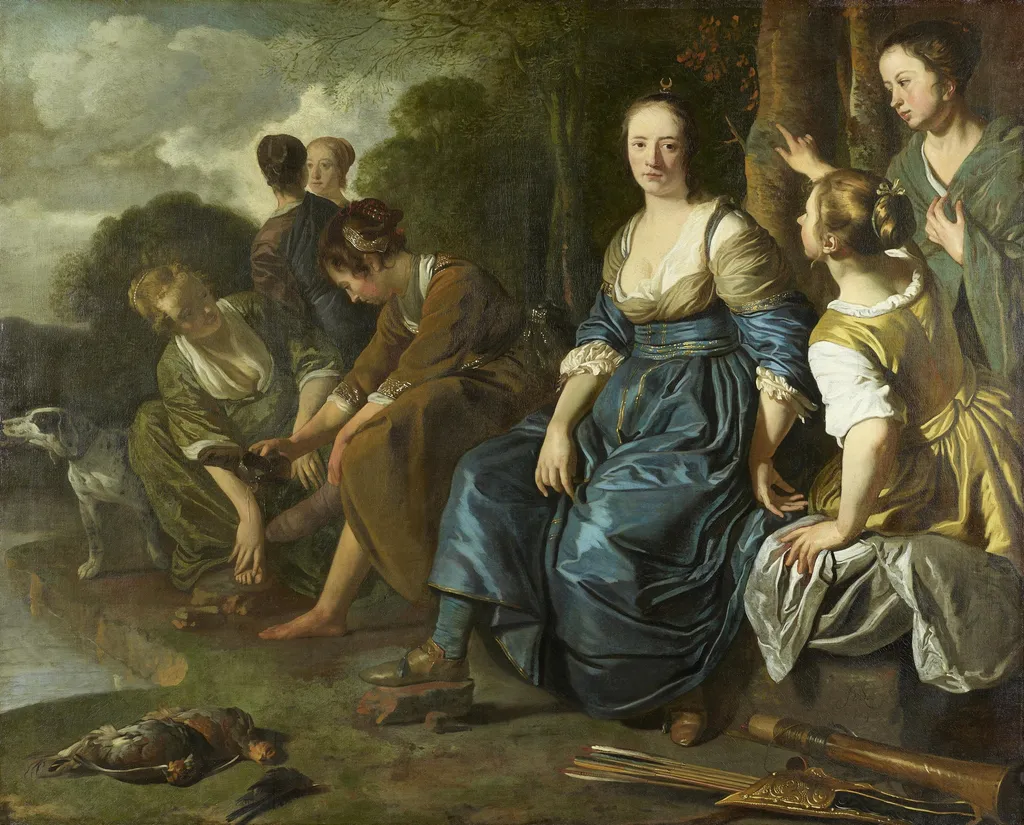
Diana and her nymphs, resting after the hunt is a paint painting by the Flemish Baroque painting artist Jacob van Loo. It dates from 1648 and is held in the collection of the Gemäldegalerie Berlin.
About this work
Overview
Painted in 1648 by Jacob van Loo, this work captures a quiet interlude after a hunt, featuring the goddess Diana and her attendants in a wooded setting.
Painted in 1648 by Jacob van Loo, this work captures a quiet interlude after a hunt, featuring the goddess Diana and her attendants in a wooded setting. Van Loo, trained in the Dutch Golden Age and later active in Paris, produced this piece during his early career, aligning with the broader Flemish Baroque tradition that favored mythological narratives rendered with naturalism and emotional nuance.
Subject & Meaning
The scene portrays Diana, Roman goddess of the hunt, and her nymphs in a moment of stillness following their pursuit. Dead birds lie at their feet, evidence of the hunt’s success. Their postures and glances suggest a pause in action, not exhaustion—perhaps contemplation or anticipation of the next phase. The presence of bows and quivers underscores their identity as hunters, blending divine authority with human-like repose.
Technique & Style
Van Loo employs chiaroscuro to model the figures with soft contrasts of light and shadow, enhancing the three-dimensionality of their forms. The composition arranges the group in a loose, conversational cluster, avoiding rigid symmetry. Skin tones are rendered with subtle gradations, reflecting his reputation for anatomical precision, particularly in the depiction of the female nude, which set his work apart from contemporaries.
History & Provenance
Created during Van Loo’s time in Amsterdam, the painting entered the collection of the Gemäldegalerie Berlin in the 19th century. Its attribution has remained consistent, with no major disputes over authorship. The work reflects Van Loo’s early style before his relocation to France, where he would later gain prominence at the French court.
Context
In mid-17th century Northern Europe, mythological scenes like this one served as vehicles for aesthetic refinement and moral allegory. While religious subjects dominated public commissions, private collectors favored classical themes that allowed for the display of technical skill and erudition. Van Loo’s treatment of Diana aligns with a trend toward intimate, humanized depictions of deities, moving away from grandeur toward psychological subtlety.
Legacy
Though less widely known today than Rembrandt or Rubens, Van Loo’s skill in rendering the human form influenced later French painters of mythological subjects. His ability to blend Dutch realism with classical themes contributed to the evolution of Baroque figure painting, particularly in how quiet, everyday moments within myth were rendered with dignity and tactile presence.
Own this work as a print
Artist & collection
Artist
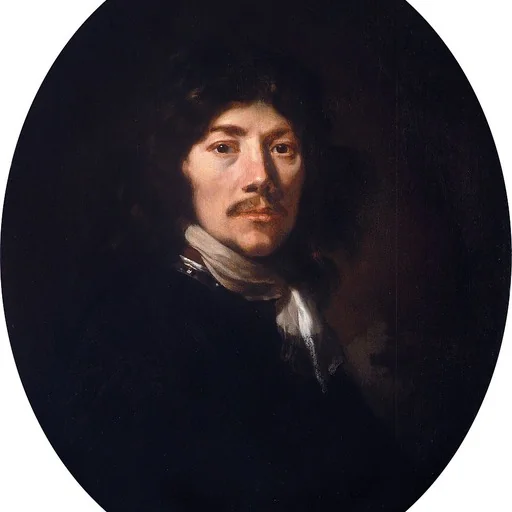
Jacob van Loo (1614 – 26 November 1670) was a painter of the Dutch Golden Age, chiefly active in Amsterdam and, after 1660, in Paris.

 Bird-Catching by a Decoy with a Whistle and Net (Decorative painting for a supper-box at Vauxhall Gardens, London)
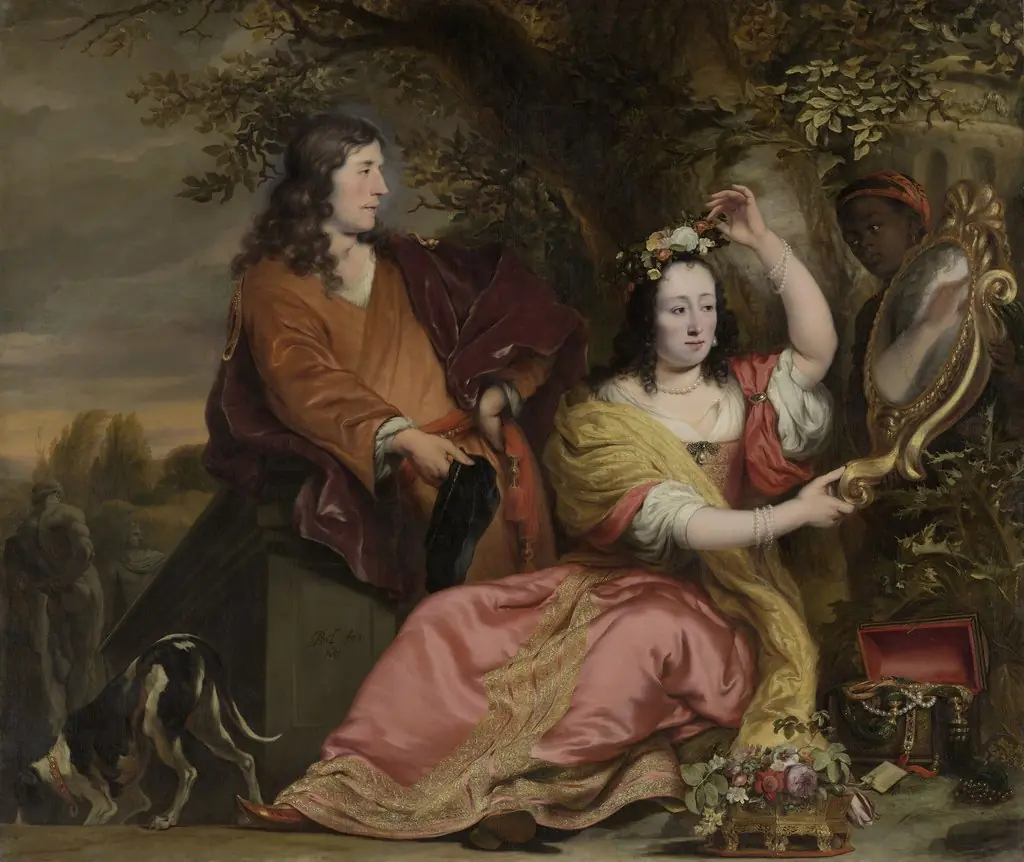 Double portrait of Jan van der Voort (1626-1678) and his sister Catharina van der Voort (1622-1674), with a servant
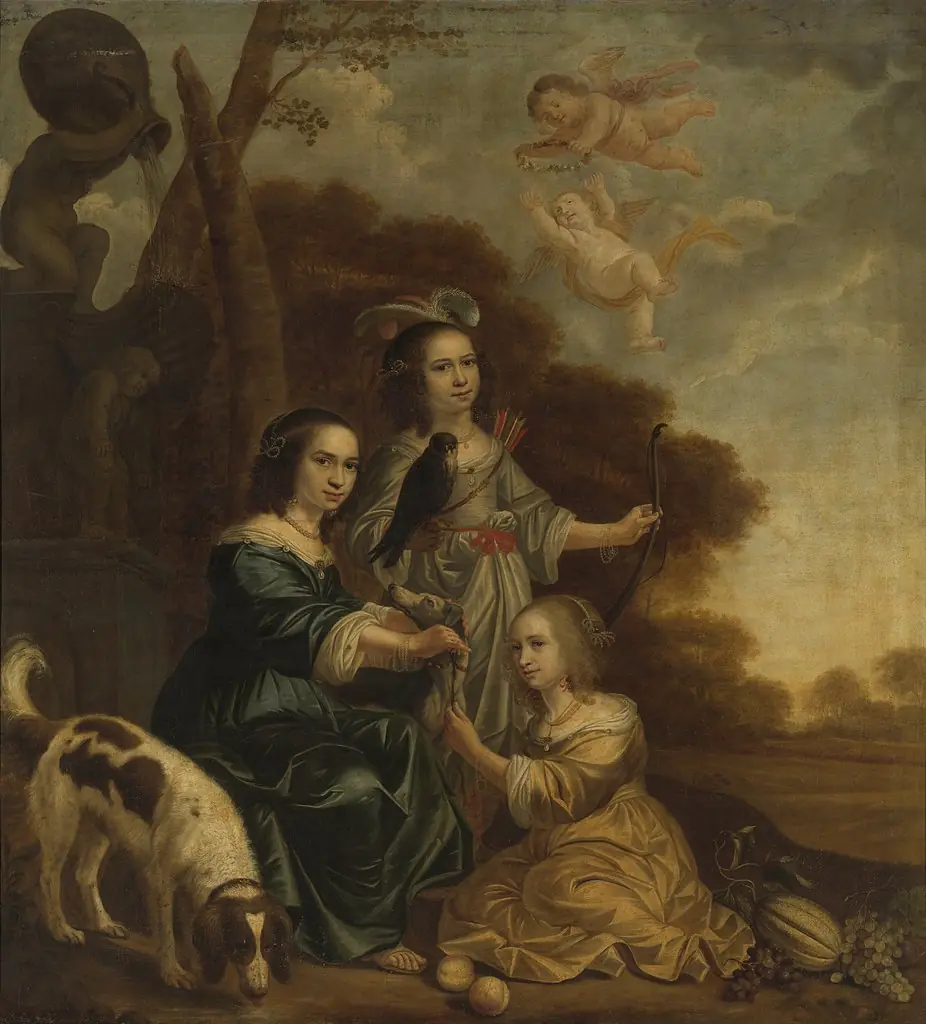 Portrait of Geertruyt, Margriet and Anna Delff, the artist's daughters
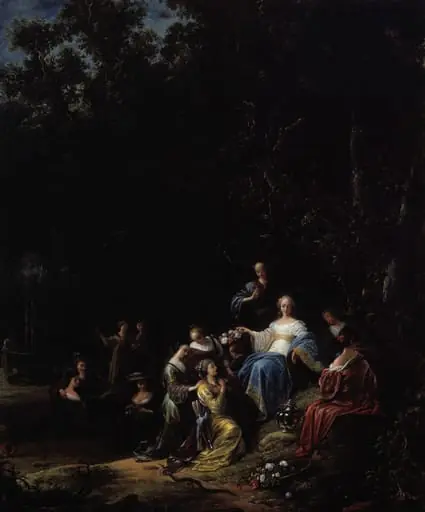 Amarillis kruunaa Mirtillon (Kohtaus pastoraalinäytelmästä Il Pastor Fido)
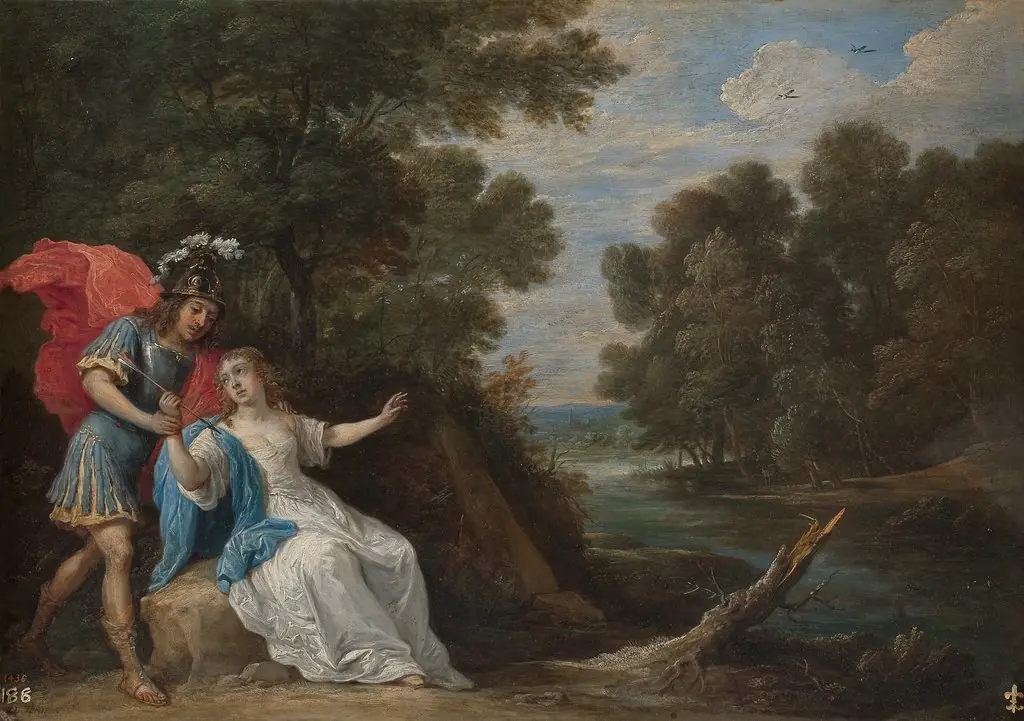 Reconciliación de Reinaldo y Armida
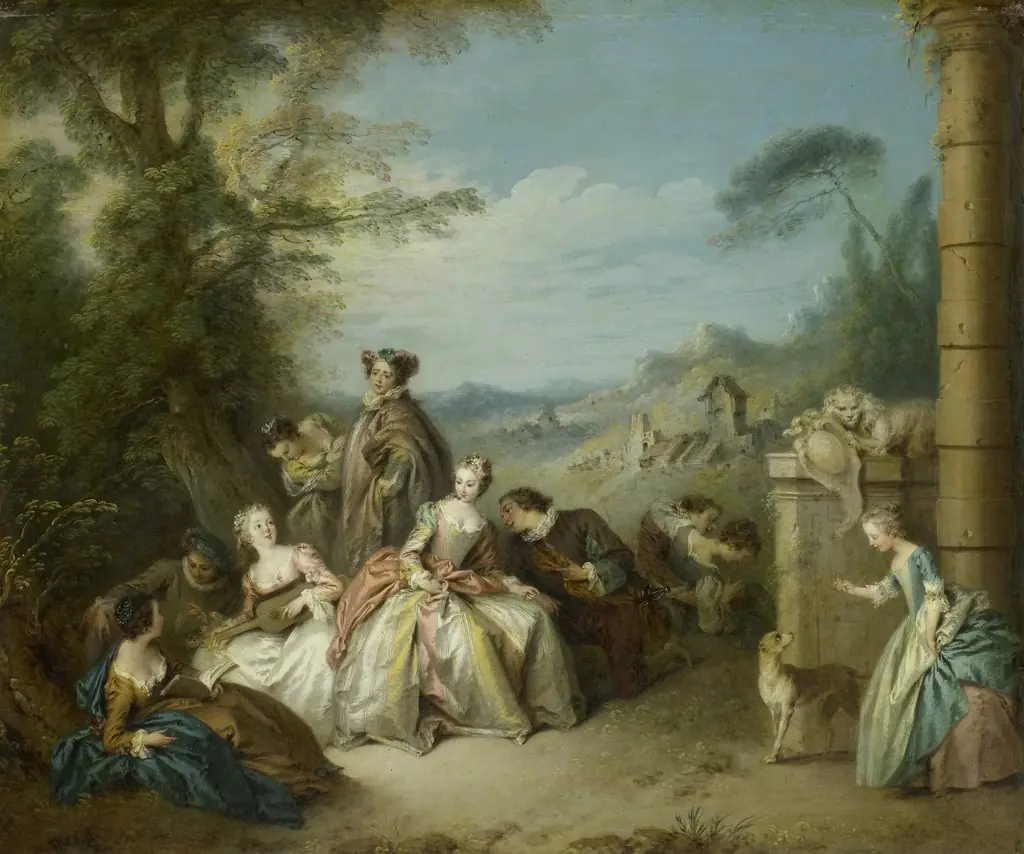 Fête galante in a Landscape
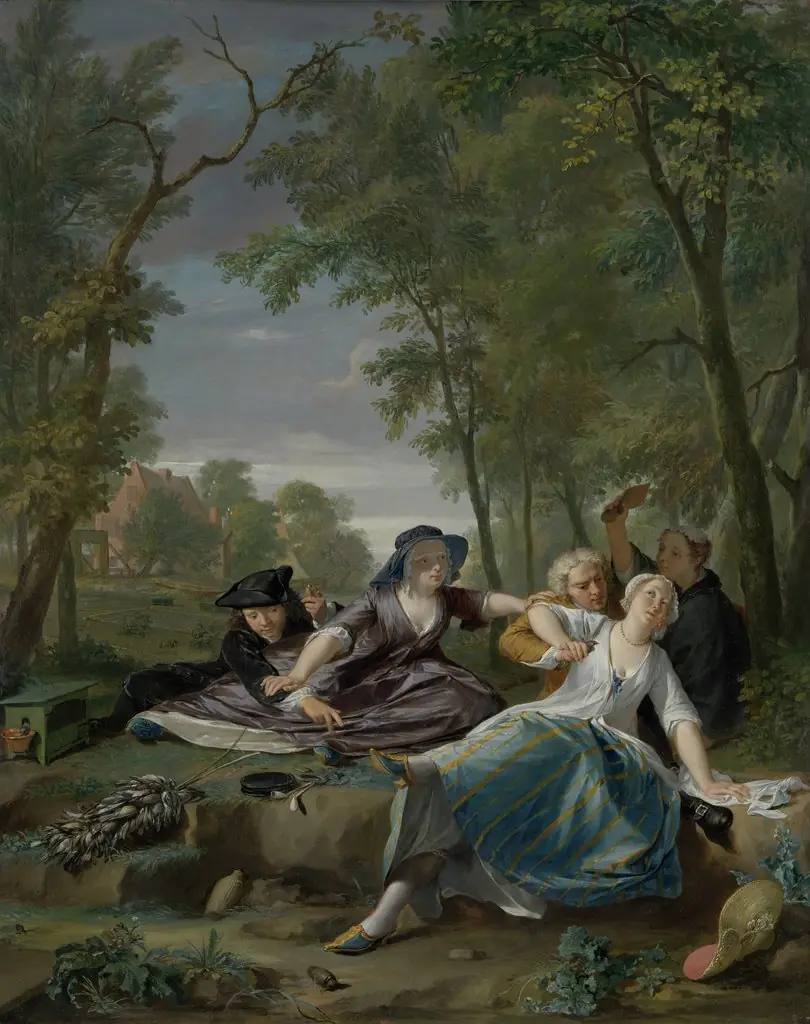 De vogelaars
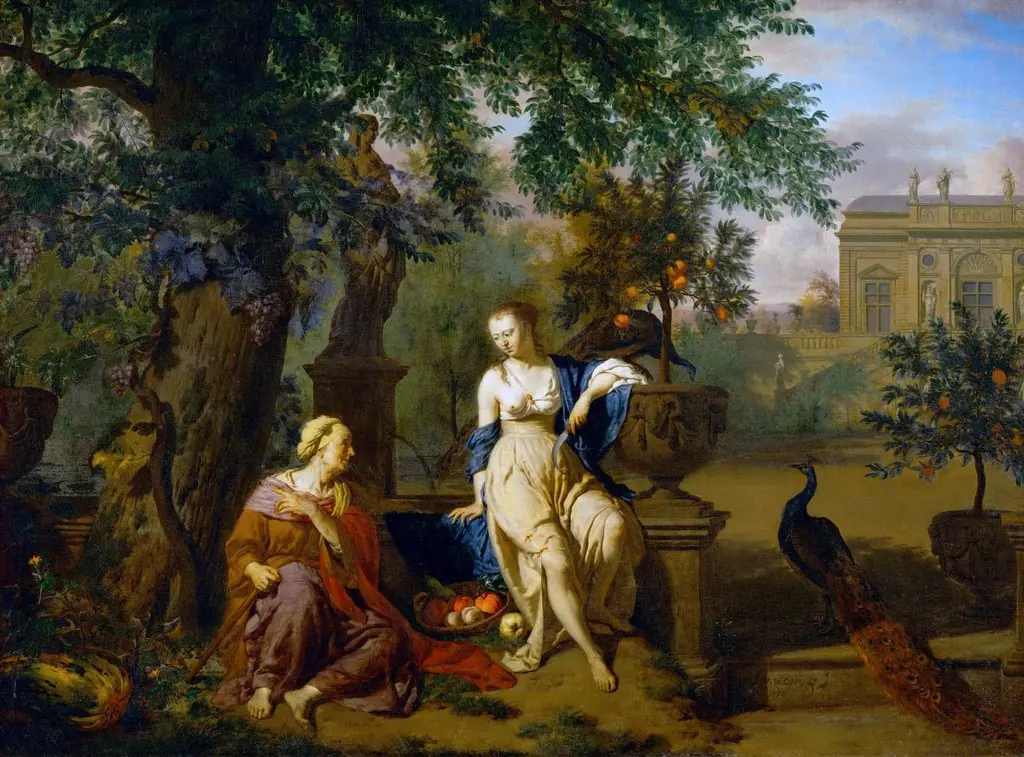 Vertumnus and Pomona
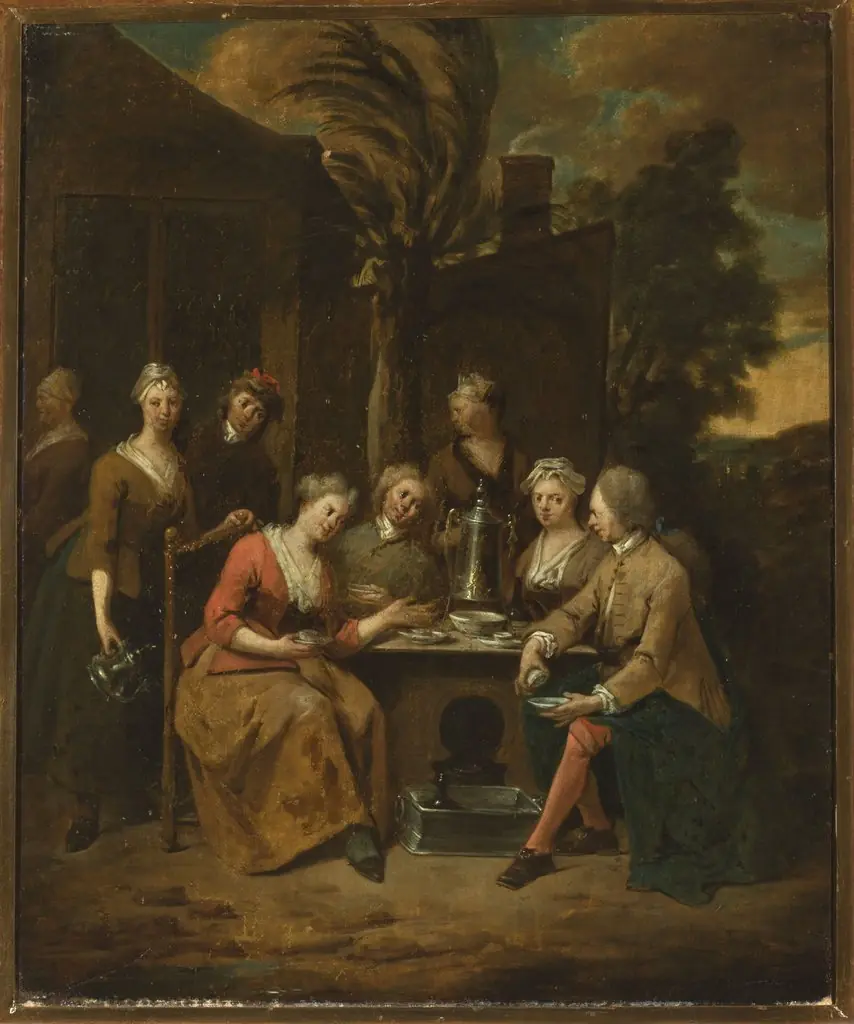 Company at the table
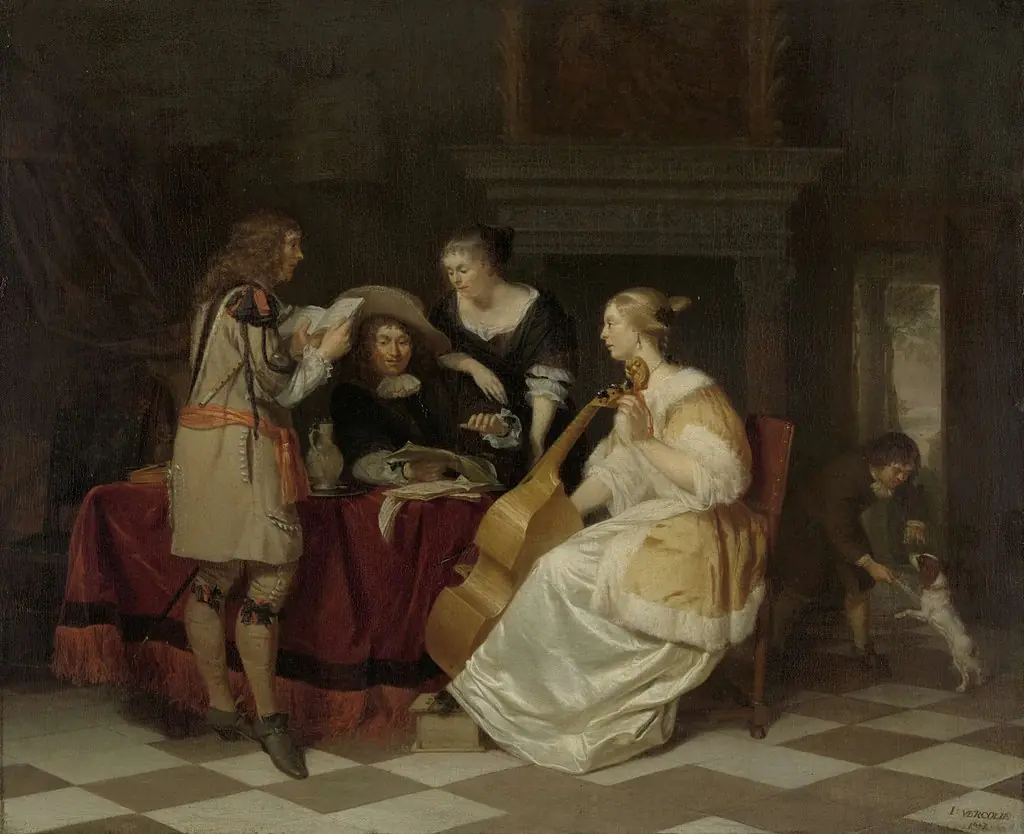 A Musical Company
 The Fête champêtre
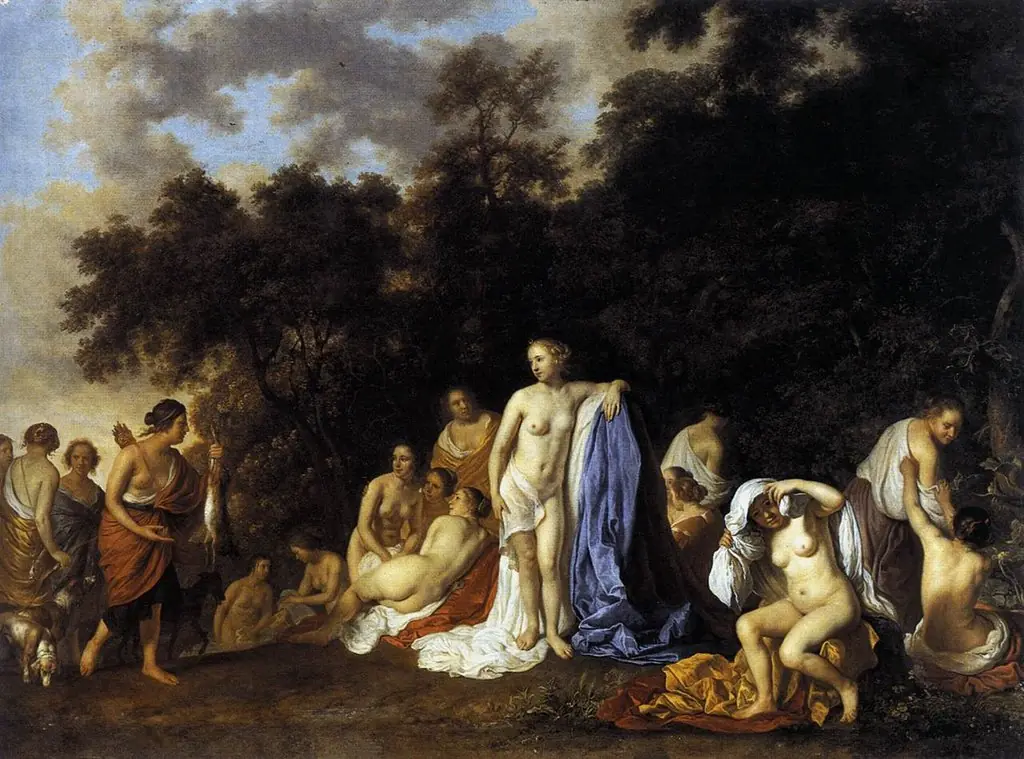
 Diana and her Nymphs