Artwork
Bethlehemic Child Murder
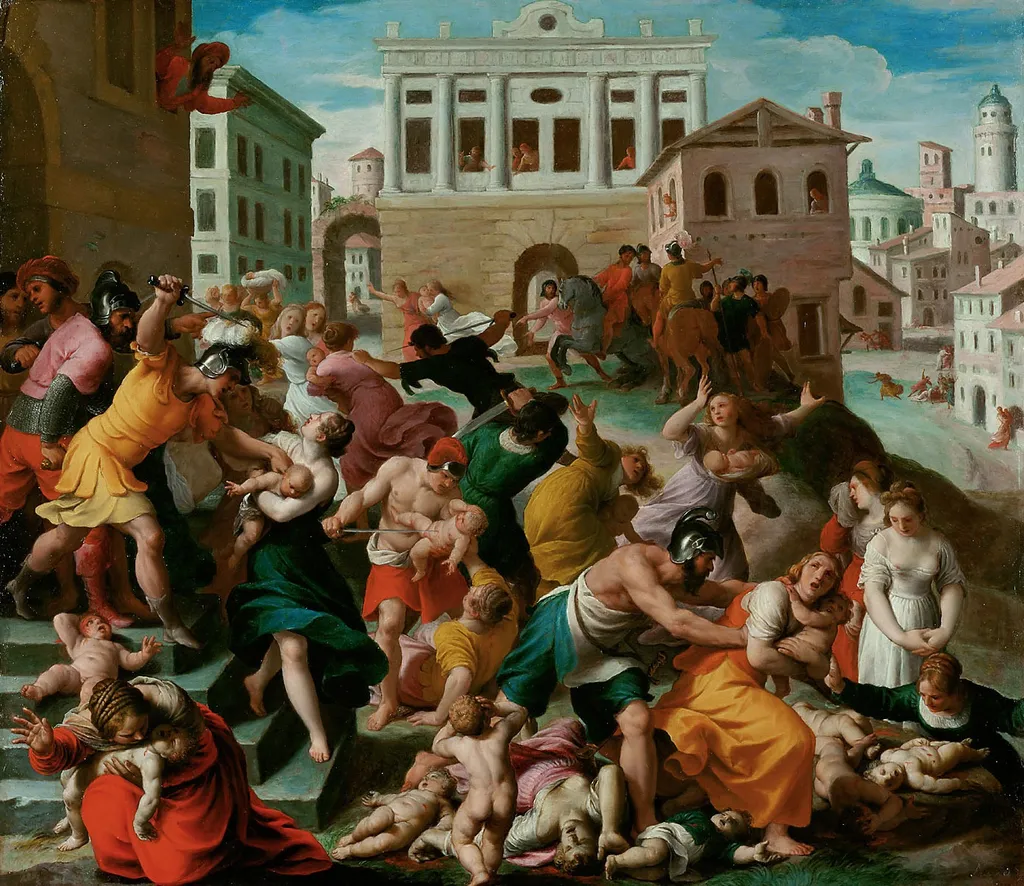
Bethlehemic Child Murder is an unspecified painting by the Early Baroque Italian artist Alessandro Turchi. It dates from 1612 and is held in the collection of the Kunsthistorisches Museum.
About this work
Overview
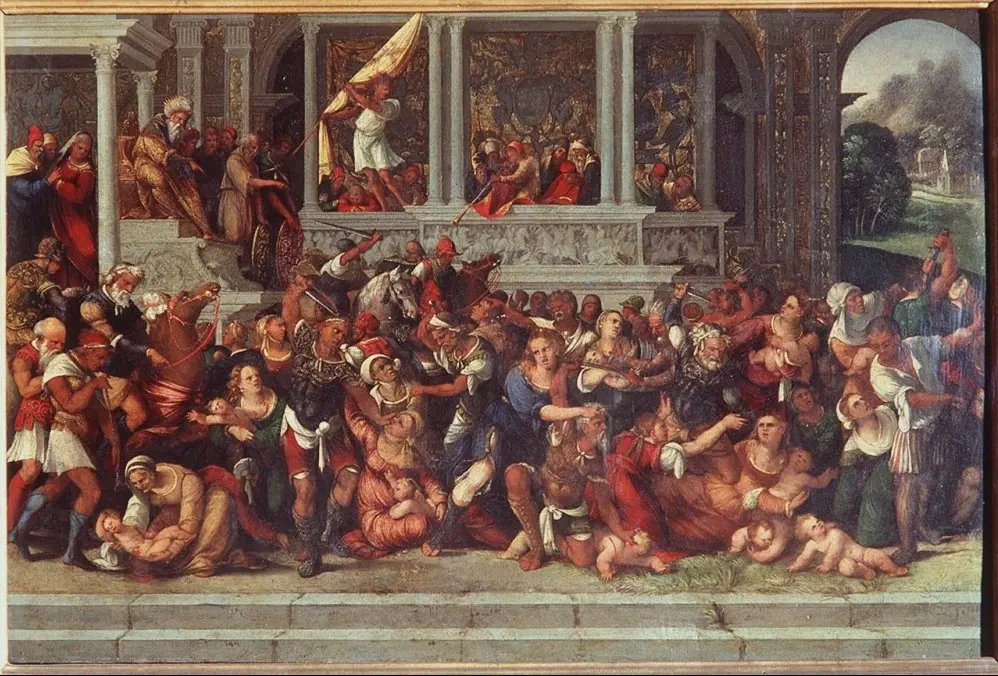
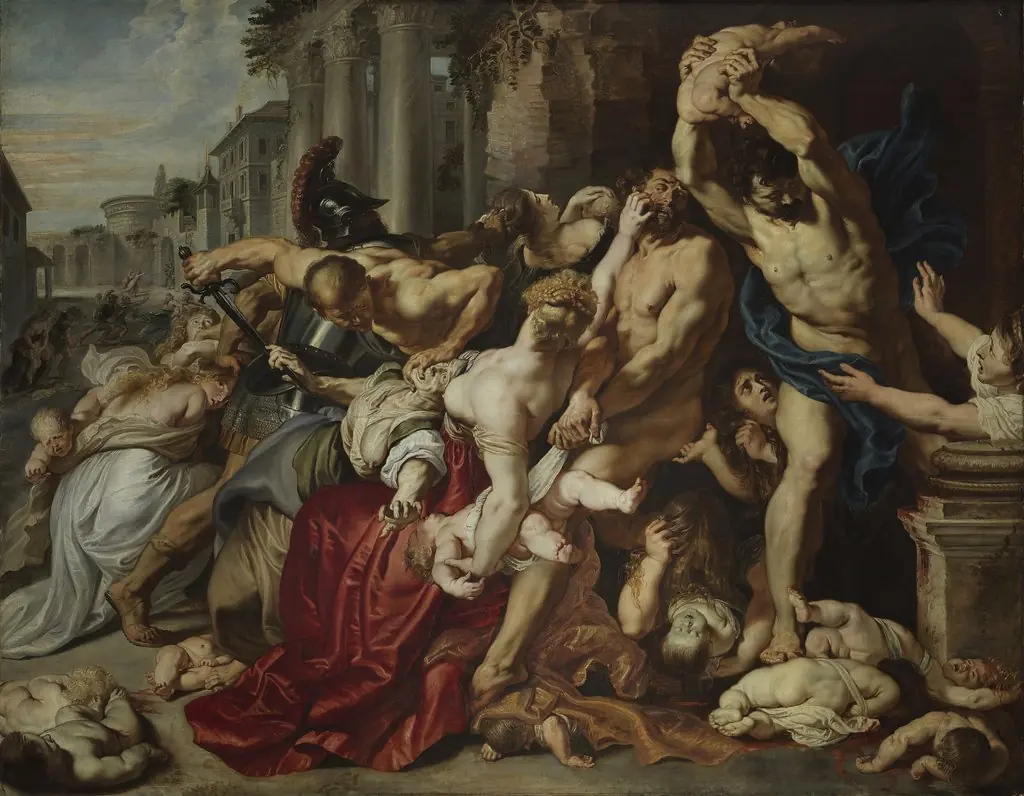
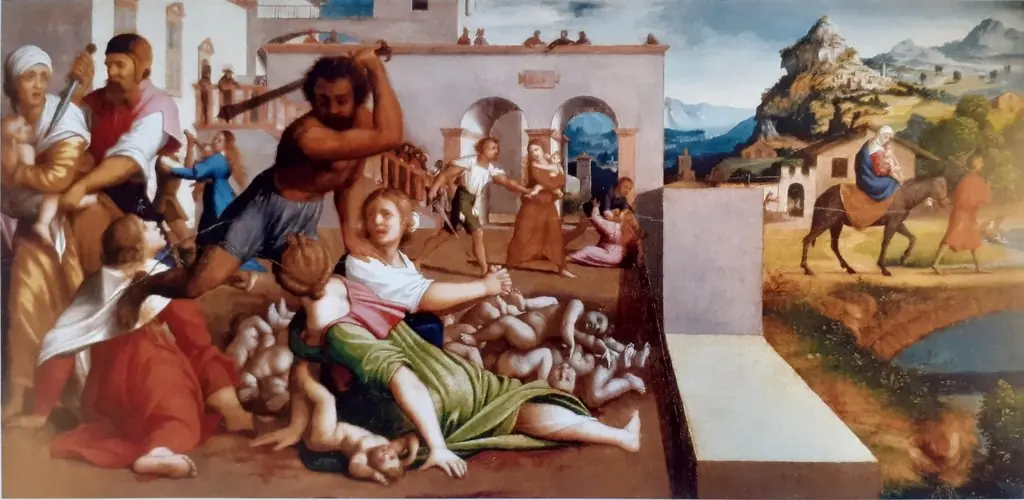
Alessandro Turchi, also known as L’Orbetto, executed the canvas titled *Bethlehemic Child Murder* in 1612, situating it within the early phase of Italian Baroque painting. The work is part of the collection of the Kunsthistorisches Museum in Vienna and presents a dramatic biblical episode involving the slaughter of infants.
Subject & Meaning
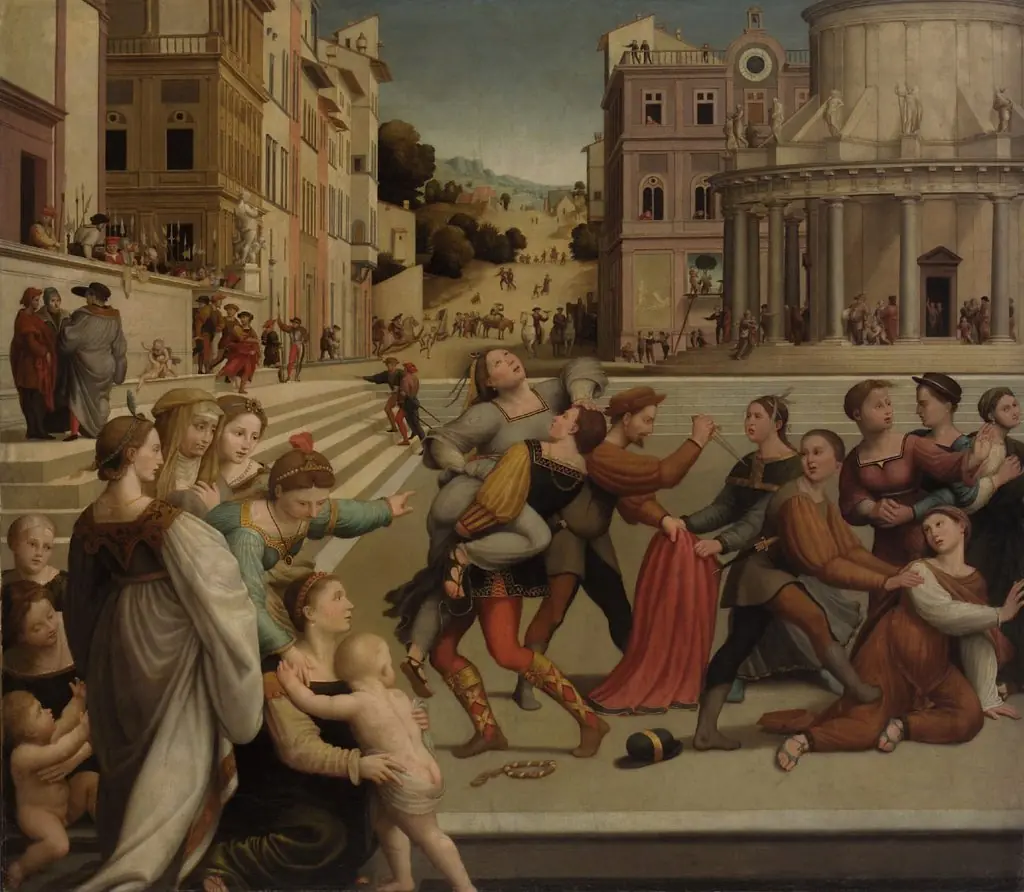
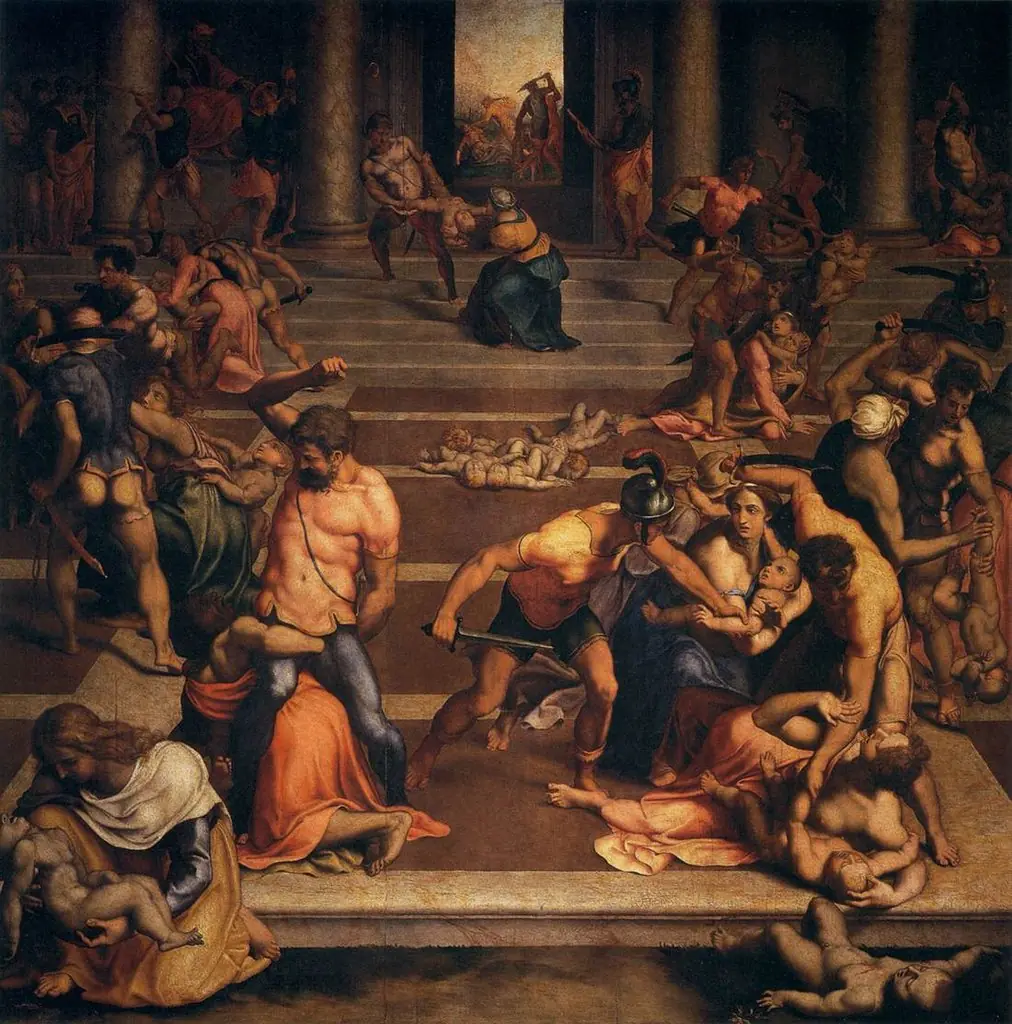
The composition portrays a tumultuous town square where armed men clash amid a frenzy of screaming women and fleeing children. Several infants lie abandoned on the ground while others are clutched protectively, emphasizing the horror of the biblical massacre and the vulnerability of the innocent.
Technique & Style
Turchi employs a stark chiaroscuro, juxtaposing deep shadows with illuminated figures to heighten the sense of urgency. The palette combines muted earth tones with flashes of bright clothing, and the brushwork balances a softened modeling of faces with the dramatic vigor characteristic of Caravaggesque influence.
History & Provenance
Born in Verona in 1578, Turchi spent much of his early career in his native city before moving to Rome later in life. *Bethlehemic Child Murder* remained in private hands before entering the Kunsthistorisches Museum’s holdings, where it has been displayed as an example of his early Baroque output.
Context
The painting reflects the Counter‑Reformation’s interest in vivid, emotionally charged religious narratives, using graphic violence to provoke piety. Its architectural backdrop—a white colonnaded building flanked by modest stone houses—anchors the scene in a recognizable urban setting, linking the biblical past to contemporary viewers of the 17th century.
Artist & collection
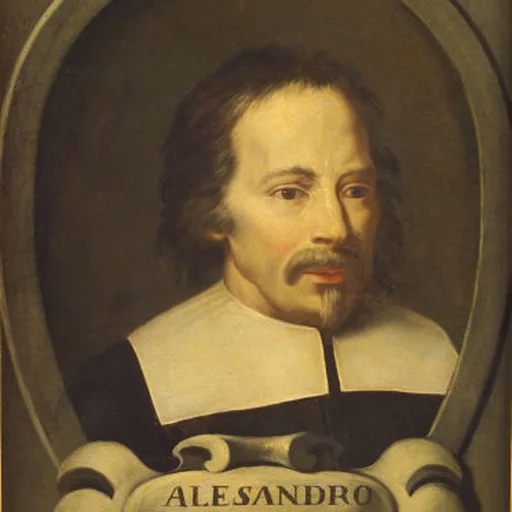
Artist
Alessandro Turchi (1578 – 22 January 1649) was an Italian painter of the early Baroque, born and active mainly in Verona, and moving late in life to Rome.