Artwork
The Silver Age
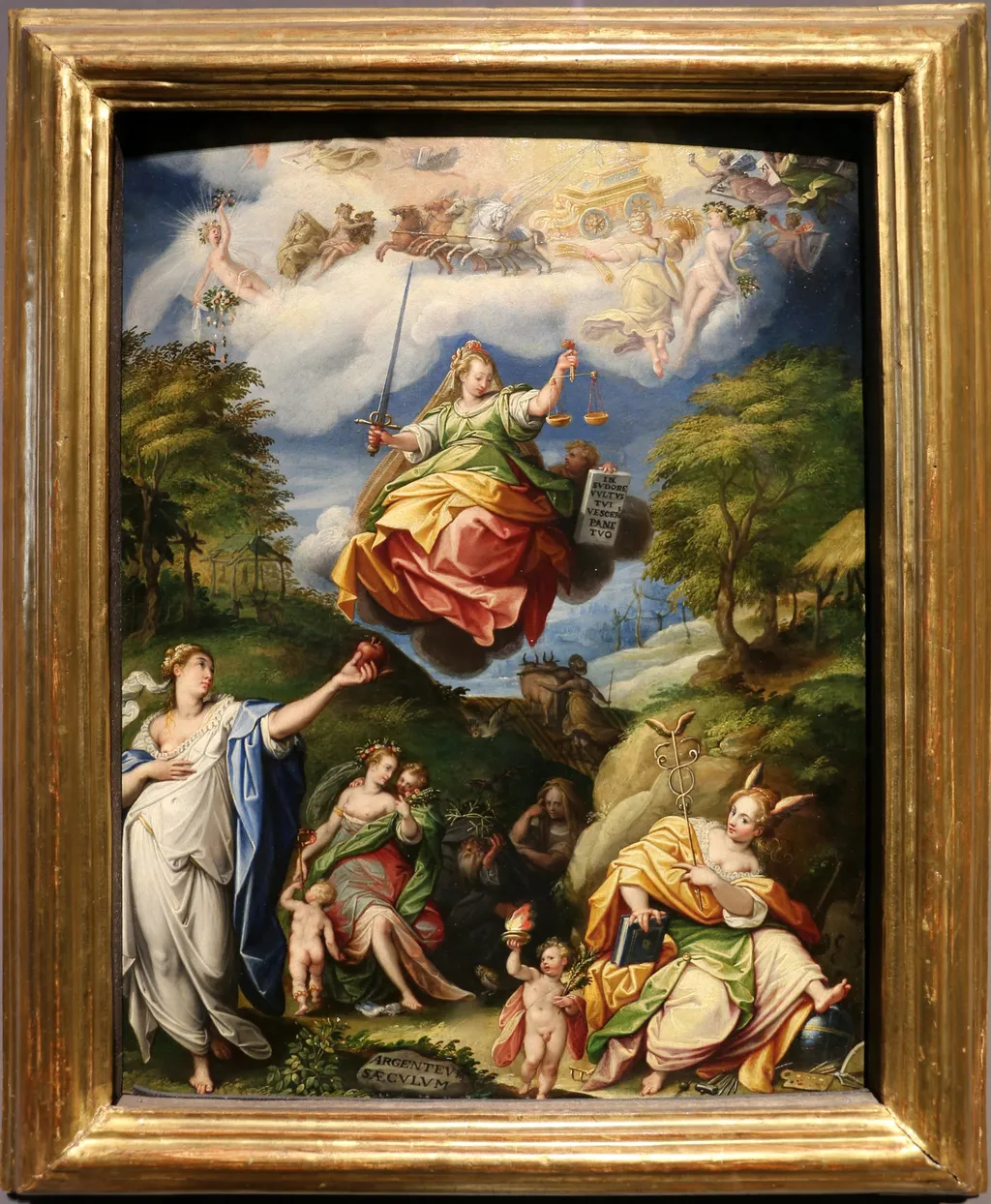
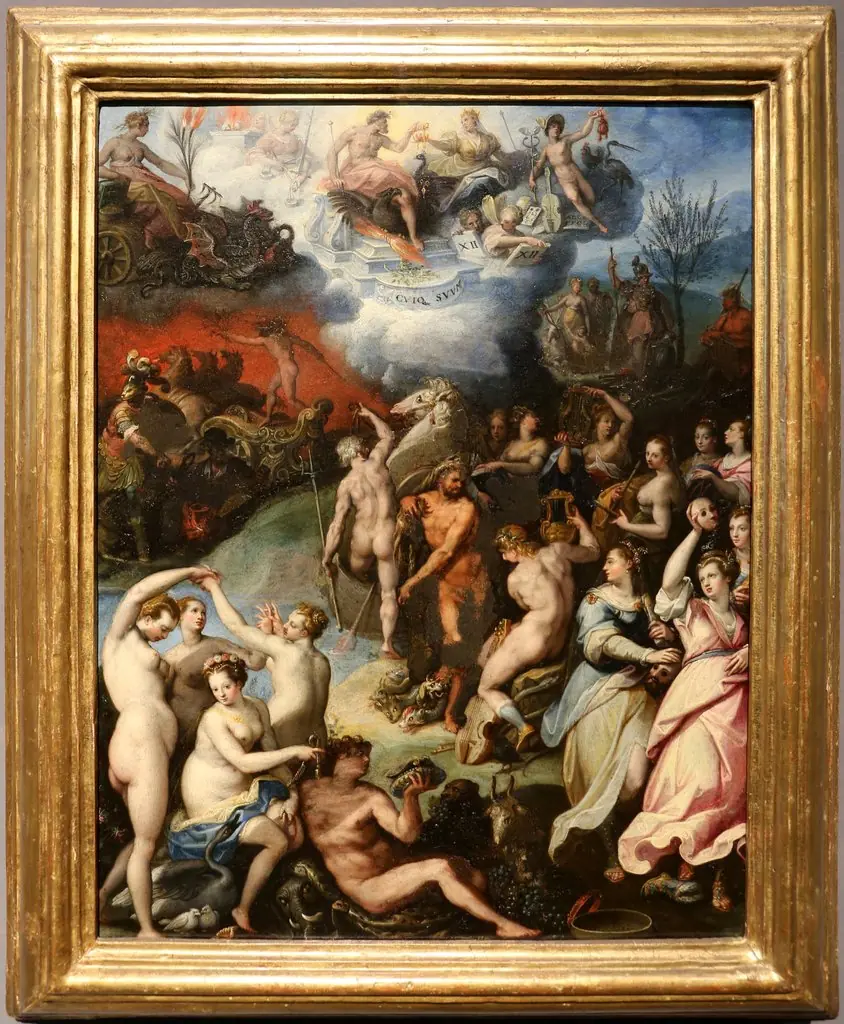
The Silver Age is an unspecified painting by Jacopo Zucchi. It dates from 1579 and is held in the collection of the Uffizi Gallery.
About this work
Overview
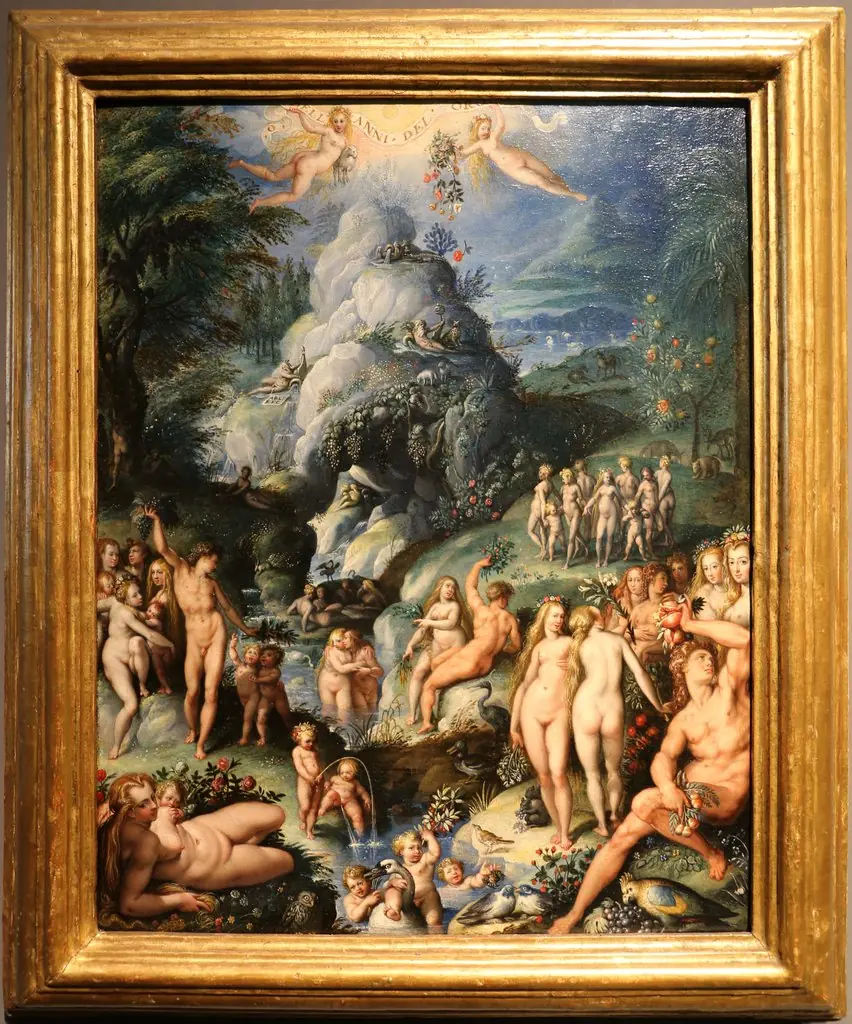
It was originally paired with The Golden Age, both recorded in the Medici collection and later transferred to the Uffizi by 1635.
Painted between 1576 and 1581, The Silver Age is an oil on panel work by Jacopo Zucchi, created during his time as a court artist for Cardinal Ferdinando I de' Medici. It was originally paired with The Golden Age, both recorded in the Medici collection and later transferred to the Uffizi by 1635. Initially misattributed to Federico Zuccari, their true authorship was reestablished in later scholarship. Their panel support and size suggest they may have functioned as decorative covers for portraits.
Subject & Meaning
The painting depicts the Silver Age, one of the classical ages of humanity as described by Ovid. A central female figure, holding a sword and scales, represents justice, surrounded by figures engaged in quiet, domestic activities—reading, caring for a child, conversing. The scene evokes a time of relative peace and moral order, following the golden era but preceding corruption. The landscape, with its soft trees and overcast sky, reinforces a mood of calm reflection rather than grandeur.
Technique & Style
Zucchi employed fine brushwork and muted tones to render the figures and landscape with delicate precision. The figures are arranged in a shallow, stage-like space, with attention to textile textures and subtle facial expressions. The use of oil on panel, rather than canvas, reflects a preference for durability and refined finish, typical of courtly commissions. Lighting is even and diffused, avoiding dramatic contrasts to maintain a serene, contemplative atmosphere.
History & Provenance
The painting was documented in Ferdinando I de' Medici’s personal collection in Rome before being moved to Florence. By 1635, it was housed in the Uffizi alongside its companion piece, The Golden Age, though both were wrongly credited to Federico Zuccari. Correct attribution to Jacopo Zucchi was confirmed in the 19th century. Their survival as a pair, along with their original panel format, suggests they were conceived as a matched set, possibly for display in a private chamber.
Context
These works emerged during a revival of classical mythological themes in late 16th-century Italian courts, particularly under Medici patronage. Zucchi’s imagery aligns with humanist interests in ancient texts and moral allegory. The pairing of The Silver Age with The Golden Age reflects a broader trend of visualizing Ovid’s Ages of Man, a concept used to comment on political and social order. Their possible connection to other Uffizi works on copper suggests a planned cycle of allegorical panels.
Legacy
Though not widely exhibited as a group today, The Silver Age remains a key example of late Mannerist allegory in Medici collections. Its scholarly reattribution helped clarify Zucchi’s role in Roman and Florentine court art. The painting contributes to understanding how classical mythology was adapted for elite audiences, blending moral philosophy with visual elegance. Its survival as part of the Uffizi’s original Medici holdings underscores its enduring institutional significance.
Artist & collection

Artist
Jacopo Zucchi (c. 1541– c. 1590) was a Florentine painter of the Mannerist style, active in Florence and Rome. His training began in the studio of Giorgio Vasari, and he participated in the decoration of the Studiolo…



 Hercules Musagetes and the gods of Olympus
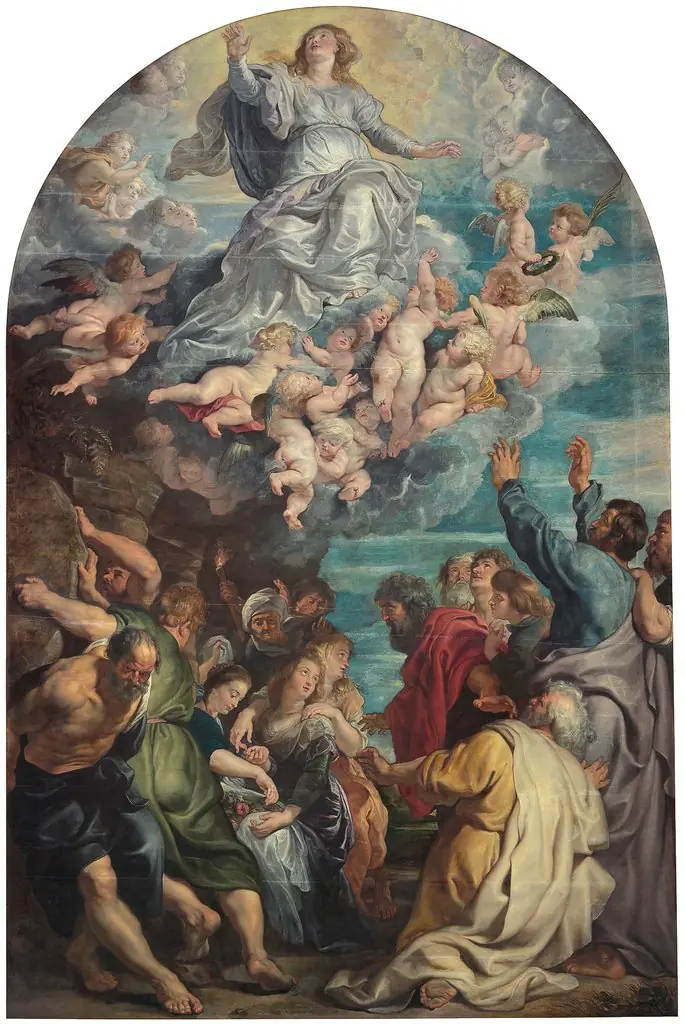 Assumption of Mary
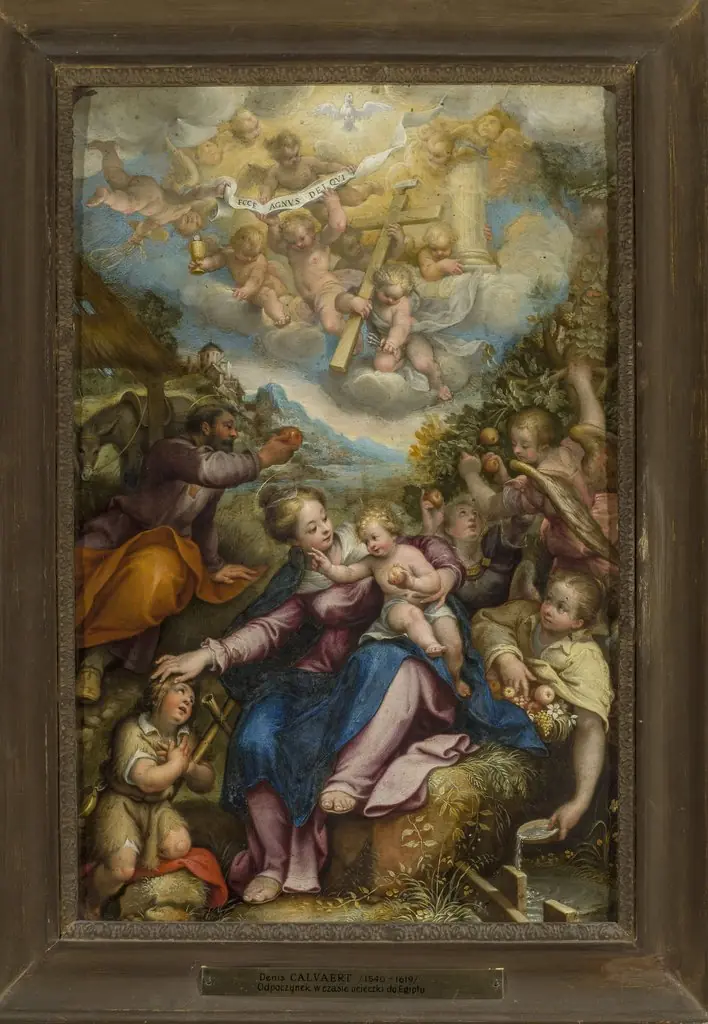 Rest during the flight to Egypt
 Saint John the Evangelist on Patmos
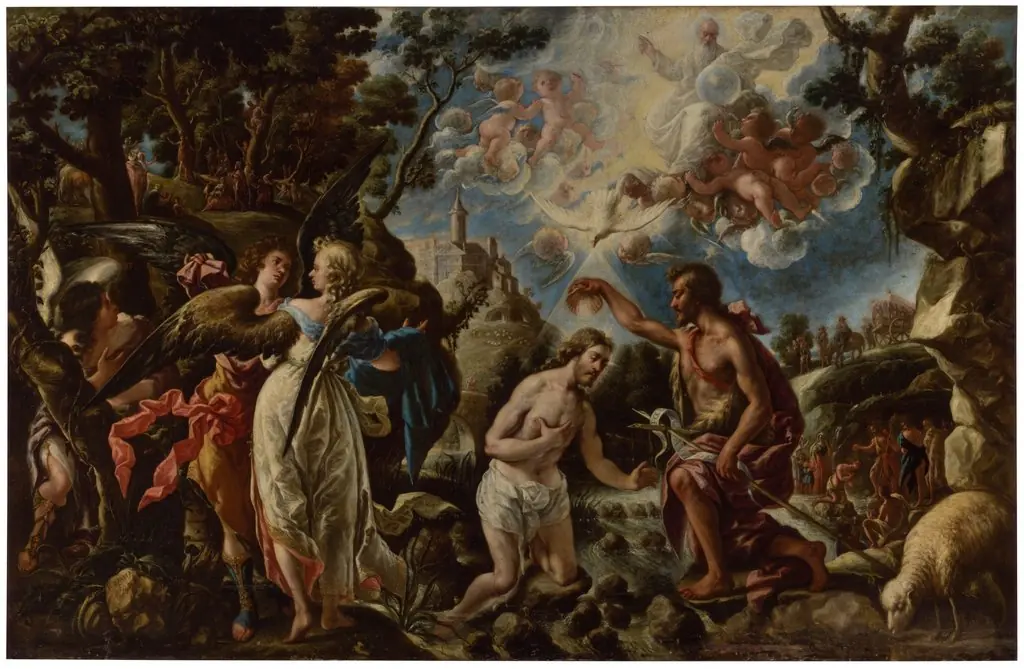 El Bautismo de Cristo
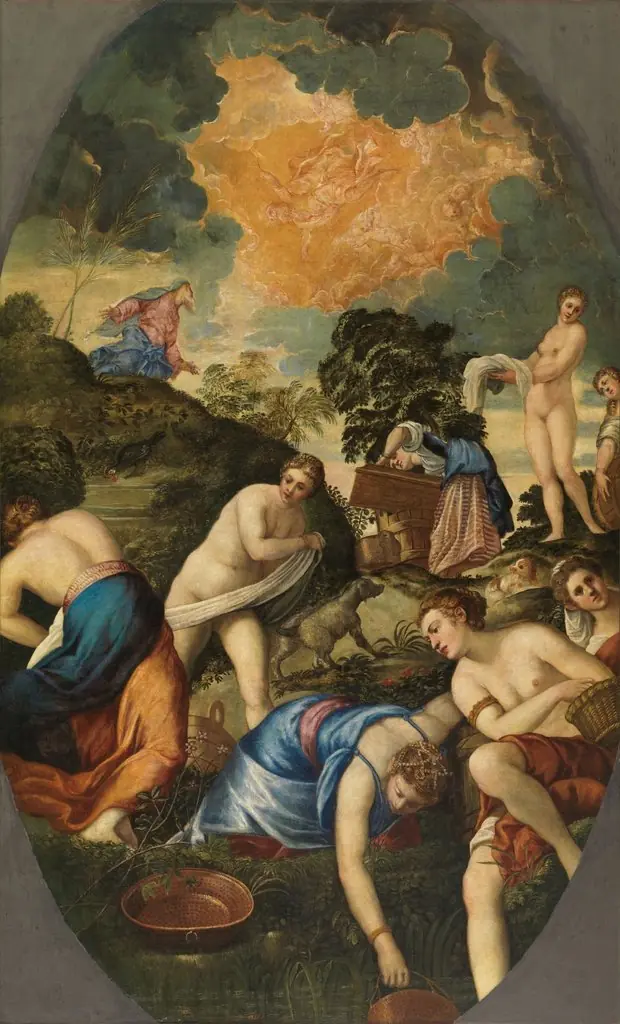 The Purification of the Midianite Virgins
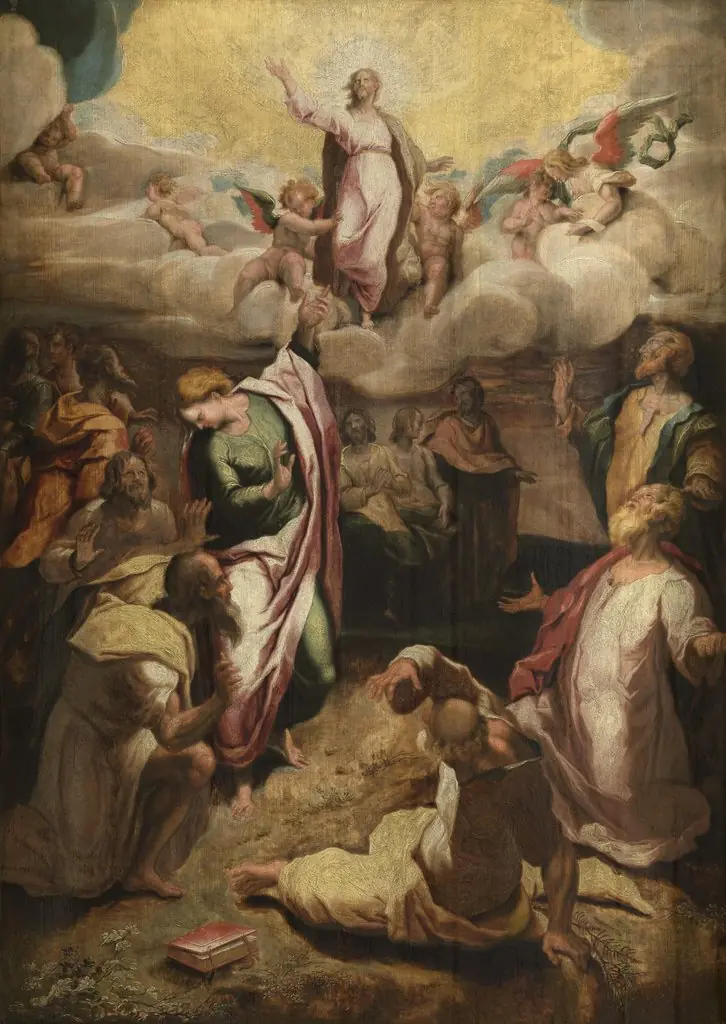 Resurrection of Christ
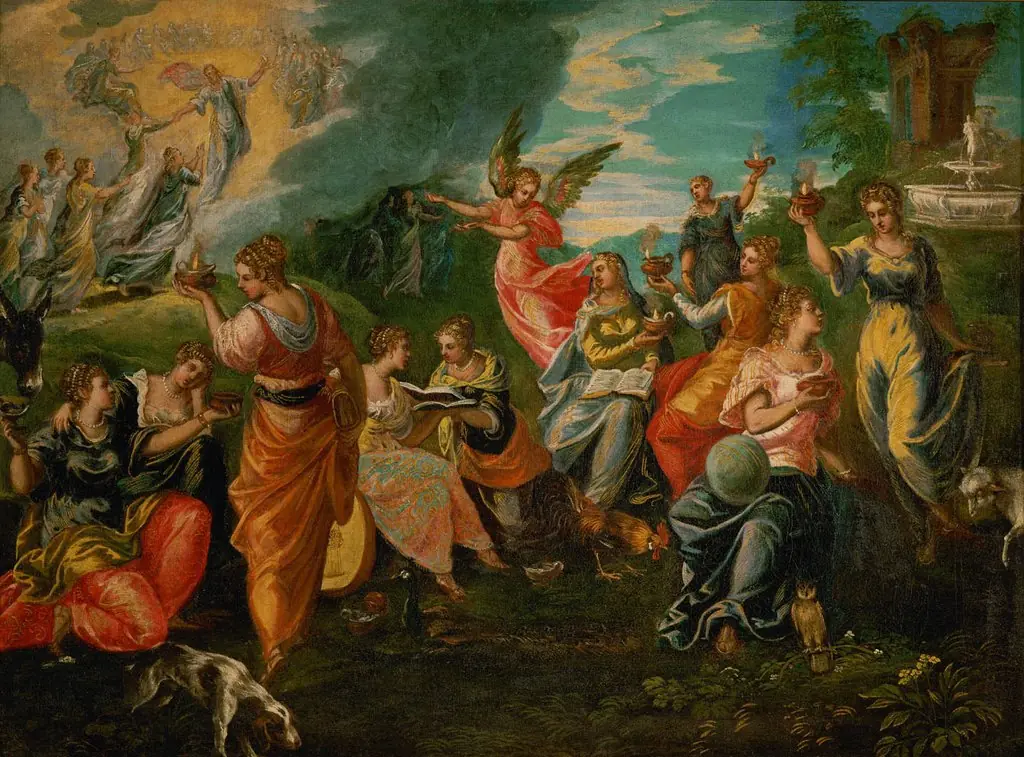 Gleichnis von den klugen und törichten Jungfrauen
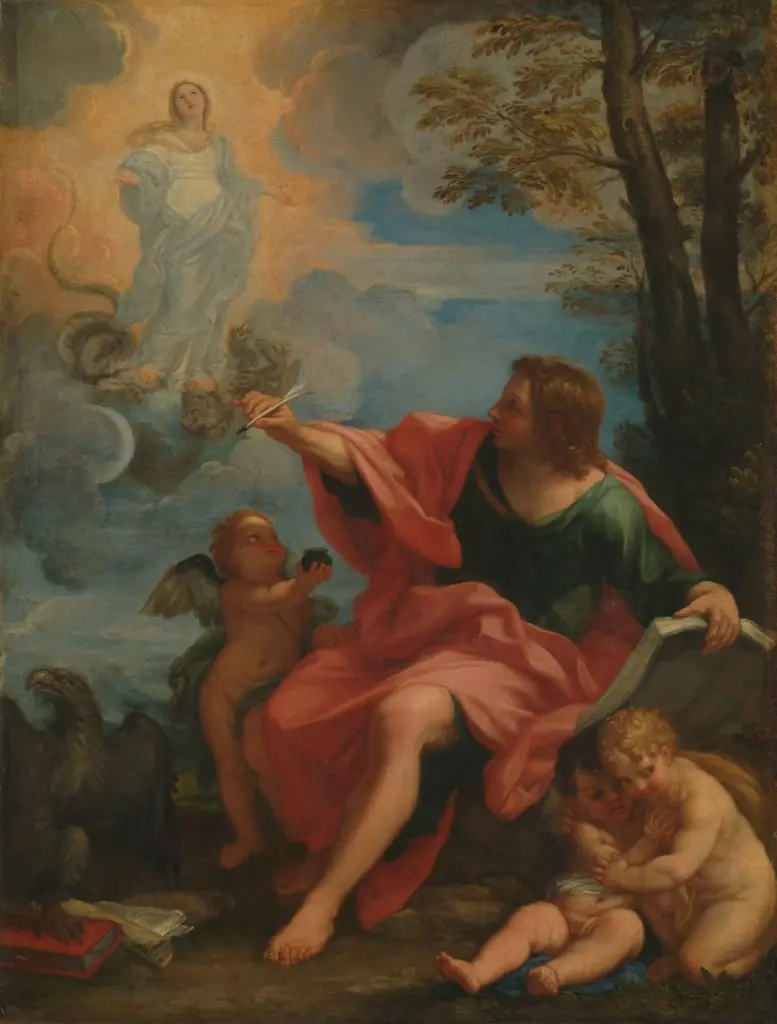 Saint John the Evangelist on Patmos
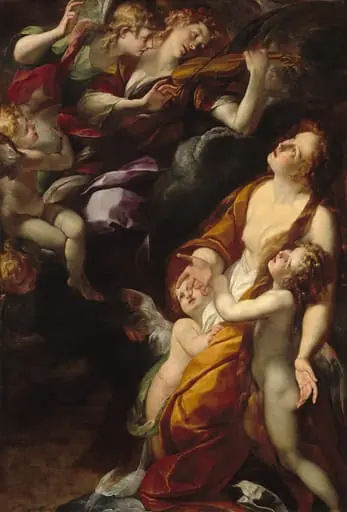 The Ecstasy of the Magdalen
 Holy Family with St. John and Angels