Artwork
Five Pieces of China
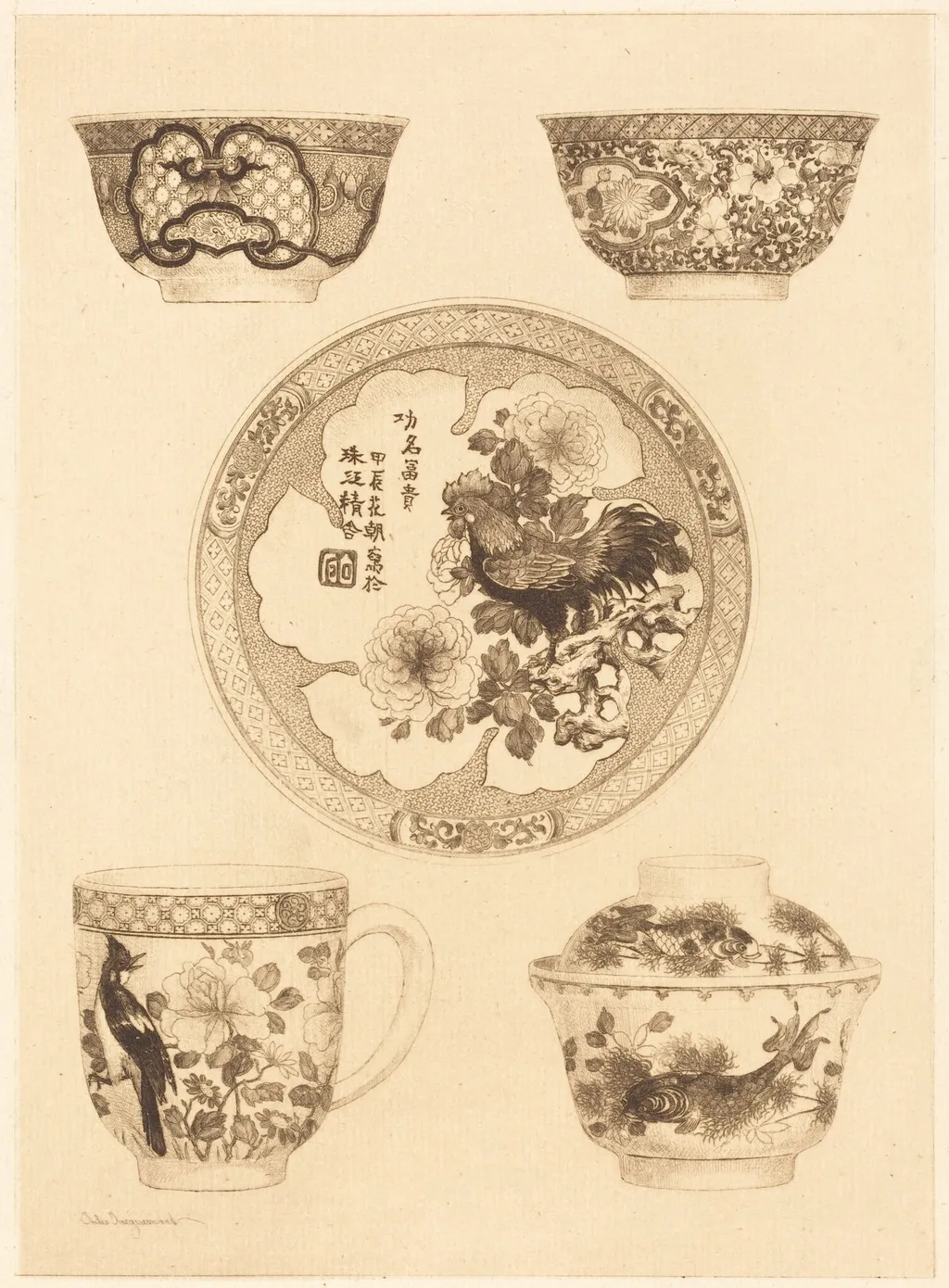
Five Pieces of China is an ink print by the Romanticist artist Jules-Ferdinand Jacquemart. It dates from 1858 and is held in the collection of the National Gallery of Art.
About this work
Overview
Jules-Ferdinand Jacquemart’s 1858 etching *Five Pieces of China* presents a meticulous study of porcelain objects. The composition arranges five distinct vessels—a central plate, two bowls, a teacup, and a lidded dish—each rendered with precise attention to surface decoration. Though executed as a print, the work conveys the illusion of three-dimensionality, emphasizing texture and form.
Subject & Meaning
The work depicts ornamental porcelain, a subject reflecting both artistic skill and the cultural fascination with East Asian ceramics in 19th-century Europe.
The work depicts ornamental porcelain, a subject reflecting both artistic skill and the cultural fascination with East Asian ceramics in 19th-century Europe. The rooster on the central plate, along with floral and avian motifs on the other pieces, suggests an interest in exoticism and decorative arts. The arrangement may serve as a technical exercise in capturing reflective surfaces and intricate patterns.
Technique & Style
Jacquemart employed etching to achieve fine detail and tonal variation, characteristic of intaglio printmaking. The method involves incising lines into a metal plate, allowing for controlled gradations of light and shadow. The work’s realism stems from the artist’s ability to balance linear precision with subtle shading, evoking the delicate translucency of porcelain.
History & Provenance
Created in 1858, *Five Pieces of China* belongs to a period when European artists frequently depicted still-life subjects, including ceramics. As a print, it likely circulated among collectors and connoisseurs of reproductive engravings. Its current whereabouts and ownership history remain undocumented in publicly available records.
Context
The etching reflects the 19th-century vogue for chinoiserie, a European interpretation of East Asian aesthetics. Artists like Jacquemart often reproduced decorative objects to showcase technical prowess, catering to a market that valued both artistic reproduction and the allure of foreign craftsmanship. Such works also served as studies for designers and manufacturers.
Artist & collection


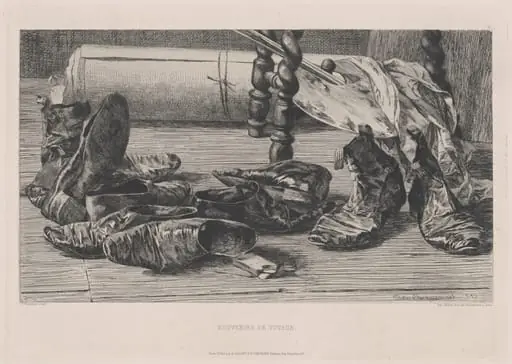
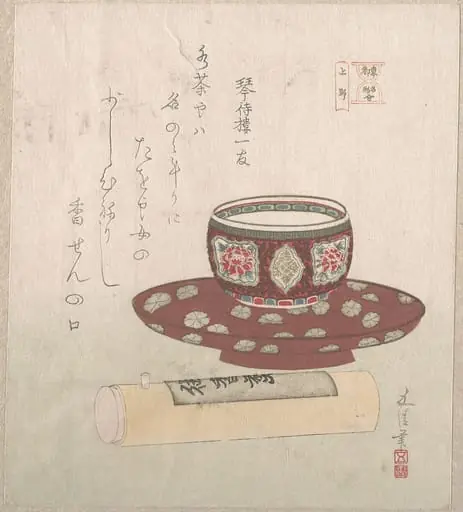 Untitled
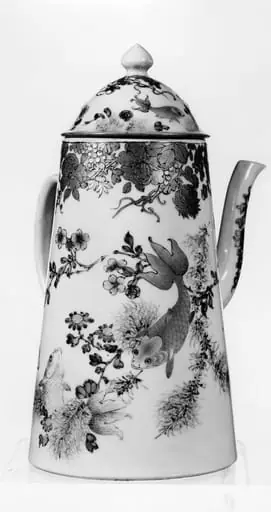 coffee maker
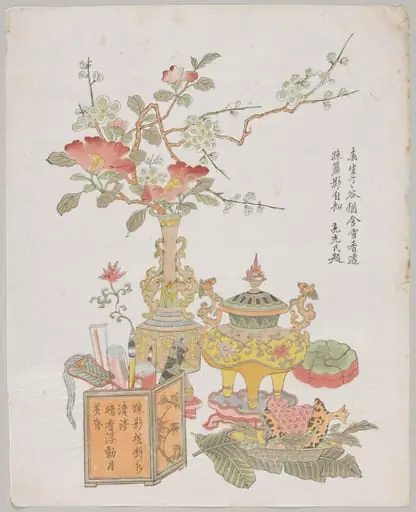 Plum and Camellia in a Bronze Vase
 明/清 陳洪綬 橅古圖 冊|Miscellaneous Studies
 Bunch of Flowers With Calamus
 Vase of Flowers
 Ōta ware: by Makudzu Kozan
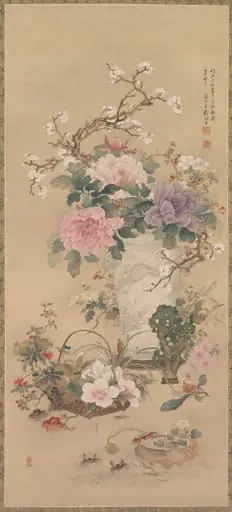 Vase of Flowers with Grasshopper, Marine Life, and Garden Rock
 Untitled
 Untitled
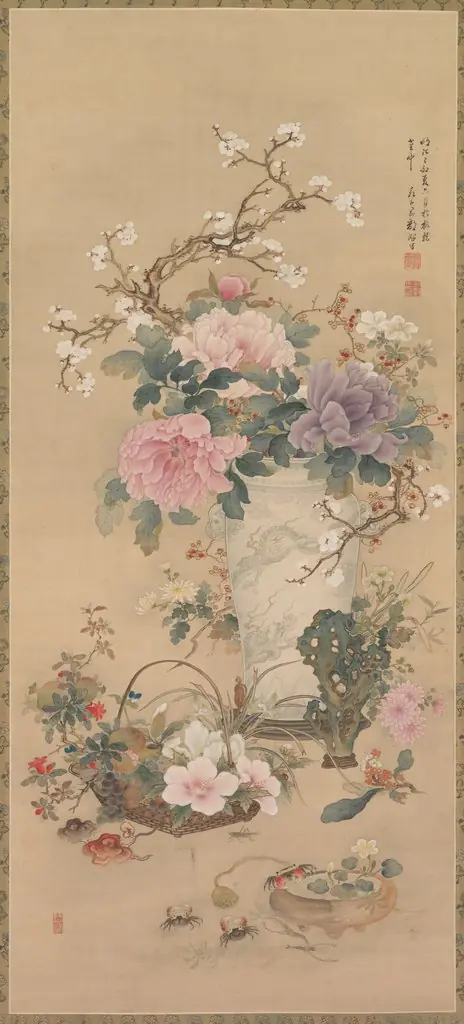 Vase of Flowers with Grasshopper, Marine Life, and Garden Rock
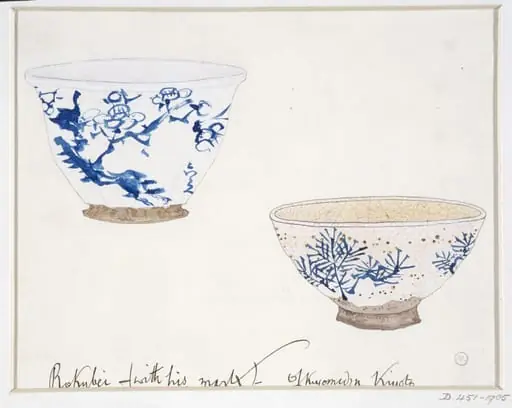 Rokubei