Artwork
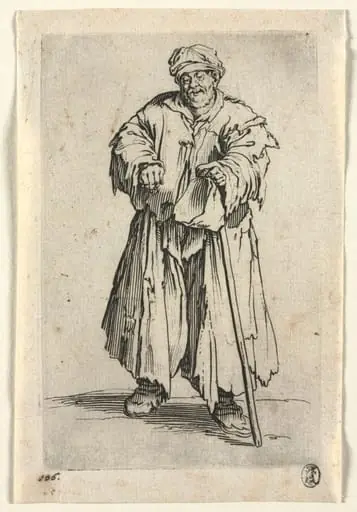
The Beggars: Beggar on Crutches, Wearing a Hat
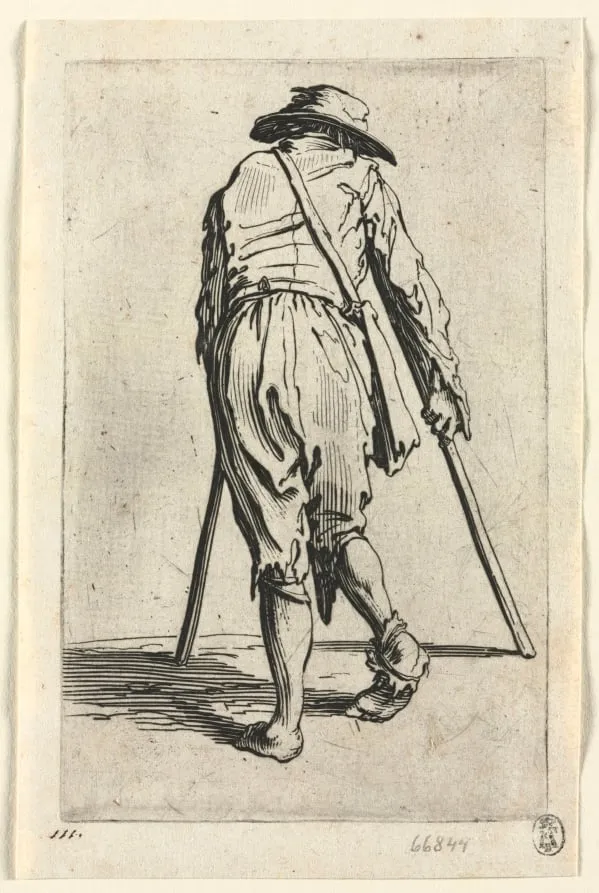
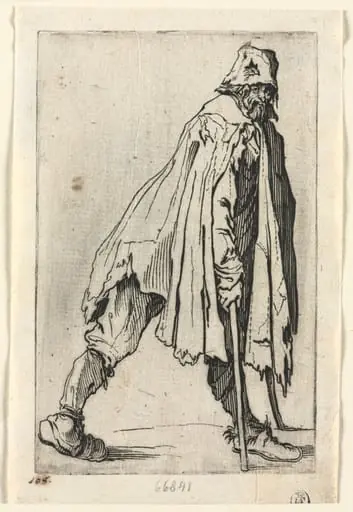
The Beggars: Beggar on Crutches, Wearing a Hat is a print by the Baroque artist Jacques Callot. It dates from 1623 and is held in the collection of the Cleveland Museum of Art.
About this work
Overview
Created around 1623 by Jacques Callot, this etching is one of a series depicting itinerant figures in early 17th-century France. Rendered in ink on paper, the work captures a single figure in motion, rendered with deliberate haste and minimal detail. It resides in the collection of The Cleveland Museum of Art, where it serves as an example of Callot’s interest in marginalized social types.
Subject & Meaning
The figure is a beggar on crutches, moving away from the viewer with a cane in one hand and a crutch tucked under his arm. His tattered clothing and slumped posture suggest hardship and exhaustion. The low-brimmed hat obscures his face, emphasizing anonymity and social invisibility. Rather than evoking pity, the image presents a quiet, unvarnished observation of survival on the margins.
Technique & Style
Callot employed fine, rapid etching lines to suggest texture and movement, avoiding polished finish in favor of immediacy. The loose rendering of fabric and limbs conveys a sense of motion, while subtle variations in line weight imply volume without heavy shading. The composition’s asymmetry and cropped edges enhance the feeling of a fleeting, candid moment.
History & Provenance
The print belongs to a larger series of beggar studies Callot produced during his time in France, likely inspired by street life in Nancy and Paris.
The print belongs to a larger series of beggar studies Callot produced during his time in France, likely inspired by street life in Nancy and Paris. It entered the Cleveland Museum of Art’s collection in the 20th century, acquired as part of a broader interest in Northern Renaissance and Baroque graphic arts. Its provenance traces back to private European collections before institutional acquisition.
Context
In the early 1600s, increased urbanization and war displaced many, leading to visible poverty in French towns. Artists like Callot turned to such figures not as moral allegories but as subjects of direct observation. This print reflects a growing interest in documenting everyday life, distinct from idealized religious or mythological themes dominant in earlier art.
Legacy
Callot’s beggar series influenced later generations of printmakers, particularly in their focus on ordinary people and social realism. Though not widely exhibited in his lifetime, these works gained recognition in the 19th century as precursors to modern documentary art. The etching remains a quiet testament to the dignity of the unseen.
Artist & collection
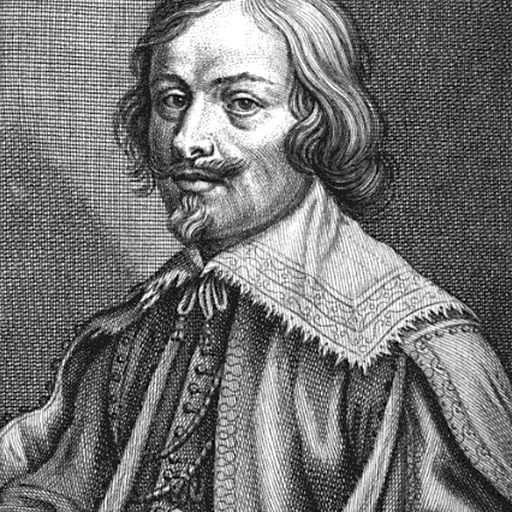
Artist
Jacques Callot was a baroque printmaker and draftsman from the Duchy of Lorraine.

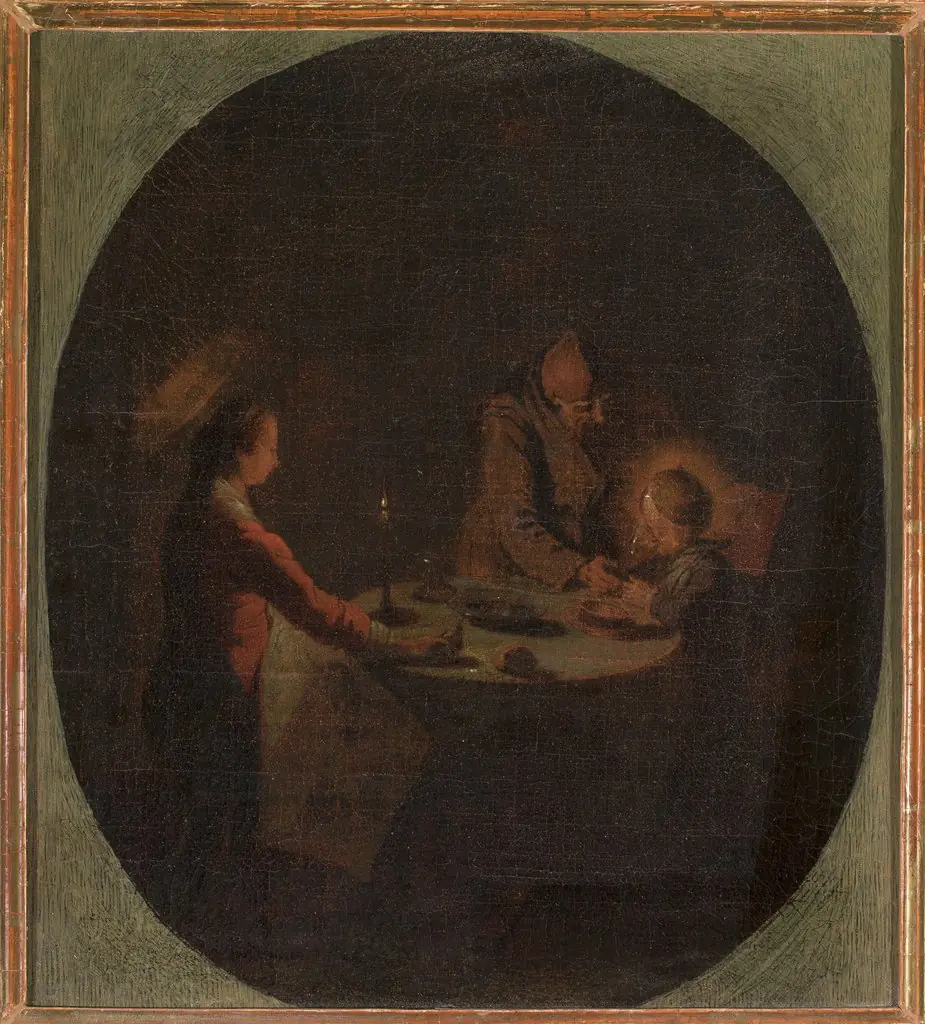 Holy Family at supper
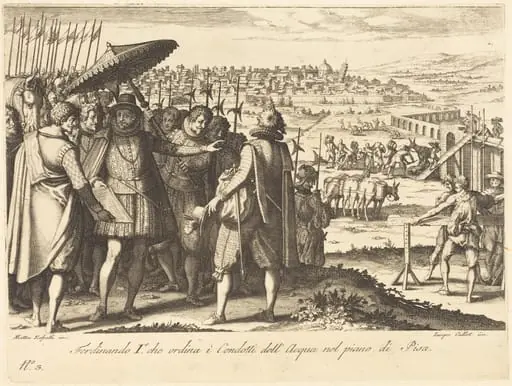 Restoration of the Aqueduct at Pisa
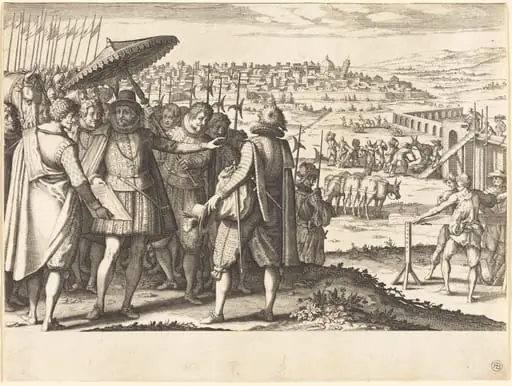 Restoration of the Aqueduct at Pisa
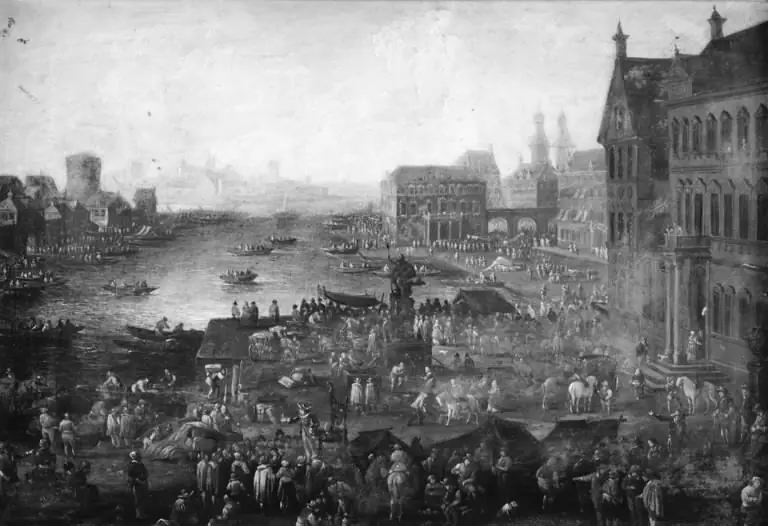 Square in Paris with Many Figures
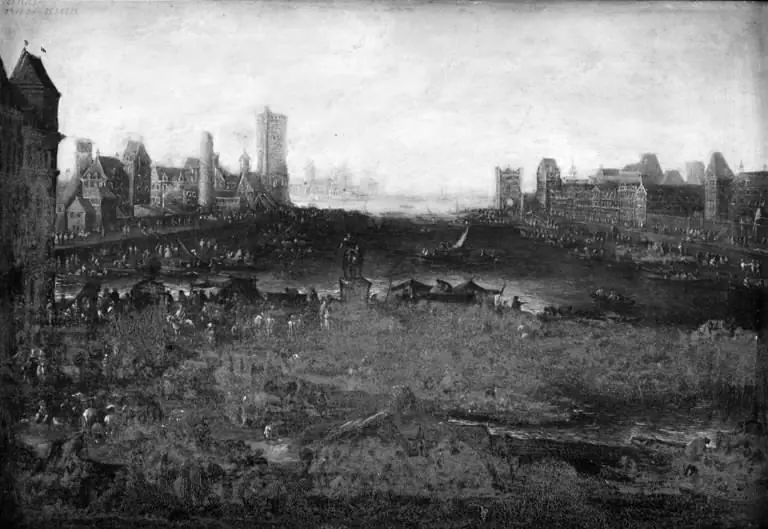 Square in Paris with Many Figures
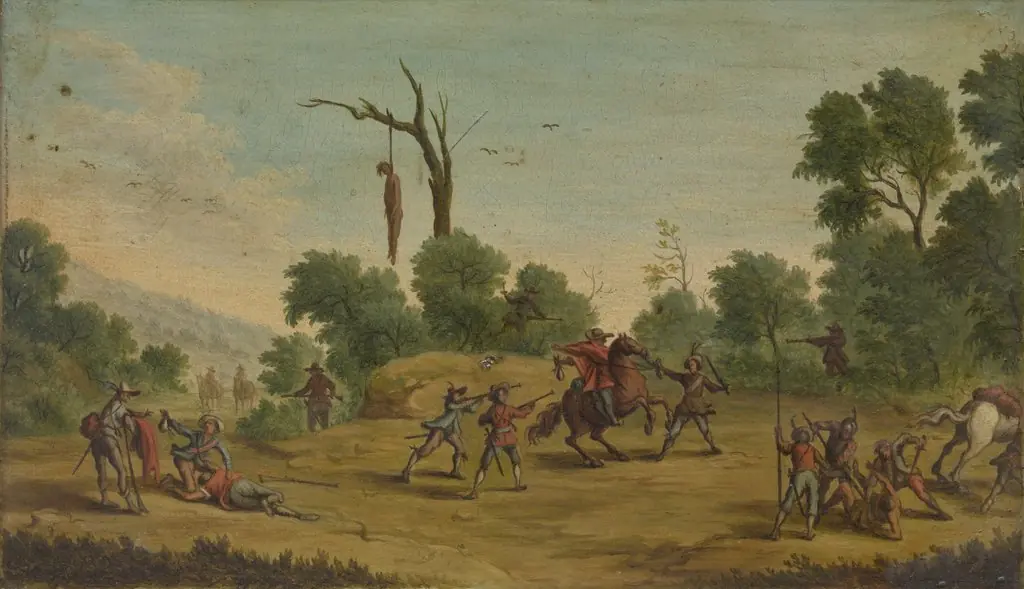 Horsemen Attacked by Robbers
 HOW WILL A COVERED PART BE CORRECTED?HOW WIKA A COVERED HEART DEED CORRECTED?
![Christ Walking on the Water [second plate], by Jacques Callot](https://artifactworldgallery.com/img/jacques-callot--christ-walking-on-the-water-second-plate--2069f3bfe4cb2126-w320.webp) Christ Walking on the Water [second plate]
Christ Walking on the Water [second plate]
 The Beggars: The Beggar on Crutches, Wearing a Cap
 The Beggars: Beggar with Wooden Leg
 Beggar with Crutches and Hat, Back View
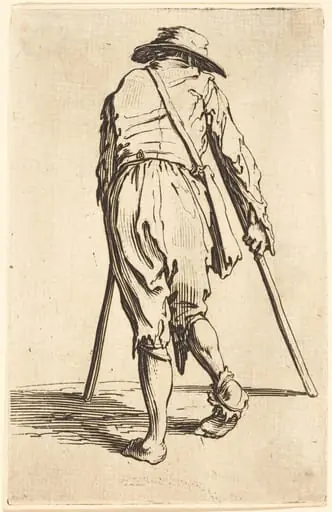 Beggar with Crutches and Hat, Back View
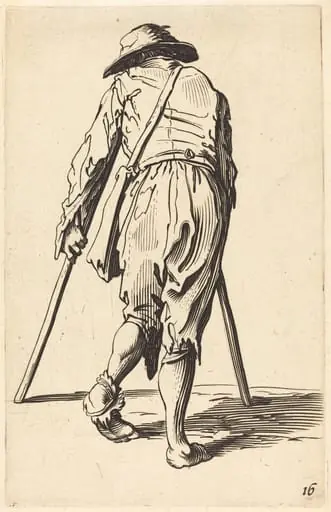 Beggar with Crutches and Hat, Back View
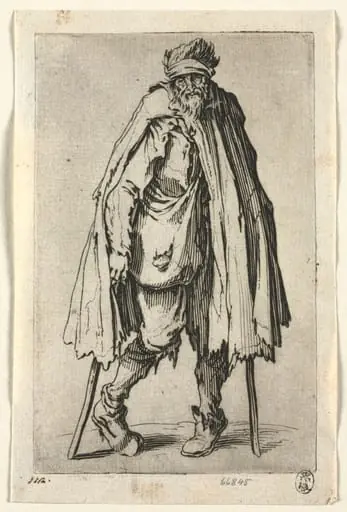 The Beggars: Beggar on Crutches with a Bag
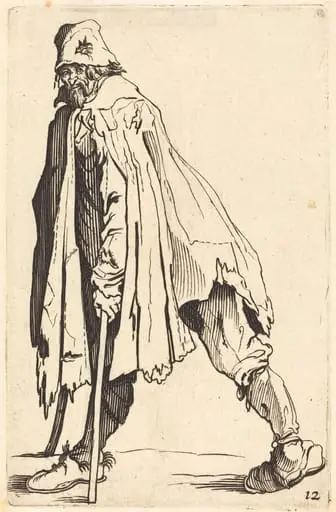 Beggar with Crutches and Cap
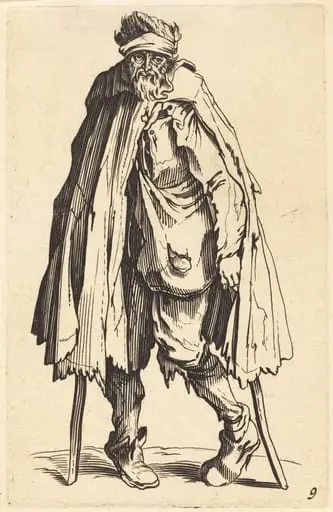 Beggar with Crutches and Sack
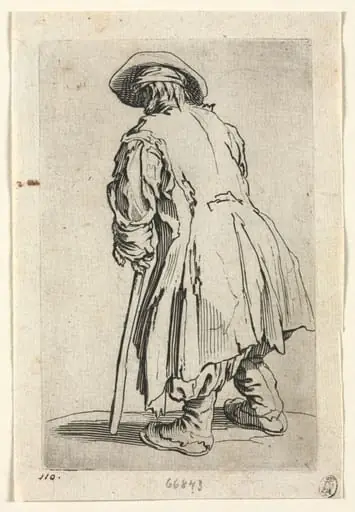 The Beggars: Old Beggar on One Single Crutch
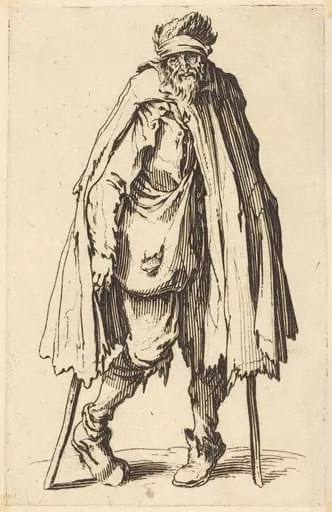 Beggar with Crutches and Sack
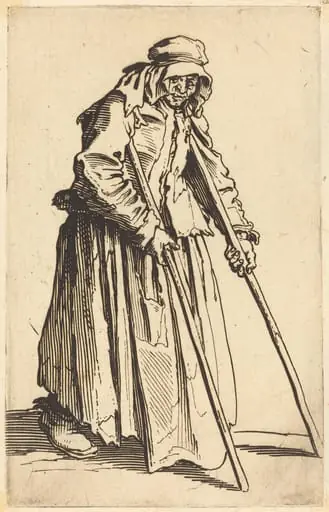 Beggar Woman with Crutches
 The Beggars: Obese Beggar with Lowered Eyes