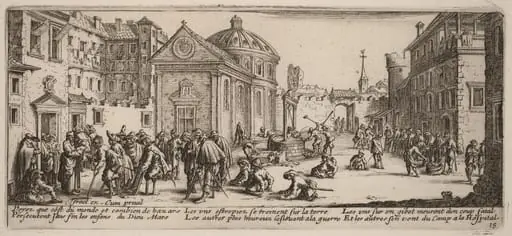
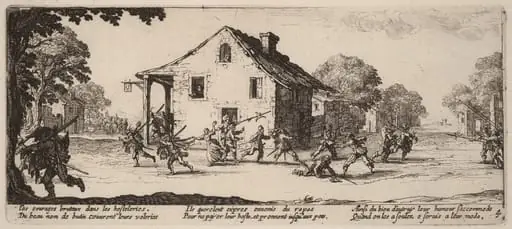
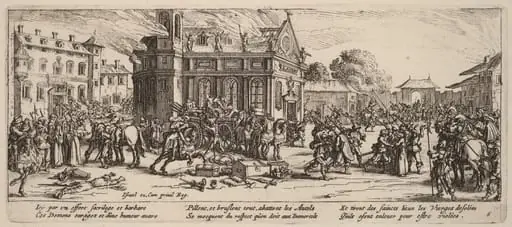
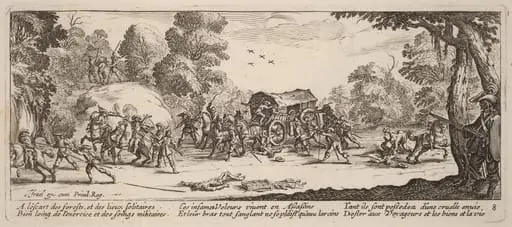
Artwork
The Firing Squad
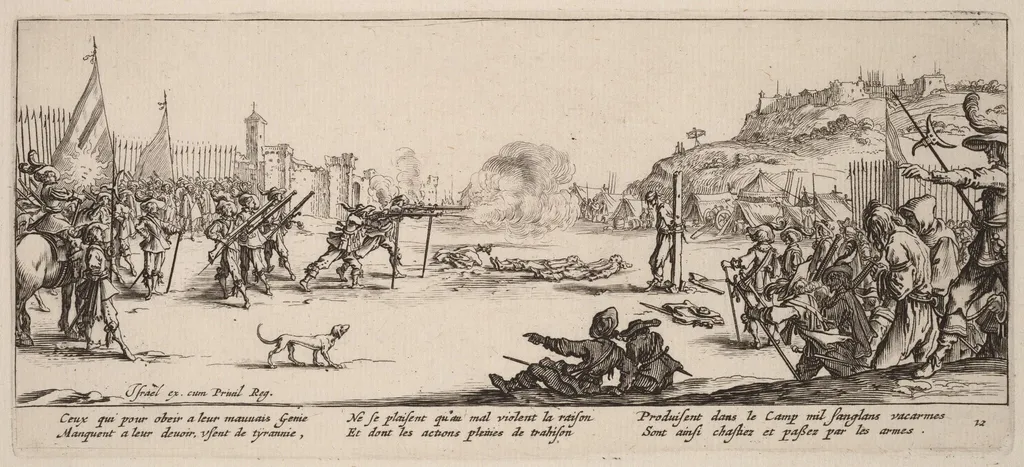
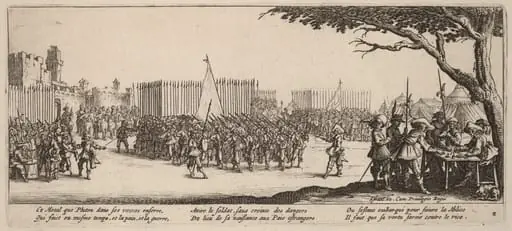
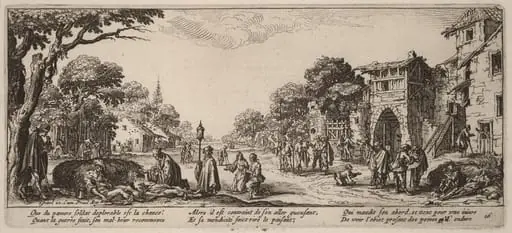
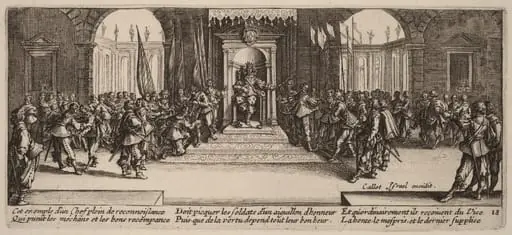
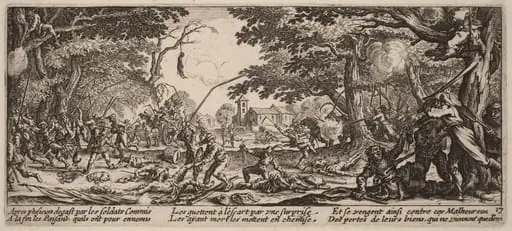
The Firing Squad is an ink print by the Baroque artist Gerrit van Schagen. It dates from 1642 and is held in the collection of the National Gallery of Art.
About this work
Overview
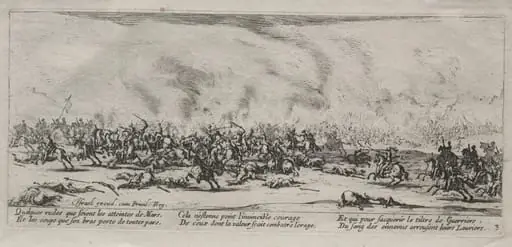
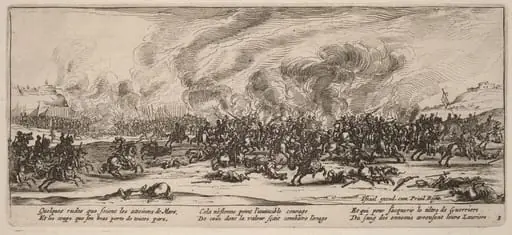
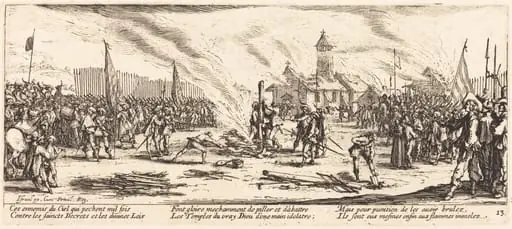
Created in 1642 by Gerrit van Schagen, this print combines etching and engraving on laid paper to depict a violent military confrontation.
Created in 1642 by Gerrit van Schagen, this print combines etching and engraving on laid paper to depict a violent military confrontation. The composition is dense with figures—soldiers on horse and foot, fallen bodies, scattered weapons, and billowing smoke—rendered in bold, incised lines that emphasize movement and disorder. A solitary dog moves through the chaos, adding an eerie stillness to the turmoil.
Subject & Meaning
The scene is not a historical battle but a moral allegory. The presence of a French inscription warning against disobedience and betrayal frames the violence as a consequence of treachery. The chaos serves as a visual admonition: disorder follows moral failure. The lone dog, untouched by conflict, may symbolize indifference or the persistence of nature amid human folly.
Technique & Style
Van Schagen used precise engraving for sharp contours and etching for tonal depth, creating contrast between the dark, heavy lines of soldiers and the softer smudges of smoke. The composition is tightly packed, with no clear focal point, forcing the viewer’s eye to scan the entire field. The lack of perspective enhances the sense of confusion, reinforcing the theme of uncontrolled violence.
History & Provenance
The print was produced in the Dutch Republic during a period when moralizing imagery was common in print culture. Van Schagen, active in Amsterdam, specialized in military and allegorical subjects. The French text suggests an intended audience beyond the Netherlands, possibly targeting French-speaking elites or soldiers familiar with the region’s political tensions of the era.
Context
In mid-17th century Europe, prints like this were widely circulated as both entertainment and instruction. Military discipline was a pressing concern in armies undergoing professionalization. This image aligns with broader trends in Dutch printmaking that used dramatic scenes to convey civic or moral lessons, often targeting soldiers and officers with warnings about loyalty and order.
Legacy
Though not widely reproduced today, the work reflects the function of print as a tool for social instruction in early modern Europe. Its blend of graphic intensity and moralizing text exemplifies how artists translated political and ethical concerns into accessible visual forms, influencing later generations of satirical and propagandistic printmakers.
Artist & collection