Artwork
Ober-oesterreich, Stadt Grein
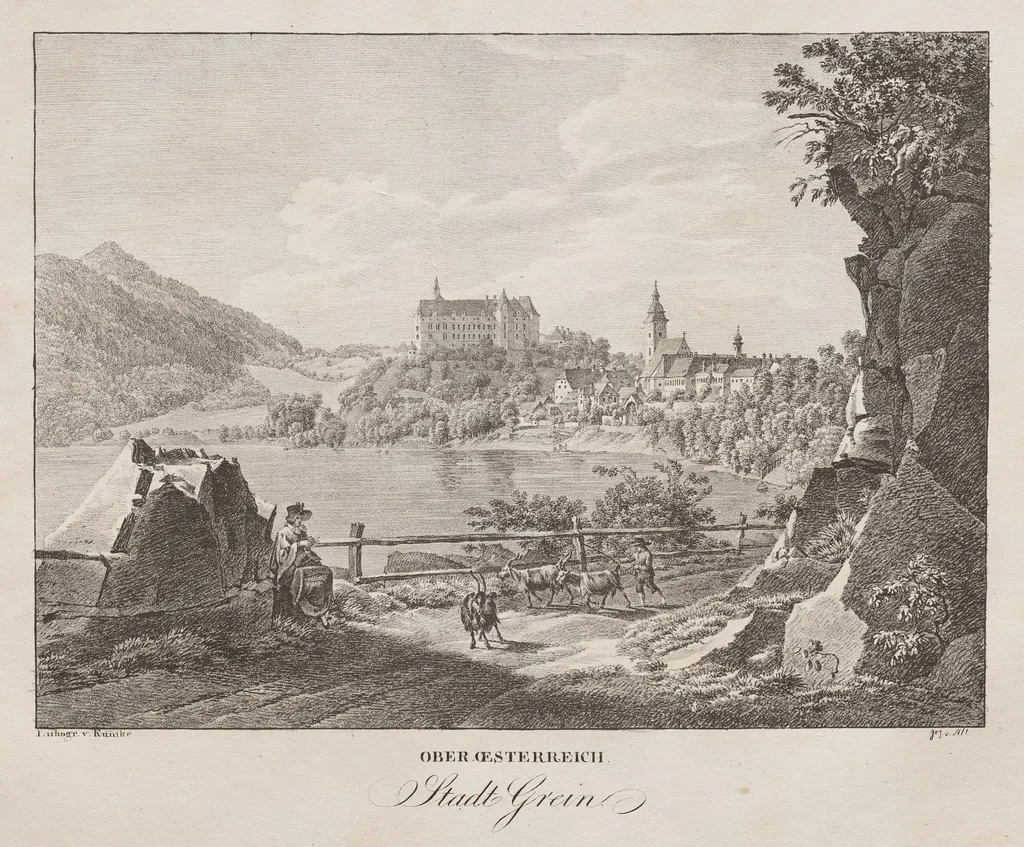
Ober-oesterreich, Stadt Grein is a print by Jakob Alt. It dates from 1839 and is held in the collection of the Cleveland Museum of Art.
About this work
Overview
Created around 1839 by Jakob Alt, this print depicts the Austrian town of Grein in Upper Austria. Rendered in fine linear detail, the scene captures a tranquil riverside setting with modest architecture and natural topography. The work is part of a series documenting regional landscapes and is currently held in the collection of The Cleveland Museum of Art.
Subject & Meaning
The image portrays Grein as a quiet, lived-in community nestled along the Danube. A lone woman sits on a bench, observing two men guiding a horse-drawn cart along the path. The composition emphasizes stillness and daily rhythm rather than grandeur, suggesting a documentary intent to record the town’s ordinary life and physical character.
Technique & Style
Alt employed precise, delicate lines to model forms and suggest atmospheric depth. Subtle gradations of tone, achieved through hatching and cross-hatching, define the play of light on stone, water, and foliage. The restrained palette and meticulous draftsmanship reflect a topographical tradition, prioritizing accuracy over dramatic effect.
History & Provenance
The print was produced during a period of heightened interest in regional Austrian landscapes, often commissioned for educational or archival purposes. It entered The Cleveland Museum of Art’s collection through documented acquisition, likely as part of a broader 19th-century European print collection assembled by the museum.
Context
In the early 19th century, artists like Alt documented towns and countryside as Austria underwent political and cultural reorganization. These images served both as records of place and as expressions of regional identity, often circulated in albums or used to support civic pride in provincial communities.
Legacy
Alt’s work contributes to a visual archive of Austrian towns before industrialization transformed their appearance. While not widely known outside specialized circles, his prints remain valuable for their unembellished depiction of 19th-century rural life and topography, offering insight into pre-modern Austrian landscapes.
Artist & collection


 St. Stephen's Cathedral in Vienna
 A Seated Man Contemplating a Sunlit Mountain Valley
 View of San Giorgio Maggiore in Venice
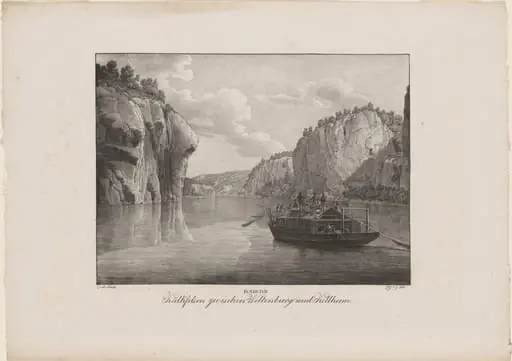 Baiern, Kalkfelsen zwischen Weltenburg und Kellheim (Bavaria, Chalk Cliffs between Weltenburg and Kellheim)
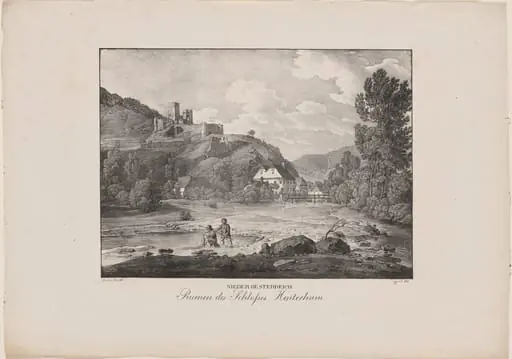 Nieder-Oesterreich, Ruinen des Schlosses Hinterhaus (Lower Austria, Ruins of Hinterhaus Castle)
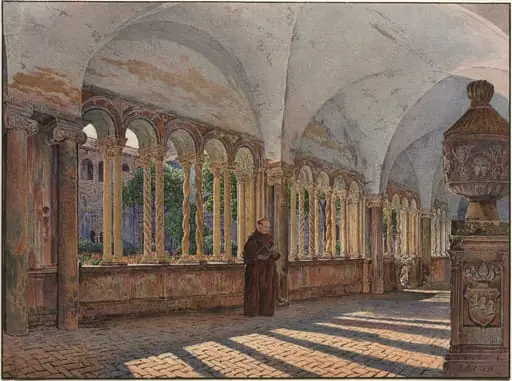 View of the Cloister of San Giovanni in Laterano, Rome
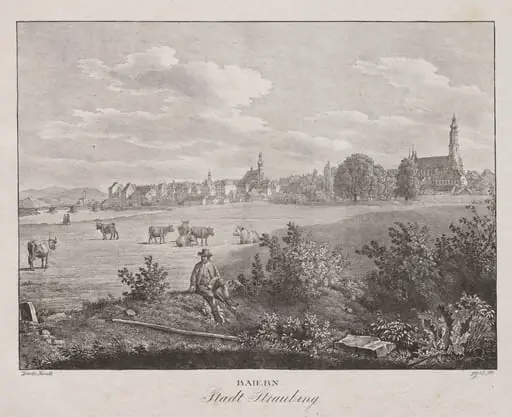 Baiern, Stadt Straubing
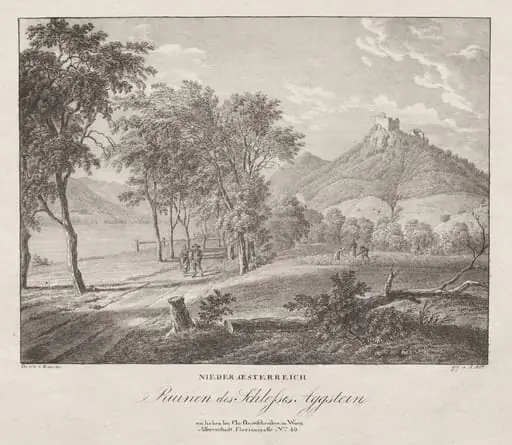 Nieder-oesterreich, Ruinen des Schlosses Aggenstein
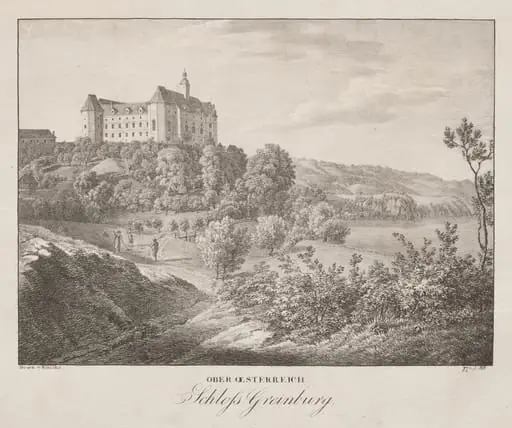 Ober-oesterreich, Schloss Greinburg
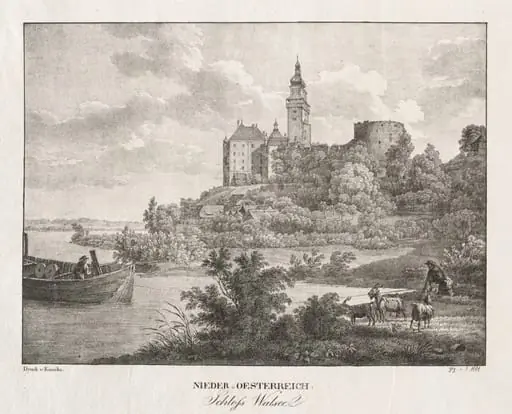 Nieder-oesterreich, Schloss Walseel
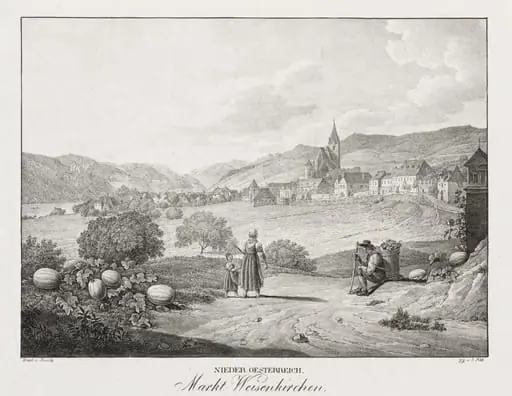 Nieder-oesterreich, Markt Weisenkirchen
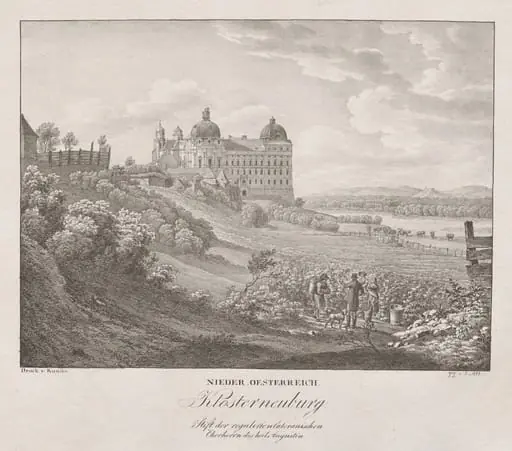 Nieder-oesterreich, Klosterneuberg
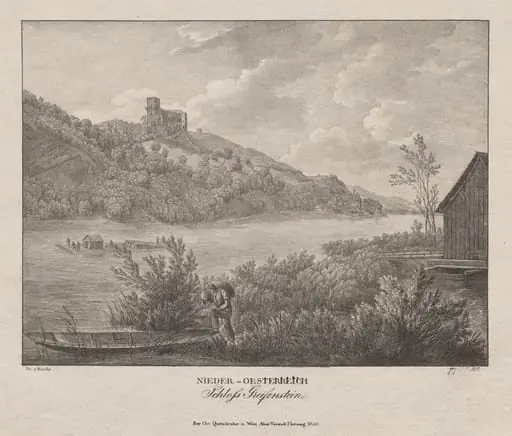 Nieder-oesterreich, Schloss Greifenstein
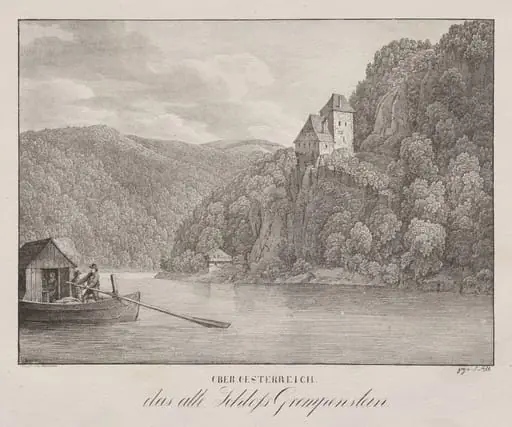 Nieder-oesterreich, Das Alte Schloss Grempenstein
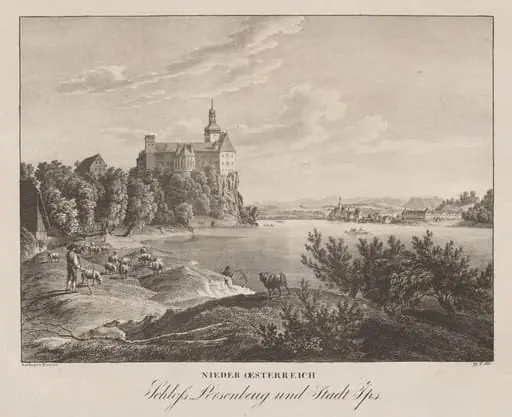 Nieder-oesterreich, Schloss Persenbeug und Stadt Ips
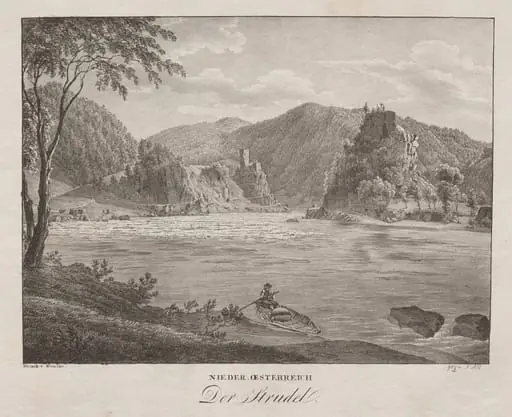 Nieder-oesterreich, Der Strudel
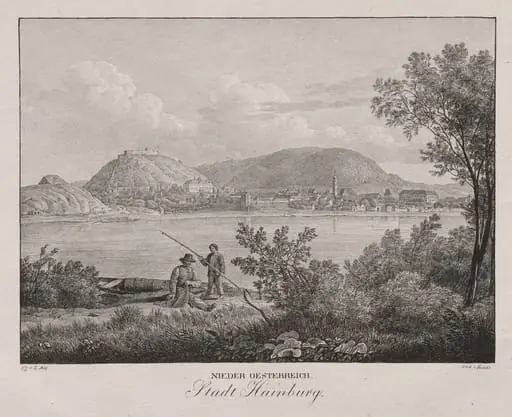 Nieder-oesterreich, Stadt Hainburg
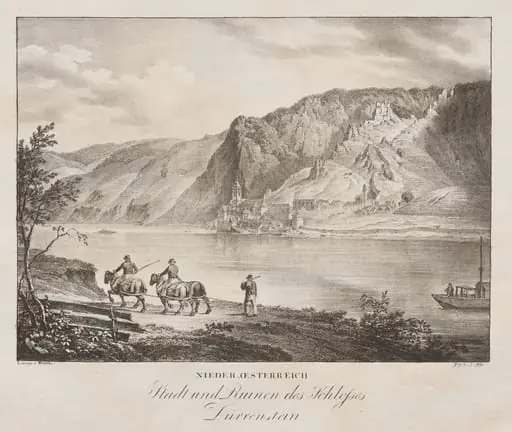 Nieder-oesterreich, Stadt und Ruinen des Schlosses
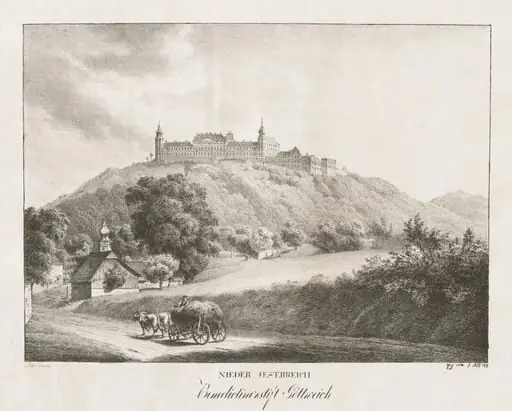 Nieder-oesterreich, Benedictinerstift Gottereich