Artwork
Fruit-piece with Stone Vase
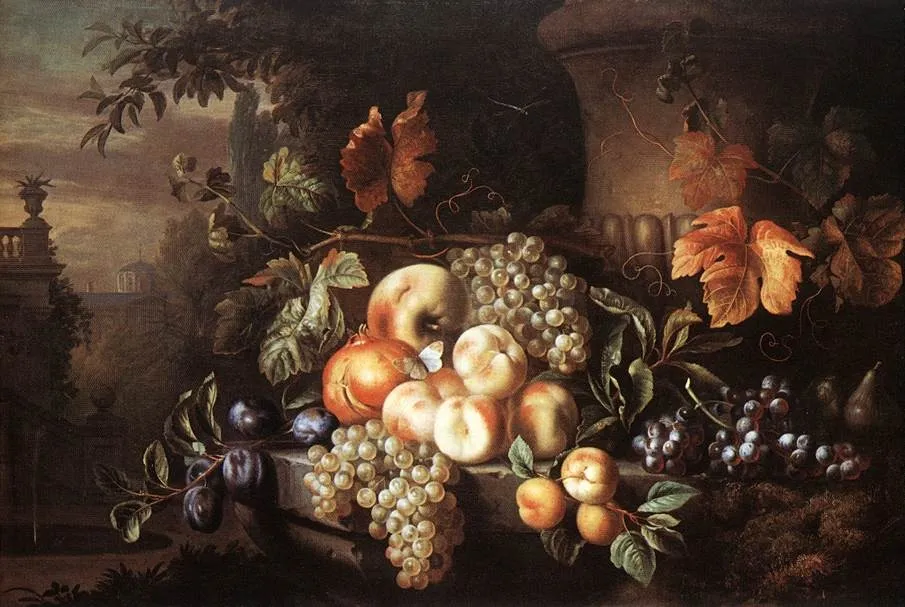
Fruit-piece with Stone Vase is an oil painting by Jakob Bogdani. It dates from 1701 and is held in the collection of the Hungarian National Gallery.
About this work
Overview
Bogdani, originally from Hungary and active in Britain, specialized in naturalistic compositions that merged botanical elements with subtle atmospheric depth.
Painted around 1701 by Jakob Bogdani, this oil-on-canvas still life presents a carefully arranged collection of fruit and a rough-hewn stone vessel. Bogdani, originally from Hungary and active in Britain, specialized in naturalistic compositions that merged botanical elements with subtle atmospheric depth. The work reflects his interest in the textures and forms of the natural world, rendered with quiet precision.
Subject & Meaning
The painting features grapes, peaches, and plums clustered around a weathered stone vase, their surfaces glistening with moisture and light. The arrangement suggests abundance, but without overt symbolism. The inclusion of partial leaves and branches hints at the fruit’s origin in a cultivated garden, grounding the scene in observed reality rather than allegory. The composition conveys a sense of quiet harvest, not celebration.
Technique & Style
Bogdani employed fine brushwork to capture the delicate sheen on peach skin and the translucent quality of grape clusters. The stone vase is rendered with attention to its porous texture and uneven surface, contrasting with the smoothness of the fruit. A dark, indistinct background isolates the still life, directing focus to the play of light and the tactile variety of organic forms, characteristic of Northern European still-life traditions.
History & Provenance
The painting has been held by the Hungarian National Gallery since at least the 19th century, though its exact acquisition history remains undocumented. Bogdani’s works were collected in Central Europe during his lifetime, and this piece likely entered the national collection as part of broader efforts to preserve Hungarian-linked artistic heritage. Its survival reflects its enduring recognition within regional art circles.
Context
Created during the early 18th century, the painting aligns with a broader European trend of naturalistic still life, particularly in the Netherlands and Habsburg territories. While Bogdani is better known for his avian subjects, this work demonstrates his versatility and engagement with domestic, terrestrial nature. It reflects a shift from symbolic vanitas toward observational precision in still-life painting.
Legacy
Though not widely exhibited beyond Hungary, the painting remains a representative example of Bogdani’s still-life output. It contributes to the understanding of Central European artists who absorbed Dutch and Flemish techniques while developing their own regional sensibilities. Its preservation underscores the value placed on detailed natural observation in early 18th-century art beyond major metropolitan centers.
Artist & collection
Artist
Jakob Bogdani (6 May 1658 - 11 November 1724), whose names are sometimes spelt Jacob and Bogdány, was a Hungarian and British artist well known for his still life and exotic bird paintings.

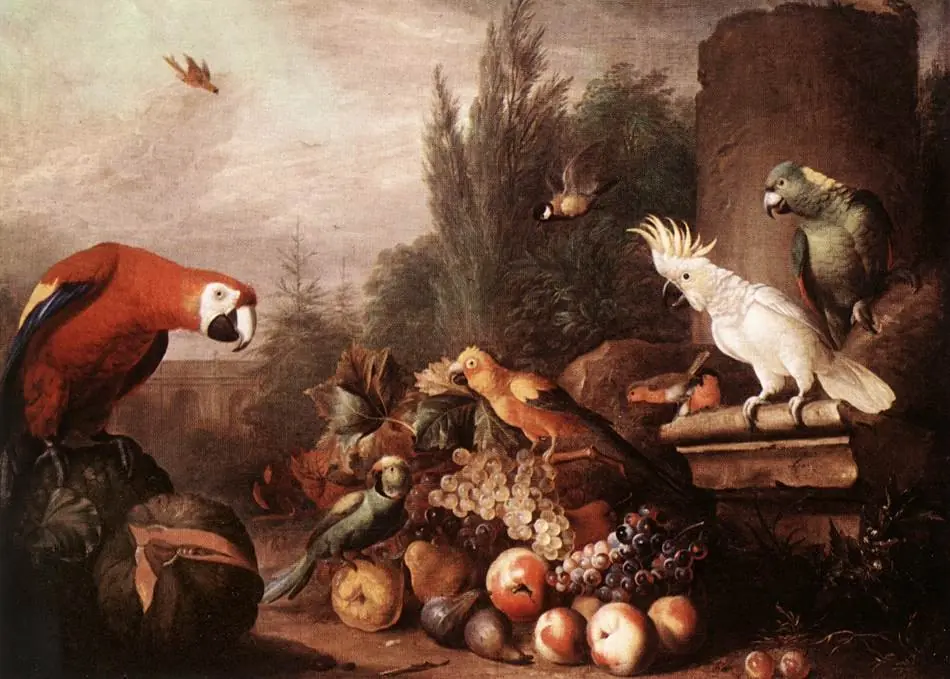 Still-life with Fruits, Parrots and White Cockatoo
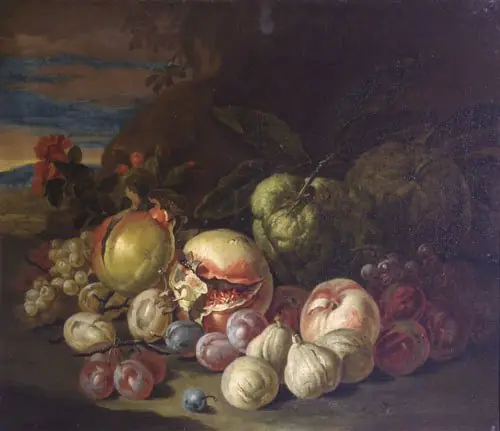 Still life of fruits with pomegranates and figs
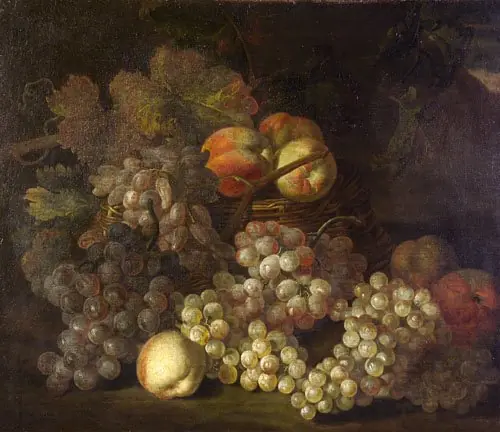 Fruit in a Wicker Basket: Grapes and Peaches
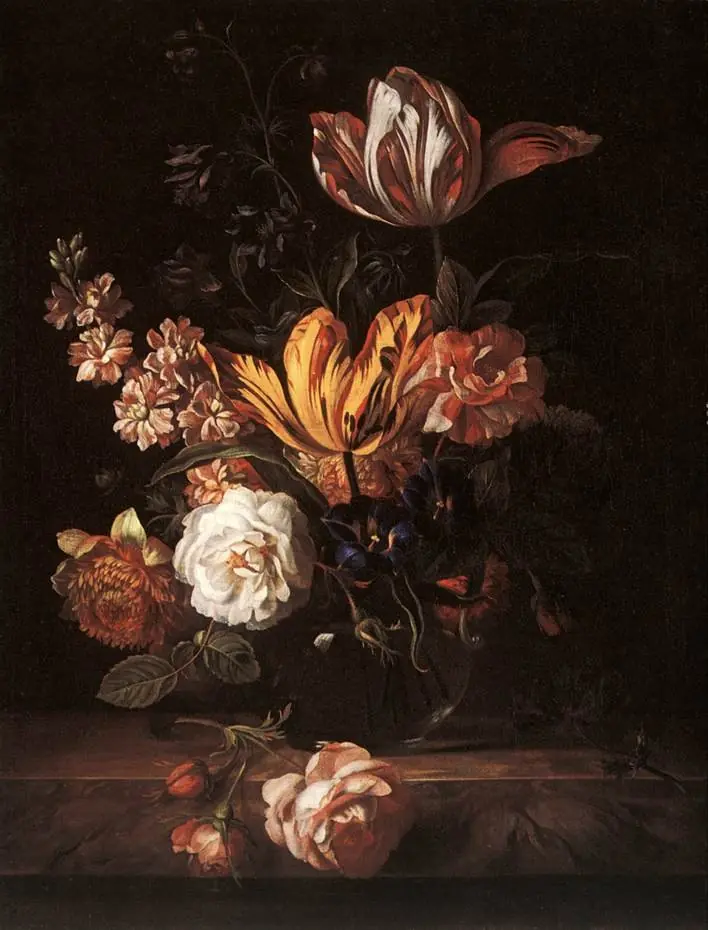 Flowers in a glass vase
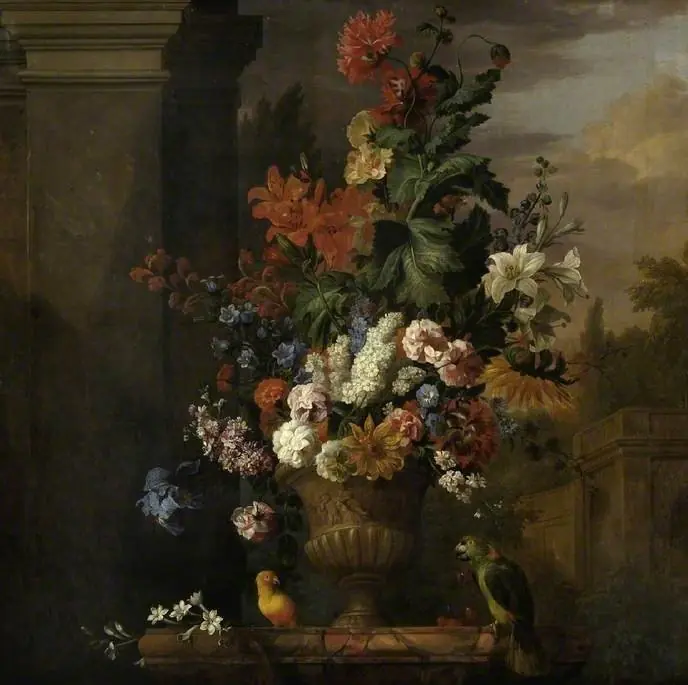 A stone vase of flowers
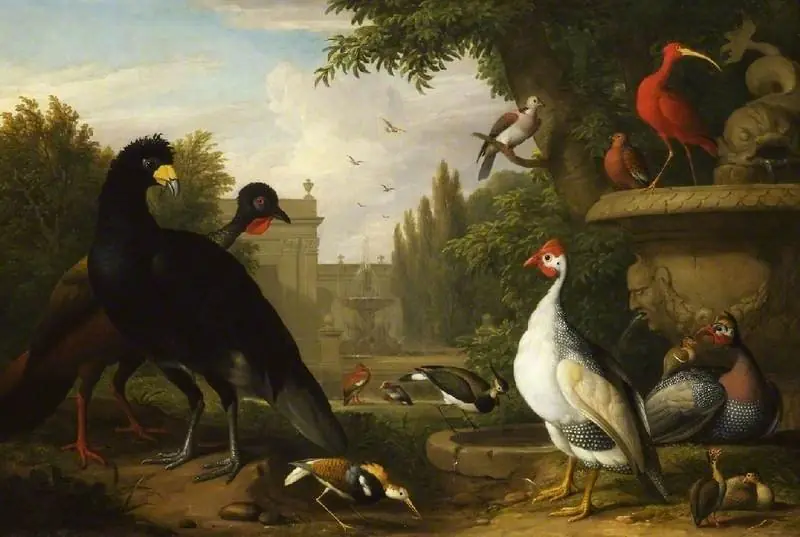 Exotic fowl in an ornamental garden beside a stone vase, a fountain beyond
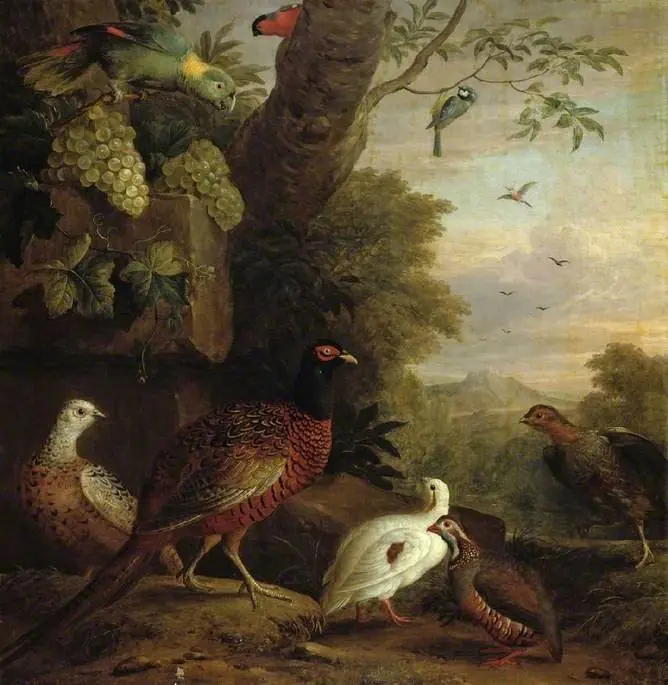 Birds in a landscape
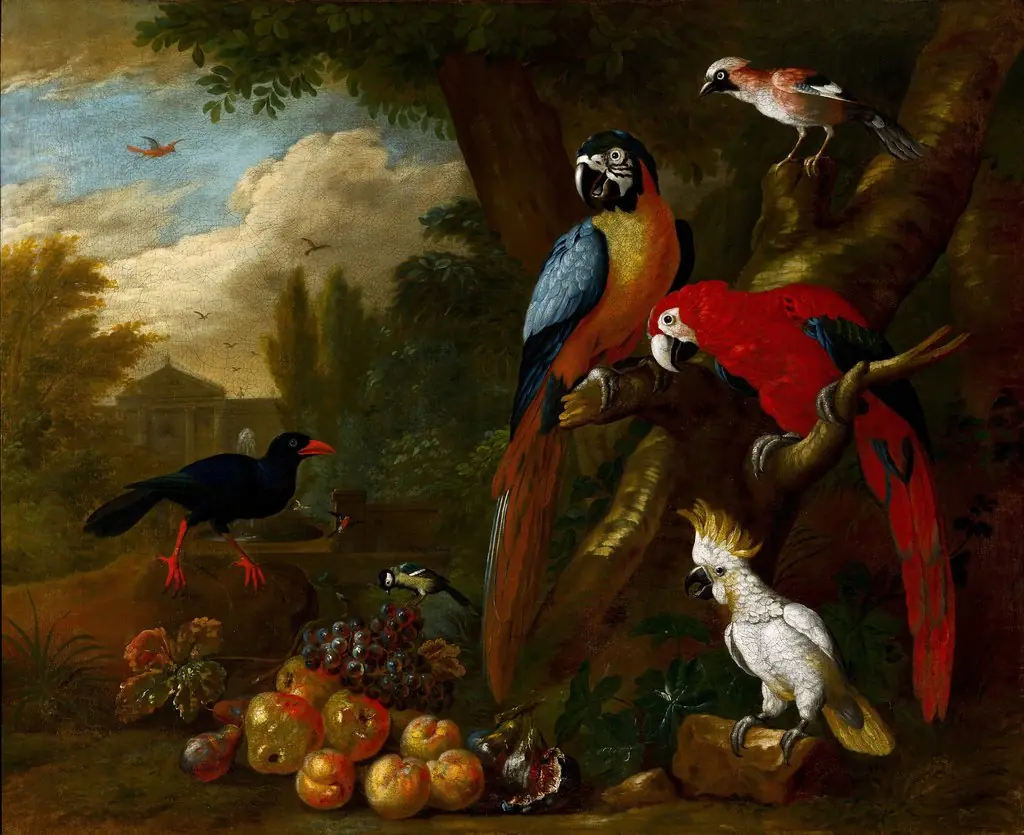 Two Macaws, a Cockatoo and a Jay, with Fruit
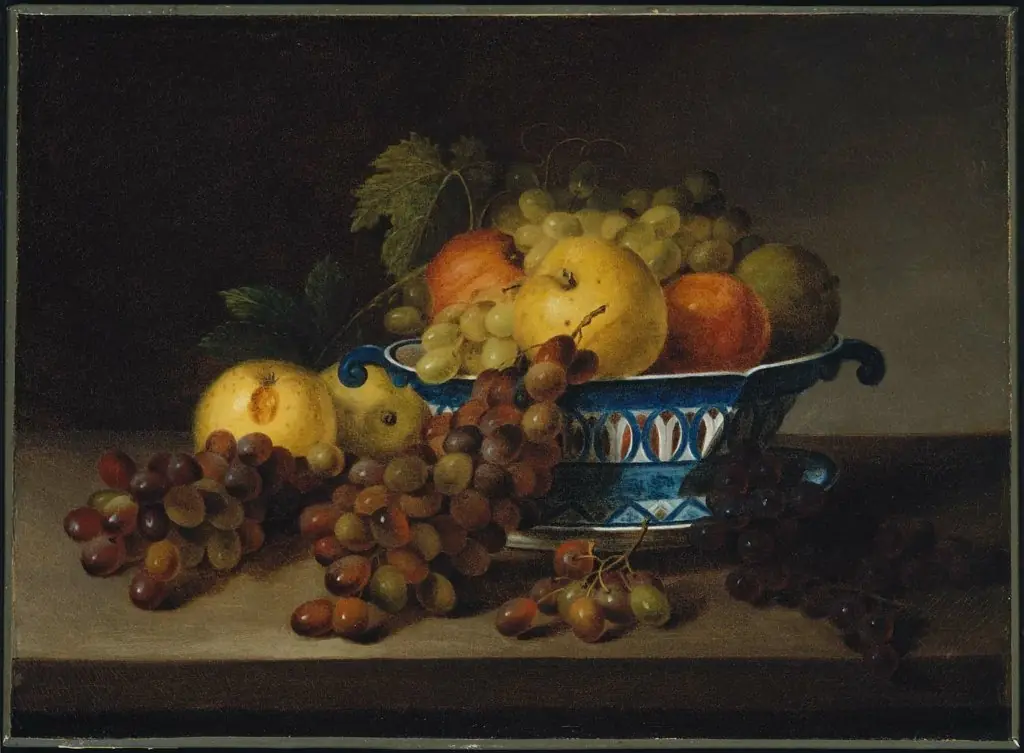 A Porcelain Bowl with Fruit
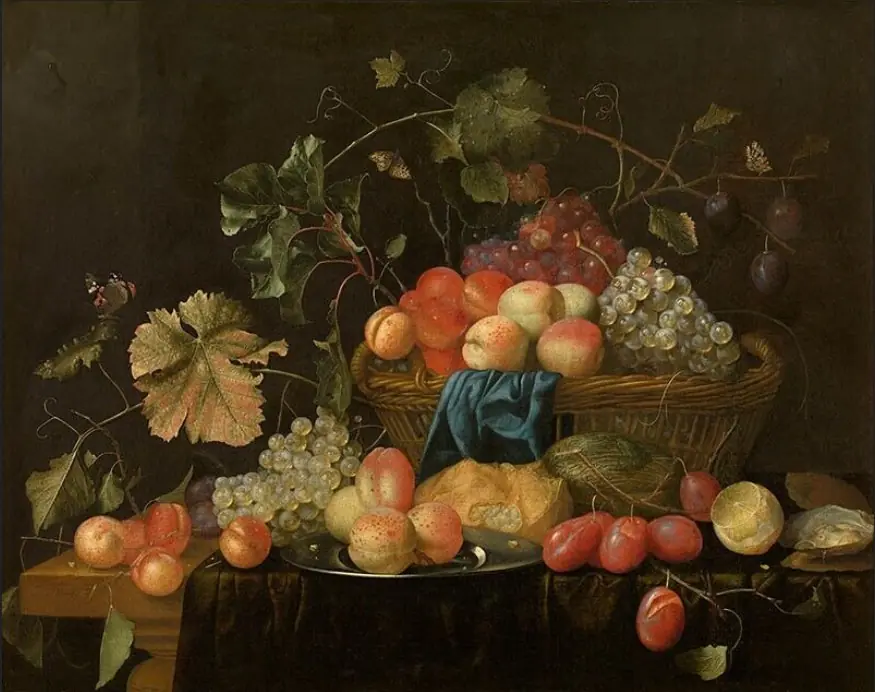 Fruit
Fruit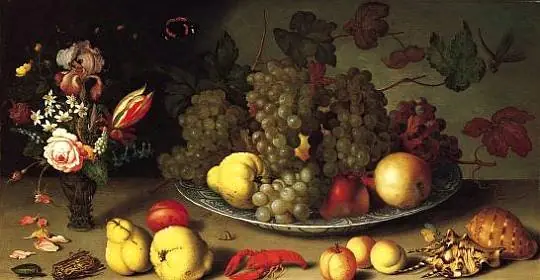 Still Life with Fruits and Flowers
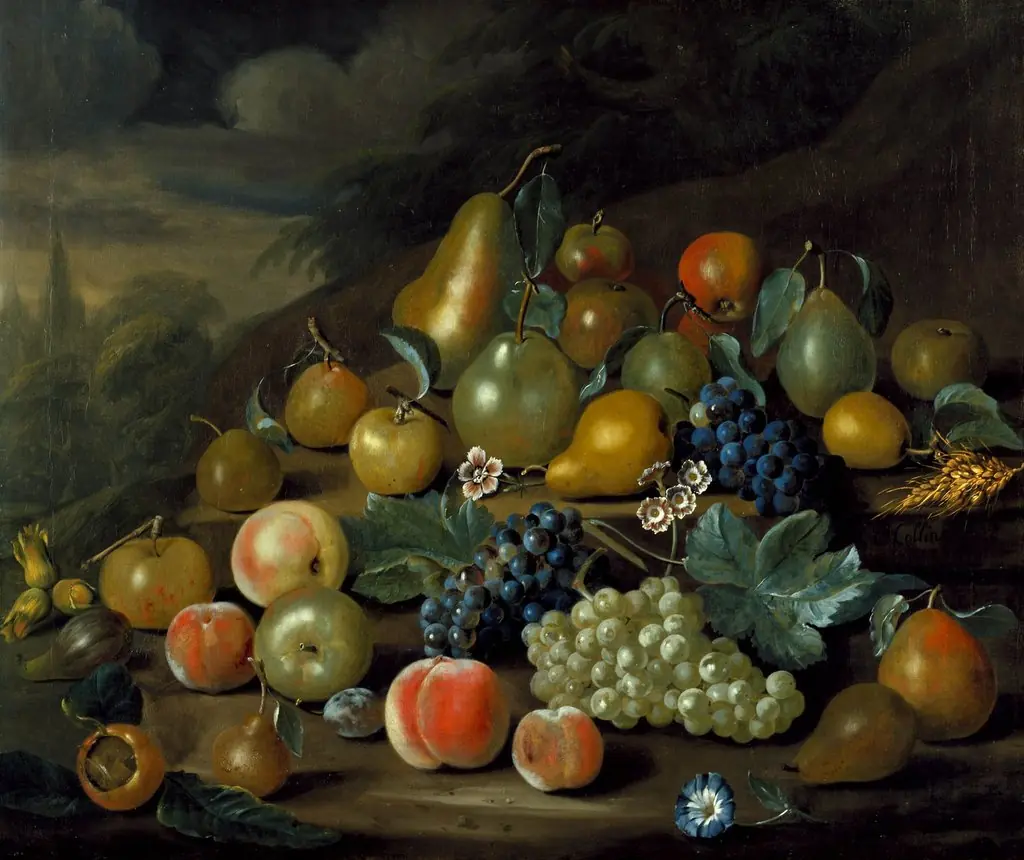 A Still Life of Pears, Peaches and Grapes
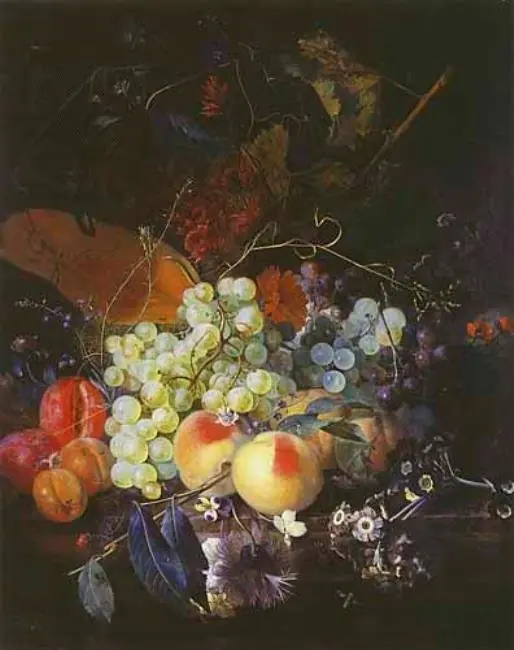 Fruit and Flowers on a Marble Table
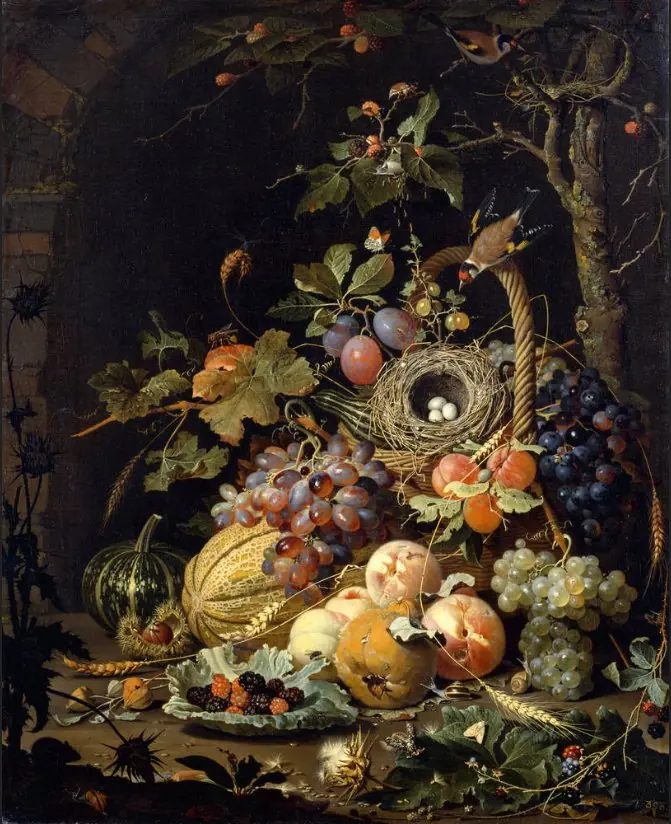 A bird's nest in a fruit basket
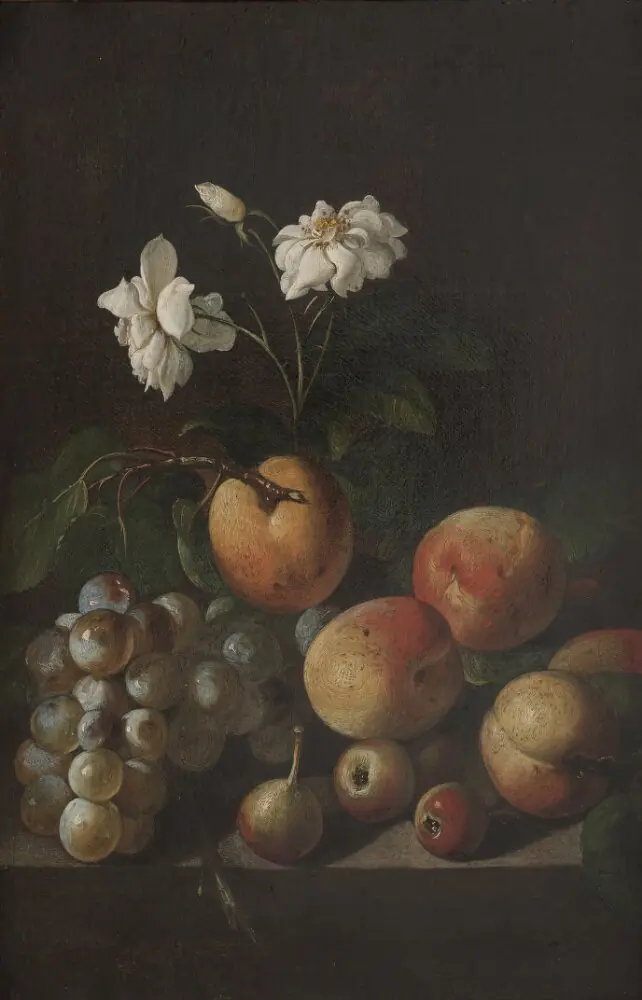 Still Life with Fruit and White Roses
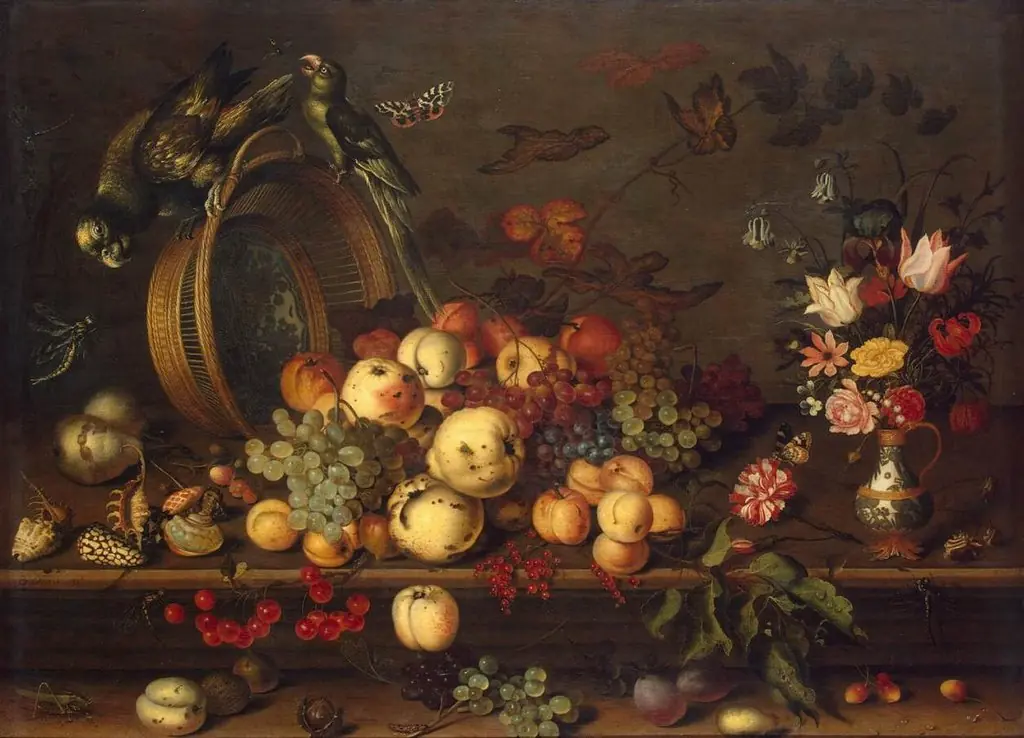 Still Life with Fruits, Shells and Insects
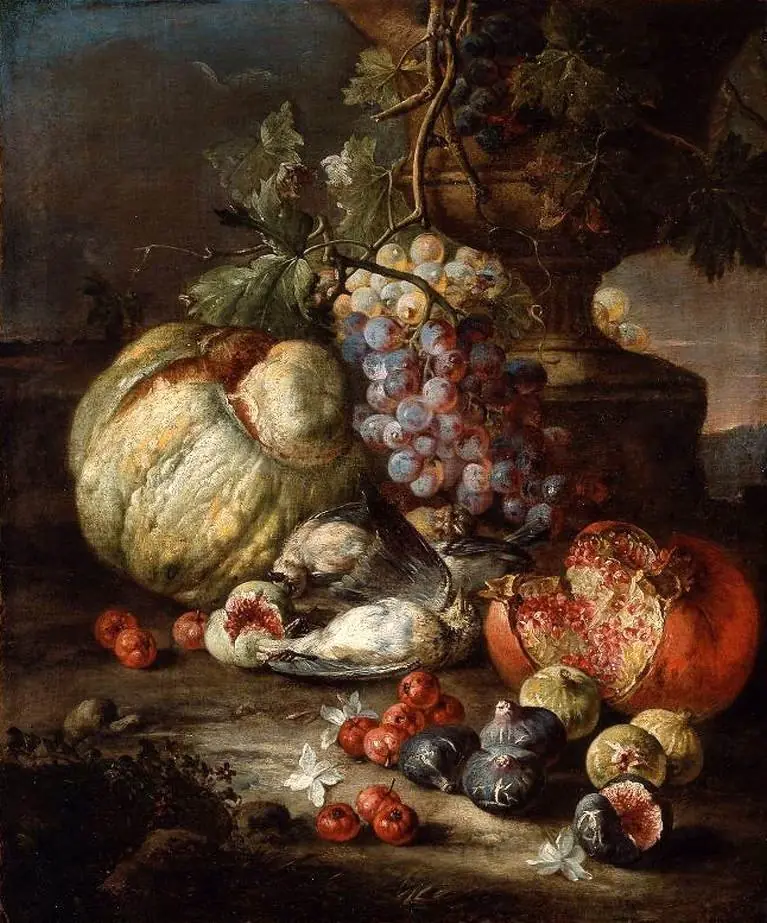 Still Life with Fruit and Dead Birds in a Landscape
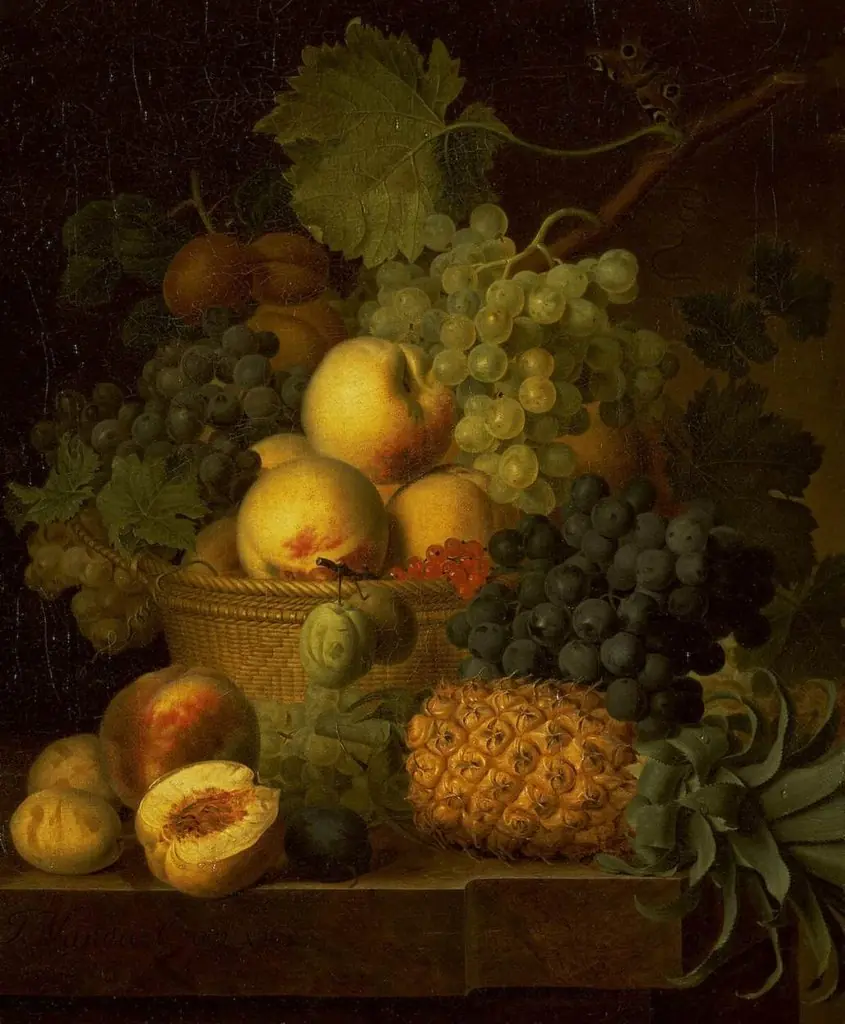 Basket of Fruit
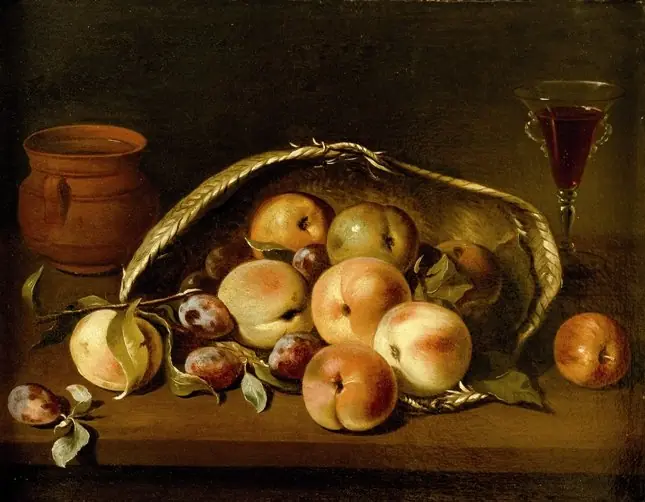 Basket with Peaches and Plums