Artwork
The Western Farmer's Home
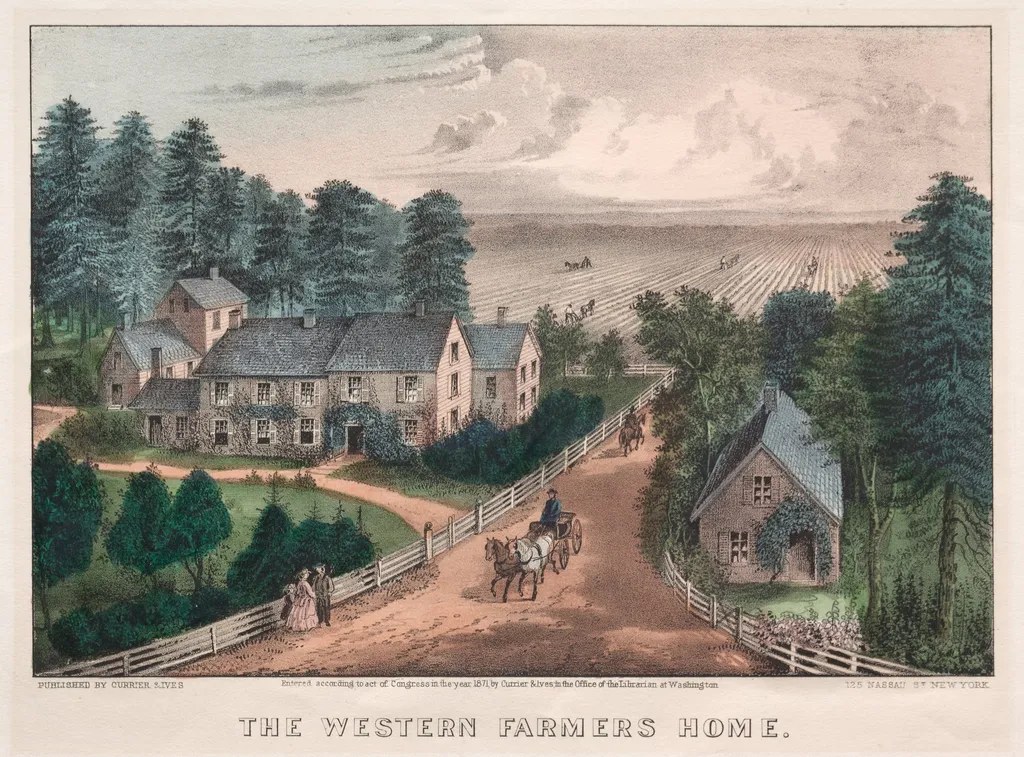
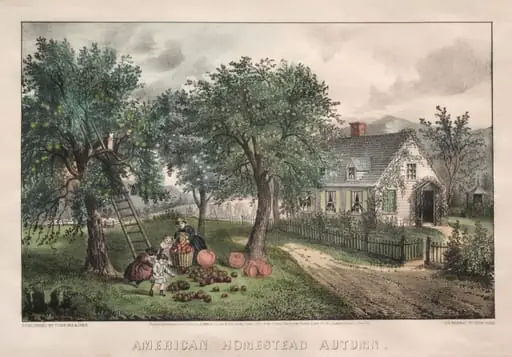
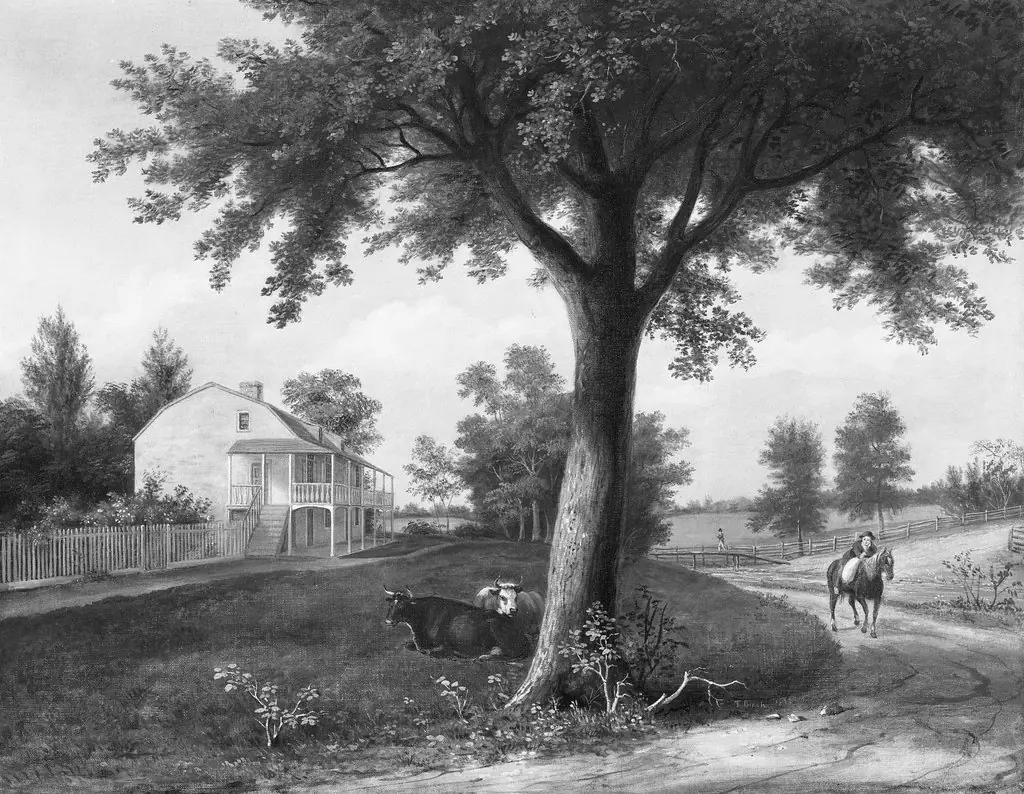
The Western Farmer's Home is a print by the Impressionist artist James Merritt Ives. It dates from 1864 and is held in the collection of the Cleveland Museum of Art.
About this work
Overview
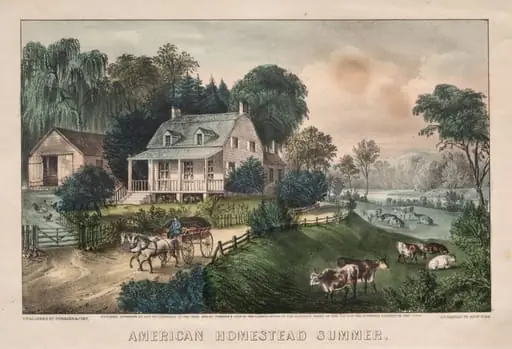
A dirt path meanders through the scene, connecting the home to distant plowed fields, where a wagon and two figures suggest quiet daily activity.
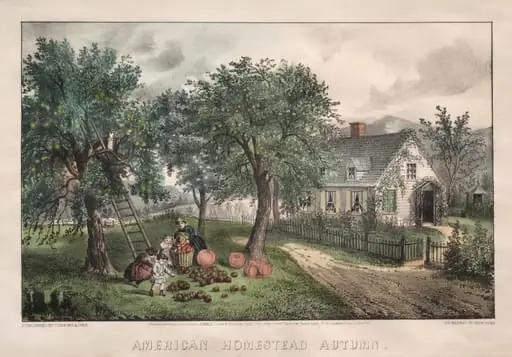
Created around 1864 by James Merritt Ives, this print depicts a tranquil rural landscape in the American West. It presents a homestead with a substantial farmhouse, outbuildings, and cultivated fields under a gently clouded sky. A dirt path meanders through the scene, connecting the home to distant plowed fields, where a wagon and two figures suggest quiet daily activity. The composition emphasizes order and serenity, reflecting a idealized vision of agricultural life during a period of westward expansion.
Subject & Meaning
The scene portrays an idealized vision of farming life, free from hardship or disorder. The neatly arranged buildings, tidy fences, and distant laborers imply self-sufficiency and harmony with the land. The title, *The Western Farmer’s Home*, frames the image as a symbol of domestic stability and progress in newly settled territories. It avoids conflict or poverty, instead offering a reassuring narrative of rural virtue during a time of national transformation.
Technique & Style
Rendered as a lithograph, the print employs fine lines and subtle tonal gradations to suggest depth and texture. Details like individual fence posts, clothing folds, and cloud formations are carefully rendered to enhance realism without overt drama. The composition is balanced and calm, with horizontal lines of fields and sky reinforcing a sense of peace. The muted palette and soft lighting contribute to a gentle, almost nostalgic atmosphere.
History & Provenance
The print was produced during the mid-19th century, a time when chromolithography made affordable, mass-produced images widely available. James Merritt Ives, known for his work with Currier & Ives, specialized in scenes that appealed to middle-class tastes. This piece entered the collection of The Cleveland Museum of Art, where it remains as part of a broader archive documenting 19th-century American visual culture and domestic ideals.
Context
Produced amid the Civil War and rapid westward migration, the image offered a comforting contrast to urbanization and national strife. It aligned with popular notions of the yeoman farmer as the backbone of democracy. Such prints were often displayed in homes as symbols of moral and economic stability, reinforcing cultural values tied to land ownership, family, and quiet industry in the expanding frontier.
Legacy
The print endures as a representative example of 19th-century American popular imagery, illustrating how visual media shaped perceptions of rural life. While not politically charged, it reflects the era’s aspirations for order and harmony in a changing nation. Today, it serves as a historical document, revealing the aesthetic and ideological preferences of its time rather than the complexities of actual frontier existence.
Artist & collection