Artwork
Two designs for the inset paintings in the lower wall of the Great Hall at Moor Park, Hertfordshire
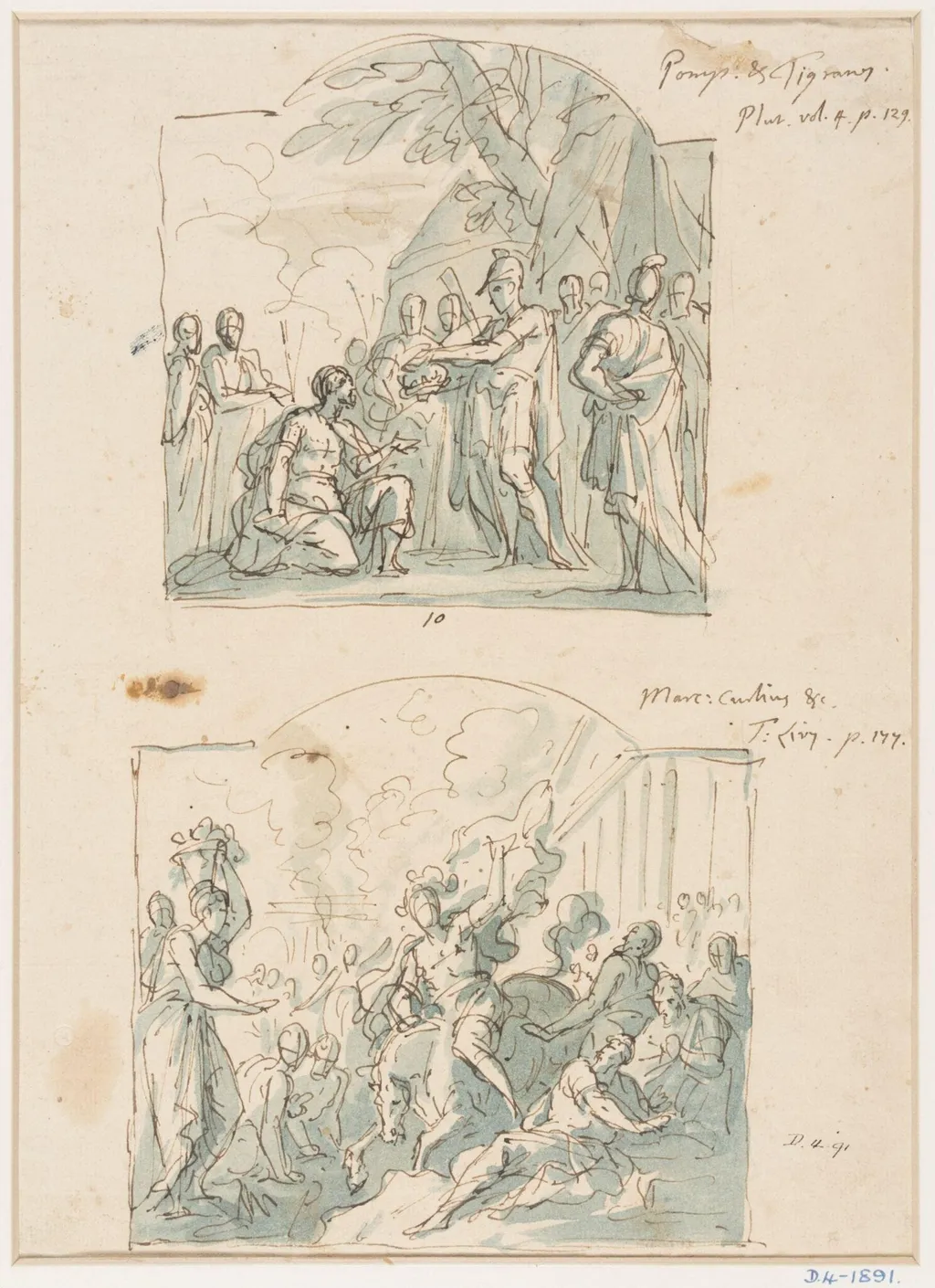
Two designs for the inset paintings in the lower wall of the Great Hall at Moor Park, Hertfordshire is a drawing by the Baroque artist James Thornhill. It dates from 1725 and is held in the collection of the Victoria and Albert Museum.
About this work
Overview
Two pen-and-ink drawings by James Thornhill serve as preparatory designs for decorative wall panels in the Great Hall of Moor Park, Hertfordshire.
Two pen-and-ink drawings by James Thornhill serve as preparatory designs for decorative wall panels in the Great Hall of Moor Park, Hertfordshire. Commissioned by Benjamin Haskins Styles, these sketches were intended to guide the execution of painted insets along the lower wall. Each drawing presents a distinct classical narrative, rendered with controlled line and tonal wash to suggest depth and movement before full-scale painting began.
Subject & Meaning
The upper drawing illustrates an episode from Plutarch’s biography of Pompey, likely emphasizing his military leadership or political stature. The lower scene depicts Marcus Curtius, the legendary Roman who sacrificed himself by riding his horse into a chasm that threatened the city’s stability, as recounted by Livy. Both subjects reflect Enlightenment-era ideals of civic virtue and heroic duty, chosen to align the patron’s residence with classical moral authority.
Technique & Style
Thornhill employed fine pen lines to define figures and architecture, then applied a soft blue-grey wash to model shadows and suggest volume. The wash was used sparingly, preserving the clarity of the ink outlines while adding atmospheric depth. This method allowed him to communicate spatial relationships and dramatic emphasis efficiently, making the sketches functional tools for both client approval and workshop execution.
History & Provenance
Created around the early 1710s, these drawings were produced during Thornhill’s early career as a decorative painter, shortly before his major commissions for public buildings. They remained in the possession of the Haskins Styles family until entering the Victoria and Albert Museum’s collection, where they are preserved as rare examples of domestic decorative planning from the period.
Context
In early 18th-century England, wealthy patrons like Haskins Styles sought to ennoble their homes through classical themes drawn from Roman history and mythology. Thornhill’s designs reflect a broader trend among aristocratic households to use art as a vehicle for moral and intellectual expression, aligning private spaces with the values of antiquity and Enlightenment humanism.
Legacy
These drawings exemplify Thornhill’s role as a bridge between architectural decoration and narrative painting in Britain. Though the final wall paintings no longer survive, the sketches endure as key documents of how grand interior schemes were conceived, offering insight into the collaborative process between artist, patron, and workshop in the early Georgian era.
Artist & collection
Artist
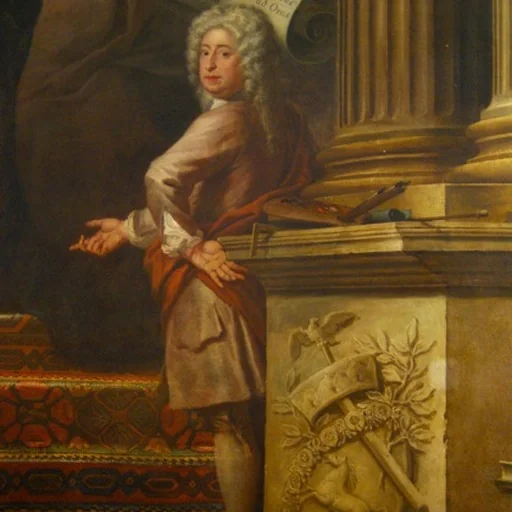
Sir James Thornhill was an English painter of historical subjects working in the Italian baroque tradition.

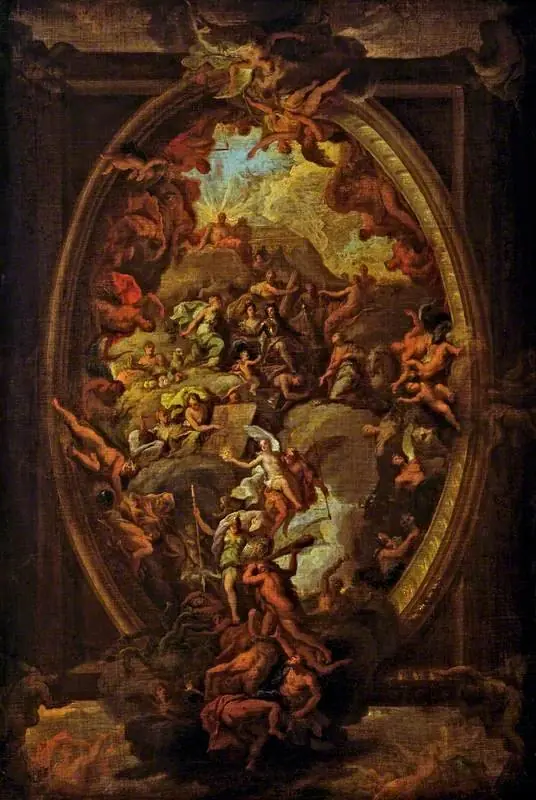 William and Mary Presenting the Cap of Liberty to Europe (sketch for the painted ceiling of the Great Hall, Greenwich Hospital)
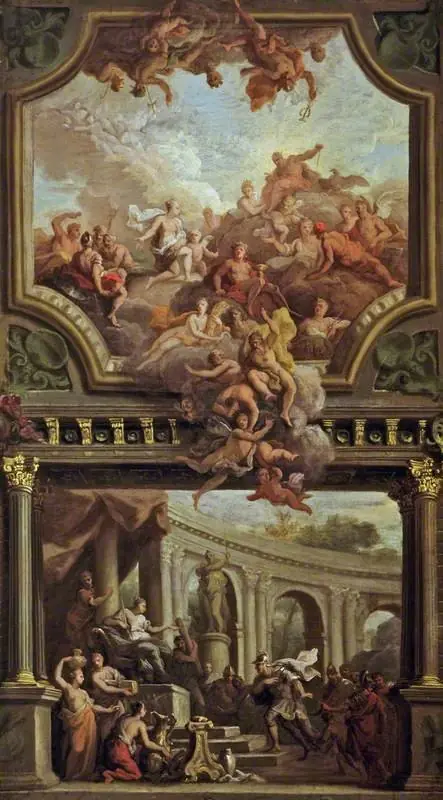 Aeneas before Dido, and Venus Supplicating Jupiter (sketch for a wall and ceiling decoration)
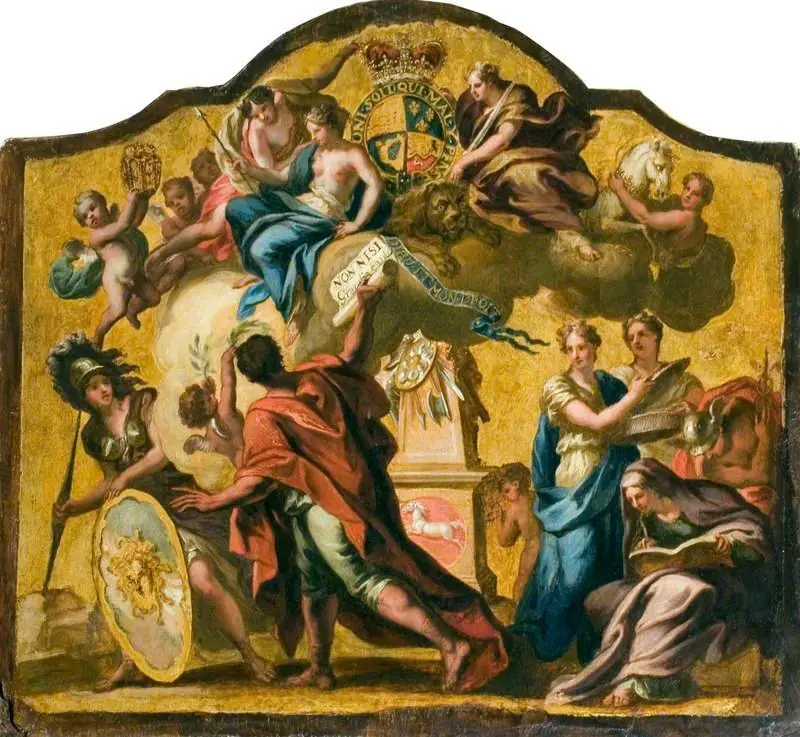 Allegorical Figures: Clemency, Prudence and Justice with Pallas, Heroic Poetry, Liberty, Discretion, History and Mercury (from the Royal State Coach for George I)
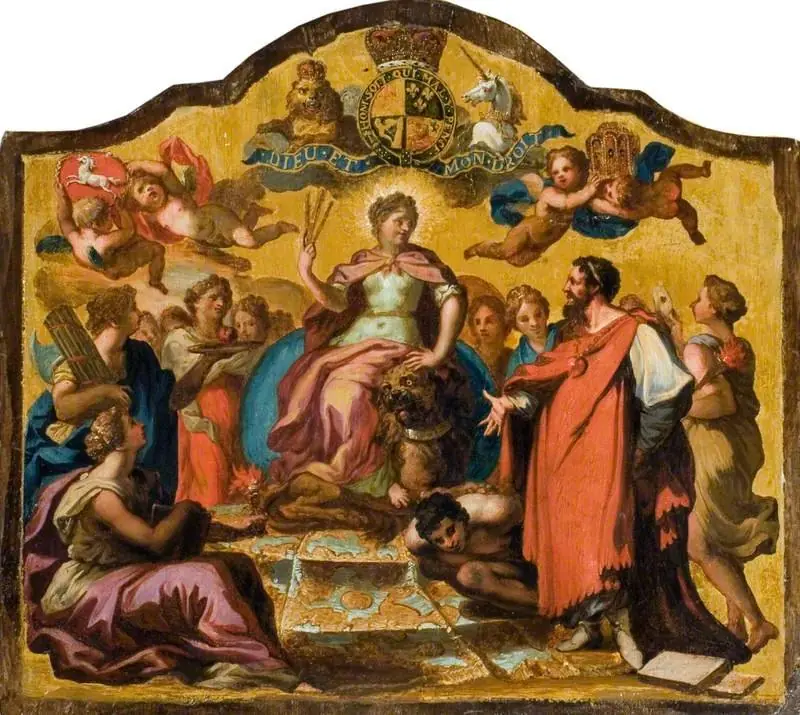 Allegorical Figures: Britannia Enthroned, Surrounded by Concord, Learning and Religion Overcoming Vice (from the Royal State Coach for George I)
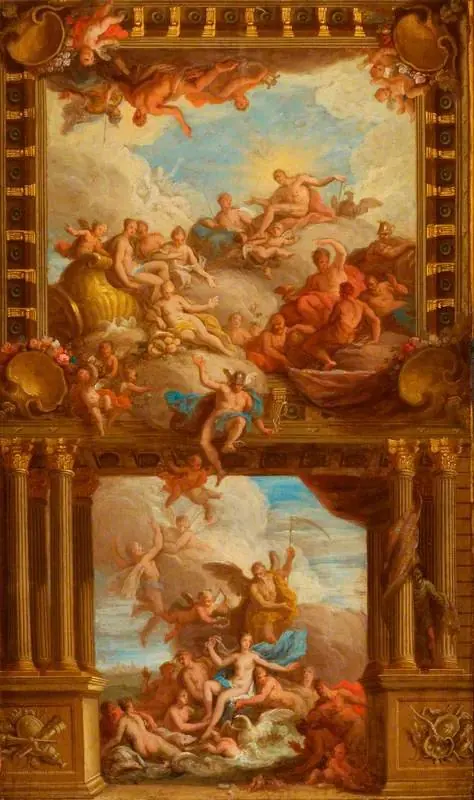 The Birth of Venus, and the Gods of Olympus (sketch for a wall and ceiling decoration)
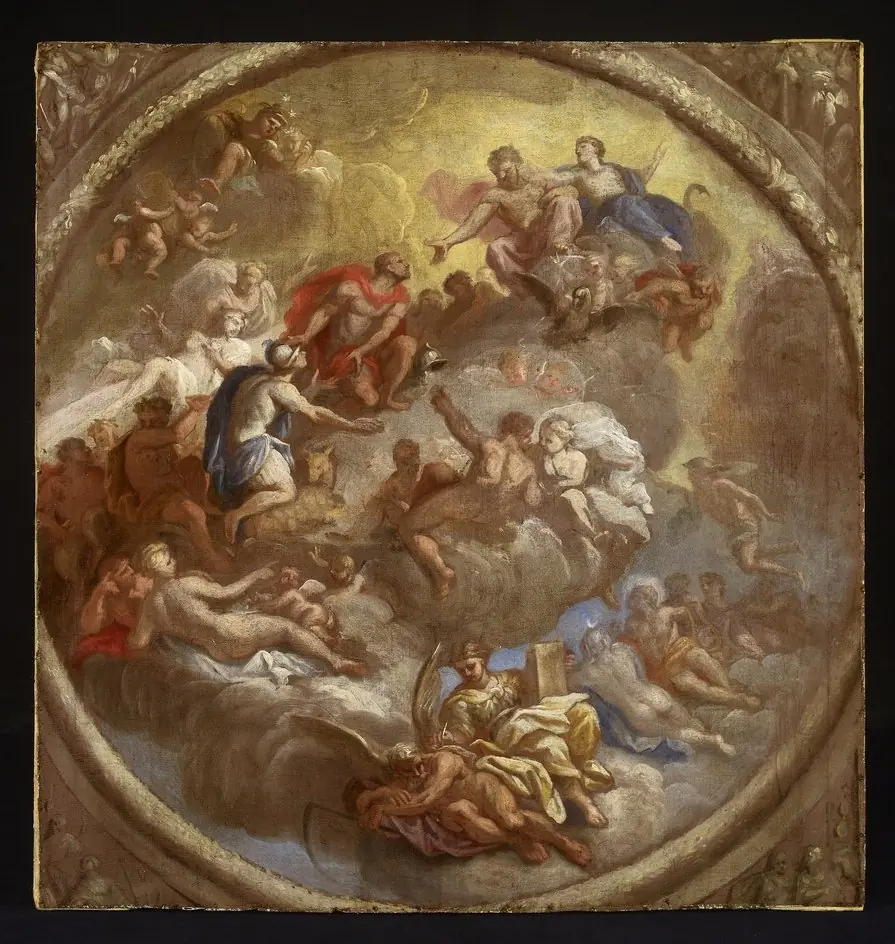 Sketch for a Ceiling Design
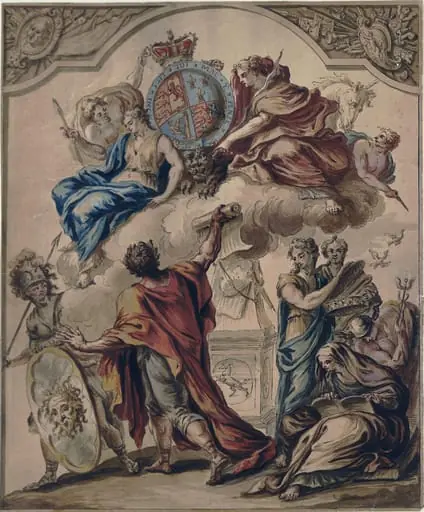 Allegorical design with figures: Clemency, Prudence and Justice with Pallas, Heroic Poetry, Liberty, Discretion, History and Mercury (preliminary design for a panel from Royal State Coach for George I)
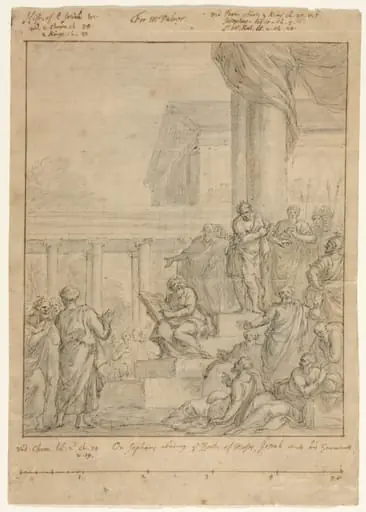 Study for King Josiah Rending his Garments
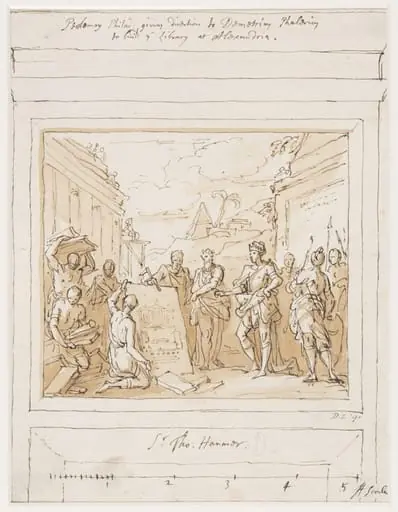 Design for a painting within an architectural setting depicting Ptolemy I commissioning the Library at Alexandria
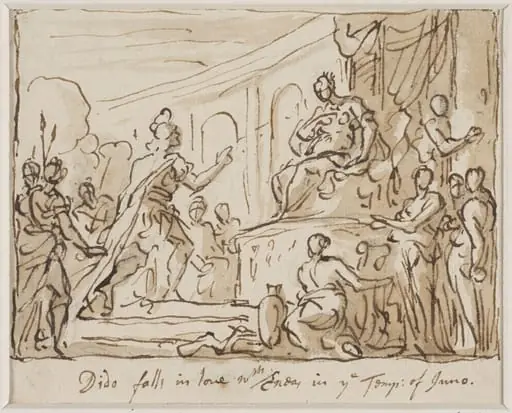 Aeneas before Dido in the Temple of Juno
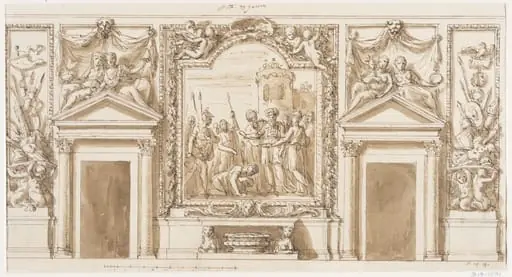 Design for the lower wall of the Great Hall at Moor Park, Hertfordshire
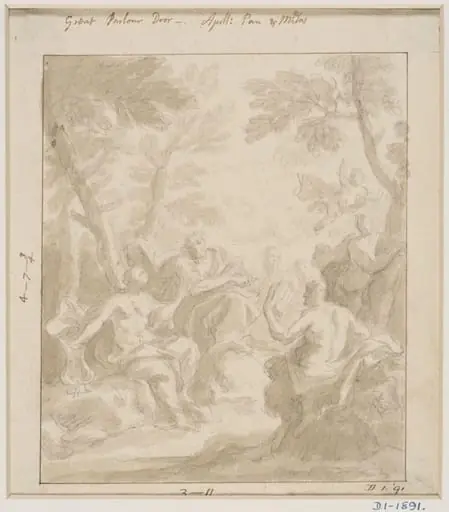 Design for an overdoor painting depicting Apollo, Pan and Midas
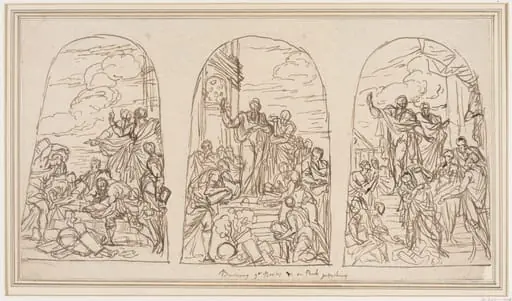 Three preparatory studies for the Burning of the Books at Ephesus
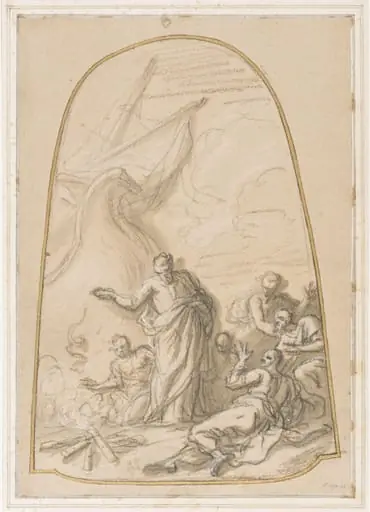 St Paul Shipwrecked on the Island of Malta