Artwork
Three Views of the Head of a Native (probably a Sakalava), Madagascar
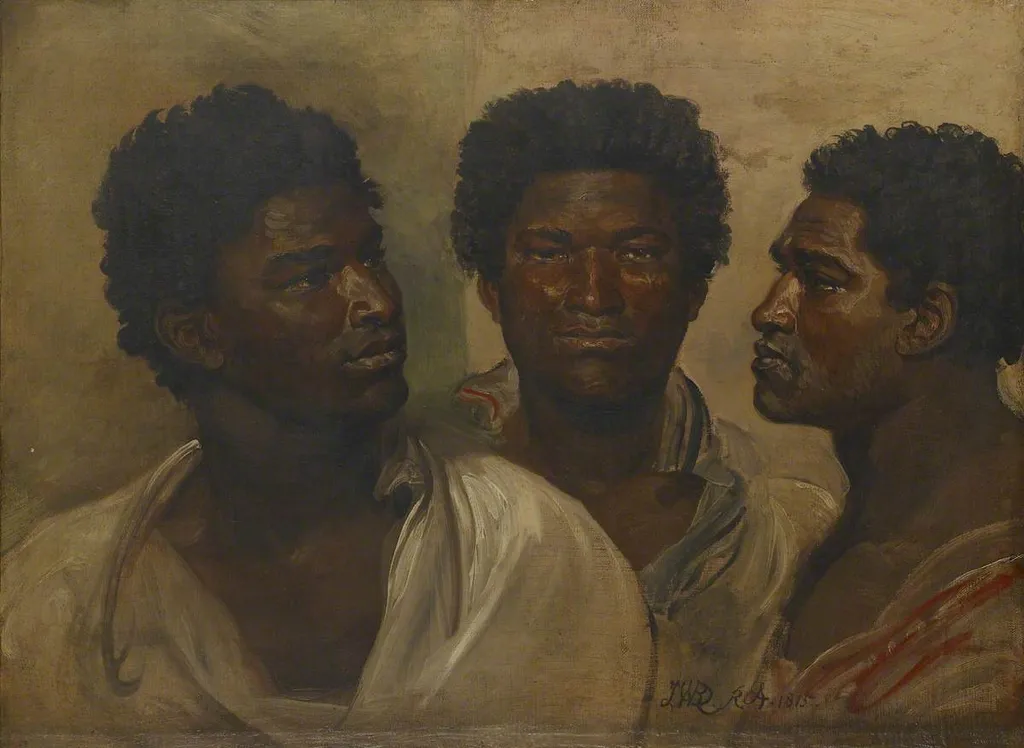
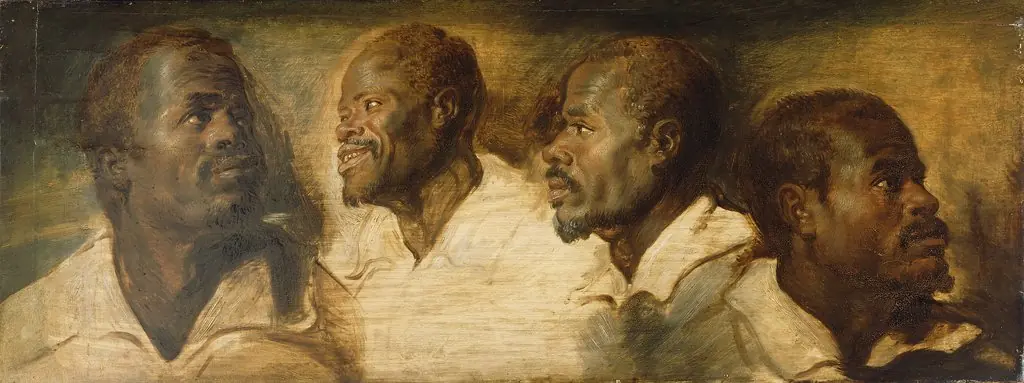
Three Views of the Head of a Native (probably a Sakalava), Madagascar is an oil painting by the British Romanticist artist James Ward. It dates from 1815 and is held in the collection of the British Museum.
About this work
Overview
James Ward’s oil painting, dated 1815, presents three sequential portraits of a single individual’s head. Each portrait captures the subject from a distinct angle—front, left profile, and right profile—against a uniform light‑brown backdrop. The work resides in the British Museum’s collection and exemplifies early‑19th‑century interest in ethnographic portraiture.
Subject & Meaning
The sitter appears to be a man of Sakalava origin from Madagascar, identifiable by his dark complexion, tightly curled hair, and the simple white collared shirt he wears. His expression remains composed and slightly introspective, offering a neutral, almost documentary representation rather than an idealized or narrative portrayal.
Technique & Style
Executed in oil on canvas, the painting employs a realistic approach with careful modeling of form. Ward utilizes chiaroscuro, contrasting light and shadow to give the facial features a three‑dimensional quality. The consistent tonal palette and precise brushwork underscore the artist’s focus on anatomical accuracy.
History & Provenance
Created in 1815, the work entered the British Museum’s holdings through acquisition in the 19th century, reflecting the period’s growing curiosity about peoples beyond Europe. Its presence in a major public institution has helped preserve it as a reference point for studies of early ethnographic art.
Artist & collection