Artwork
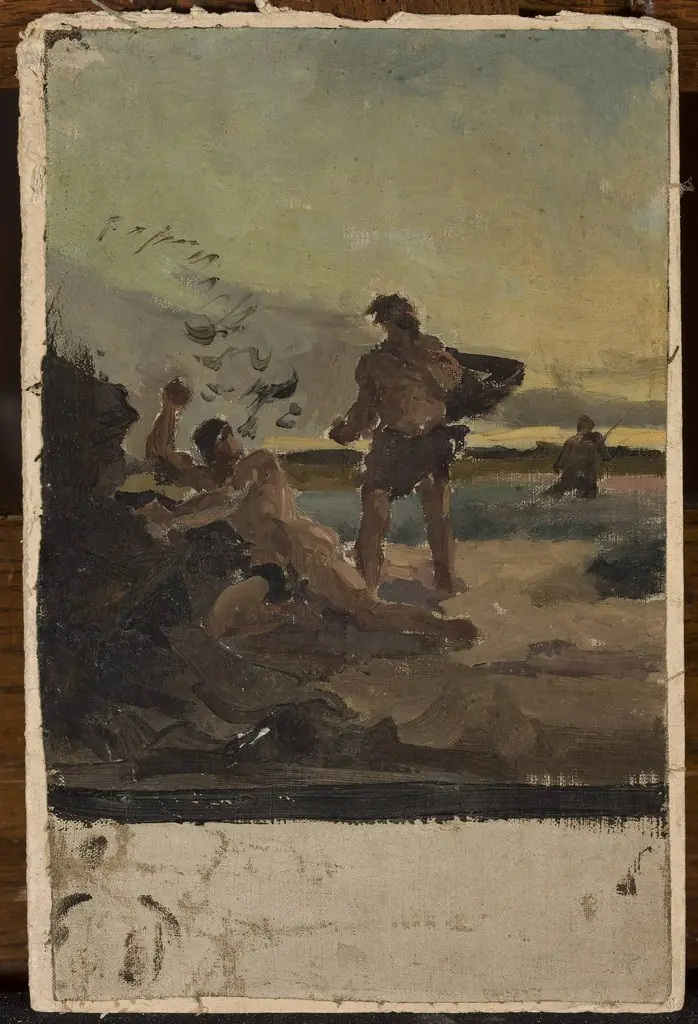
Brother robbers, sketch for a painting
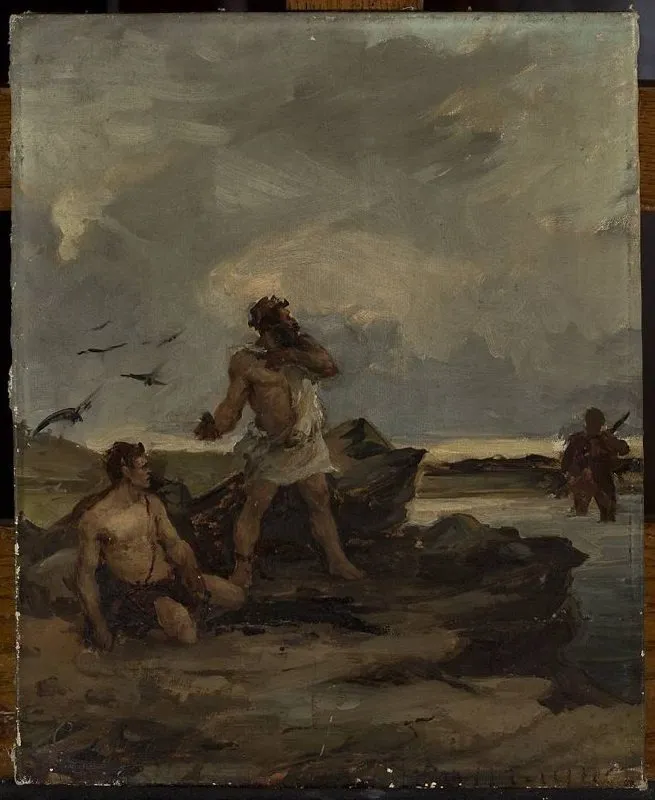
Brother robbers, sketch for a painting is an oil painting by the Realist artist Jan Ciągliński. It dates from 1891 and is held in the collection of the National Museum in Warsaw.
About this work
Overview
Created in 1891 by Polish artist Jan Ciągliński, this oil sketch was prepared as a preliminary study for a larger composition.
Created in 1891 by Polish artist Jan Ciągliński, this oil sketch was prepared as a preliminary study for a larger composition. Executed during his time in St. Petersburg under the Russian imperial court, the work reflects Ciągliński’s engagement with contemporary European realism while hinting at emerging impressionistic tendencies. It remains part of the National Museum in Warsaw’s collection, representing a transitional moment in his artistic development.
Subject & Meaning
The scene portrays two male figures on a barren shoreline—one standing, the other kneeling—suggesting a moment of confrontation or aftermath. Their bare torsos and the rugged setting imply a life outside societal norms, possibly referencing outlawed or marginalized figures. The absence of clear narrative cues invites interpretation, emphasizing emotional tension over storytelling, consistent with Realism’s focus on human condition over idealization.
Technique & Style
Ciągliński employed visible, expressive brushwork and a restrained palette of browns and grays to convey texture and atmosphere. Chiaroscuro modeling enhances the three-dimensionality of the figures, directing focus to their physical presence and emotional weight. The loose handling of paint, particularly in the background, suggests an interest in capturing transient light and mood, aligning the work with early impressionistic concerns despite its realist subject matter.
History & Provenance
The sketch was produced during Ciągliński’s years in St. Petersburg, where he was active in artistic circles influenced by both Russian academic traditions and Western European trends. It remained in his possession until entering the National Museum in Warsaw’s holdings, likely through posthumous acquisition or donation. Its survival as a study rather than a finished painting offers insight into his preparatory process and evolving compositional ideas.
Context
In late 19th-century Russia, artists like Ciągliński navigated tensions between state-sponsored realism and emerging modernist impulses. Though Polish by birth, his work was shaped by the imperial cultural environment. This sketch reflects broader artistic shifts—moving beyond rigid academicism toward looser techniques and psychological depth—while retaining a grounding in observable reality, characteristic of the period’s transitional art scene.
Legacy
Ciągliński’s work, including this sketch, is noted for its role in bridging Polish and Russian artistic traditions. While not widely exhibited, it contributes to understanding the early development of impressionistic approaches within the Russian Empire. As a study, it reveals the artist’s method and the quiet evolution of his style, offering scholars a window into the informal processes behind larger, now-lost or unrecorded works.
Artist & collection
Artist
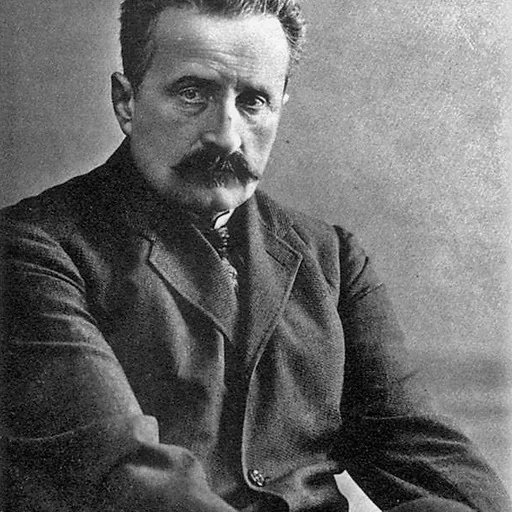
Jan Ciągliński (Polish: ; Russian: Ян/Иван Францевич Ционглинский, romanized: Yan/Ivan Frantsevich Tsionglinskiy; 20 February 1858 – 6 January 1913) was a Polish painter, active in St.

 Winter: Juno Beseeching Aeolus to Destroy the Fleet
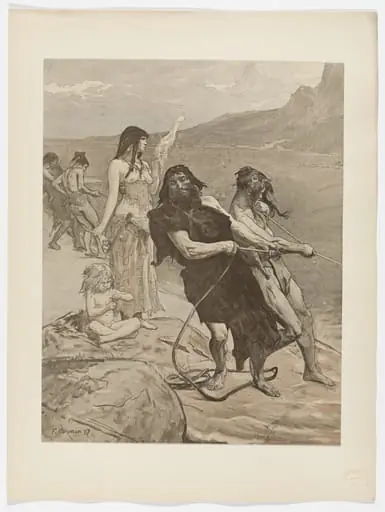 Untitled
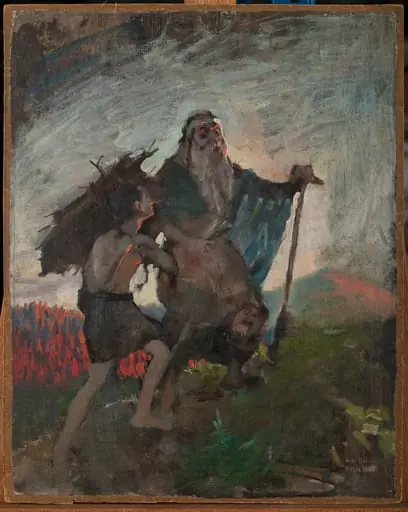 Abraham ja Iisak
 Hercules tötet den Riesen Cacus und raubt die Rinder des Geryoneus
 The Vision of Saint Jerome
 Scenă idilică
 Der verlorene Sohn (2 Teile)
 Nightmare
 King Hieron II of Syracuse Calls on Archimedes to Fortify the City
 Hercules sleept Cerberus uit de hel
 Johannes der Täufer
 Brother robbers, sketch for a painting