Artwork
Lot and His Daughters
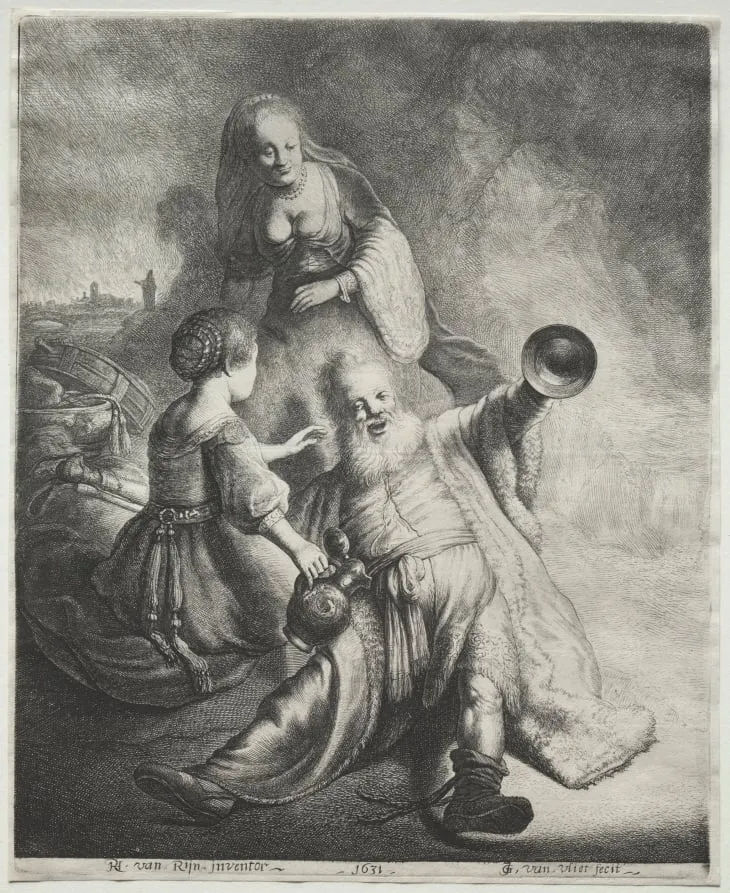
Lot and His Daughters is a print by the Baroque artist Jan Gillisz van Vliet. It dates from 1631 and is held in the collection of the Cleveland Museum of Art.
About this work
Overview
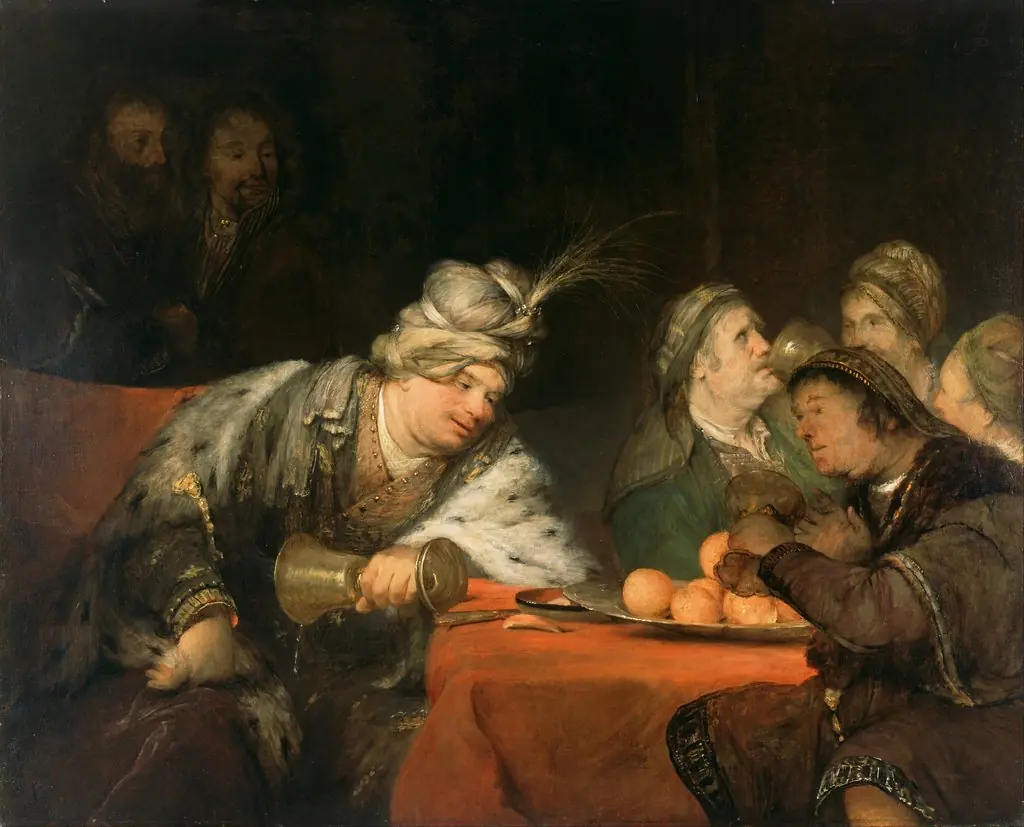
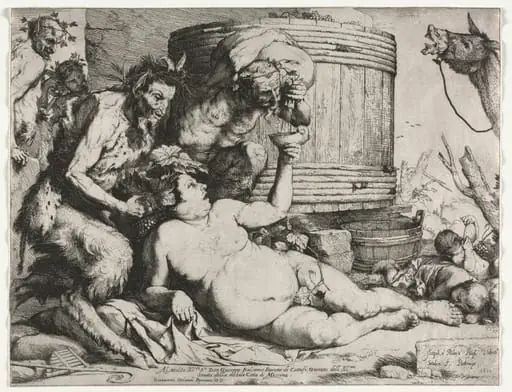
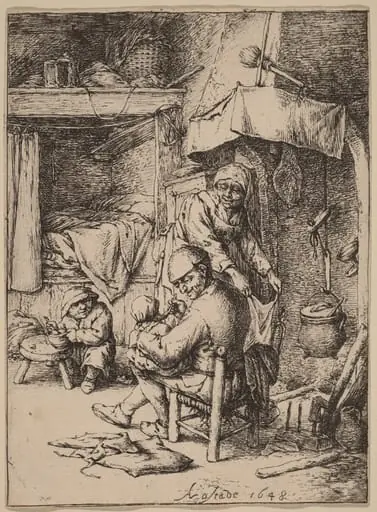
This etching depicts the biblical story of Lot and his daughters following their escape from Sodom. Though rooted in scripture, the scene is rendered with striking realism, focusing on human frailty rather than divine drama. The composition centers on an exhausted, inebriated Lot, surrounded by his daughters, in a dim interior illuminated by a single candle.
Subject & Meaning
The narrative, often interpreted as a moral warning, here emphasizes ambiguity. Lot’s passive state and his daughters’ attentive, almost casual gestures suggest complex motivations—survival, duty, or manipulation—without clear judgment. The absence of overt sanctity shifts focus from divine retribution to intimate, unsettling human behavior.
Technique & Style
The artist employs chiaroscuro to isolate faces and hands in the candle’s glow, deepening the psychological tension. Fine, controlled lines define textures of fabric and skin, while the surrounding darkness absorbs detail, heightening the sense of isolation. The intimacy of the scene is amplified by the narrow focus and restrained palette.
History & Provenance
The print was produced by Jan Georg van Vliet after a drawing by Rembrandt van Rijn, likely made in the 1630s. Van Vliet, a Dutch engraver and Rembrandt’s student, translated the original with fidelity to its emotional tone. The work circulated among collectors, reflecting contemporary interest in biblical subjects rendered with psychological depth.
Context
In 17th-century Dutch art, biblical scenes were frequently reimagined through everyday settings and humanized figures. This print aligns with a trend that prioritized emotional realism over idealized piety. The tavern-like atmosphere and unheroic portrayal of Lot reflect a broader cultural shift toward secularized interpretations of sacred stories.
Legacy
The etching contributed to a lasting visual language in which biblical figures were depicted with psychological nuance. Its emphasis on moral ambiguity and domestic intimacy influenced later artists exploring similar themes. The work remains a quiet example of how religious narratives were reinterpreted through the lens of ordinary human experience.
Artist & collection
Artist
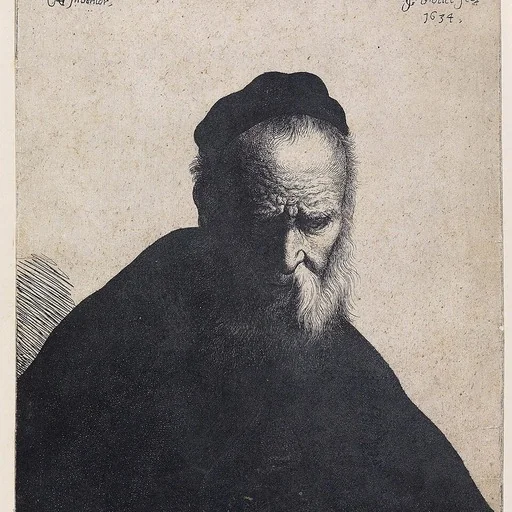
Jan Gillisz. van Vliet (1605 – 1668), was a Dutch Golden Age painter and Rembrandt pupil, whose paintings are no longer attributed to him with any certainty. Today he is known only for his drawings and prints.