Artwork
Evening
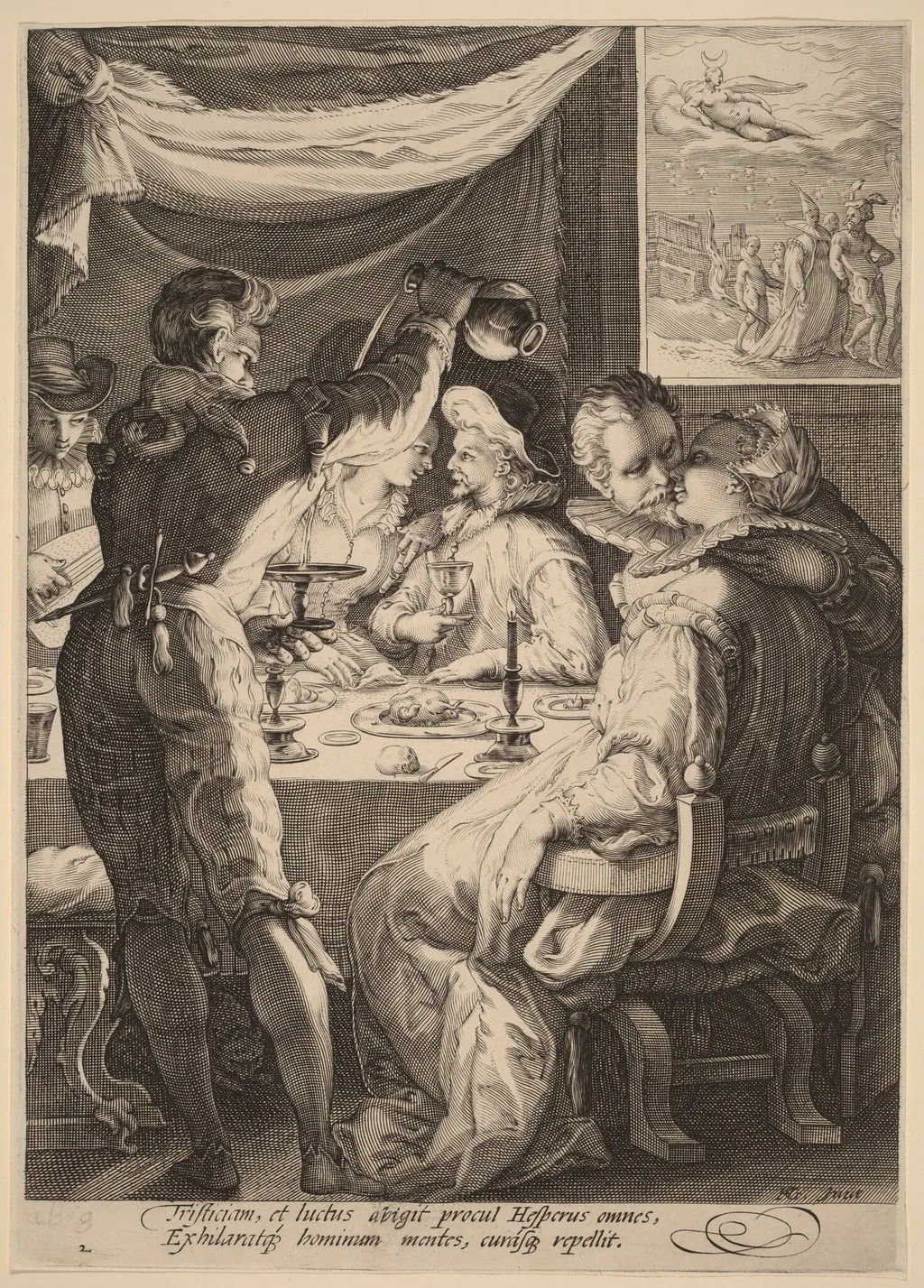
Evening is an ink print by the Renaissance artist Jan Pietersz Saenredam. It dates from 1596 and is held in the collection of the National Gallery of Art.
About this work
Overview
As part of the Northern Mannerist tradition, the work combines precise line work with layered symbolism.
Created around 1596, *Evening* is an engraving on paper by Jan Pietersz. Saenredam, a Dutch artist active in the late 16th century. As part of the Northern Mannerist tradition, the work combines precise line work with layered symbolism. Saenredam, known for his versatility across painting, printmaking, and cartography, used engraving to convey complex narratives in small formats, often blending everyday scenes with allegorical elements.
Subject & Meaning
The scene depicts a group gathered at a table, engaged in eating and drinking, but the inclusion of a miniature sky scene—a lone figure in a boat—introduces a contrasting narrative. This aerial vignette, seemingly detached from the meal, suggests a moral or mythological commentary. The Latin inscription reinforces that the image is more than a domestic moment, inviting viewers to interpret the supper as a metaphor, possibly warning against excess or reflecting on transience.
Technique & Style
Saenredam employed the engraving technique, incising fine lines into a metal plate to produce the image. The print demonstrates meticulous control of line and texture, with delicate shading and intricate detailing in clothing, tableware, and facial expressions. The composition balances naturalism with stylized elements, typical of Northern Mannerism, where clarity of form is paired with symbolic complexity rather than pure realism.
History & Provenance
The work originates from Saenredam’s early career in the Dutch Republic, a period when printmaking flourished as a medium for both artistic expression and moral instruction. While specific early ownership records are sparse, the print aligns with the broader circulation of engraved allegories among educated audiences in the late 1500s, who valued visual puzzles and classical references in domestic settings.
Context
In late 16th-century Netherlands, prints like *Evening* served as vehicles for moral and philosophical reflection, often drawing from classical literature and biblical parables. The juxtaposition of a mundane meal with a celestial vignette reflects a cultural fascination with layered meaning, where daily life was viewed through the lens of larger cosmic or ethical frameworks, a hallmark of Mannerist thought in the region.
Legacy
Saenredam’s *Evening* exemplifies how Northern Mannerist printmakers used technical precision to embed subtle narratives in accessible formats. Though less known than his son’s architectural drawings, this work contributes to the understanding of how Dutch artists of the period engaged with allegory, influencing later generations who continued to explore the intersection of the ordinary and the symbolic in print.
Artist & collection
Artist
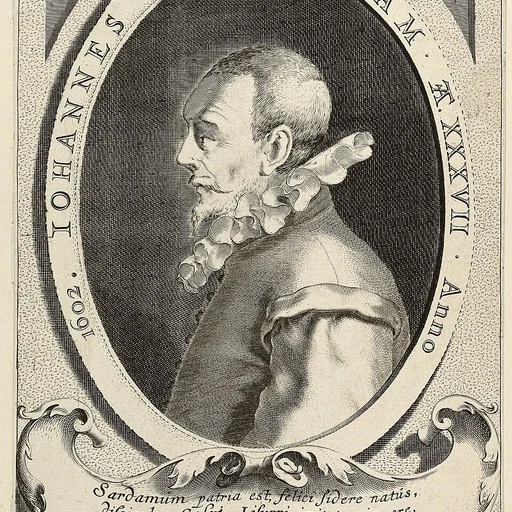
Jan Pieterszoon (abbr. Pietersz.) Saenredam (c. 1565 – 6 April 1607) was a Dutch Northern Mannerist painter, printmaker in engraving, and cartographer, and father of the painter of church interiors, Pieter Jansz…

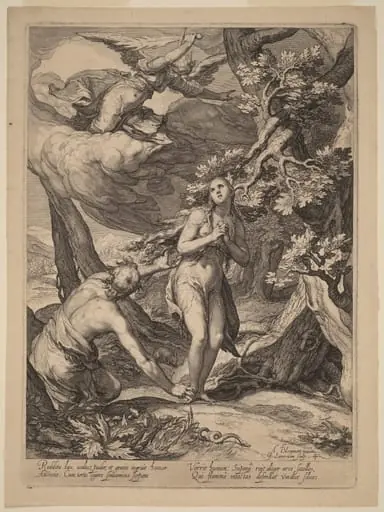
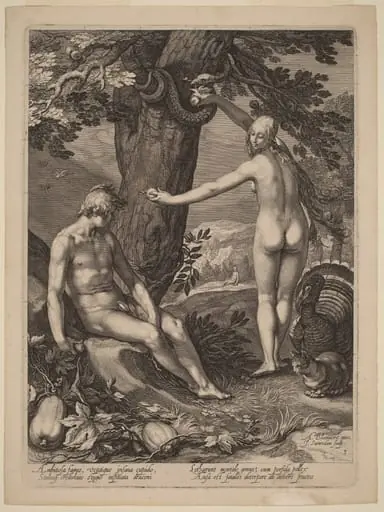
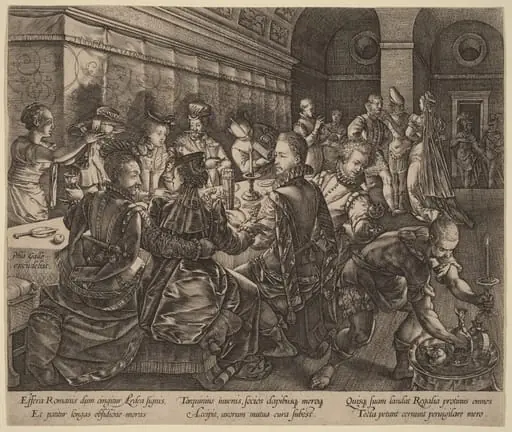 Banquet at the House of Tarquinius Collatinus
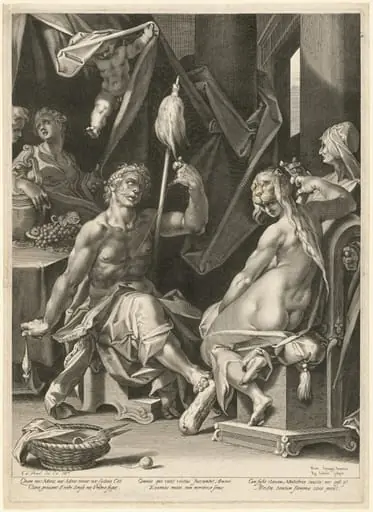 Hercules and Omphale
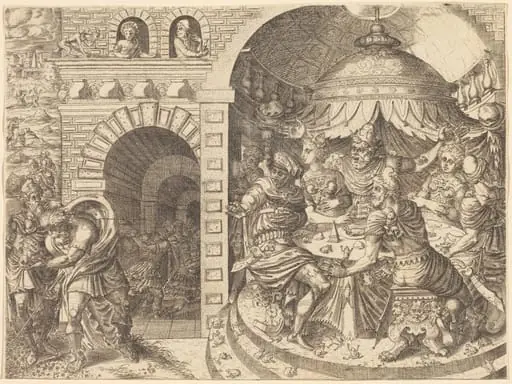 Pharaoh and the Plague of Frogs
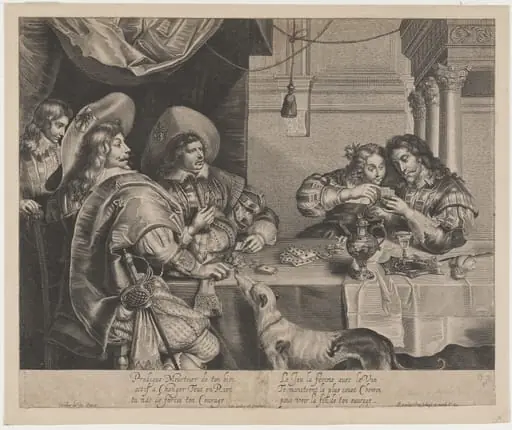 The Card Players
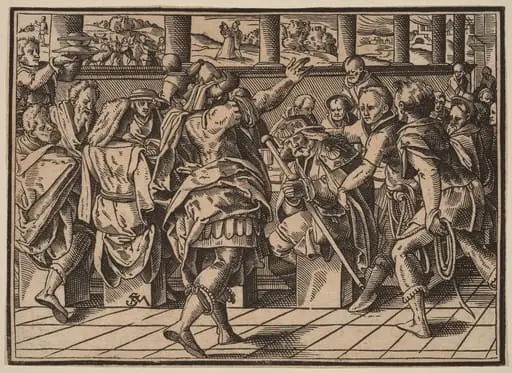 The Martyrdom of Saint James (?)
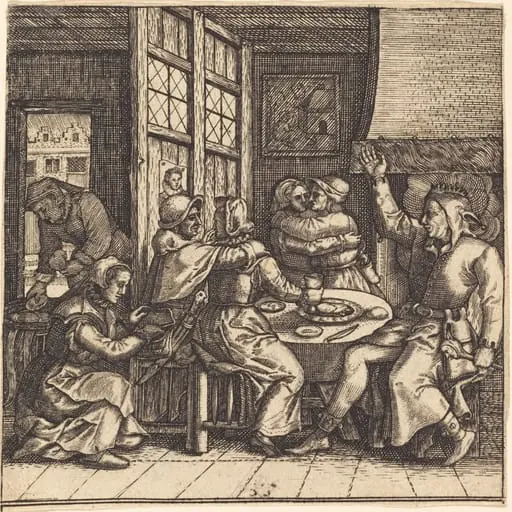 Exempel und Lehr Jetziger Welt Lauf
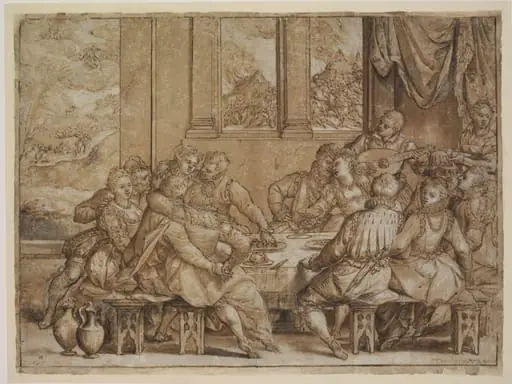 Mankind Feasting and Making Love, Awaiting the Last Judgement (‘the coming of the son of man’) (Matthew 24:37–42)
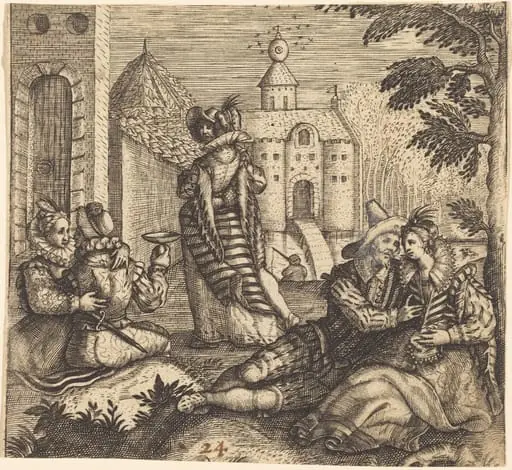 Exempel und Lehr Jetziger Welt Lauf
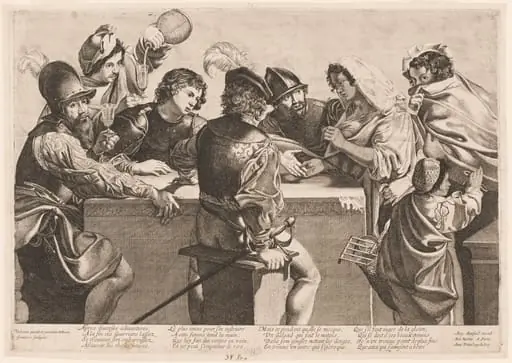 The Fortune Teller
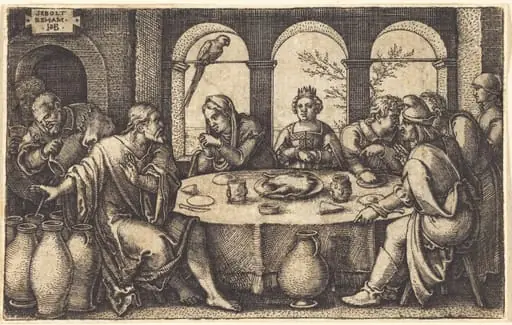 The Wedding at Cana
 Peasants' Feast
 A Satyr Visiting a Peasant Family