Artwork
Still Life with Pass Glass
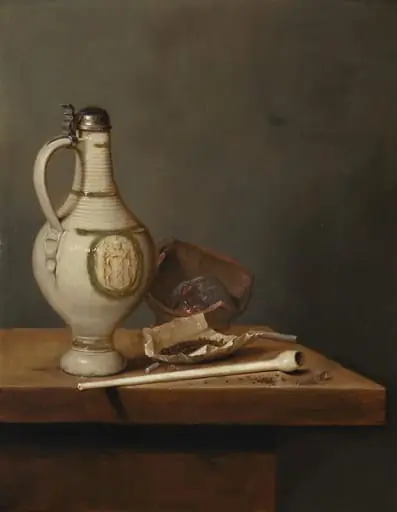
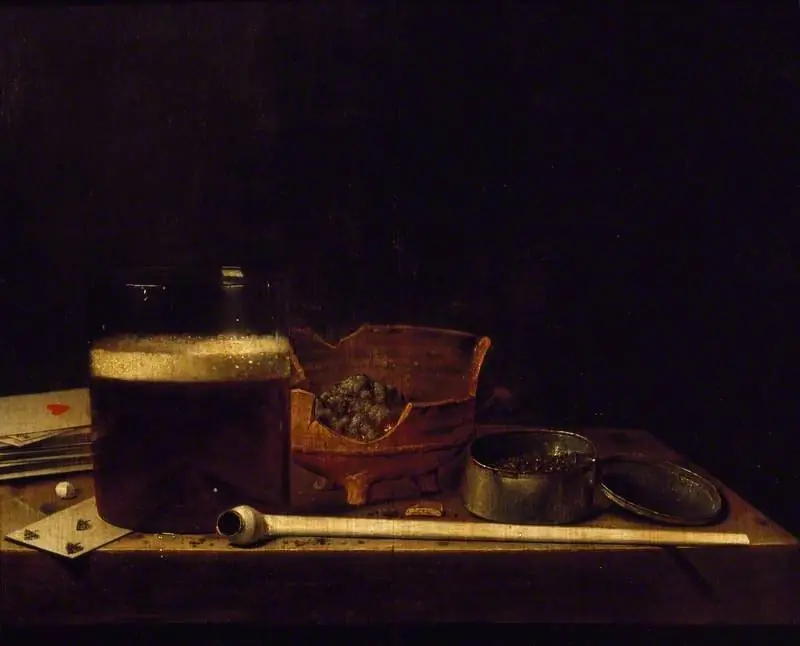
Still Life with Pass Glass is an oil painting by the Dutch Golden Age artist Jan Jansz van de Velde. It dates from 1660 and is held in the collection of the Mauritshuis.
About this work
Overview
The work resides in the Mauritshuis, where its restrained palette and deliberate lighting reflect Dutch Golden Age conventions of domestic introspection.
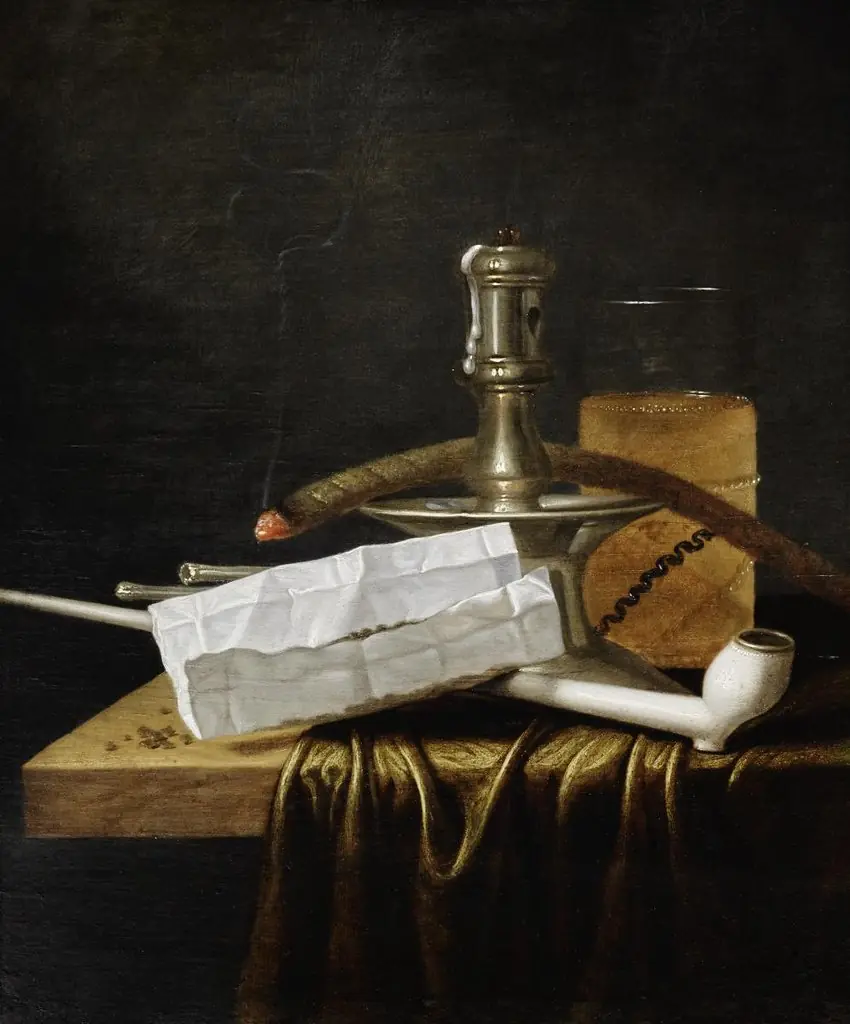
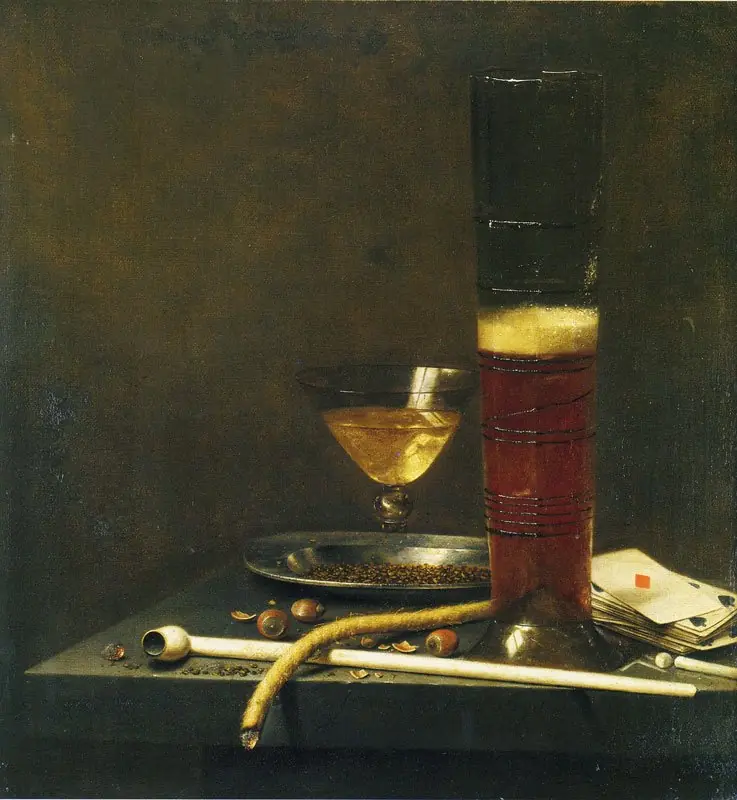
Painted in 1660 by Jan Jansz van de Velde, this oil-on-canvas still life presents a modest arrangement of everyday objects: a tall cylindrical pass glass, a white Gouda clay pipe, and loose tobacco. Set against a deep, unbroken background, the composition isolates these items with quiet precision. The work resides in the Mauritshuis, where its restrained palette and deliberate lighting reflect Dutch Golden Age conventions of domestic introspection.
Subject & Meaning
The objects—tobacco, pipe, and drinking vessel—suggest personal ritual rather than display. Their placement, slightly disordered, implies recent use, evoking solitary moments of pause. No grand symbolism is present; instead, the painting honors the quiet dignity of ordinary habits. The absence of human figures deepens the sense of stillness, inviting reflection on the transient nature of simple, habitual pleasures.
Technique & Style
Van de Velde employs chiaroscuro to model form through sharp contrasts between light and shadow, enhancing the tactile presence of the glass and clay. Brushwork is deliberate yet visible, particularly in the textured surfaces of the pipe and scattered tobacco. The dark background absorbs ambient light, focusing attention on the objects’ material qualities—translucent glass, porous clay, fibrous leaf—rendered with restrained realism.
History & Provenance
The painting entered the Mauritshuis collection in the 19th century, having likely passed through private Dutch hands since its creation. Its attribution to van de Velde is consistent with his known output of small-scale still lifes from the 1650s–60s. No significant alterations or restorations are documented, preserving the original surface and tonal balance as intended by the artist.
Context
In mid-17th century Holland, still lifes often conveyed moral or philosophical themes through everyday items. Van de Velde’s work aligns with this tradition but avoids overt allegory. Unlike lavish banquet scenes, this painting reflects the growing middle-class appreciation for understated domesticity, where quiet objects carried emotional weight without grand narrative.
Legacy
Van de Velde’s quiet approach influenced later Dutch still life painters who favored intimacy over spectacle. This painting remains a representative example of how ordinary objects, rendered with technical care and emotional restraint, could sustain visual interest without symbolic overload. Its endurance in the Mauritshuis underscores its role as a quiet anchor in the canon of Dutch genre painting.
Own this work as a print
Artist & collection
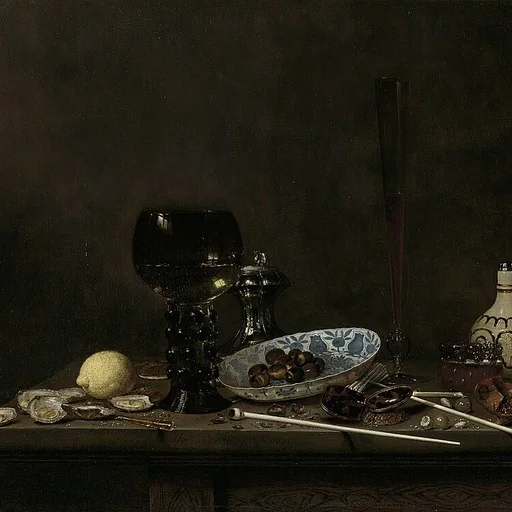
Artist
Jan Jansz van de Velde (1620–1662) was a Dutch artist, born in Haarlem.

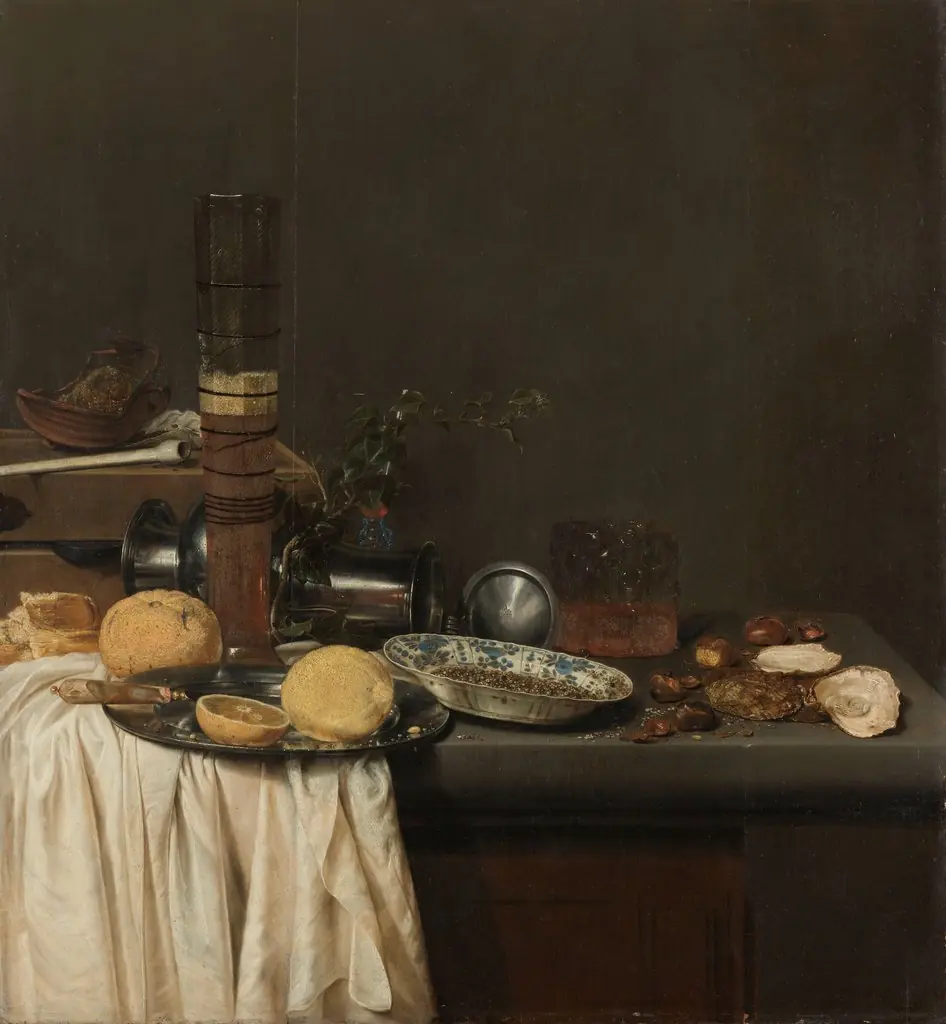 Still-life with a Tall Beer Glass
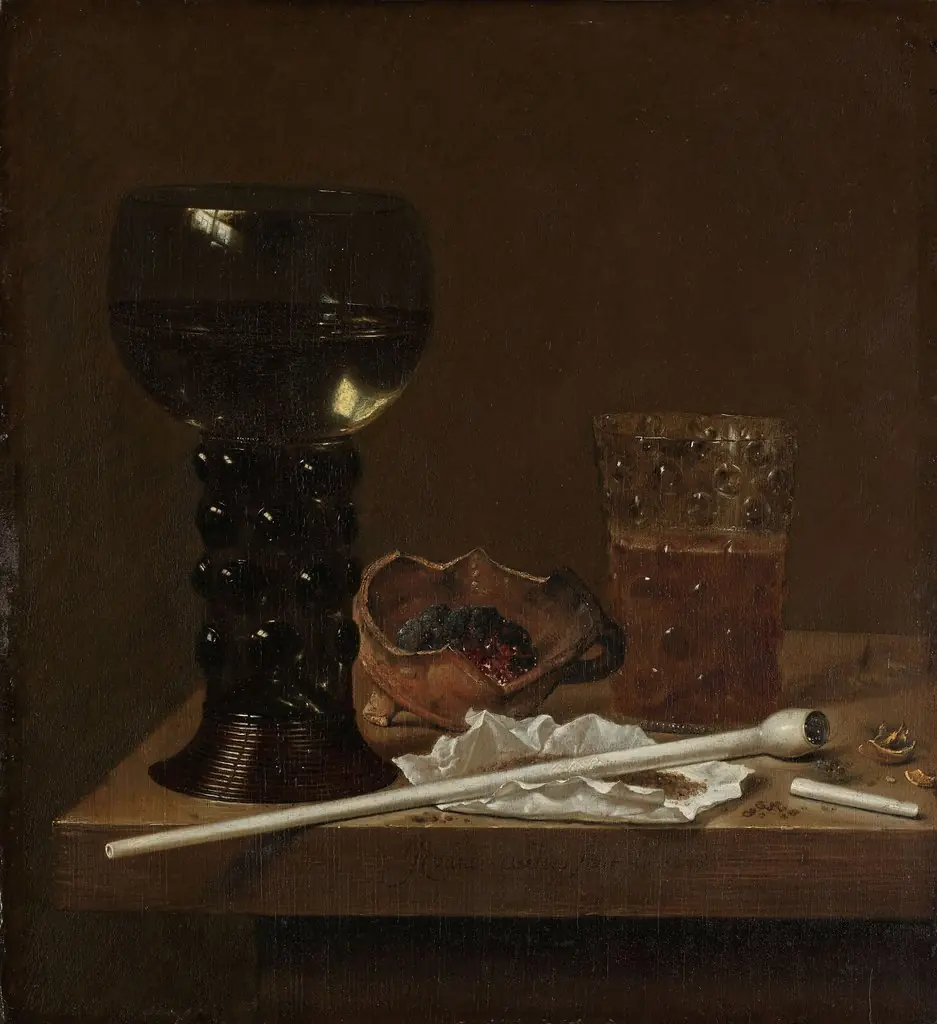 Still life with wineglass, beer glass and pipe
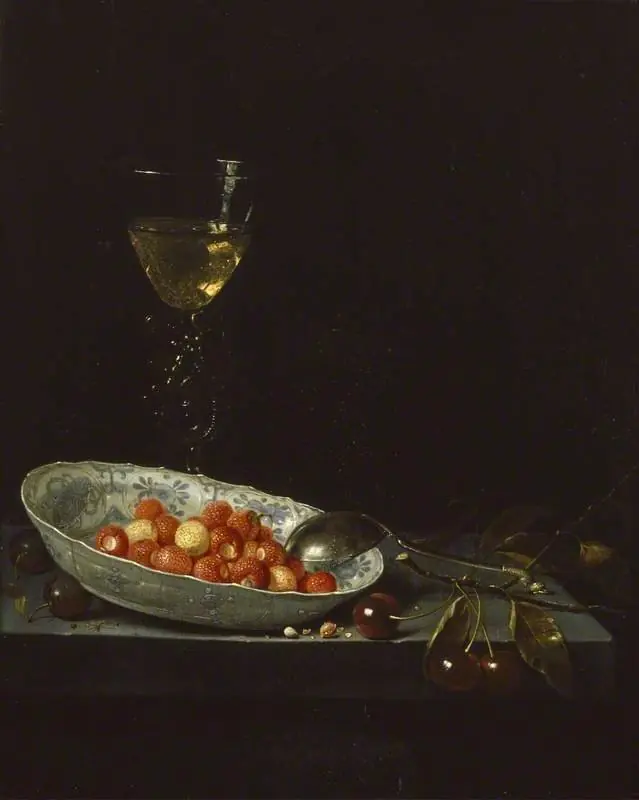 Still Life with Strawberries and Cherries
 Glasses, Smoking Implements, and Cards
 Still Life with Roemer, Salt Cellar, Tobacco, Lemon, and Olives
 Still life with wineglass, flute, glass, earthenware jug and pipes
 Still Life with Goblet and Fruit
 Still Life with a clay Pipe