Artwork
Schloss Loenersloot in Holland
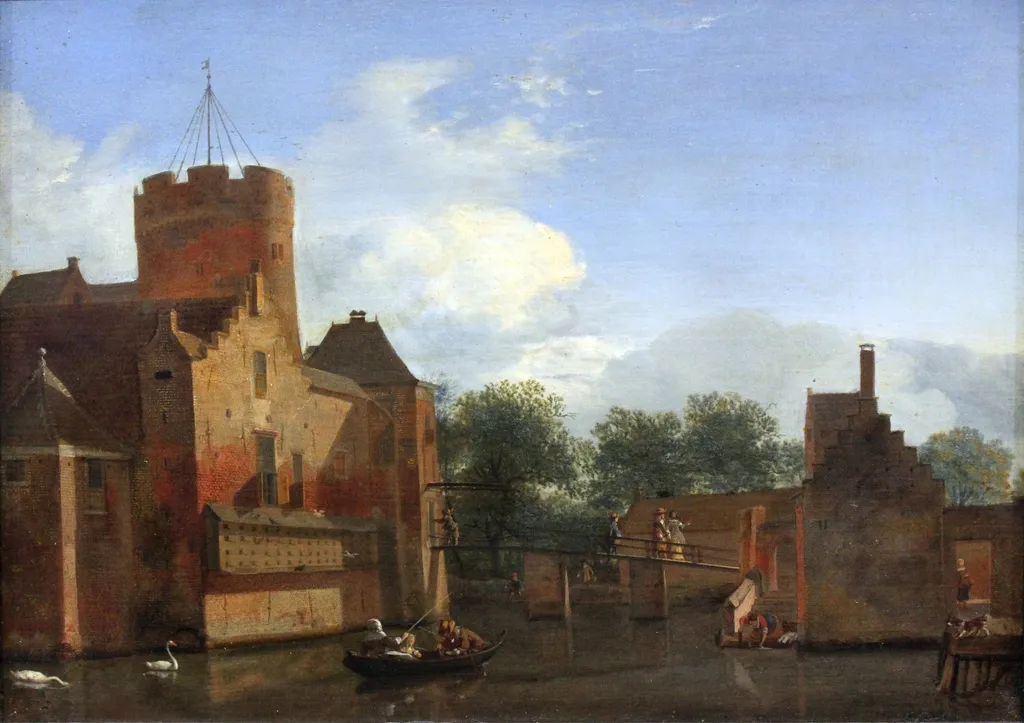
Schloss Loenersloot in Holland is an oil painting by the Dutch Golden Age artist Jan van der Heyden. It dates from 1668 and is held in the collection of the Städel Museum.
About this work
Overview
Jan van der Heyden’s 1668 oil painting captures the Dutch riverside estate of Schloss Loenersloot, situated on the Angstel near the village of Loenersloot. The composition centers on the fortified manor with its prominent tower, encircled by a shallow moat, while a small boat and figures on a bridge animate the tranquil scene. The work belongs to the collection of the Städel Museum in Frankfurt.
Subject & Meaning
The canvas presents a detailed view of the castle’s architecture and its immediate landscape, emphasizing the relationship between built structures and water.
The canvas presents a detailed view of the castle’s architecture and its immediate landscape, emphasizing the relationship between built structures and water. A solitary figure stands on the banks, suggesting everyday activity within an otherwise serene setting. The painting reflects the 17th‑century Dutch interest in documenting local landmarks and the orderly, prosperous environment of the Golden Age.
Technique & Style
Executed in oil on canvas, van der Heyden employs a precise, almost photographic handling of light and texture. Fine brushwork renders the brickwork, foliage, and rippling water with clarity, while a restrained palette of earth tones punctuated by occasional brighter hues conveys atmospheric depth. The composition balances linear perspective with a calm, balanced horizon typical of Dutch Baroque landscape.
History & Provenance
Created in 1668, the painting remained in private hands before entering the Städel Museum’s collection, where it is displayed as part of the museum’s Dutch Golden Age holdings. Its provenance traces a typical path for Dutch works, moving from regional owners to a major German institution in the 19th‑20th centuries.
Context
Van der Heyden, renowned for his meticulous townscapes and architectural subjects, combined his artistic practice with a reputation as an inventor and city planner. This work exemplifies his focus on Dutch civic and rural architecture, aligning with contemporary trends that celebrated national scenery and engineering achievements during the height of the Dutch Golden Age.
Own this work as a print
Artist & collection
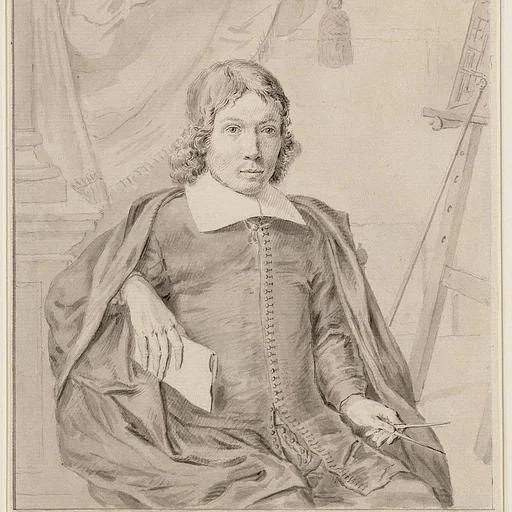
Artist
Jan van der Heyden (5 March 1637, Gorinchem – 28 March 1712, Amsterdam) was a Dutch Baroque-era painter, glass painter, draughtsman and printmaker.

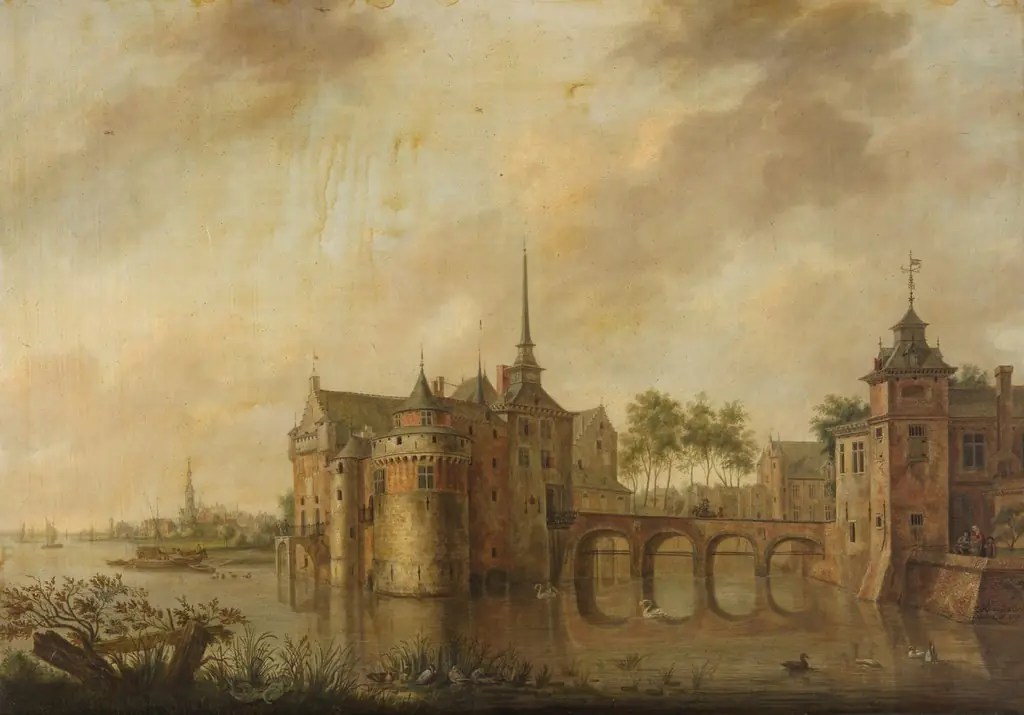 Schloß Temsch an der Schelde
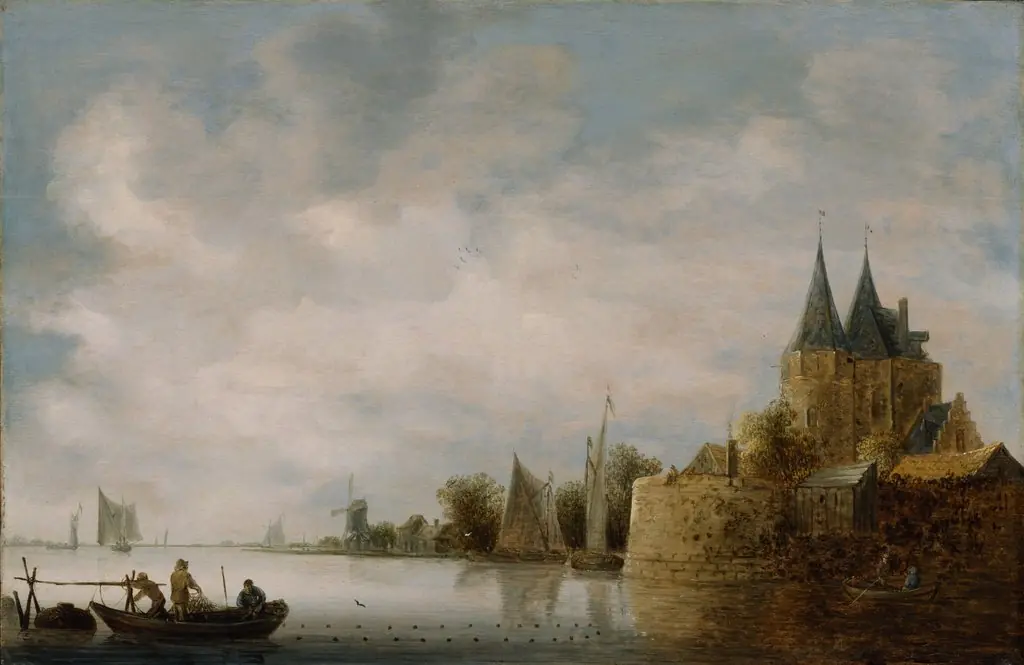 View of the North Port at Hoorn
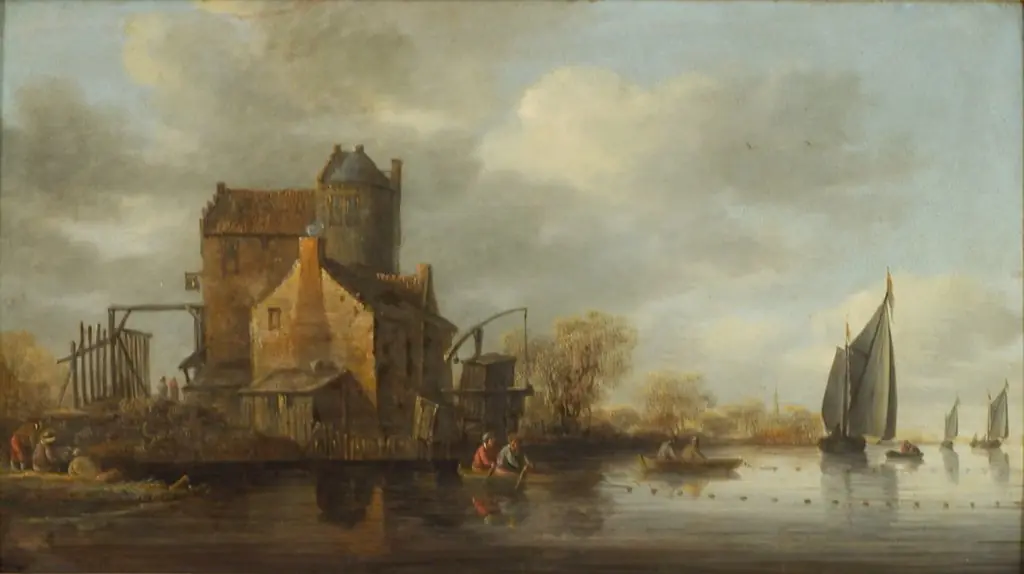 Dutch River View
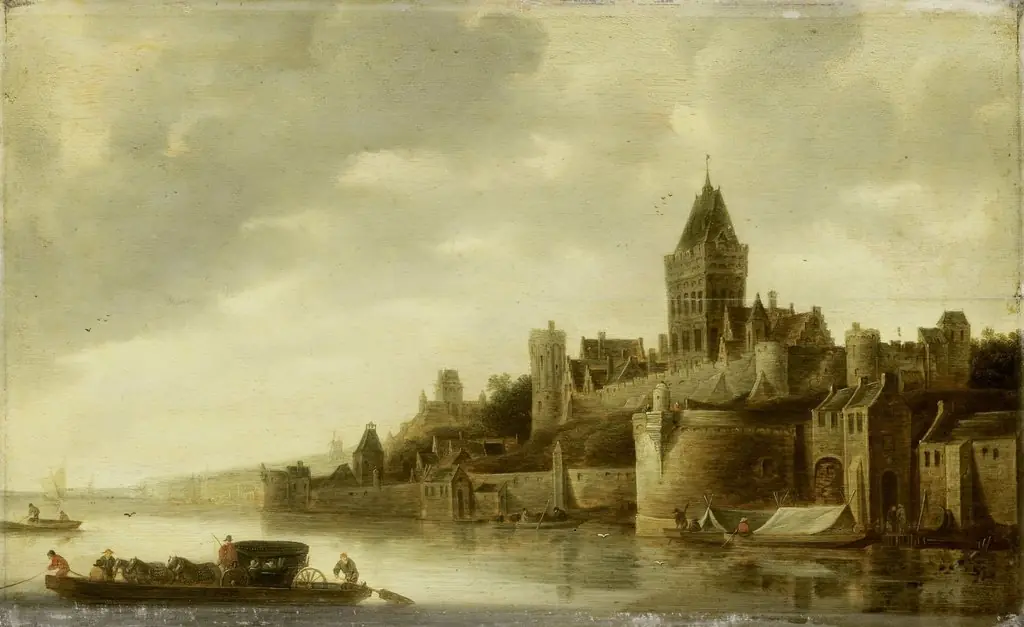 View of the Valkhof in Nijmegen
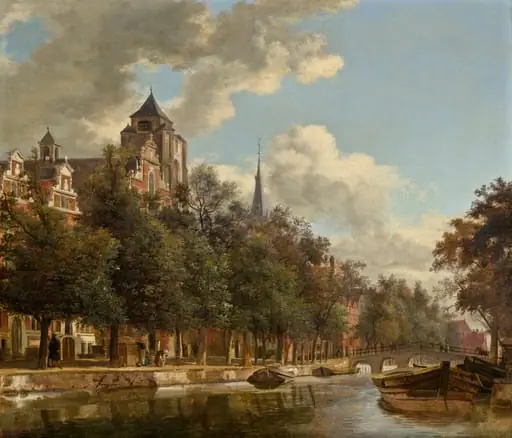
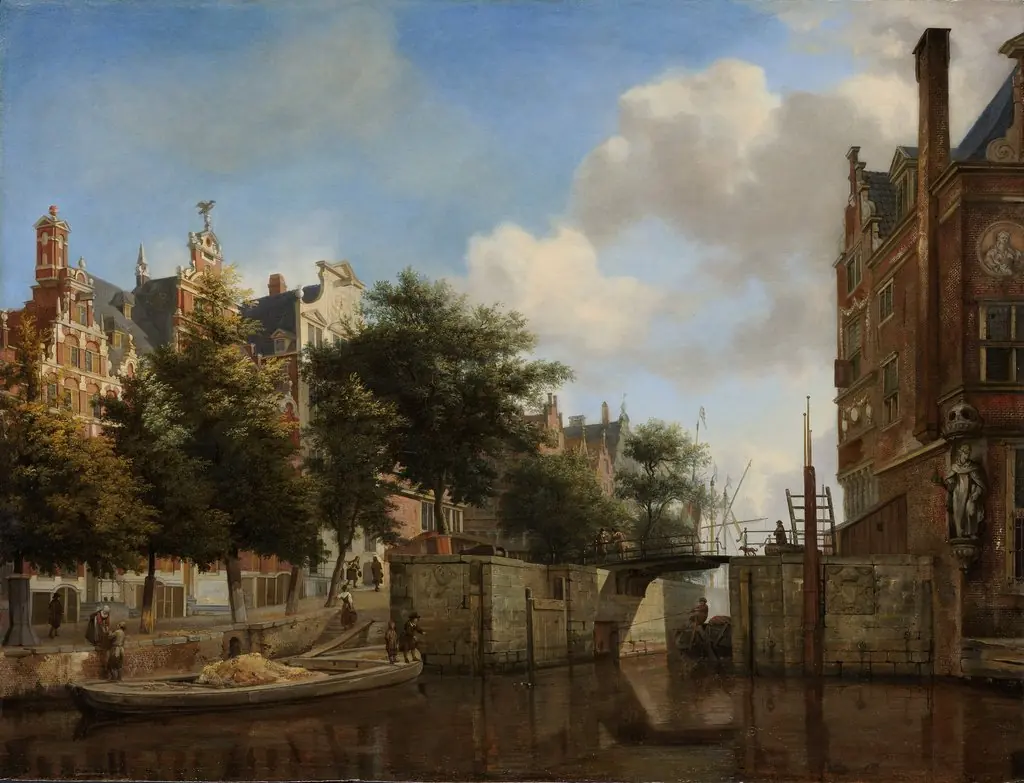 Amsterdam City View with Houses on the Herengracht and the old Haarlemmersluis
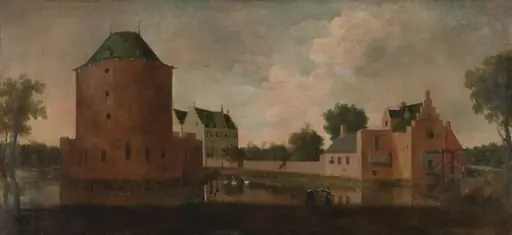 Teylingen Castle
 The Castle of Montfoort near Utrecht
 The drawbridge
 Imaginary View based on the Kolksluis, Amsterdam
 Dutch Landscape
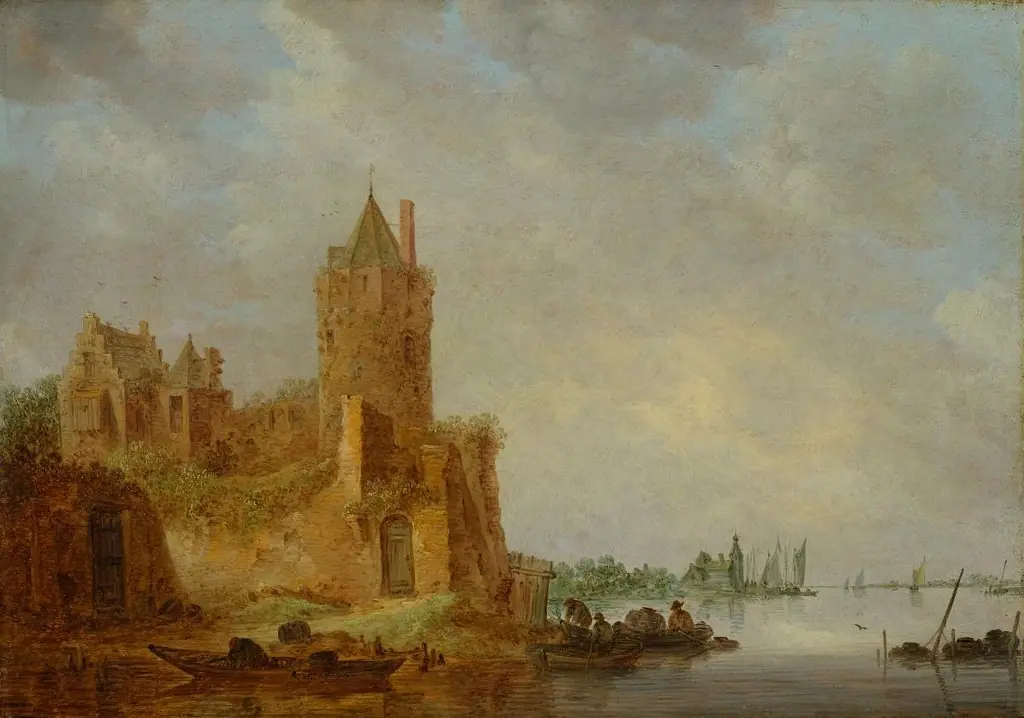 Altes Schloss an einem Fluss
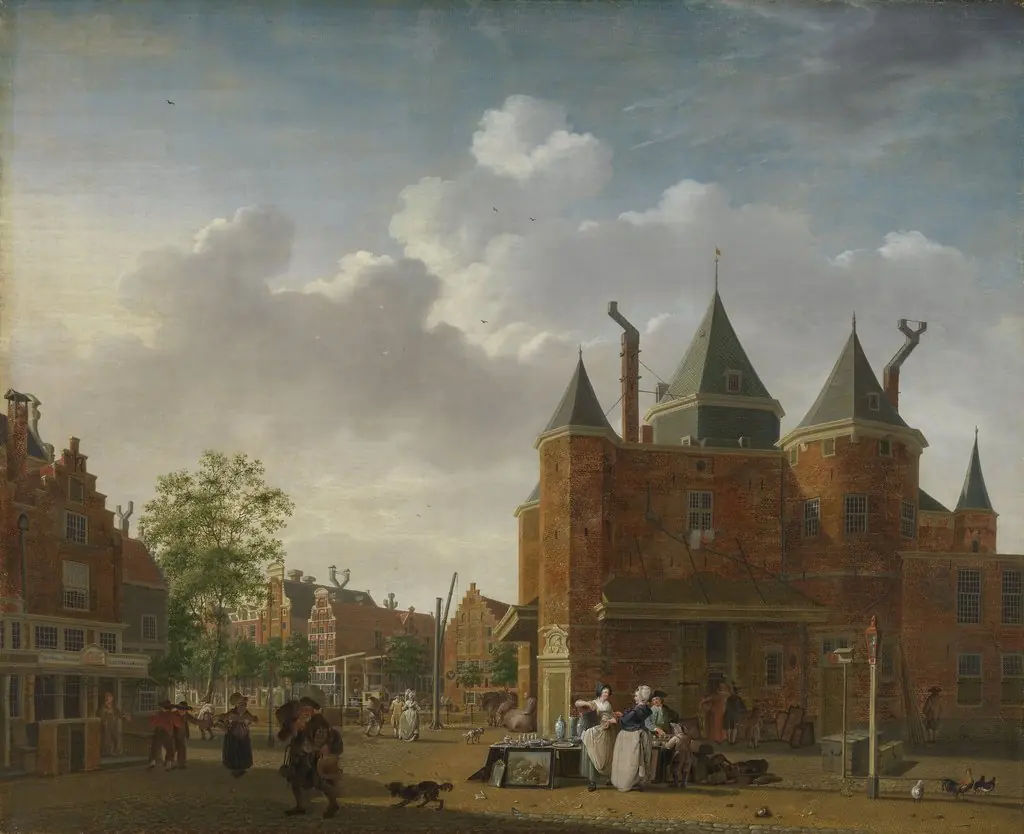 The Sint-Antoniuswaag in Amsterdam