Artwork
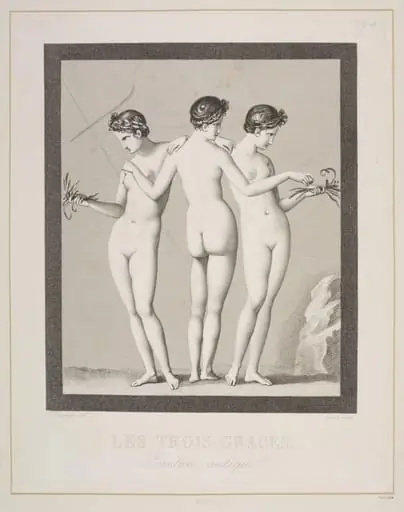
Les trois graces
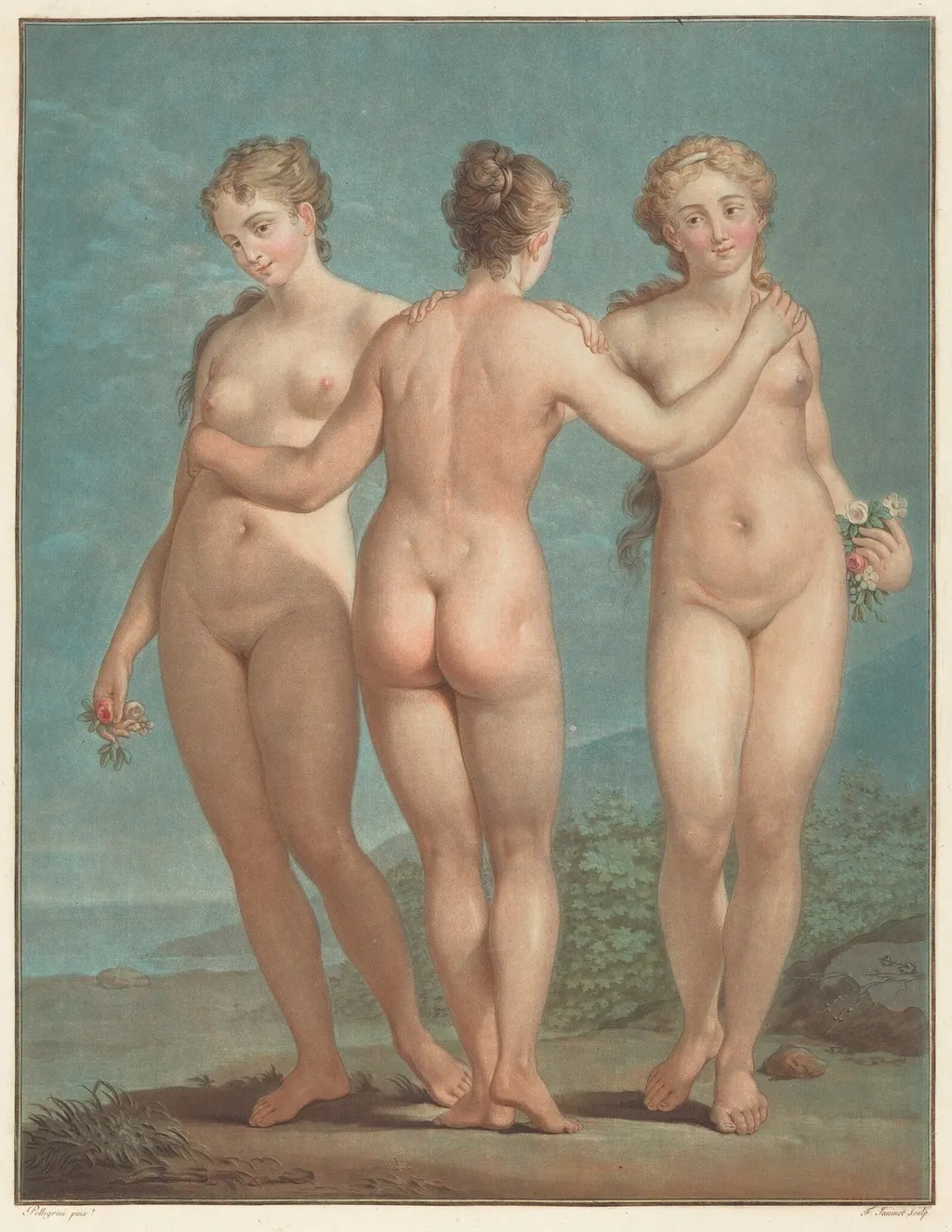
Les trois graces is an ink print by the Romanticist artist Jean-François Janinet. It dates from 1786 and is held in the collection of the National Gallery of Art.
About this work
Overview
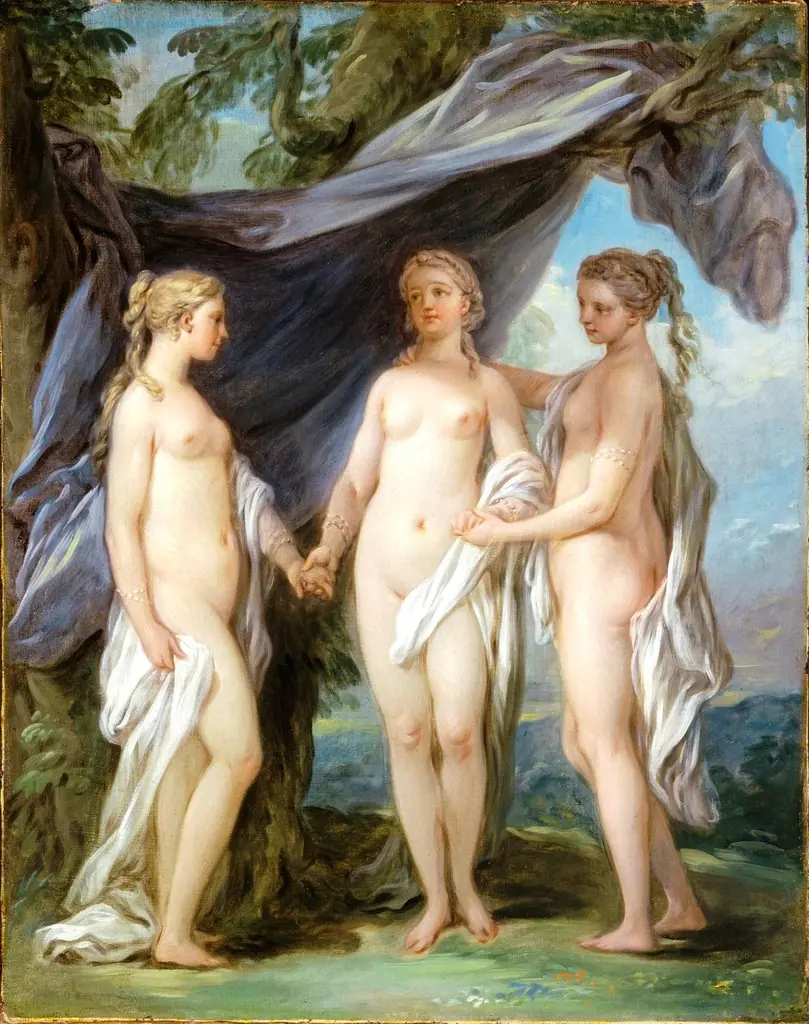
The composition presents three nude female figures standing in a quiet, harmonious grouping, rendered with subtle tonal gradations and fine linear detail.
Created in 1786 by Jean-François Janinet, this print depicts the Three Graces in a delicate color etching with wash technique on laid paper. The composition presents three nude female figures standing in a quiet, harmonious grouping, rendered with subtle tonal gradations and fine linear detail. The work belongs to the tradition of academic figure studies, where mythological subjects served as vehicles for exploring idealized human form.
Subject & Meaning
The Three Graces—Aglaea, Euphrosyne, and Thalia—represent beauty, charm, and joy in classical mythology. Janinet portrays them in a serene, interlinked pose, emphasizing unity and grace rather than narrative drama. The flowers they hold allude to fertility and seasonal renewal, while their gentle physical contact suggests mutual affection. The composition reflects Enlightenment-era ideals of harmony and rational beauty drawn from antiquity.
Technique & Style
Janinet employed color etching and wash to achieve soft transitions in skin tones and atmospheric depth. The lines are fluid and precise, contouring the figures’ forms with minimal interruption, a hallmark of academic draftsmanship. The pale blue sky and faint landscape behind them provide a restrained backdrop, directing focus to the bodies. The use of wash adds luminosity without overwhelming the etched lines, balancing detail with tonal subtlety.
History & Provenance
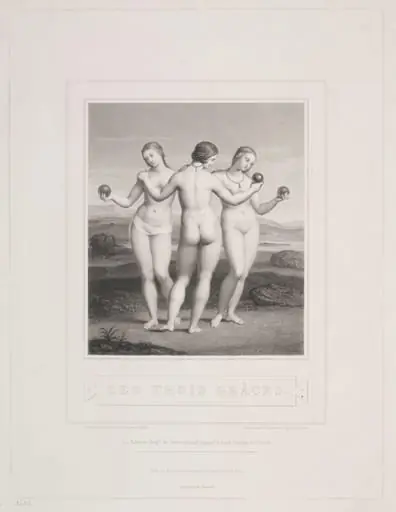
Produced in 1786, the print was part of a broader revival of classical themes in French printmaking during the late Ancien Régime. Janinet, known for reproductive engravings after Old Masters, adapted this subject from earlier painted compositions, likely inspired by Raphael or ancient sculpture. The work circulated among collectors and art students, serving both as aesthetic study and decorative object in private collections.
Context
In the decades before the French Revolution, academic art emphasized classical ideals as a counterpoint to Rococo frivolity. Janinet’s etching aligns with this shift, offering a restrained, dignified interpretation of mythological nudes. Unlike overtly sensual depictions, this work prioritizes balance and composure, reflecting the growing influence of Neoclassicism in both visual culture and intellectual circles across Europe.
Legacy
Though not widely exhibited today, Janinet’s etching remains a representative example of late 18th-century printmaking’s role in disseminating classical motifs. It contributed to the standardization of the Three Graces motif in academic training, influencing later artists through its clarity of form and controlled execution. The work endures as a quiet testament to the period’s reverence for classical harmony in art.
Artist & collection