Artwork
The Harvesters' Lunch
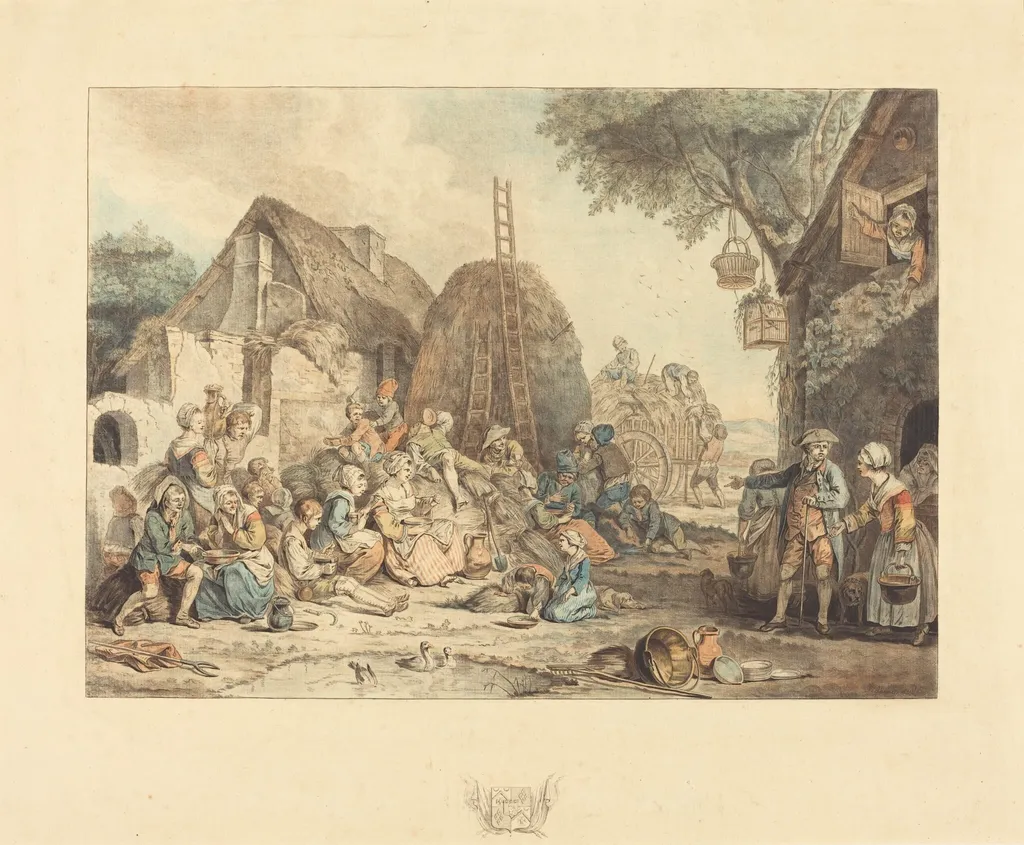
The Harvesters' Lunch is an ink print by the Romanticist artist Jean-François Janinet. It dates from 1774 and is held in the collection of the National Gallery of Art. Jean‑François Janinet’s print titled *The Harvesters’ Lunch* was produced in 1774.
About this work
Overview
Jean‑François Janinet’s print titled *The Harvesters’ Lunch* was produced in 1774. Executed as a color etching with wash and roulette techniques, the work presents a lively rural tableau. A thatched cottage anchors the composition, surrounded by haystacks, a wagon, and villagers engaged in various activities during the harvest season.
Subject & Meaning
The scene captures a communal pause amid agricultural labor: men, women, and children gather to eat, converse, and tend tools or livestock. The inclusion of everyday objects—a birdcage, simple pottery, and modest clothing—underscores the ordinary rhythms of village life, while the varied postures suggest both work and brief leisure.
Technique & Style
Janinet employs fine, intersecting lines to render textures such as rough thatch and smooth ceramic surfaces. Washes add tonal depth, and roulette work creates subtle tonal variations across the sky and ground. The limited palette of earth tones punctuated by occasional reds highlights details without overwhelming the composition, typical of late‑18th‑century French printmaking.
History & Provenance
Created in the final decade of the Ancien Régime, the print reflects contemporary interest in pastoral genre scenes. While specific ownership records are scarce, the work has appeared in several 19th‑century catalogues of French prints, indicating its circulation among collectors of etchings and its inclusion in Janinet’s broader oeuvre.
Context
The image aligns with the Enlightenment’s fascination with rural virtue and the idealization of agrarian labor. Janinet’s depiction of a harvest gathering parallels other genre works of the period that celebrated communal effort and the simplicity of country life, offering a visual counterpoint to the urban focus of many contemporaneous prints.
Artist & collection

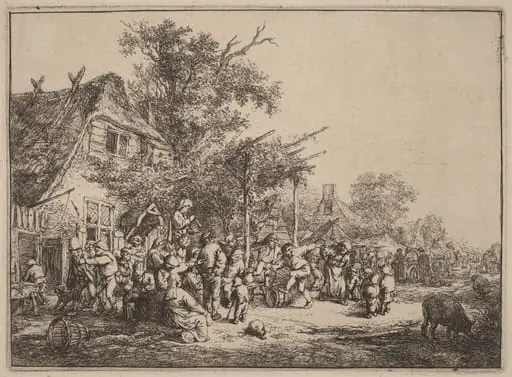 Village Kermesse with Peasants Feasting Under a Pergola
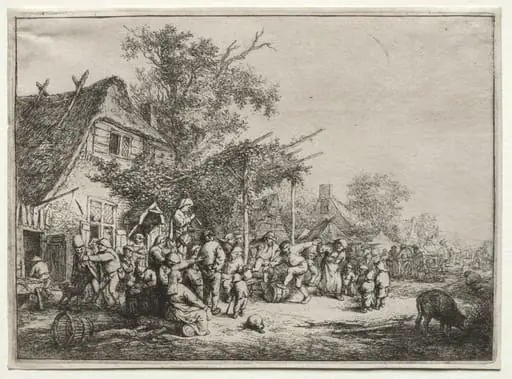 Festival Under the Trellis
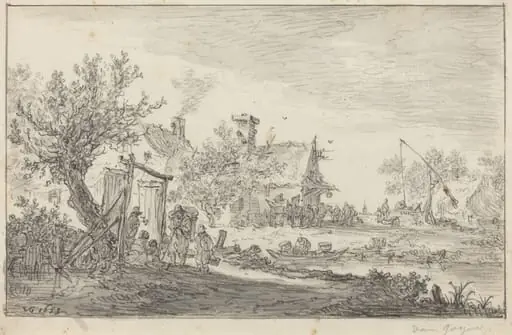 Wayside Inn
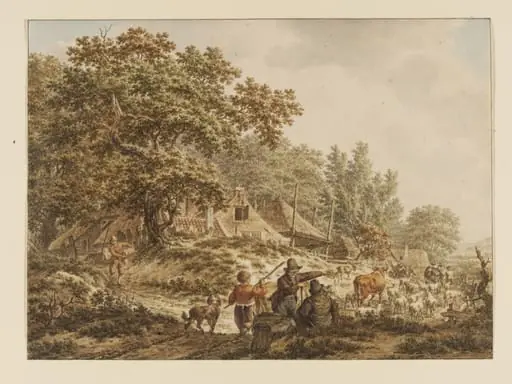 Herdsmen and Their Flocks Before a Dutch Farmstead Among Trees
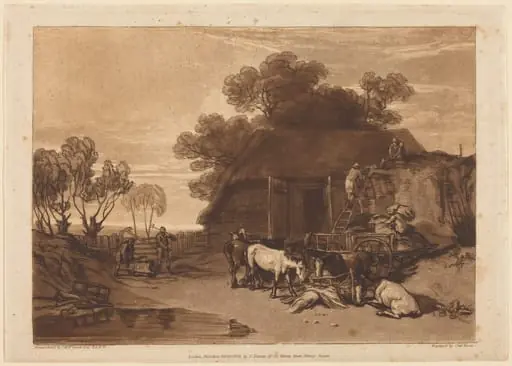 The Straw Yard
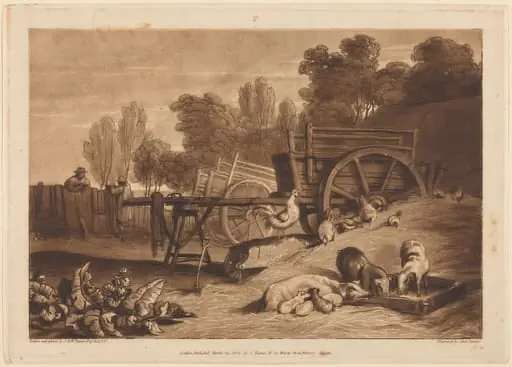 The Farm-yard with the Cock
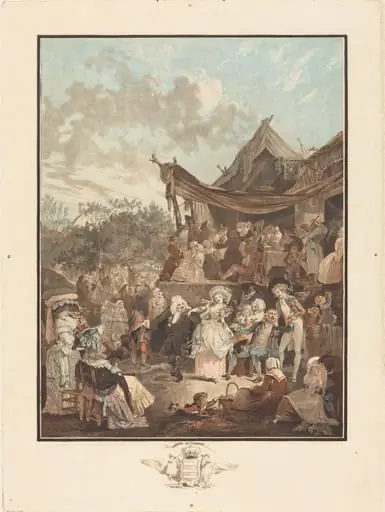 Le Menuet de la mariee (The Bride's Minuet)
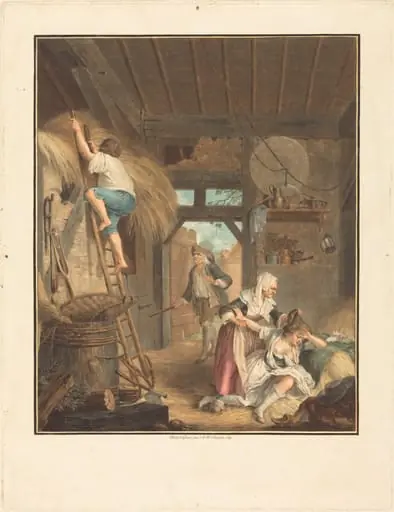 It's Too Late (Il est trop tard)
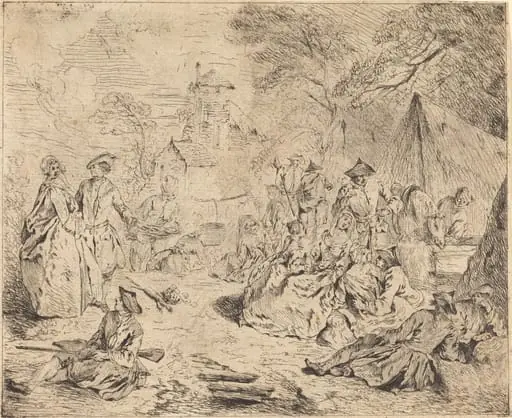 Troops Resting
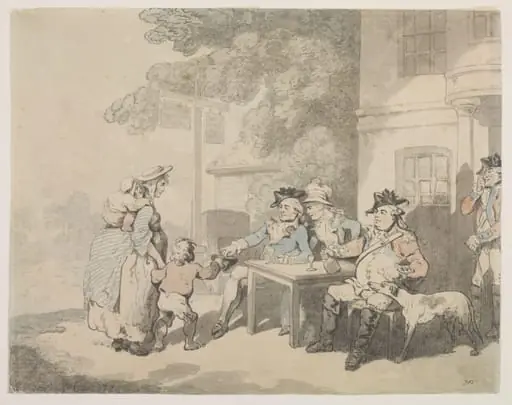 Untitled
 Landscape with a Cottage and Figures
 Spring (Village Fair before an Inn)