Artwork
Ubu Roi; Petits Poèmes amorphes
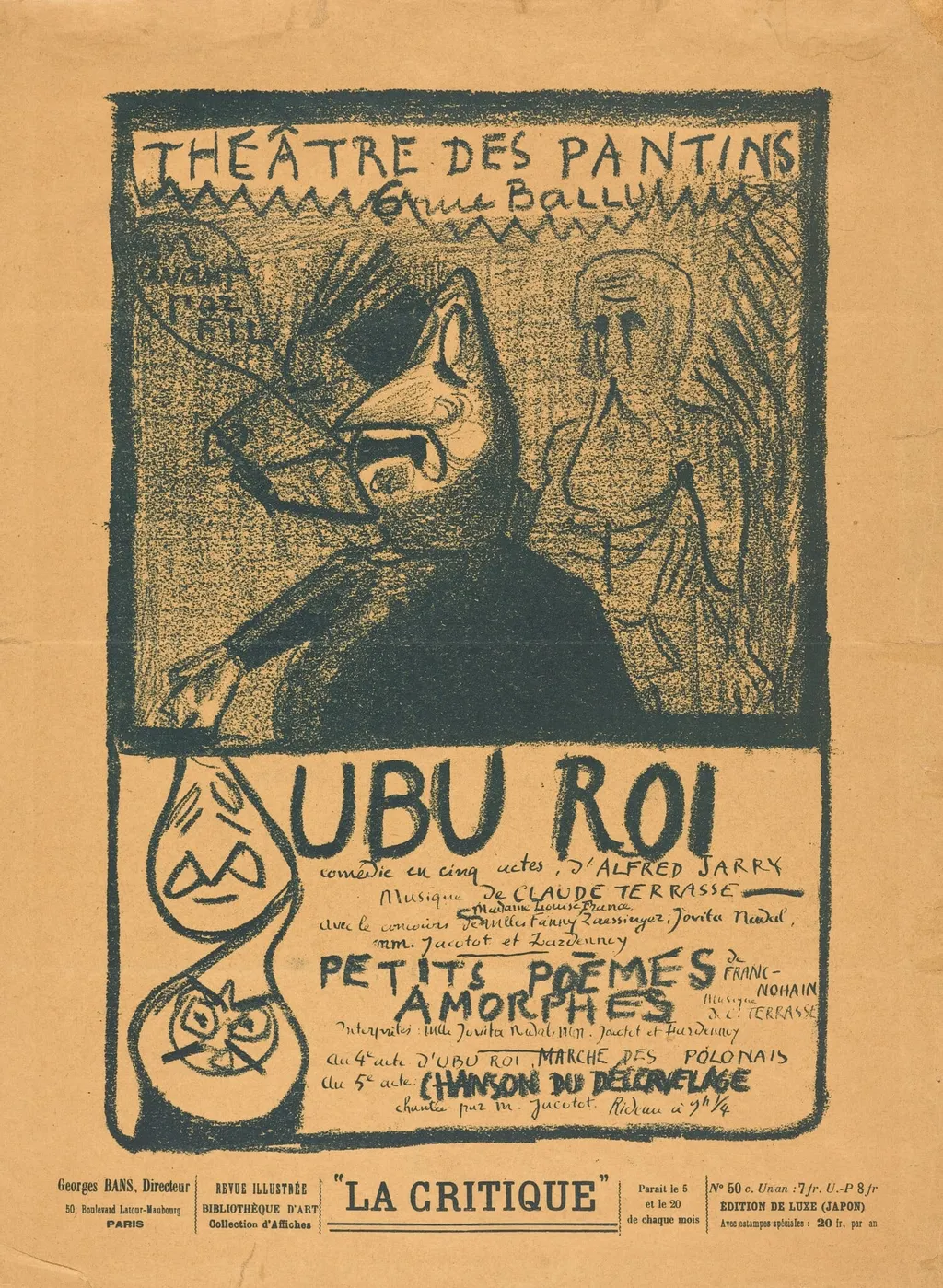
Ubu Roi; Petits Poèmes amorphes is a print by the Impressionist artist Alfred Jarry. It dates from 1898 and is held in the collection of the National Gallery of Art.
About this work
Overview
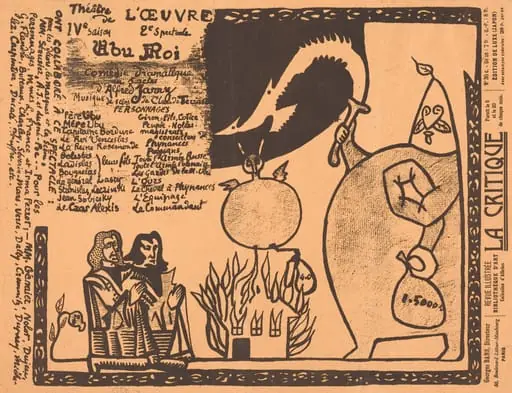
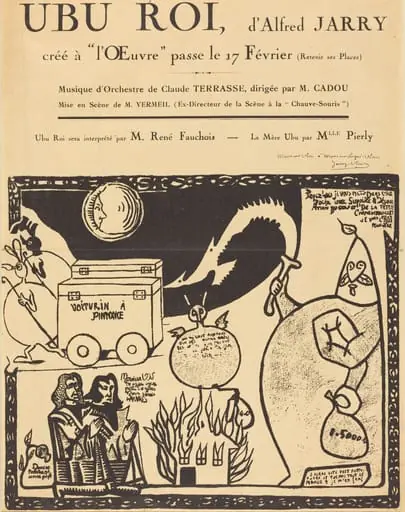
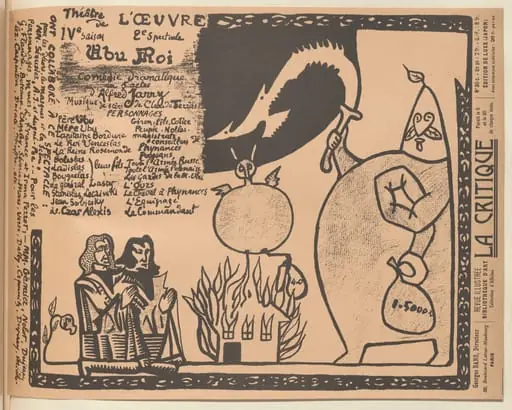
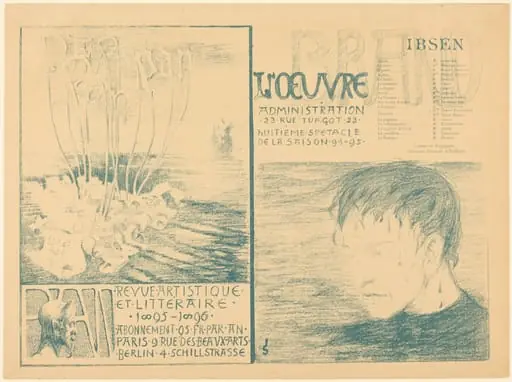
Executed using a photomechanical process in green ink, it functions as a promotional poster for Jarry’s play Ubu Roi and his accompanying collection of poems.
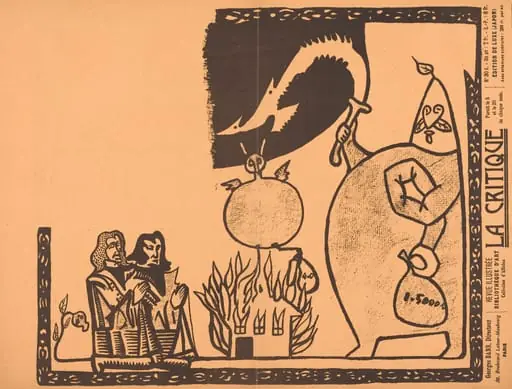
Created in 1898 by Alfred Jarry, this print combines text and image in a single composition on light brown wove paper. Executed using a photomechanical process in green ink, it functions as a promotional poster for Jarry’s play Ubu Roi and his accompanying collection of poems. The design merges typographic elements with figural sketches, reflecting the avant-garde spirit of late 19th-century French experimental theater.
Subject & Meaning
The central figure—a grotesque man with an exaggerated nose and mouth—evokes the character of Père Ubu, the absurd, vulgar protagonist of Jarry’s play. Below, a smaller head and inscribed French text reinforce the work’s literary purpose. The inclusion of names likely refers to collaborators or patrons. The imagery rejects naturalism, instead embodying satire and chaos, aligning with Jarry’s subversive critique of authority and artistic convention.
Technique & Style
The image was produced via a photomechanical method, allowing reproduction while retaining hand-drawn qualities. Bold, simplified contours and distorted proportions characterize the figures, suggesting a deliberate move away from realism. The limited green palette on warm paper enhances the crude, urgent aesthetic. The integration of handwritten-style text within the image blurs boundaries between graphic design and literary artifact.
History & Provenance
This print was made to accompany the 1898 publication of Ubu Roi and Petits Poèmes amorphes, serving as both advertisement and artistic extension of Jarry’s theatrical work. It was likely distributed among avant-garde circles in Paris. Its survival as a singular artifact reflects its niche appeal during a period when such experimental prints were rarely preserved as collectibles.
Context
Emerging alongside Symbolist and Decadent movements, Jarry’s work rejected bourgeois norms and embraced absurdity. While not part of Impressionism, the print shares with contemporaneous graphic art a fascination with expressive line and anti-academic form. It reflects broader late-century shifts in publishing, where artists increasingly designed their own promotional materials to control narrative and aesthetic.
Legacy
Though obscure in its time, this print became a touchstone for later Dadaists and Surrealists drawn to its anarchic tone and visual irreverence. Jarry’s fusion of text and grotesque imagery prefigured 20th-century experimental typography and performance art. Its raw, unpolished quality continues to resonate in works that prioritize conceptual disruption over technical refinement.
Artist & collection