Artwork
France comforted by Time
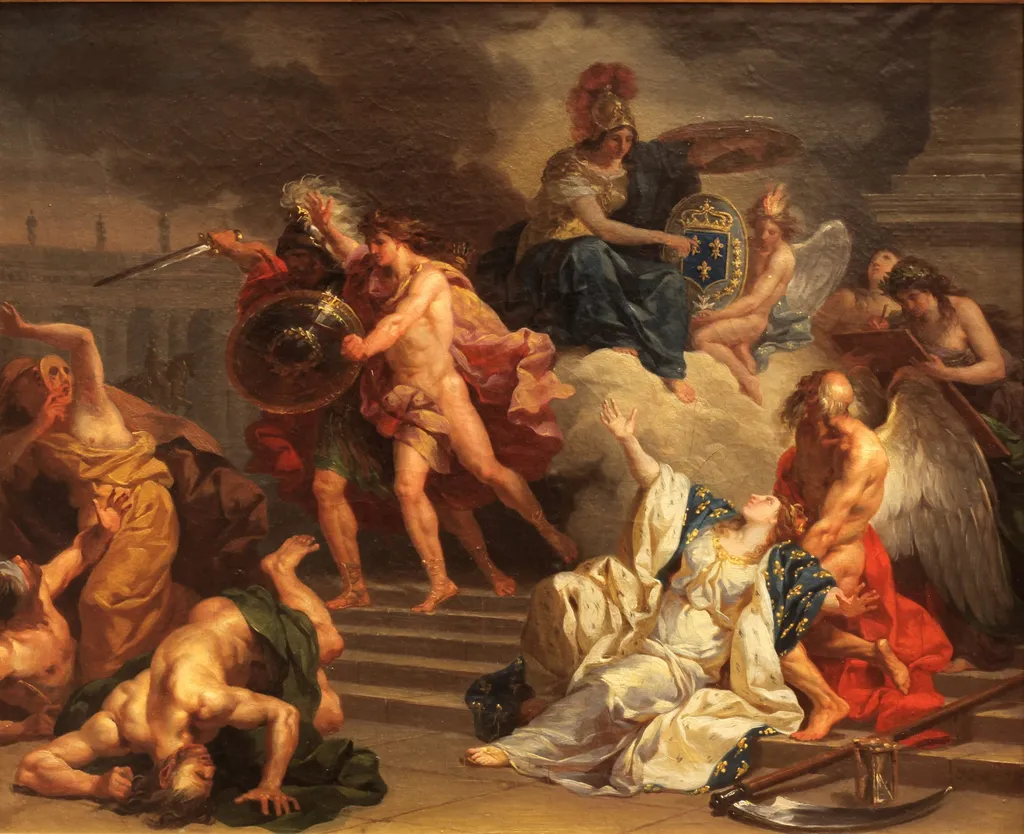
France comforted by Time is an oil painting by the Neoclassicist artist Jean-Charles Nicaise Perrin. It dates from 1802 and is held in the collection of the Museum of Fine Arts of Lyon.
About this work
Overview
The work reflects Perrin’s role as a state-aligned artist tasked with visualizing the ideals of post-revolutionary France through mythic imagery.
Painted around 1802 by Jean-Charles Nicaise Perrin, this oil-on-canvas allegory was commissioned during the early years of the French Empire. It presents a symbolic narrative of national recovery, blending classical forms with contemporary political sentiment. The work reflects Perrin’s role as a state-aligned artist tasked with visualizing the ideals of post-revolutionary France through mythic imagery.
Subject & Meaning
The painting personifies France as a sorrowful woman seated on a cloud, cradling a shield bearing the royal fleur-de-lis and crown—symbols of monarchy reclaimed under Napoleon. Around her, fallen figures and armored soldiers suggest the turmoil of revolution and war. An angelic figure, possibly representing Time, offers solace, implying that history will restore order and dignity to the nation.
Technique & Style
Perrin employs dramatic chiaroscuro to heighten emotional tension, with warm golds and deep reds dominating the palette. Figures are rendered with classical precision, their poses echoing sculptural ideals, yet the composition remains dynamic and crowded. The contrast between the serene, luminous figure of France and the chaotic, shadowed masses below underscores the painting’s thematic focus on divine reassurance amid disorder.
History & Provenance
Commissioned during Napoleon’s consolidation of power, the work was intended to legitimize imperial authority by linking it to France’s historical legacy. It entered the collection of the Museum of Fine Arts of Lyon in the 19th century, where it remains today. Its survival through political upheavals reflects its enduring role as a visual artifact of state-sponsored narrative.
Context
Created shortly after the fall of the Directory and during Napoleon’s rise, the painting responds to a cultural need for unifying symbols. While the Revolution had rejected monarchy, its imagery—like the fleur-de-lis—was repurposed to evoke continuity and stability. Perrin’s work aligns with other state commissions that blended classical allegory with emerging imperial identity.
Legacy
Though less known today than contemporaries like David, Perrin’s painting exemplifies how state patronage shaped public visual culture under the Empire. Its blend of myth and politics offers insight into how regimes used art to mediate collective memory. The work remains a key example of early 19th-century French allegorical painting, valued for its historical resonance rather than aesthetic novelty.
Own this work as a print
Artist & collection
Artist
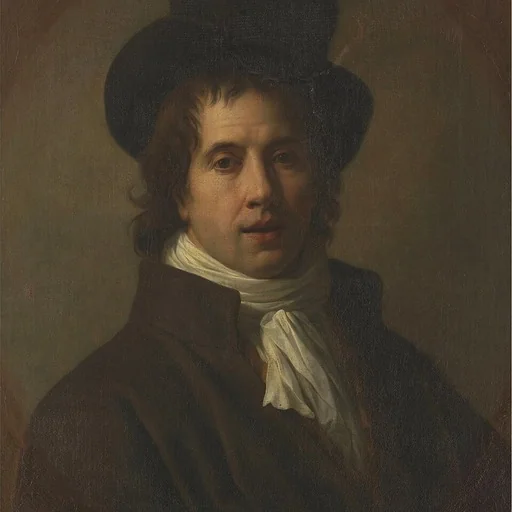
Jean-Charles Nicaise Perrin (12 October 1754, in Paris – 23 September 1831, in Paris) was a French Neo-Classical painter, primarily of historical and Biblical scenes. During the Empire, he produced patriotic allegories.

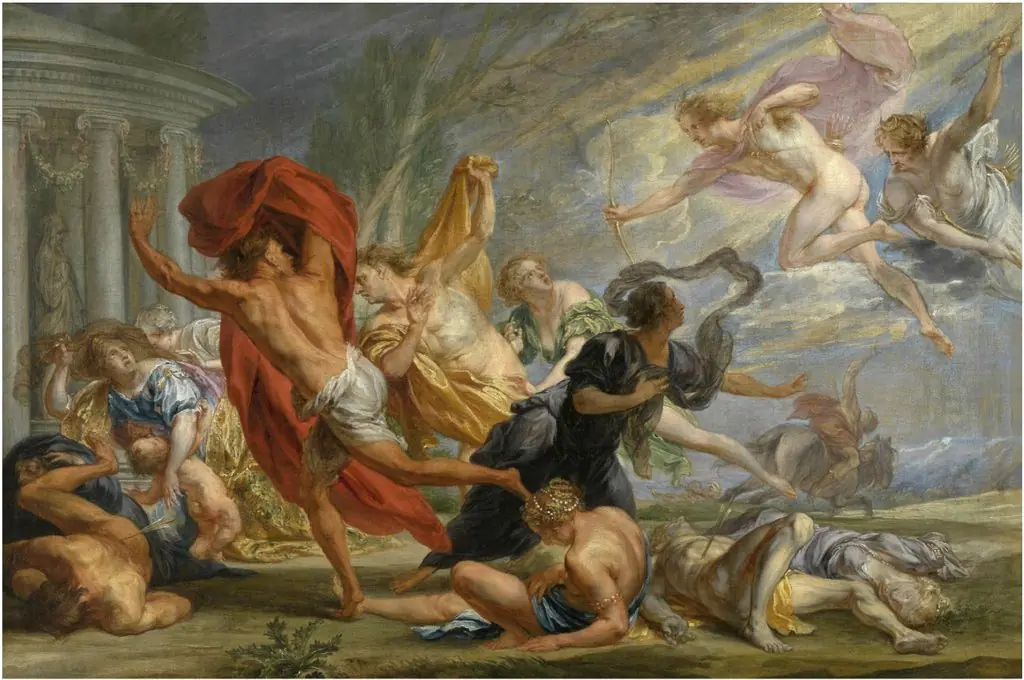 Apollo and Diana Kill Niobe's Children
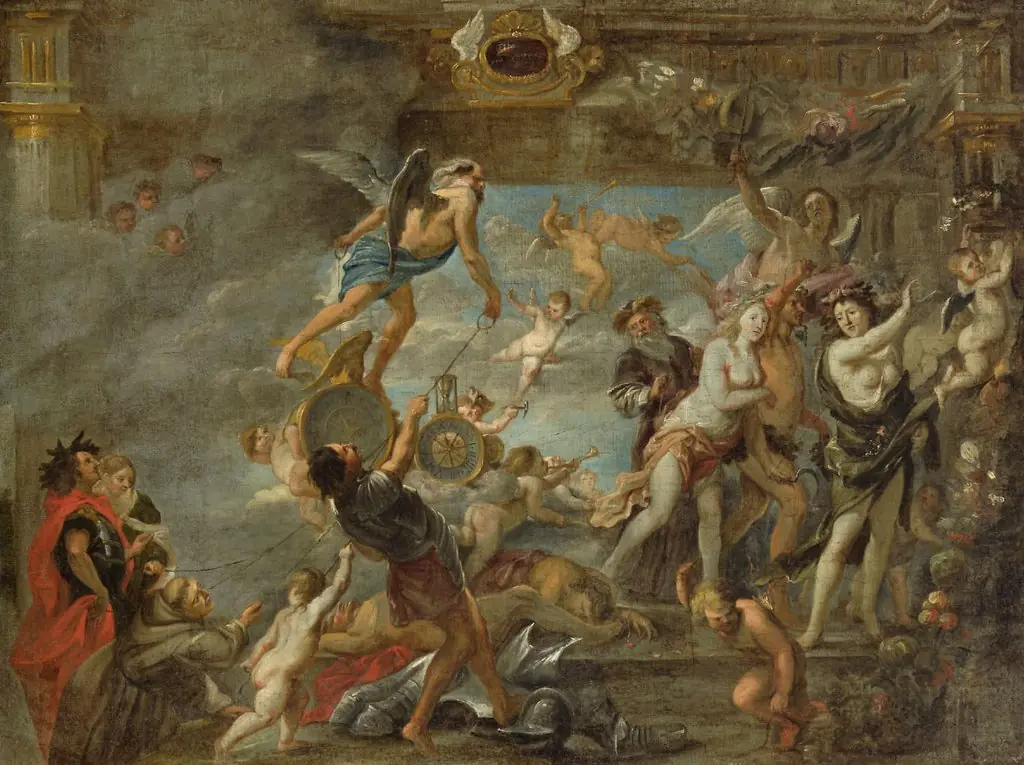 Triumph of Time
 Hercules and Minerva Expelling Mars
 The Abduction of Orithyia
 Perseo affronta Fineo con la testa di Medusa
 Massacre of the Innocents
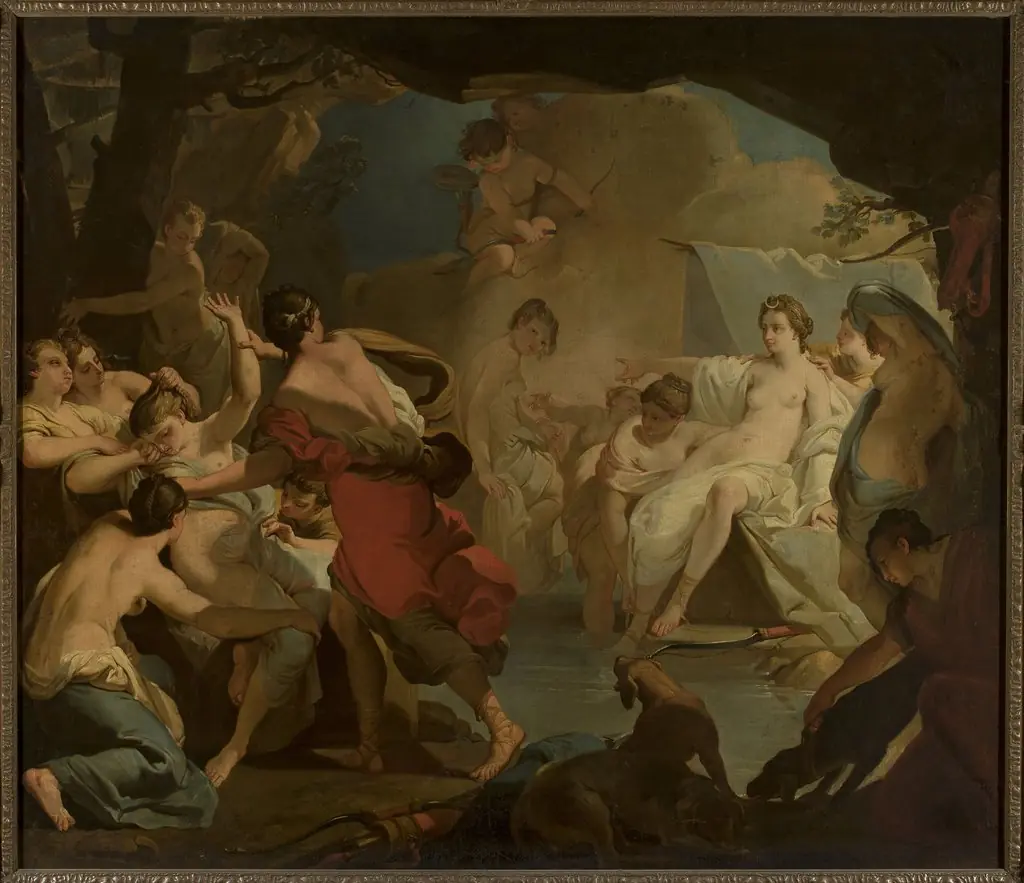 Diana's judgement of the nymph Callisto
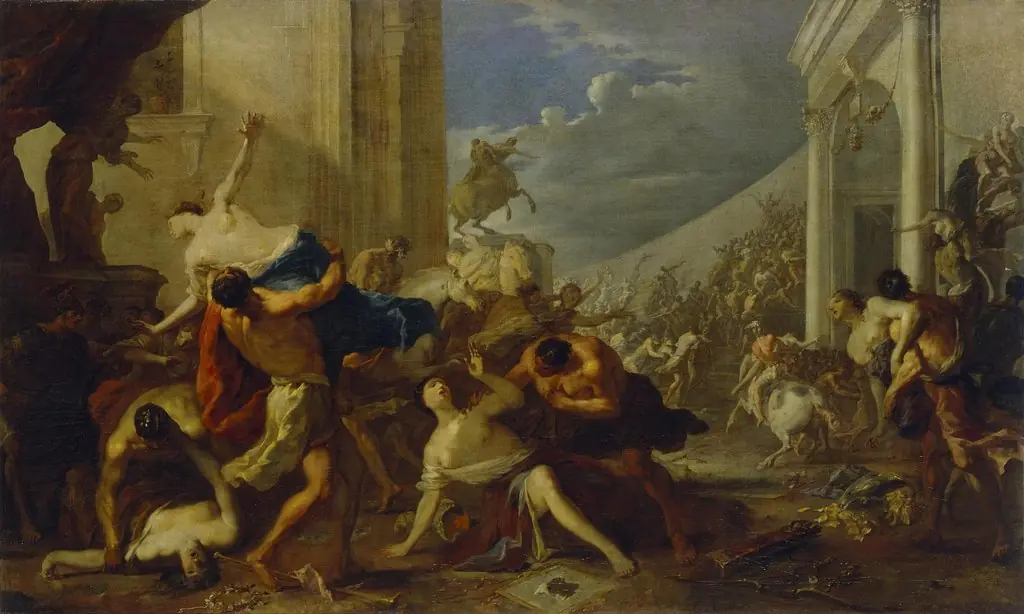 Rape of the Sabine Women
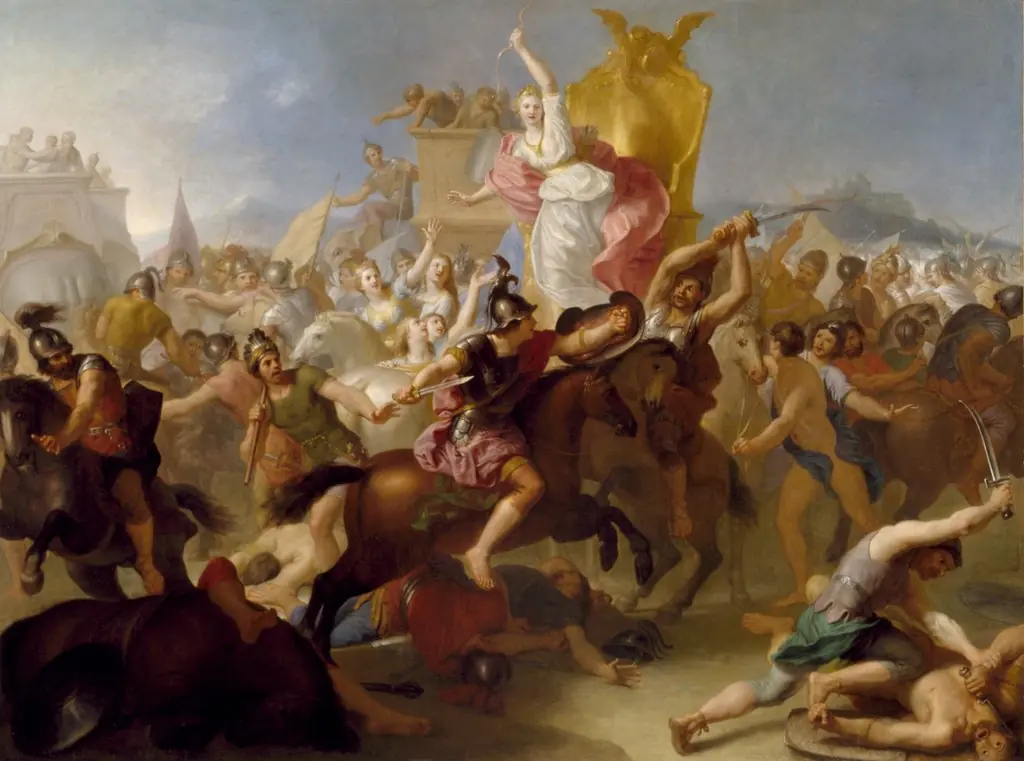 Armida Fighting the Christians
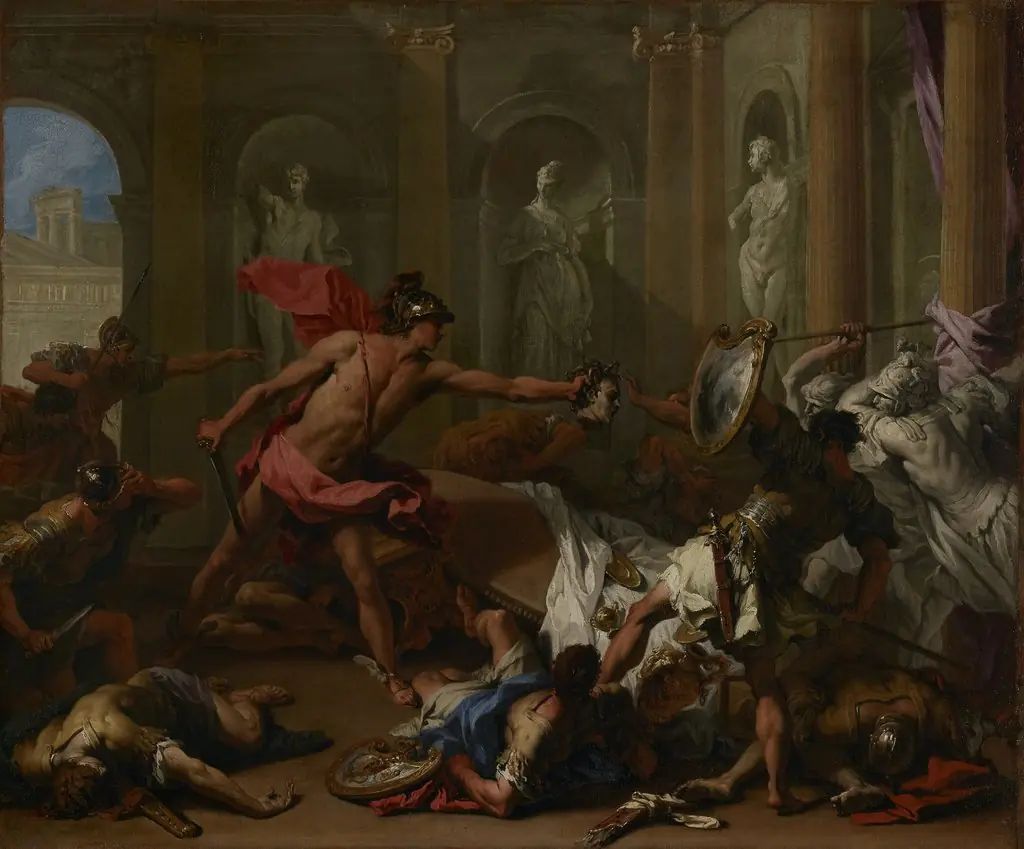 Perseus Confronting Phineus with the Head of Medusa
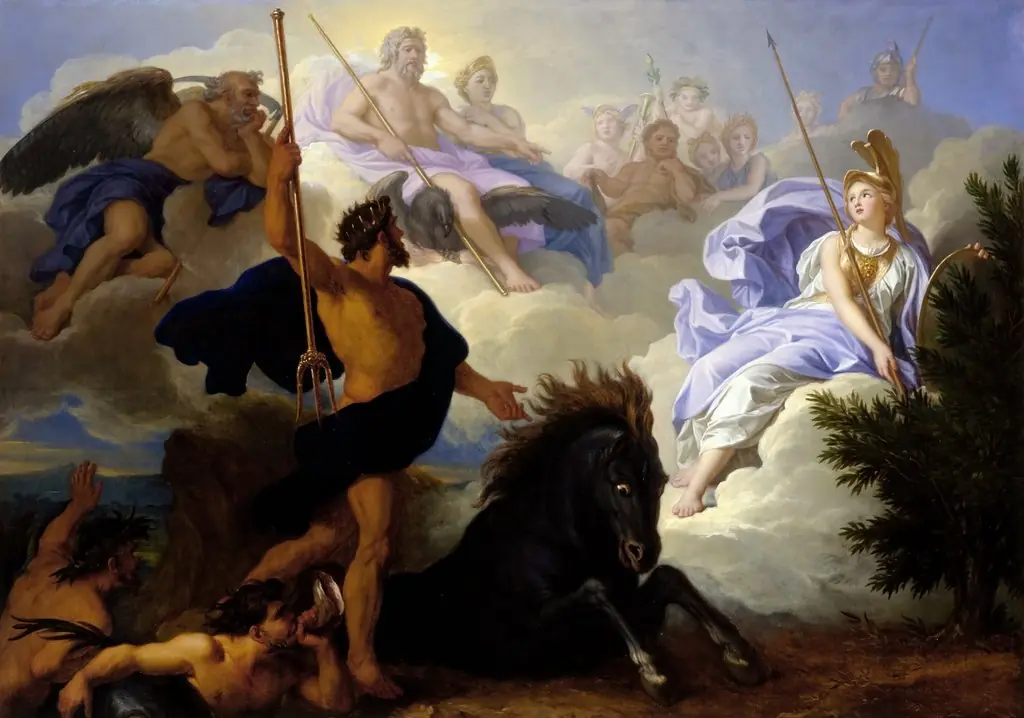 Dispute between Minerva and Neptune over the Naming of the City of Athens
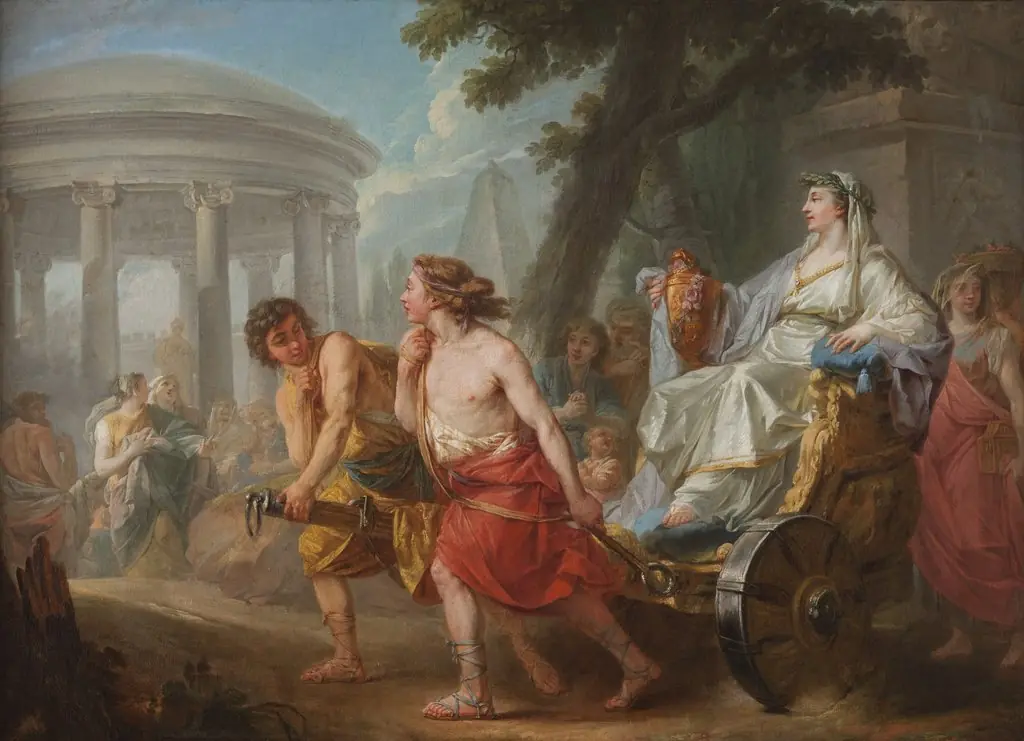 Cleobis and Biton with Cydippe in the Front of Hera Temple