Artwork
Battle at Heshi Kuluke: from Battle Scenes of the Quelling of Rebellions in the Western Regions, with Imperial Poems
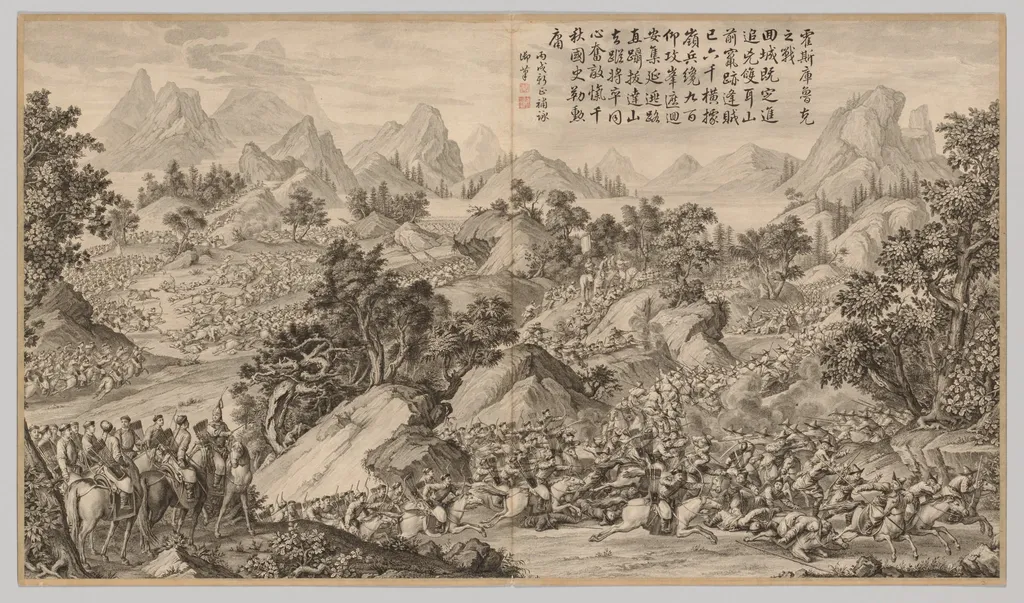
Battle at Heshi Kuluke: from Battle Scenes of the Quelling of Rebellions in the Western Regions, with Imperial Poems is a print by the Romanticist artist Jean Damascene Sallusti. It dates from 1770 and is held in the collection of the Cleveland Museum of Art.
About this work
Overview
The work is a printed etching from the Qianlong era, forming part of a series that depicts military actions in the western frontier of the empire, now Xinjiang. Each image is accompanied by a poem penned by the emperor, linking visual narrative with his own literary commentary on the campaigns.
Subject & Meaning
The scene portrays mounted troops advancing through a dust‑filled landscape, illustrating the suppression of uprisings in the region. The composition emphasizes collective bravery and the orderly conduct of the army, reflecting the imperial narrative of restoring order to the western territories.
Technique & Style
The prints were produced using copperplate etching, a technique introduced to the Chinese court by an Italian artist employed by the emperor. The method allowed for fine line work and repeated reproduction, ensuring the images could be disseminated widely while preserving the detailed representation of armor, horses, and terrain.
History & Provenance
Commissioned by Emperor Qianlong in the 18th century, the series served as an official record of his military successes. The inclusion of his poems personalized the documents, turning them into both visual and textual reports. Copies of the prints entered imperial collections and later appeared in museum holdings, such as the Cleveland Museum of Art.
Artist & collection
Artist
Jean-Damascène Sallusti, also Giovanni Damasceno (simplified Chinese: 安德义; traditional Chinese: 安德義; pinyin: Ān Déyì; d.

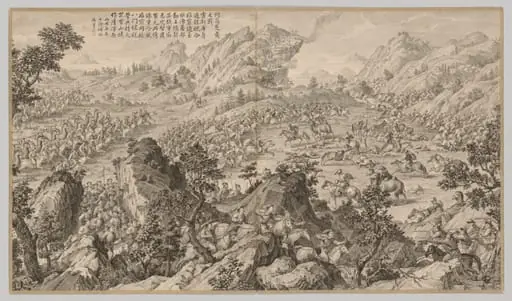 Battle at A'erchu'er: from Battle Scenes of the Quelling of Rebellions in the Western Regions, with Imperial Poems
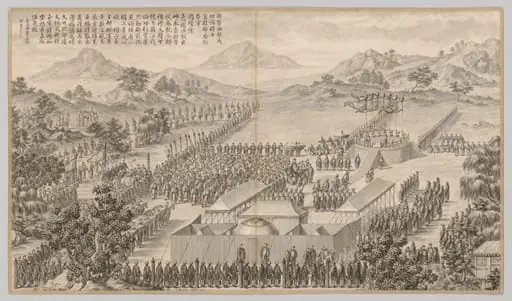 Rewards to Generals and Officers in Quelling the Uigurs: from Battle Scenes of the Quelling of Rebellions in the Western Regions, with Imperial Poems
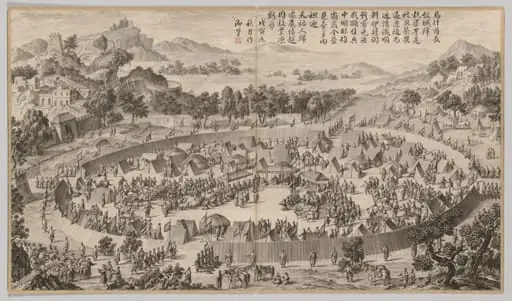 Chieftain Wushe Surrendering the City: from Battle Scenes of the Quelling of the Rebellions in the Western Regions, with imperial Poems
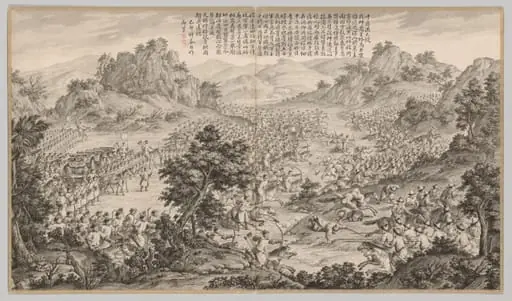 Great Victory at Hu'erman: from Battle Scenes of the Quelling of Rebellions in the Western Regions, with Imperial Poems
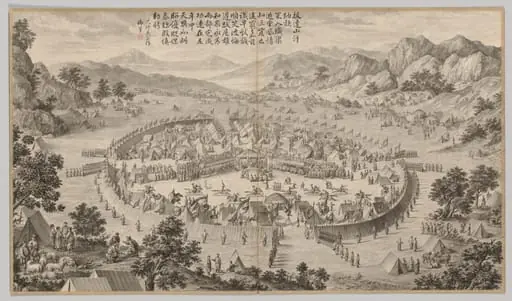 Khan of Bada Shan Presenting Tribute: from Battle Scenes of the Quelling of Rebellions in the Western Regions, with Imperial Poems
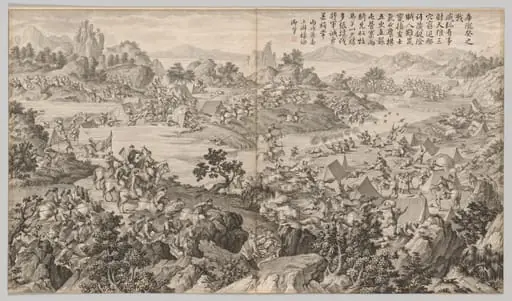 Battle of Kulongkui: from Battle Scenes of the Quelling of Rebellions in the Western Regions, with Imperial Poems
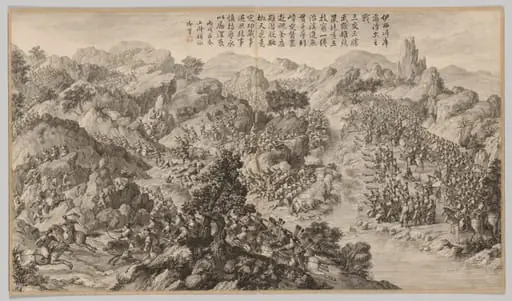 Battle at Yixi'er Ku'ernao'er: from Battle Scenes of the Quelling of Rebellions in the Western Regions, with Imperial Poems
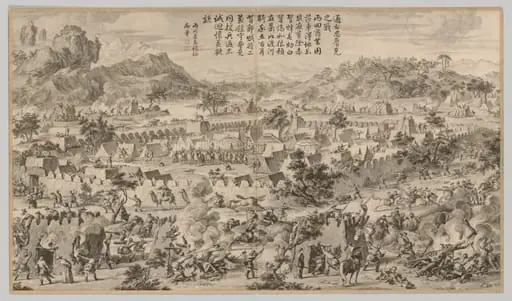 Battle at Tunggushi Luke: from Battle Scenes of the Quelling of the Rebellions in the Western Regions, with Imperial Poems
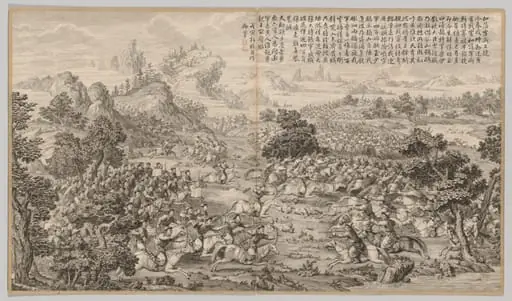 Victory at Heluo Heshi: from Battle Scenes of the Quelling of Rebellions in the Western Regions, with Imperial Poems
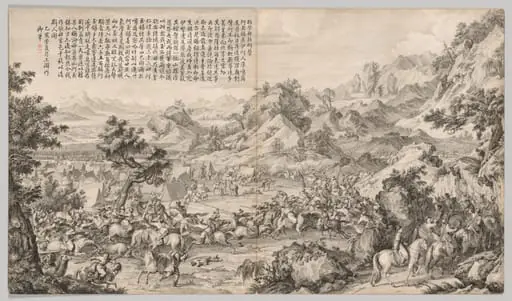 Attacking the Camp at Gatan Ola: from Battle Scenes of the Quelling of Rebellions in the Western Region, with Imperial Poems
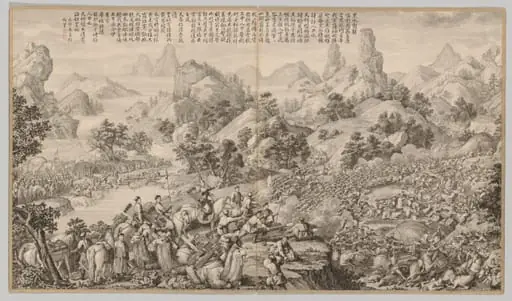 Breaking Through the Siege at Hesui: from Battle Scenes of the Quelling of Rebellions in the Western Regions, with imperial Poems
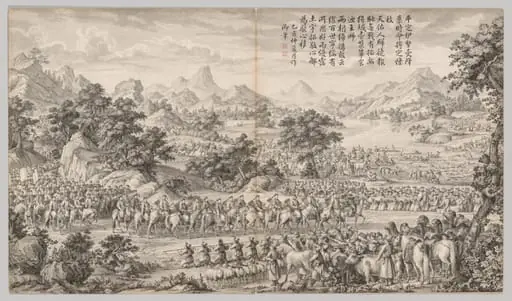 Receiving Surrender from the Eli: from Battle Scenes of the Quelling of Rebellions in the Western Regions, with Imperial Poems
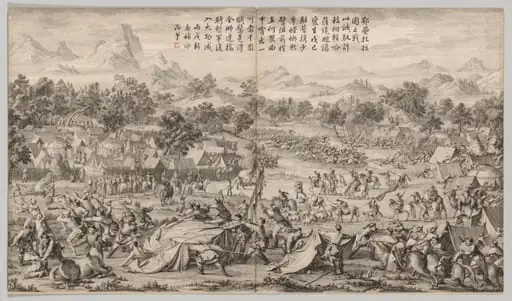 The Battle at Elei Zhalatu: from Battle Scenes of the Quelling of Rebellions in the Western Regions, with Imperial Poems