Artwork
The Apocalypse: The Angel in the Sun Calling the Birds of Prey
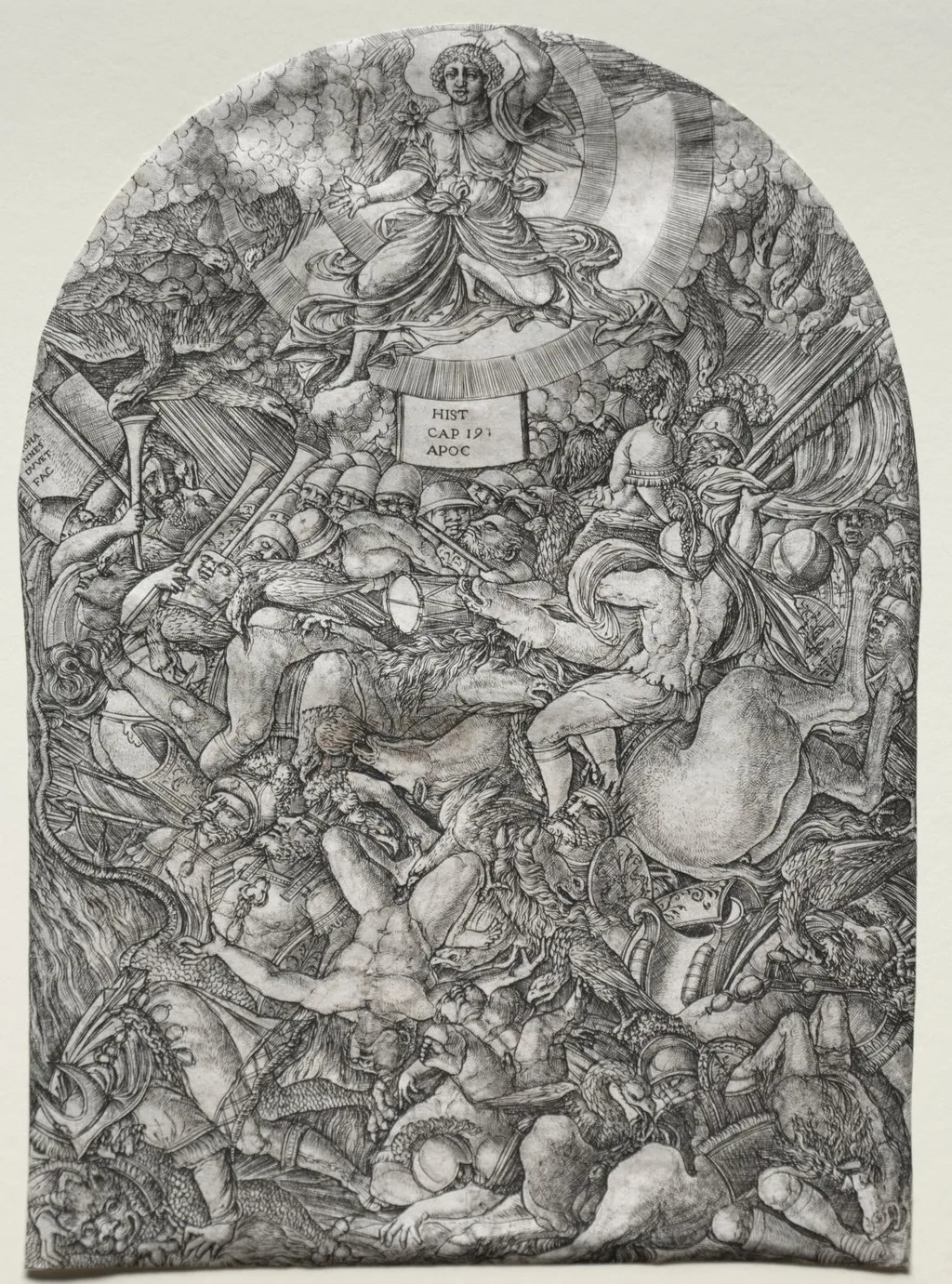
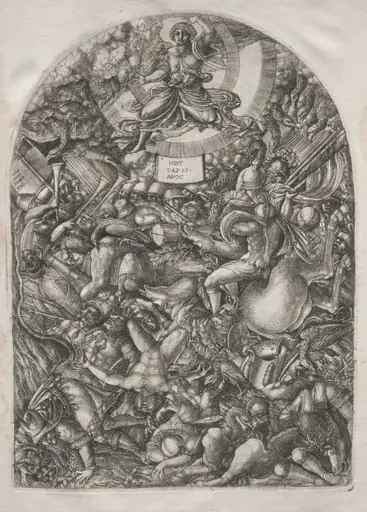
The Apocalypse: The Angel in the Sun Calling the Birds of Prey is a print by the Renaissance artist Jean Duvet. It dates from 1504 and is held in the collection of the Cleveland Museum of Art.
About this work
This painting shows an angel in the sun, calling birds of prey.
The artist used a lot of detail to show the angel's wings and the sun's rays. It's interesting that the artist, Jean Duvet, was one of the first to illustrate the Apocalypse, a series of events from the Bible.
Check out the work of artist Jean Duvet (French, 1485–1561) for more like this.
Overview
Jean Duvet, a French goldsmith and engraver active in the early 16th century, produced a series of engravings illustrating the Book of Revelation.
Jean Duvet, a French goldsmith and engraver active in the early 16th century, produced a series of engravings illustrating the Book of Revelation. Among them is this scene depicting an angel within the sun summoning birds of prey. Created around 1504, it stands as one of the earliest and most ambitious attempts in French printmaking to convey apocalyptic vision through intricate line work and symbolic intensity.
Subject & Meaning
The image illustrates a moment from Revelation where an angel calls forth scavenging birds to gather for the final judgment. The angel, positioned within a radiant solar disk, acts as a divine herald. The birds, scattered across the sky, symbolize destruction and divine retribution. Duvet’s interpretation emphasizes cosmic order and impending doom, rooted in medieval theological imagery rather than classical harmony.
Technique & Style
Duvet employed fine, dense engraving lines to render the angel’s wings and the sun’s radiating beams with obsessive detail. His style avoids Renaissance ideals of proportion and spatial logic, favoring a compressed, almost chaotic composition. The heavy cross-hatching and rhythmic patterning create a sense of spiritual urgency, distinguishing his work from the more restrained prints of his contemporaries.
History & Provenance
Duvet’s Apocalypse series, including this print, was likely produced in Lyon during the 1510s and 1520s. Though few impressions survive from the original plates, the series was circulated among religious collectors and clergy. Its survival reflects its use as a devotional tool, though its complexity suggests it also appealed to those interested in esoteric biblical interpretation.
Context
In early 16th-century France, religious upheaval and growing interest in apocalyptic prophecy shaped artistic production. Duvet’s work emerged alongside printed Bibles and devotional texts, yet his imagery diverged from mainstream humanist trends. His engravings reflect a vernacular, almost folkloric approach to biblical narrative, distinct from the classical revival dominating Italian and Northern European art.
Legacy
Duvet’s expressive, non-classical style was largely overlooked until the 19th century, when Romantic artists and scholars recognized parallels with William Blake’s visionary prints. His work is now seen as a unique bridge between medieval iconography and early modern individualism in printmaking, offering a rare French voice in the global development of religious engraving.
Artist & collection

Artist
Jean Duvet (1485 – after 1562) was a French Renaissance goldsmith and engraver, now best known for his engravings.

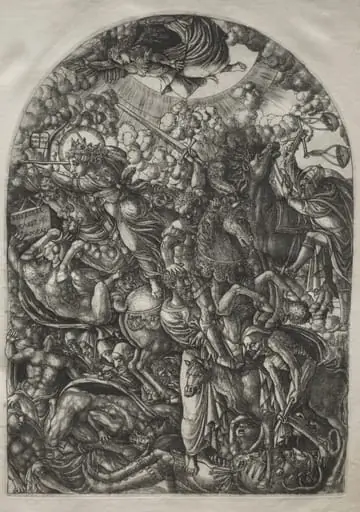 The Apocalypse: St. John Sees the Four Riders
 The Apocalypse: The Angel in the Sun Calling the Birds of Prey
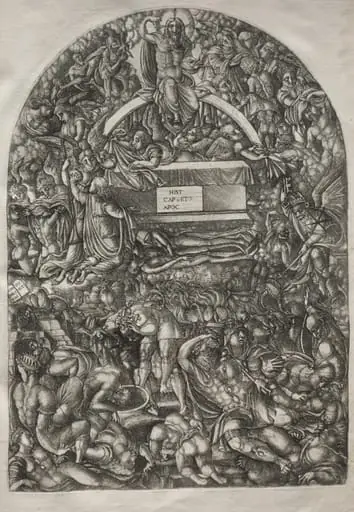 The Apocalypse: A Star Falls and Makes Hell to Open
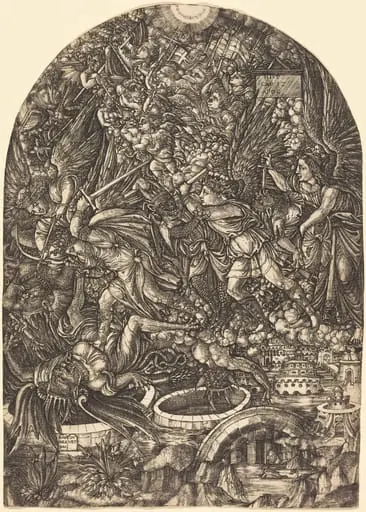 Saint Michael and the Dragon
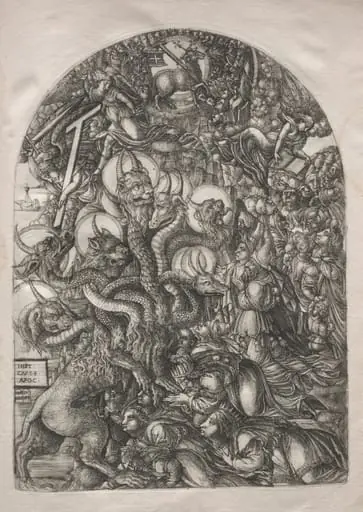 The Apocalypse: The Beast with Seven Heads and Ten Horns
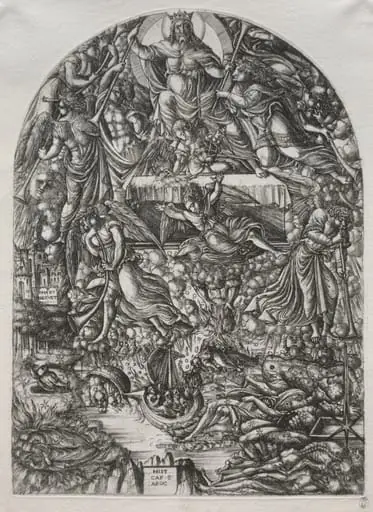 The Apocalypse: The Opening of the Seventh Seal
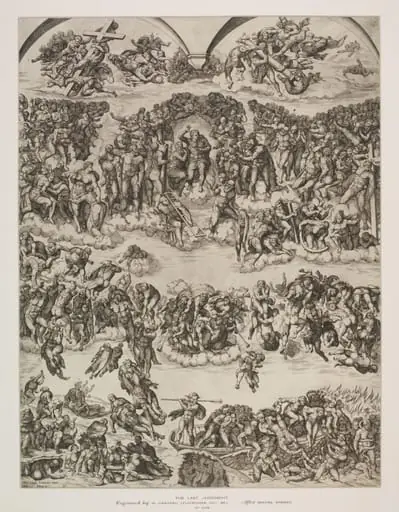 The Last Judgment