Artwork
Saint Michael and the Dragon
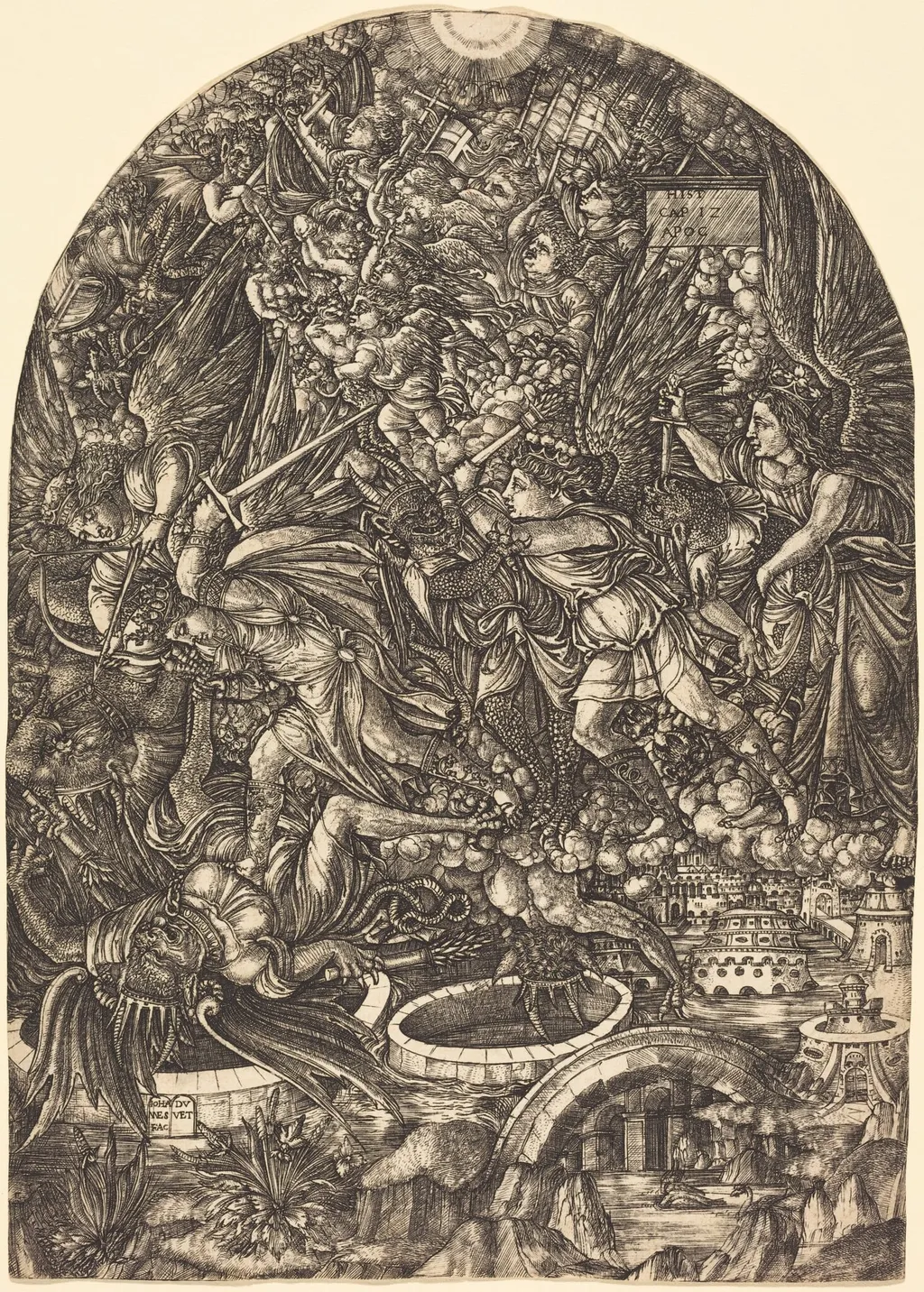
Saint Michael and the Dragon is an ink print by the Renaissance artist Jean Duvet. It dates from 1551 and is held in the collection of the National Gallery of Art.
About this work
Overview
Executed on laid paper, the work is one of approximately 73 plates he produced, all marked by intricate detail and fervent religious subject matter.
Created in 1551, *Saint Michael and the Dragon* is an engraving by Jean Duvet, a French goldsmith turned printmaker. Executed on laid paper, the work is one of approximately 73 plates he produced, all marked by intricate detail and fervent religious subject matter. Duvet’s approach to engraving diverged from the polished norms of his time, favoring a dense, almost feverish composition that prioritizes emotional intensity over classical restraint.
Subject & Meaning
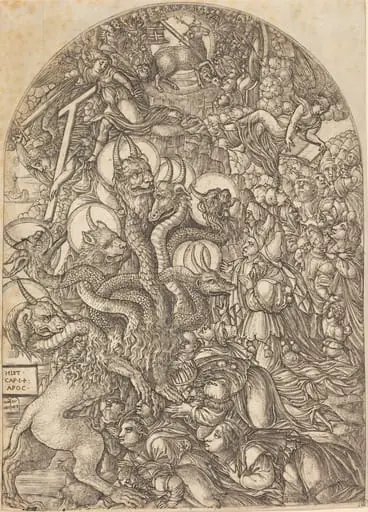
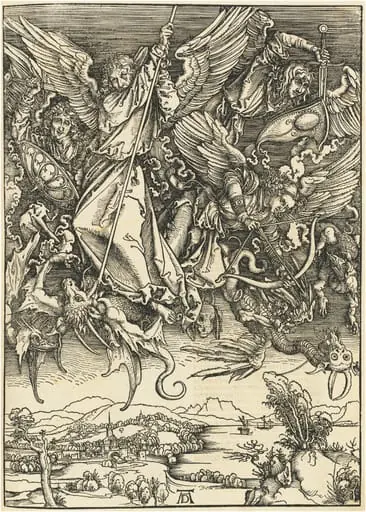
The scene illustrates the apocalyptic battle between the Archangel Michael and the dragon, a symbol of evil from the Book of Revelation. Michael, armed and airborne, descends upon the beast that coils around a besieged city, its body crushing structures and scattering tiny figures below. The imagery reflects a medieval vision of divine judgment, where cosmic conflict manifests in earthly chaos, emphasizing spiritual struggle over physical victory.
Technique & Style
Duvet employed fine, overlapping lines to build texture and depth, packing every surface with minute details—from the dragon’s scaled hide to the fractured architecture below. The engraving’s density creates a sense of claustrophobic motion, with no empty space left unoccupied. His hand is unrefined yet energetic, producing a raw visual rhythm that contrasts with the smoother aesthetics of contemporary Italian and Netherlandish prints.
History & Provenance
Duvet worked primarily in France during the mid-16th century, a period when printmaking was still developing as a distinct artistic medium there. While little is known of his personal life, his body of work remained largely within French collections. *Saint Michael and the Dragon* was likely circulated among religious patrons and collectors interested in apocalyptic themes, though no early ownership records are well documented.
Context
Produced during the height of the Protestant Reformation and Catholic Counter-Reformation, Duvet’s imagery resonated with a climate of religious anxiety. The depiction of divine triumph over chaos mirrored contemporary sermons and devotional literature. Unlike Northern Renaissance artists who emphasized realism, Duvet embraced symbolic intensity, aligning more closely with mystical traditions than with emerging humanist ideals.
Legacy
Though largely overlooked in his lifetime, Duvet’s work gained renewed attention in the 19th century for its emotional force and visionary quality. His dense, expressive engravings were later compared to those of William Blake, not for technical similarity but for shared spiritual urgency. Today, his prints are studied as unique expressions of French Renaissance mysticism, distinct from the dominant trends of his era.
Artist & collection

Artist
Jean Duvet (1485 – after 1562) was a French Renaissance goldsmith and engraver, now best known for his engravings.

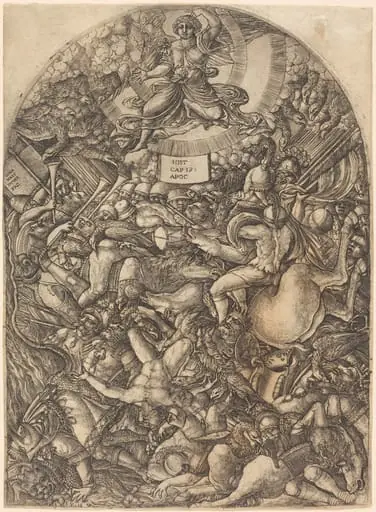 The Angel in the Sun Calling the Birds of Prey
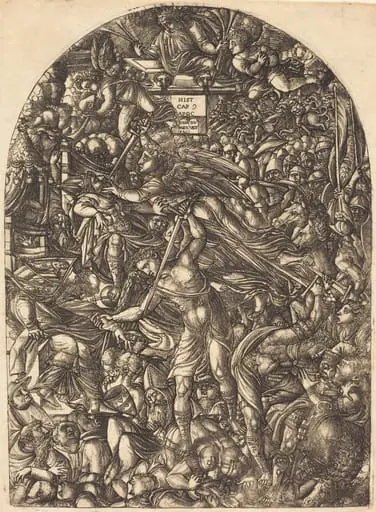 The Angel Sounding the Sixth Trumpet
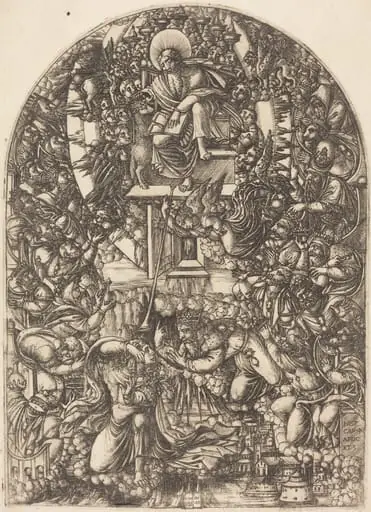
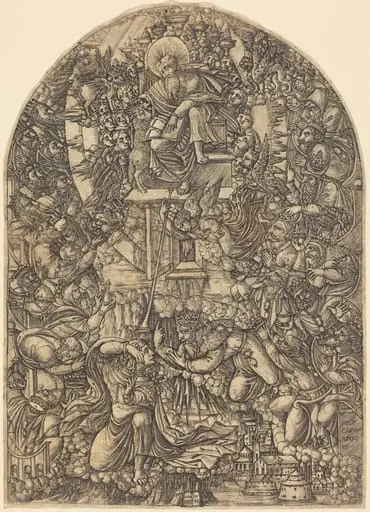 Saint John Summoned to Heaven
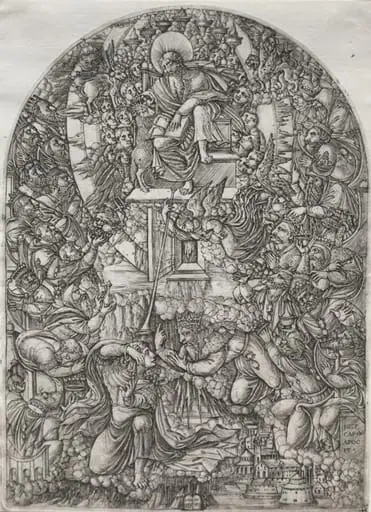 The Apocalpse: St. John Summoned to Heaven
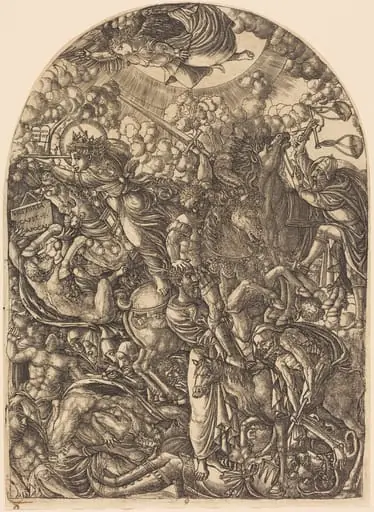 Saint John Sees the Four Horsemen
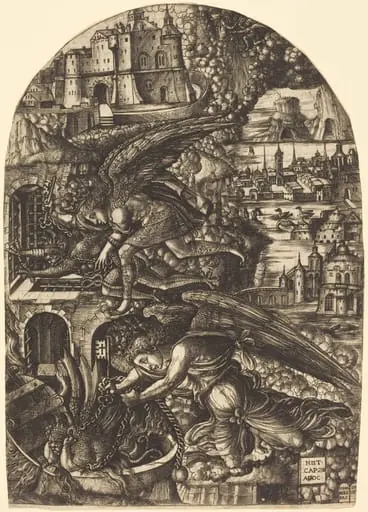 Satan Bound for a Thousand Years
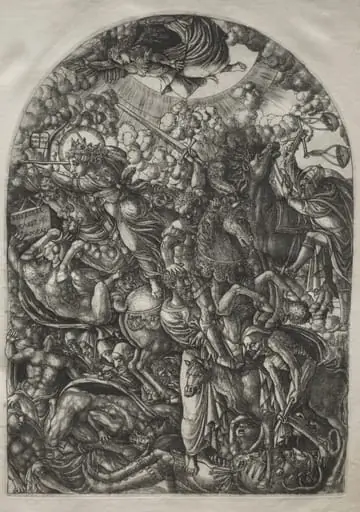 The Apocalypse: St. John Sees the Four Riders
 Saint John Summoned to Heaven
 The Four Avenging Angels
 Saint Michael Fighting the Dragon