Artwork
The daughter of Zion
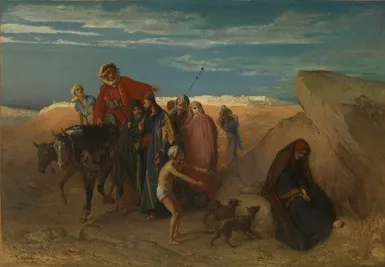
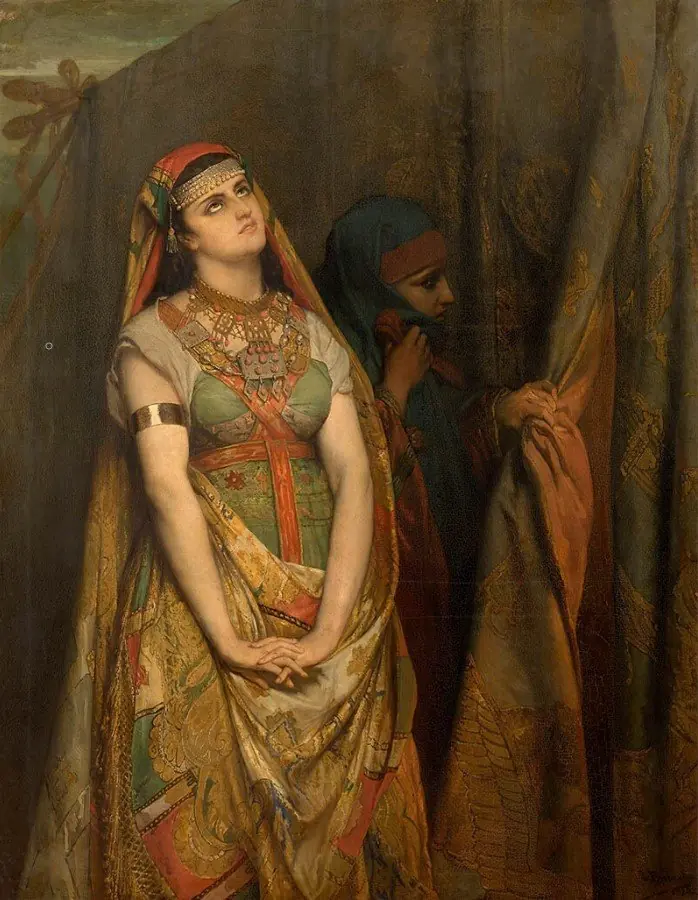
The daughter of Zion is an oil painting by the Orientalist artist Jean-François Portaels. It dates from 1850 and is held in the collection of the Royal Museums of Fine Arts of Belgium.
About this work
Overview
Painted around 1850 by Belgian artist Jean-François Portaels, this oil on canvas work depicts a quiet, contemplative scene rooted in biblical symbolism.
Painted around 1850 by Belgian artist Jean-François Portaels, this oil on canvas work depicts a quiet, contemplative scene rooted in biblical symbolism. Portaels, a central figure in Belgium’s Orientalist movement, was also director of the Académie Royale des Beaux-Arts in Brussels, where he influenced emerging artists. The painting’s subdued palette and intimate composition reflect his interest in spiritual and cultural narratives from the Near East.
Subject & Meaning
The figure at the center, seated on the ground in dark robes, represents the Daughter of Zion—a poetic personification of Jerusalem or the Jewish people in mourning. Surrounding her are figures in traditional attire, their postures and expressions conveying collective grief or reverence. The desert setting and camel suggest a timeless, arid landscape associated with biblical antiquity, reinforcing the allegorical weight of the scene rather than documenting a specific event.
Technique & Style
Portaels employed visible brushwork and a restrained palette of browns, beiges, and muted earth tones to evoke texture and atmosphere. Chiaroscuro is used deliberately to model forms and deepen the emotional gravity of the scene, casting soft shadows that define the figures’ contours and enhance their stillness. The composition avoids theatricality, favoring quietude and spatial depth through careful placement of figures against a sparse, rocky horizon.
History & Provenance
The painting entered the collection of the Royal Museums of Fine Arts of Belgium in the 19th century, likely acquired during or shortly after its creation. As part of a broader institutional effort to document Belgian artistic contributions to Orientalism, it has remained in public ownership since its inception, with no documented private ownership or significant relocation in its history.
Context
Created during the height of European Orientalism, the work aligns with a trend in which Western artists interpreted Middle Eastern and North African subjects through a lens of romanticized antiquity. While Portaels traveled to the region, his depiction is less ethnographic than symbolic, drawing on biblical imagery familiar to his audience. The painting reflects both scholarly interest in the East and the era’s tendency to frame non-Western cultures as vessels of spiritual or historical myth.
Legacy
Though not widely exhibited outside Belgium, the painting remains a key example of 19th-century Belgian Orientalism. It illustrates how artists like Portaels blended religious allegory with ethnographic detail to construct emotionally resonant scenes. Its continued presence in the Royal Museums underscores its role as a representative work of a movement that shaped Belgian academic art, even as its cultural assumptions are now critically reevaluated.
Artist & collection
Artist
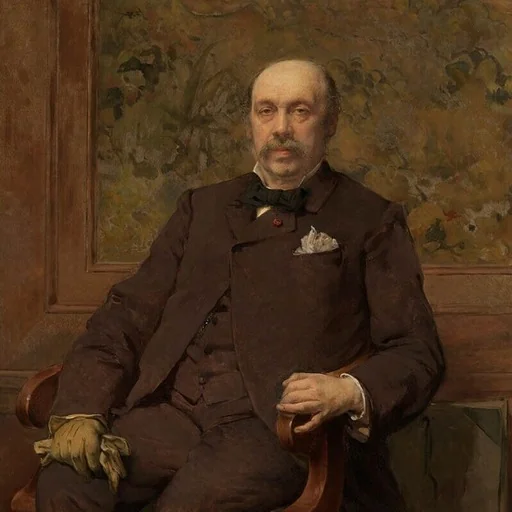
Jean-François Portaels or Jan Portaels (3 April 1818 – 8 February 1895) was a Belgian painter of genre scenes, biblical stories, landscapes, portraits and Orientalist subjects.

Museum
Royal Museums of Fine Arts of Belgium
Continue through works from the same source collection.
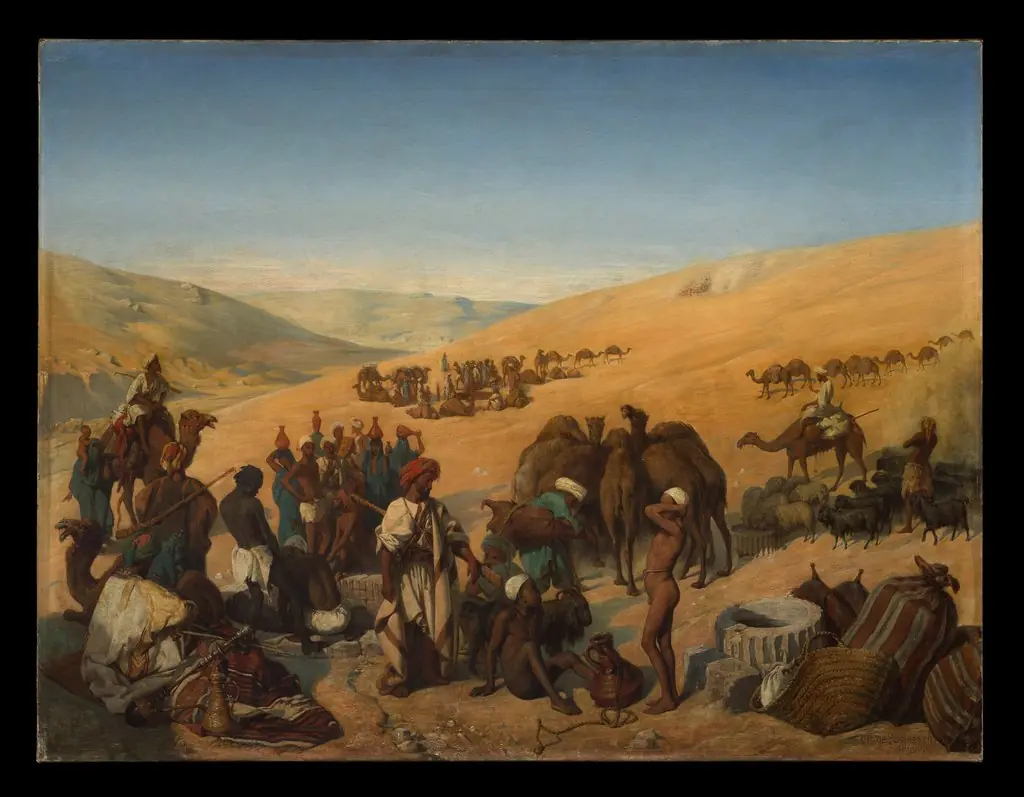 Halt of Caravans at the Wells of Saba (Beersheba) in the Desert South of Hebron
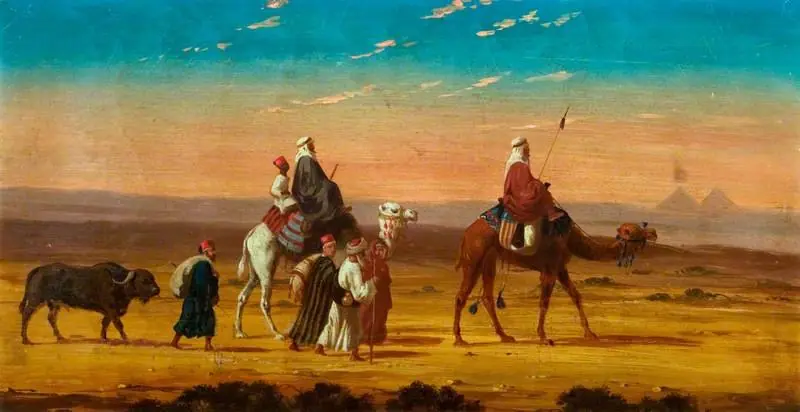 A Caravan in the Desert
 The Heathcart
 Eastern Festival
 Une Caravane en Repos en Kabylie
 Fantasia in Egypt
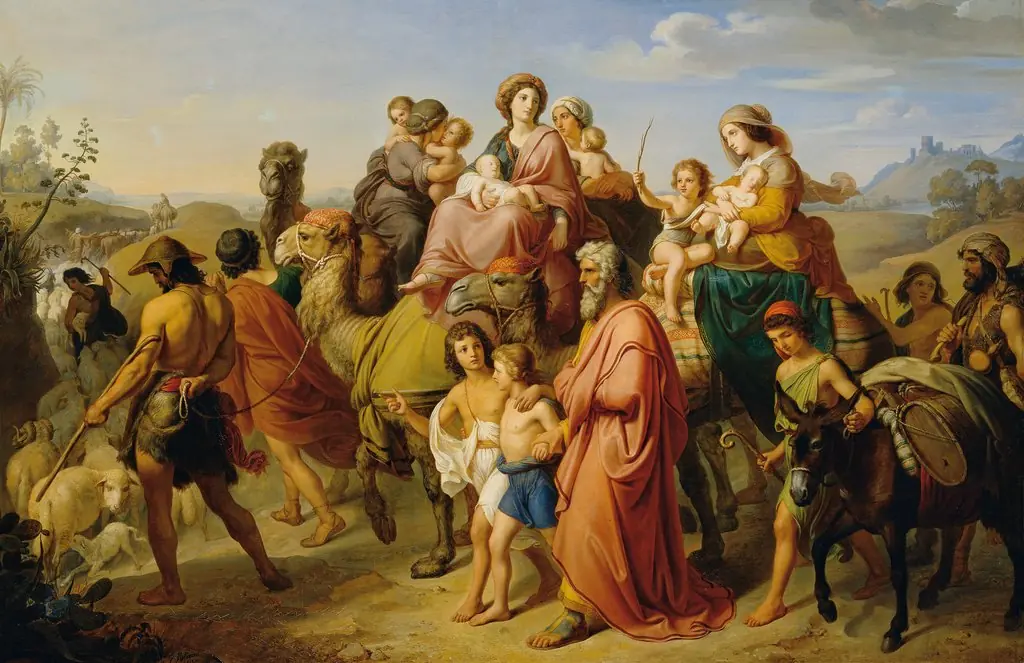 Jacob's homecoming
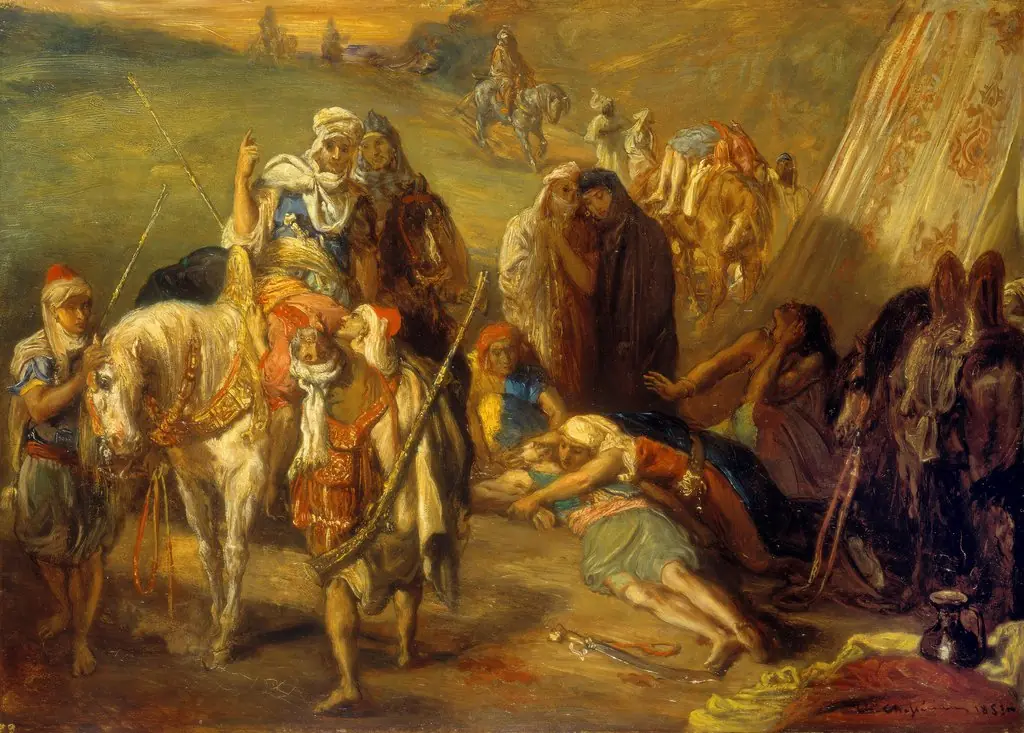 Recovery of Wounded Warriors
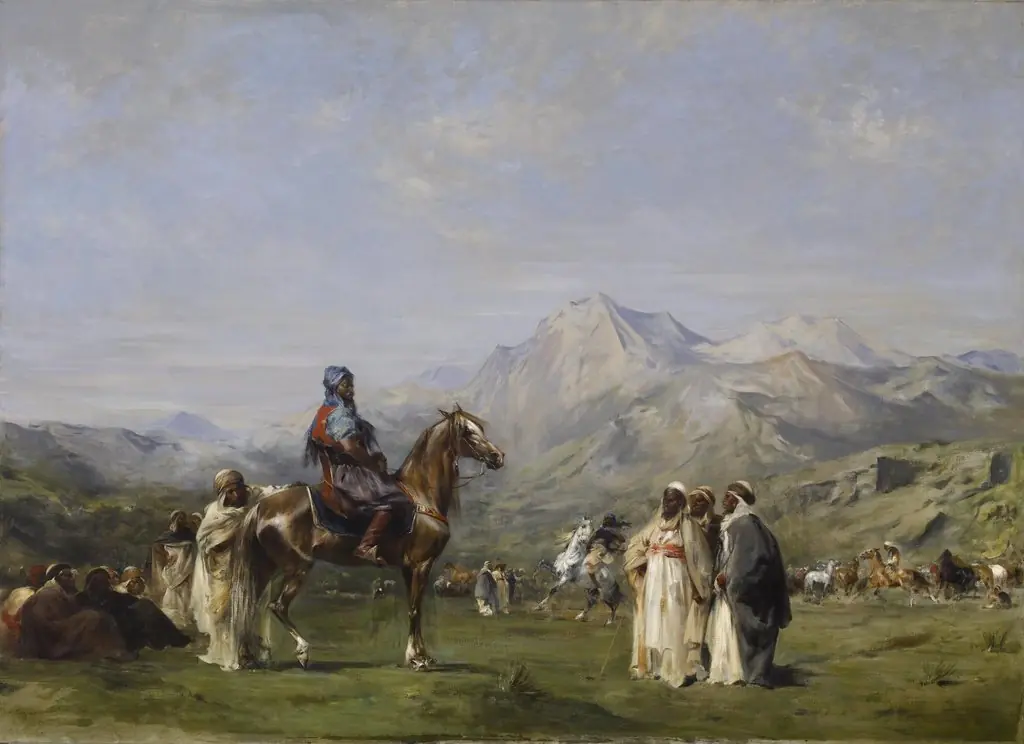 An Encampment in the Atlas Mountains
 A Caravan in the Desert
 The Departure of Abraham
 The Three Wise Men