Artwork
The Philosopher (Saint Jerome?)
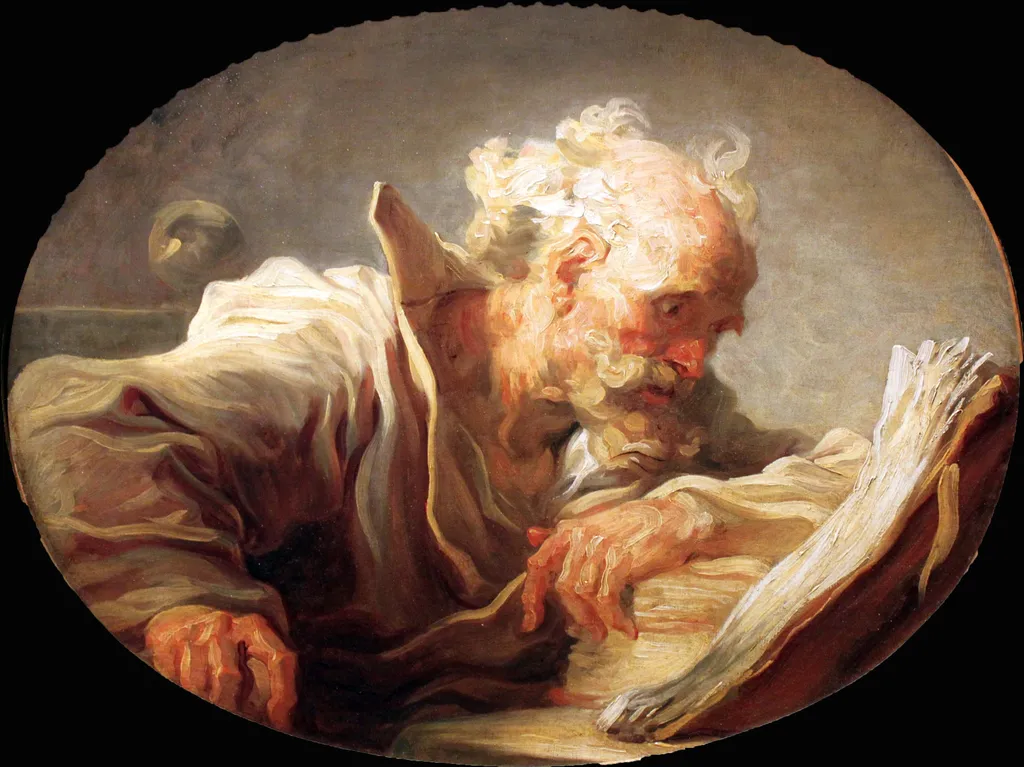
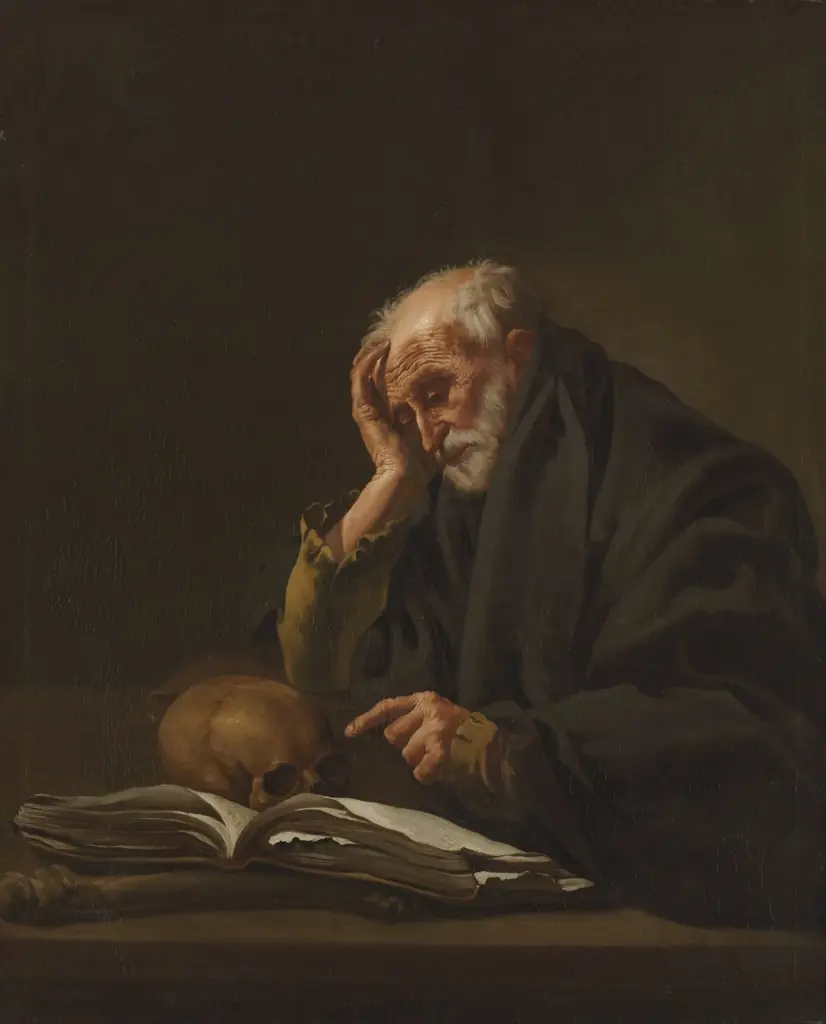
The Philosopher (Saint Jerome?) is an unspecified painting by the Rococo painting artist Jean Honoré Fragonard. It dates from 1769 and is held in the collection of the Hamburger Kunsthalle. Jean‑Honoré Fragonard’s oil painting known as *The Philosopher* (sometimes identified as Saint Jerome) was executed in 1769.
About this work
Overview
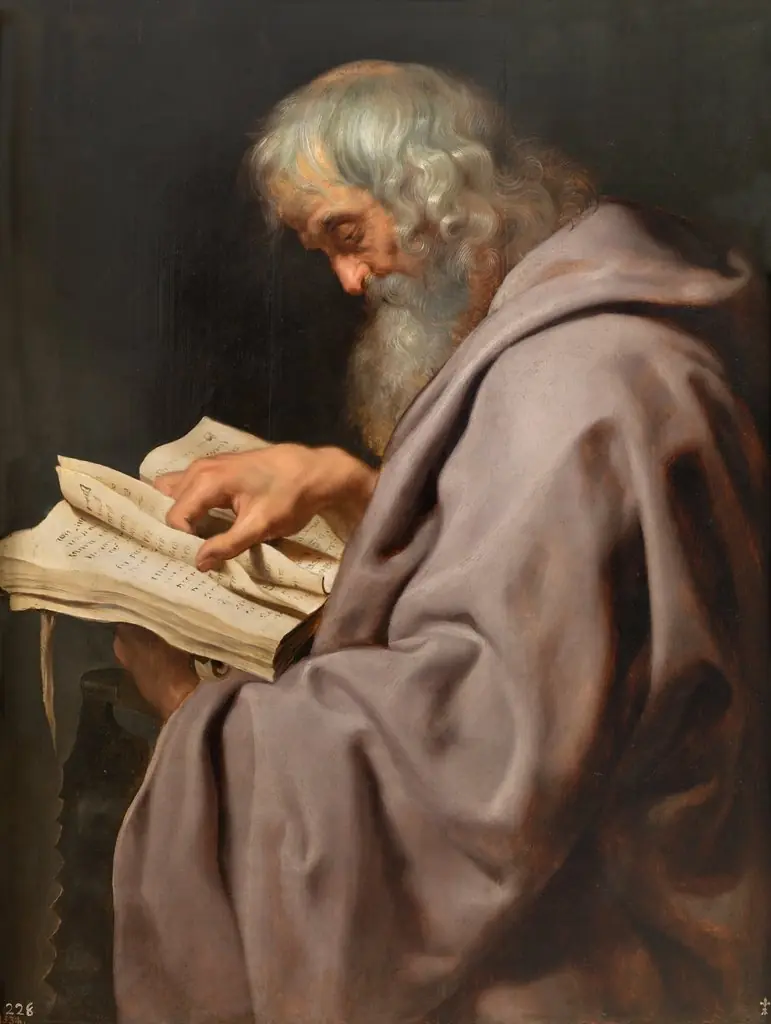
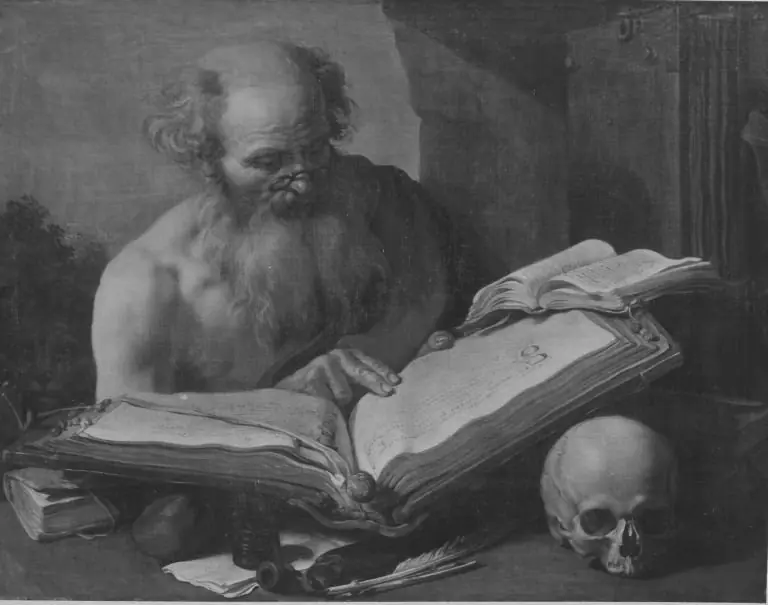
Jean‑Honoré Fragonard’s oil painting known as *The Philosopher* (sometimes identified as Saint Jerome) was executed in 1769. The work is part of the collection of the Hamburger Kunsthalle in Germany. It presents a solitary, elderly figure seated before a plain gray wall, absorbed in an open book.
Subject & Meaning
The central figure is an aged man with white hair, dressed in a simple white robe. He gazes downward at the pages, his right hand resting on the text, suggesting contemplation or scholarly study. The composition has traditionally been linked to Saint Jerome, the early Christian scholar famed for translating the Bible, though the title remains ambiguous.
Technique & Style
Fragonard renders the man’s face and garments with warm, muted tones, allowing soft light to illuminate the hair and fabric. The brushwork is delicate, especially in the rendering of the book’s pages and the subtle gradations of the background wall, creating a restrained atmosphere that contrasts with the artist’s more flamboyant Rococo works.
History & Provenance
Painted toward the end of Fragonard’s career, the piece entered the Hamburger Kunsthalle’s holdings in the 20th century, though the exact acquisition details are not widely documented. Its presence in a German museum reflects the broader European interest in French 18th‑century art and the continued scholarly attention to Fragonard’s lesser‑known subjects.
Artist & collection

Artist
Jean-Honoré Fragonard was born on 5 April 1732 in Grasse, the son of a glover, and moved with his family to Paris in 1738.