Artwork
Three Figures with a Dog
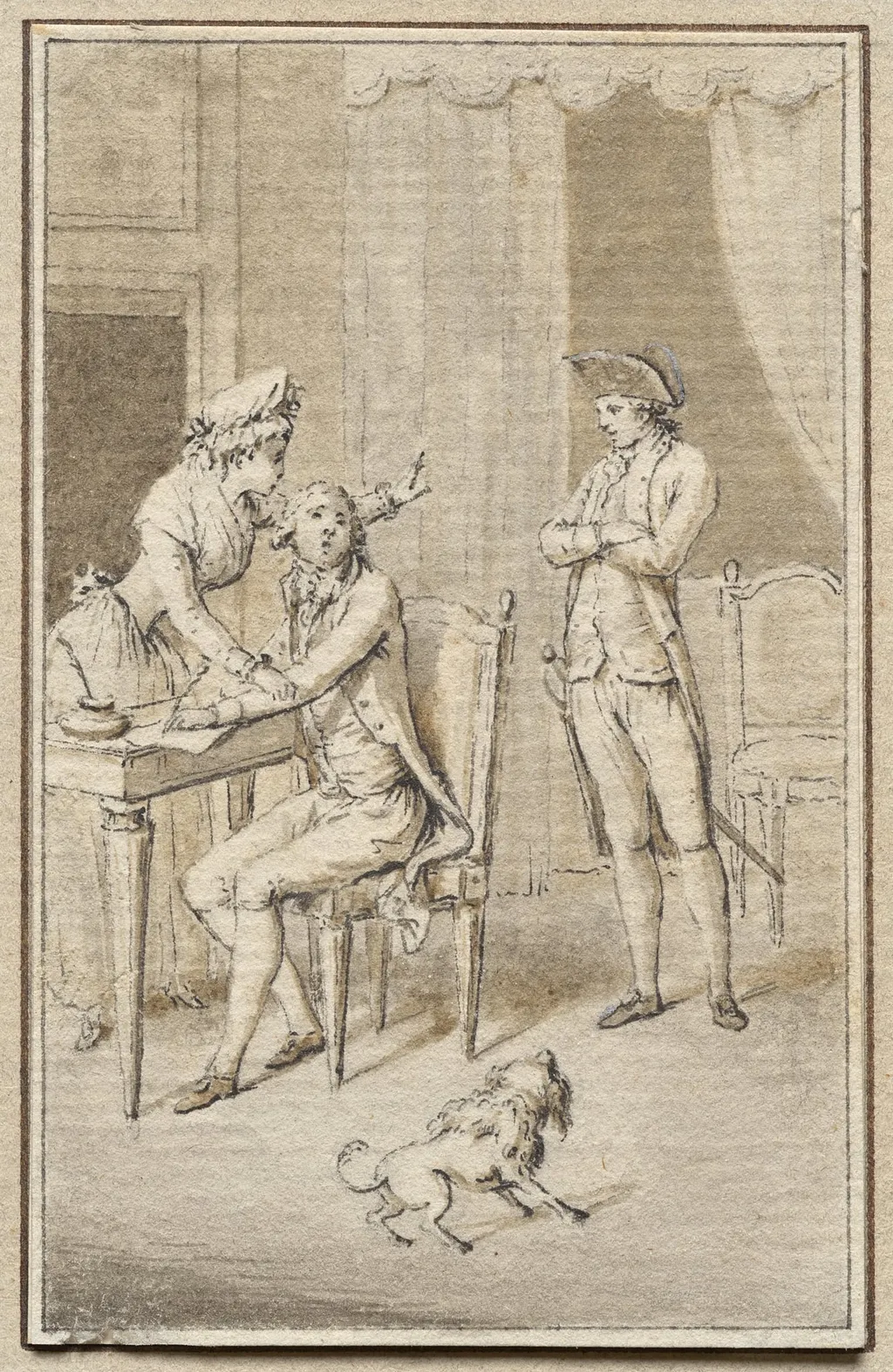
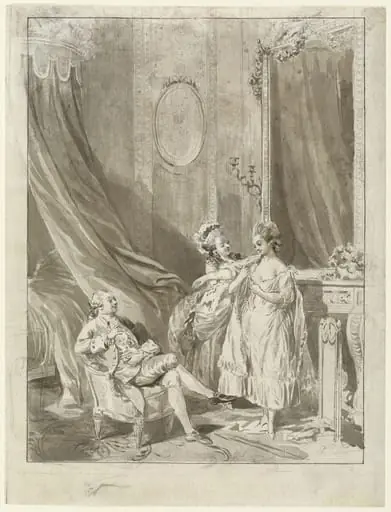
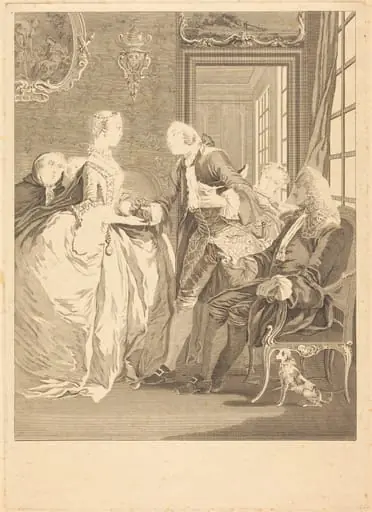
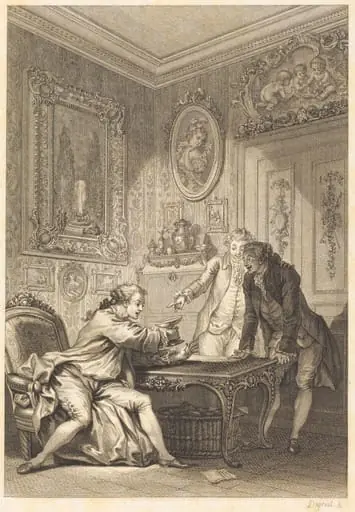
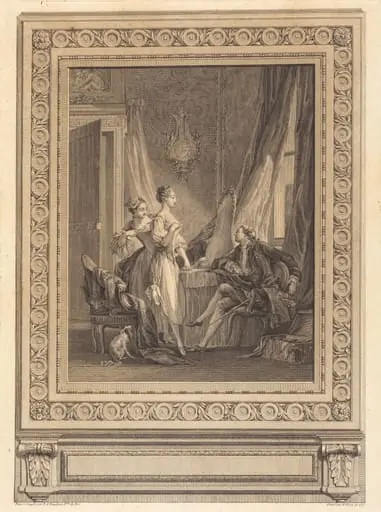
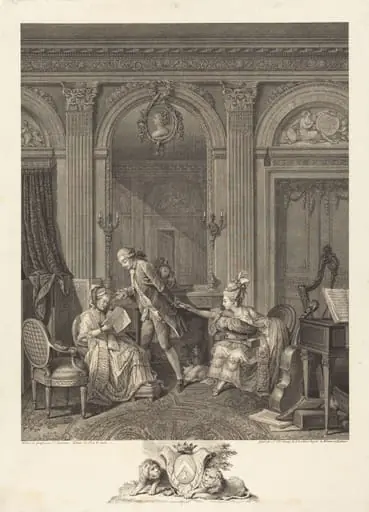
Three Figures with a Dog is a drawing by the Romanticist artist Jean-Michel the Younger Moreau. It dates from 1804 and is held in the collection of the Cleveland Museum of Art.
About this work
Overview
It depicts a quiet domestic moment involving three figures and a dog, emphasizing nuanced interpersonal dynamics over narrative clarity.
This drawing, attributed to Jean-Baptiste Marie Pierre (sometimes confused with Moreau the Younger), is a finely rendered pen-and-ink composition from late eighteenth-century France. It depicts a quiet domestic moment involving three figures and a dog, emphasizing nuanced interpersonal dynamics over narrative clarity. Its delicate line work and restrained composition suggest it may have been intended as a study or illustration for a literary work.
Subject & Meaning
A woman gently guides the hand of a seated man as he writes, while a soldier stands apart, held at bay by her raised gesture. A small dog, alert and attentive, observes the exchange. The scene implies a private, possibly intimate interaction—perhaps a scribe receiving dictation—where authority, guidance, and restraint coexist. The soldier’s distance and the dog’s vigilance heighten the tension of unspoken social boundaries.
Technique & Style
Executed in fine pen and ink with subtle washes, the drawing demonstrates precise control of line and tone. Figures are rendered with economical yet expressive strokes, capturing posture and movement without excess detail. The background is left largely empty, focusing attention on the interplay of gestures and spatial relationships. This restrained approach reflects the academic tradition of draftsmanship valued in French artistic circles of the period.
History & Provenance
The work’s origins are tied to the milieu of French illustrators working for publishers in the 1770s–1790s, though its exact commission or publication context remains undocumented. It entered the collection of The Cleveland Museum of Art through known acquisitions of eighteenth-century drawings, likely from a European private collection. Its attribution has been subject to scholarly review, with some early references mistakenly linking it to Moreau the Younger.
Context
During the late Enlightenment, illustrated books flourished in France, requiring artists to convey narrative subtlety through minimal means. This drawing aligns with a broader trend of intimate, psychologically suggestive scenes used to accompany literary texts. Artists were expected to translate emotion and social nuance into single, contained images—a skill evident in the quiet drama of this composition.
Legacy
Though not widely exhibited, the drawing exemplifies the quiet sophistication of French draftsmanship in the decades before the Revolution. It contributes to the understanding of how illustrators conveyed complex human interactions without overt drama. Its preservation in a major museum underscores its value as a representative artifact of an understudied branch of eighteenth-century visual culture.
Artist & collection
Artist
Jean-Michel the Younger Moreau
Jean-Michel the Younger Moreau (1741–1814) was a French artist.