Artwork
L'era cristiana
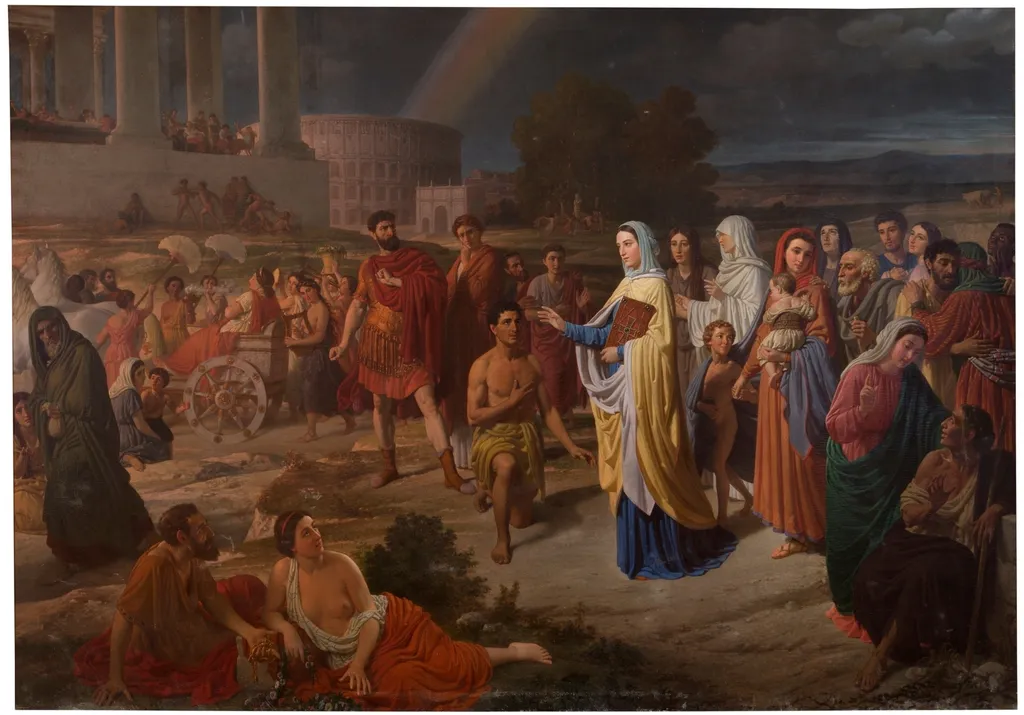
L'era cristiana is an oil painting by the Post-Impressionist artist Joaquín Espalter y Rull. It dates from 1871 and is held in the collection of the Museo del Prado.
About this work
Overview
Joaquín Espalter y Rull, a Catalan artist based in Madrid, completed *L'era cristiana* in 1871 as an oil on canvas. The work belongs to the collection of the Museo del Prado and reflects his focus on historical and narrative subjects. Though active during a period of artistic transition, Espalter y Rull maintained a detailed, figurative approach, distinct from emerging modernist trends.
Subject & Meaning
The architectural backdrop and celestial rainbow imply divine sanction, framing the scene as a pivotal historical turning point rather than a literal event.
The painting portrays a moment of communal revelation in an ancient setting, likely symbolizing the dawn of Christian influence. A central woman in yellow, holding a book, addresses a diverse group of onlookers, suggesting the transmission of new ideas. The architectural backdrop and celestial rainbow imply divine sanction, framing the scene as a pivotal historical turning point rather than a literal event.
Technique & Style
Espalter y Rull employed precise brushwork to render fabric textures and facial expressions with subtle nuance. The composition uses contrasting warm tones in the figures’ garments against cooler atmospheric hues, enhancing depth. Light falls selectively across the central figure, guiding the viewer’s attention without relying on dramatic chiaroscuro, instead favoring clarity and narrative legibility.
History & Provenance
Painted in 1871, the work entered the Museo del Prado’s collection shortly after its completion. It reflects the Spanish state’s interest in acquiring historical paintings that aligned with national cultural narratives during the late 19th century. Its preservation in a major public institution underscores its recognition as a significant example of academic painting from the period.
Context
Created during Spain’s post-Revolutionary era, the painting responds to a broader European trend of reviving historical and religious themes in academic art. While Impressionism gained ground in France, Spanish artists like Espalter y Rull continued to prioritize detailed storytelling and moral allegory, often commissioned or endorsed by state institutions seeking cultural continuity.
Legacy
Though not widely known outside Spain, *L'era cristiana* remains a representative work of 19th-century Spanish academic painting. It illustrates the persistence of narrative realism in state-supported art, even as avant-garde movements reshaped European aesthetics. The painting continues to serve as a reference for studies on the intersection of religion, history, and visual culture in Spain.
Own this work as a print
Artist & collection
Artist
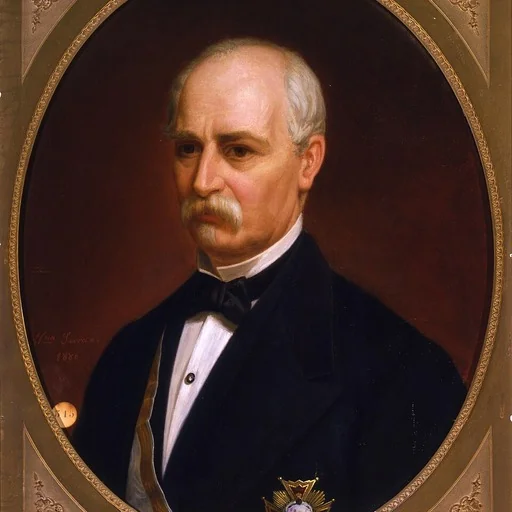
Joaquim Espalter i Rull or, in Spanish, Joaquín Espalter y Rull (30 September 1809 – 16 January 1880) was a Catalan painter who spent most of his career in Madrid; known primarily for portraits and historical scenes.

 Christ Leaving the Temple
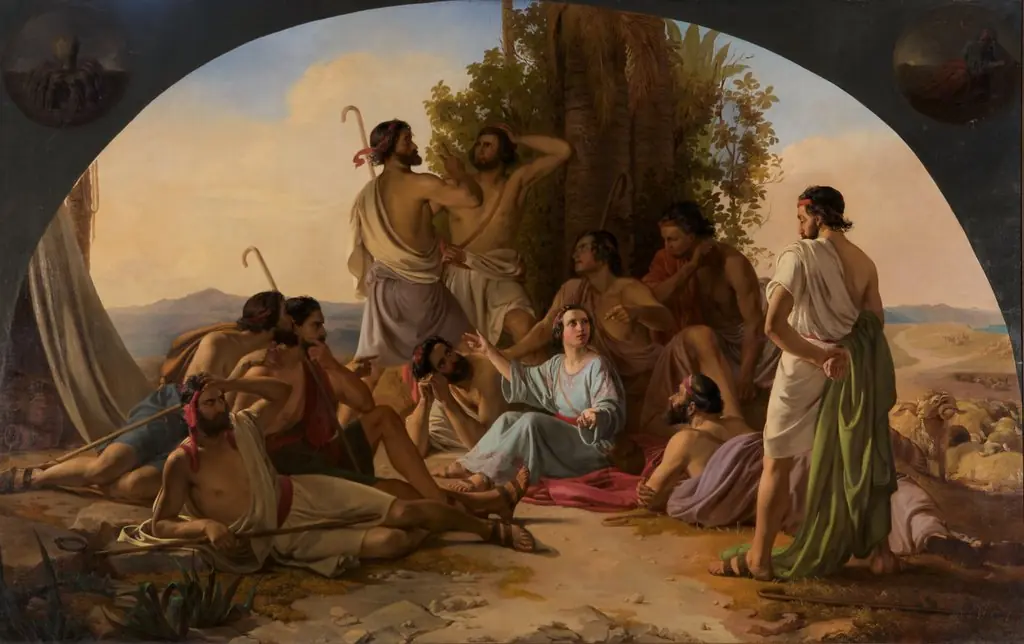 Joseph tells his dream
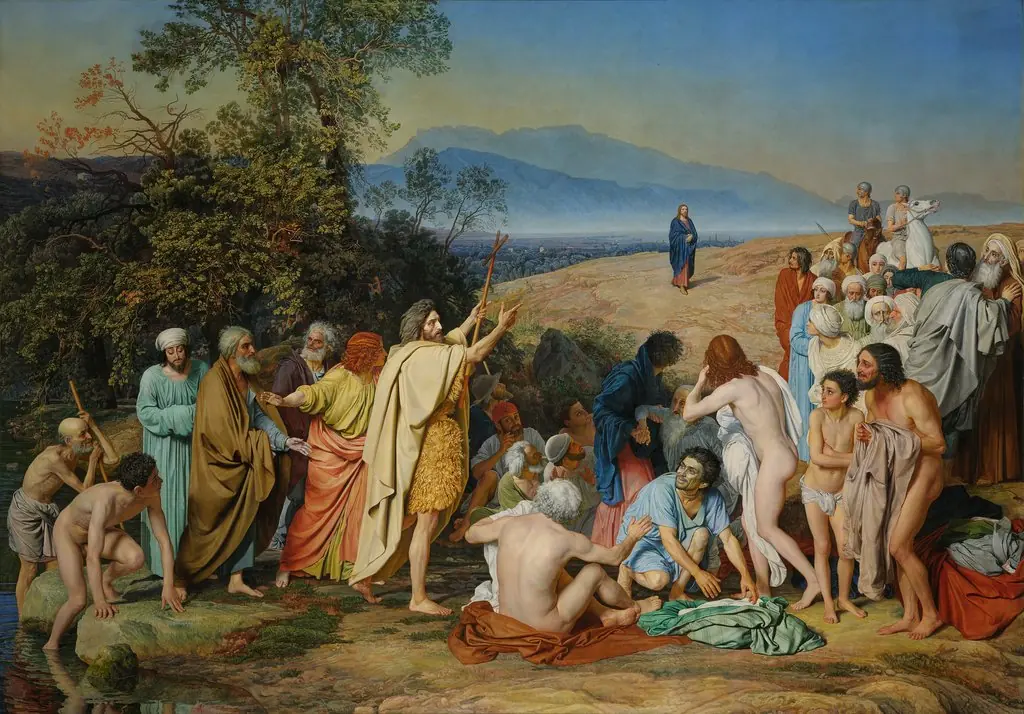 The Appearance of Christ Before the People
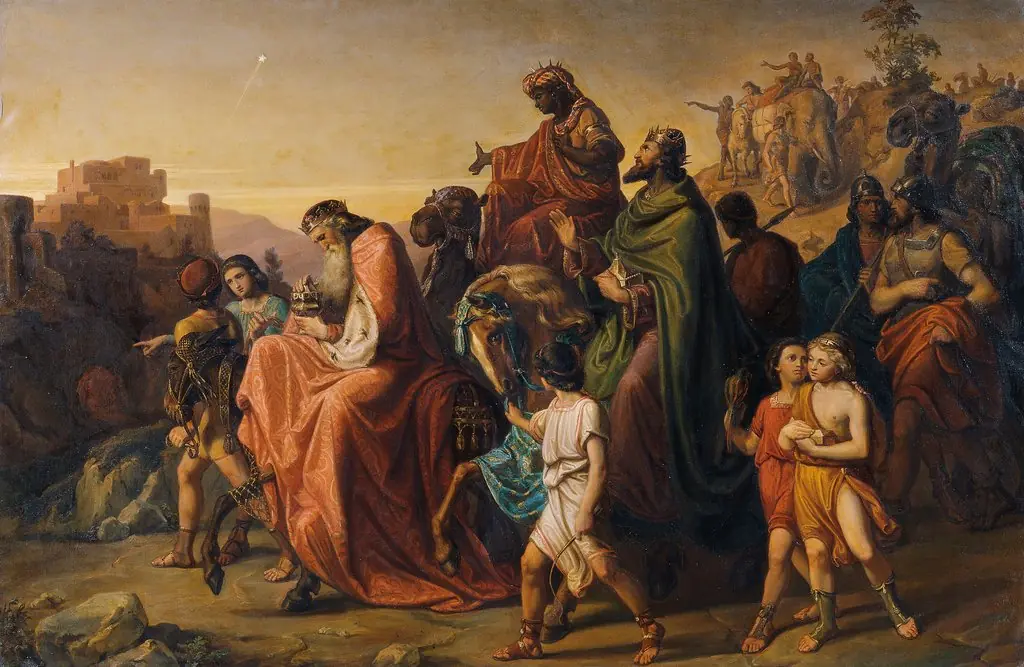 Journey of the Magi with their Retinue
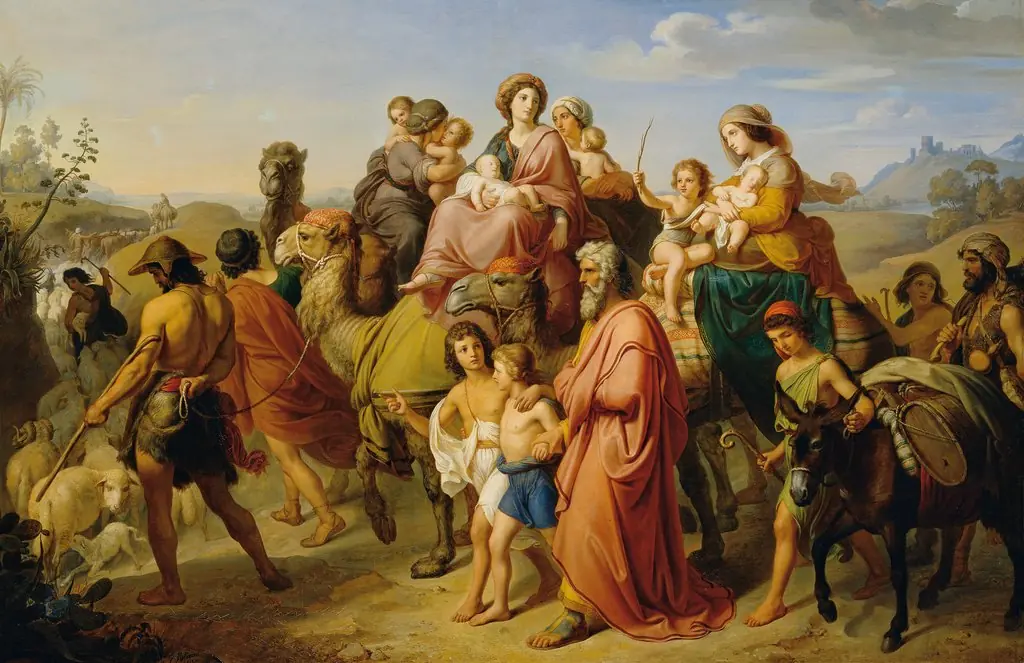 Jacob's homecoming
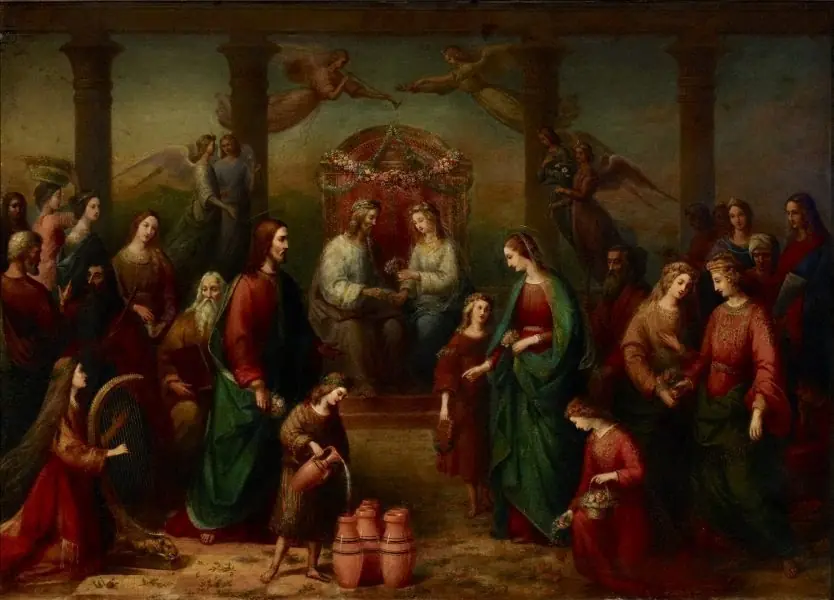 The Marriage at Cana of Galilee
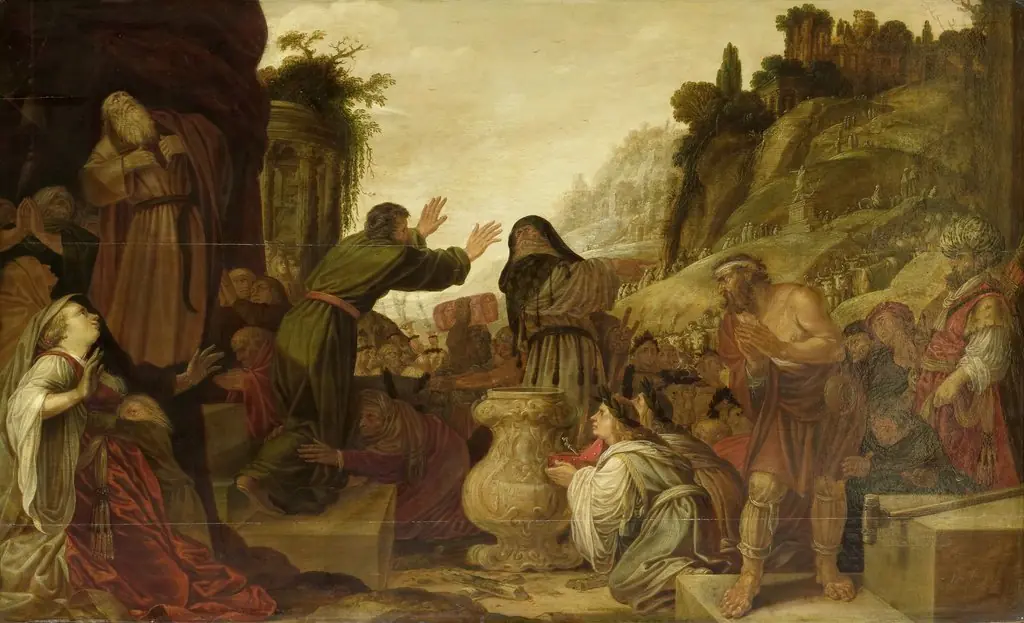 Sts Paul and Barnabas worshipped as gods by the people of Lystra
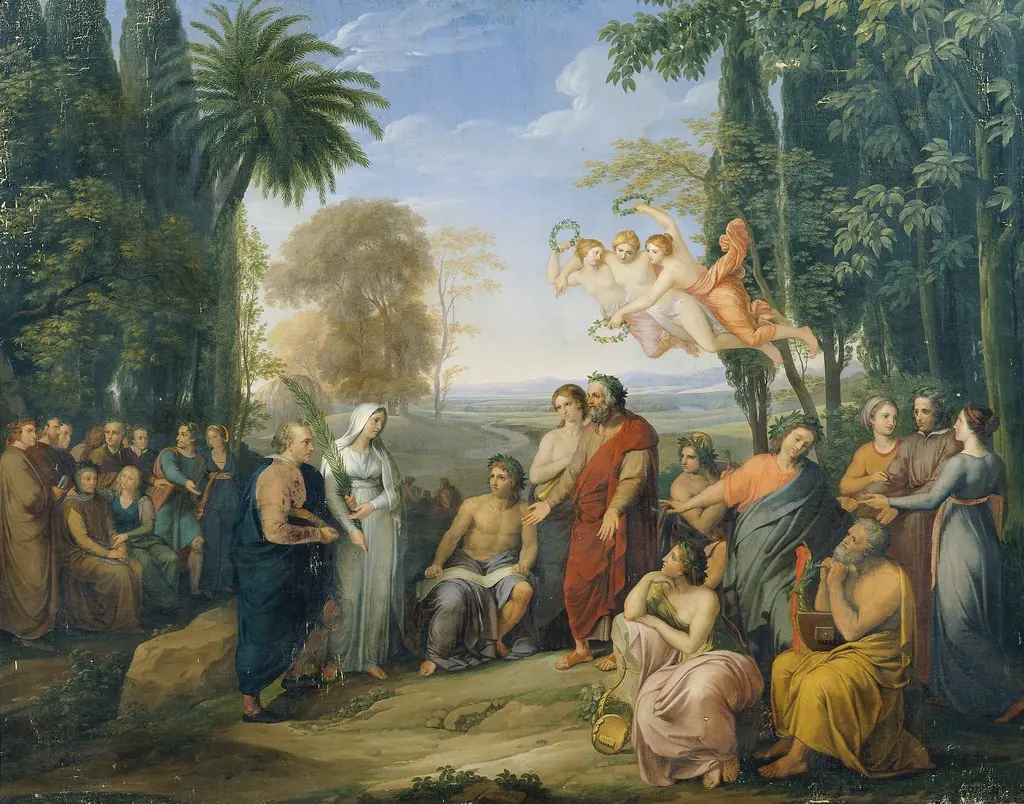 Klopstock unter den Dichtern im Elysium
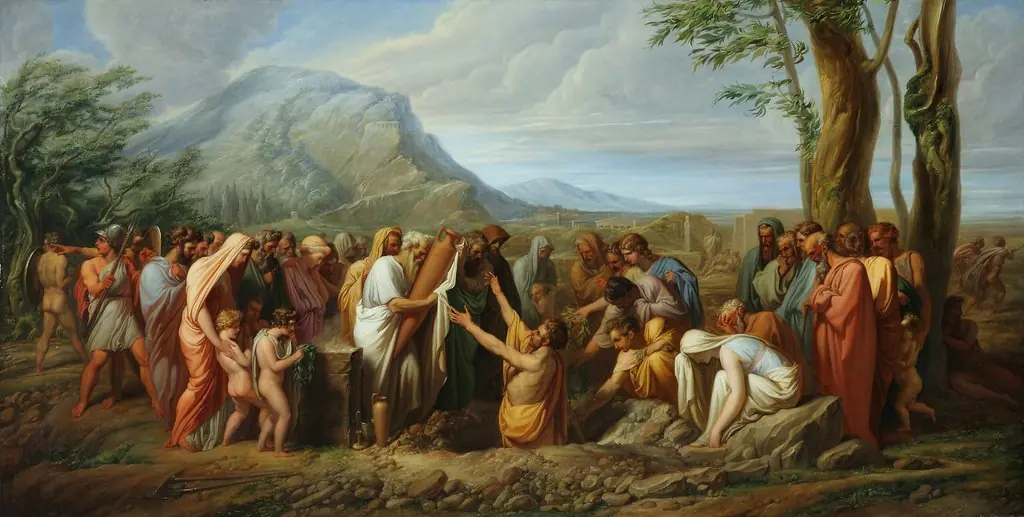 Sepoltura delle ceneri di Temistocle nella terra attica
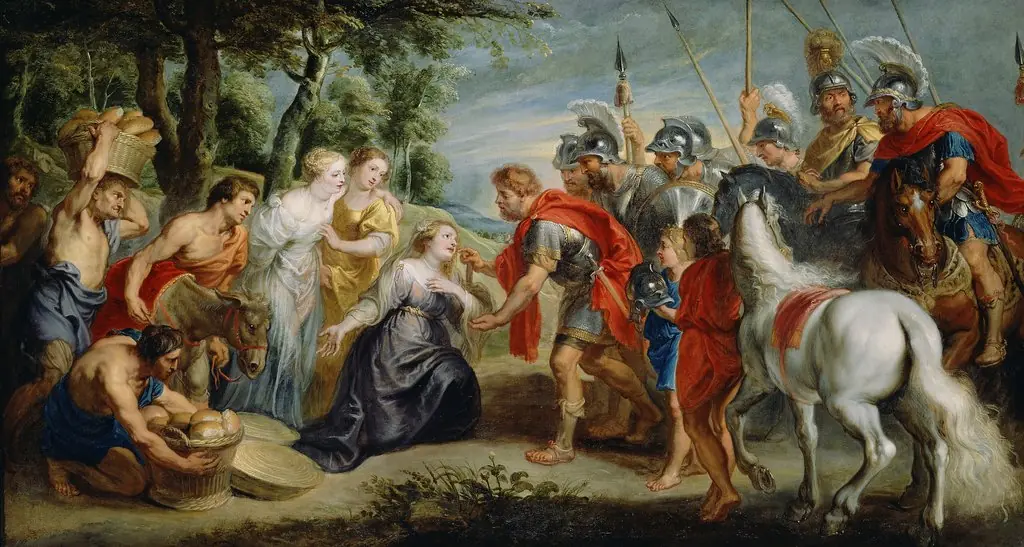 David Meeting Abigail
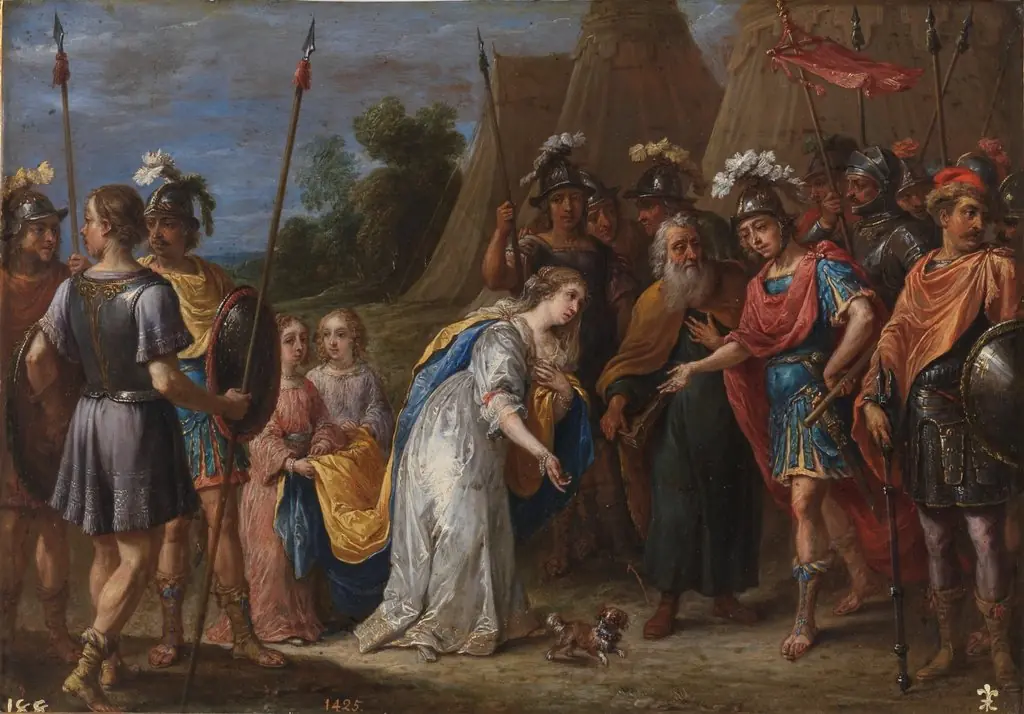 Armida ante Godofredo de Bouillon
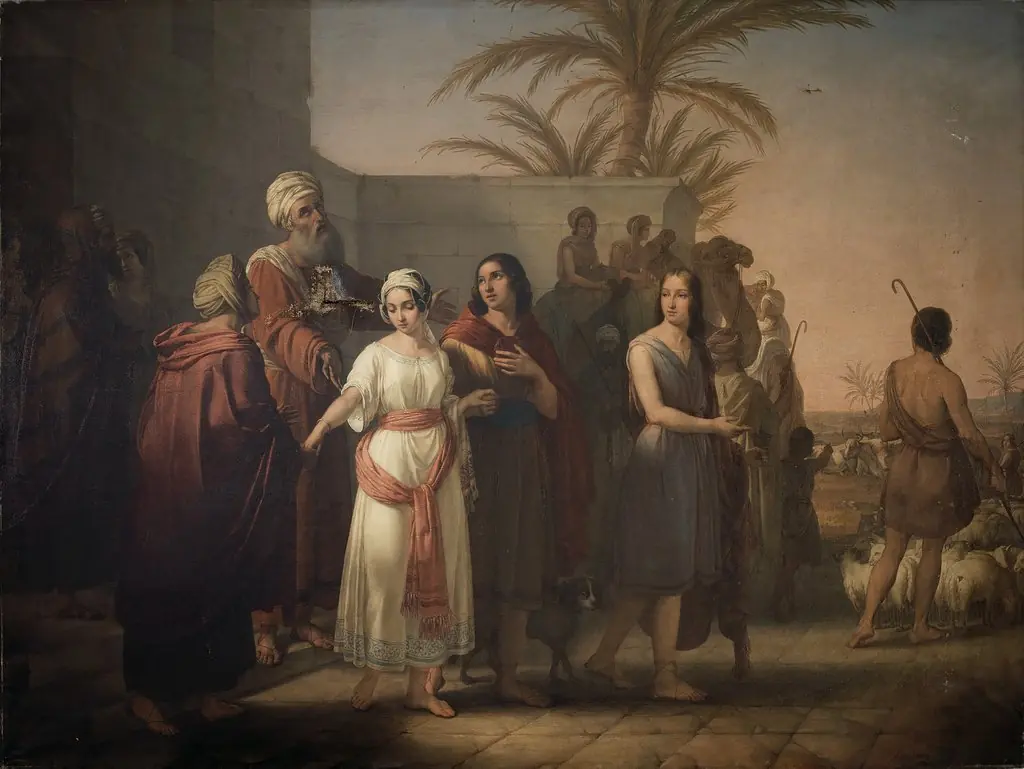 Tobias and his wife say goodbye to his in-laws in order to return to his father