Artwork
Maxentius
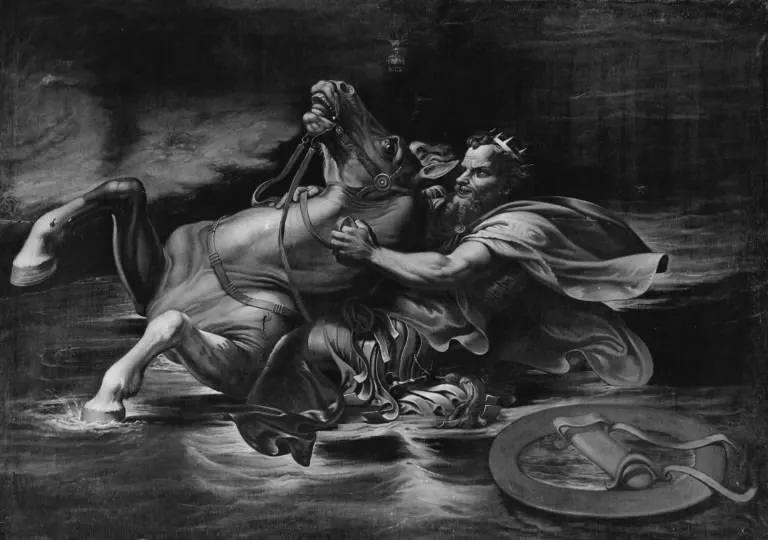
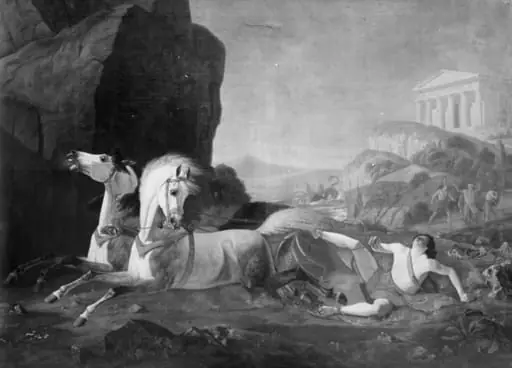
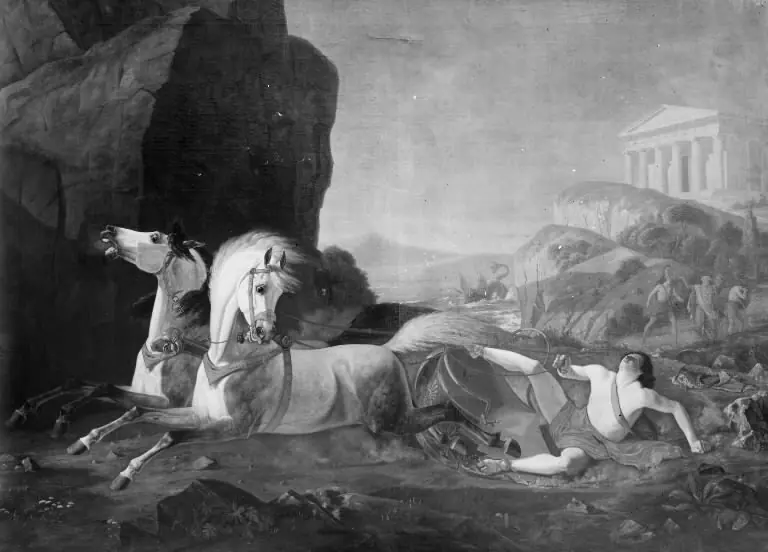
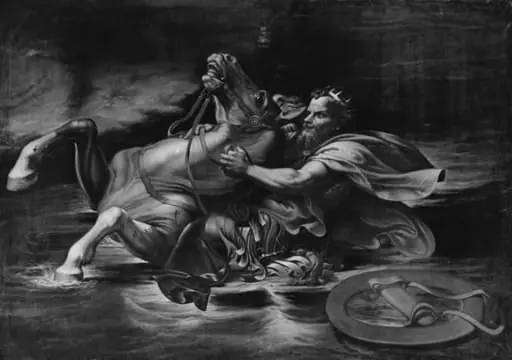
Maxentius is an oil painting by the Neoclassicist artist Johann Georg Wahl. It dates from 1803 and is held in the collection of the Statens Museum for Kunst.
About this work
Overview
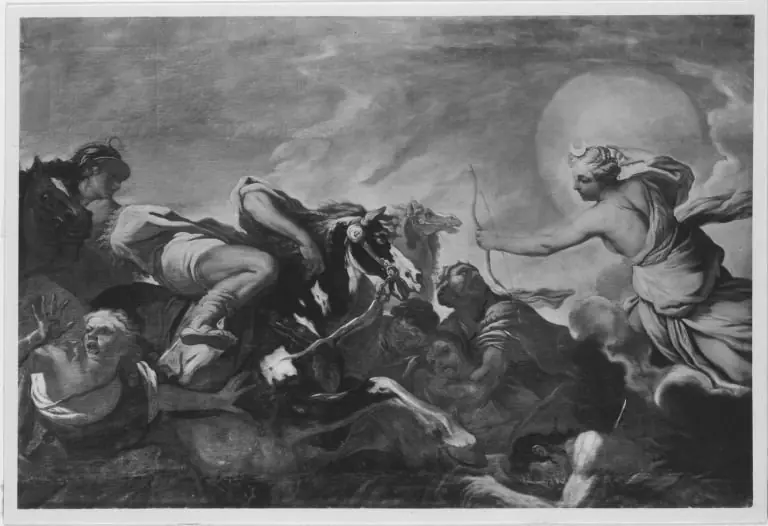
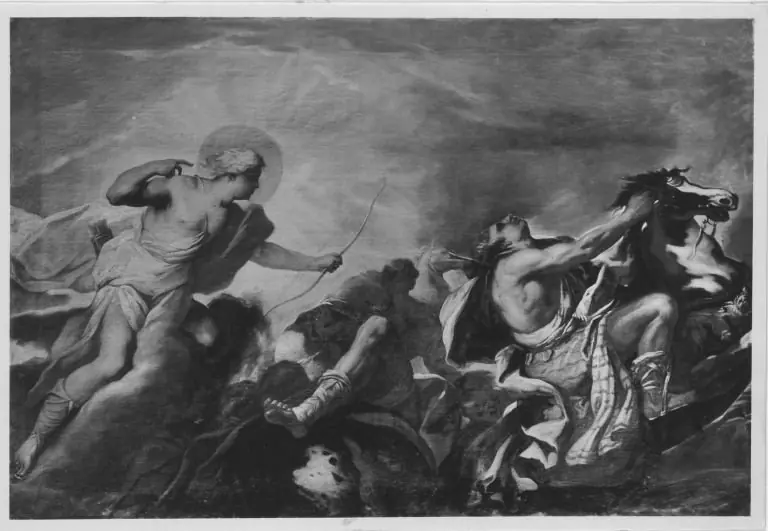
Painted in 1803 by Johann Georg Wahl, this oil-on-canvas work depicts the Roman emperor Maxentius in a moment of physical struggle. The scene captures him entangled with a rearing horse in water, rendered with precise detail and dramatic lighting. The painting resides in the collection of Statens Museum for Kunst in Copenhagen, representing early 19th-century historical narrative painting.
Subject & Meaning
The figure is identified as Maxentius, a Roman emperor whose historical death involved drowning in the Tiber.
The figure is identified as Maxentius, a Roman emperor whose historical death involved drowning in the Tiber. Wahl portrays him not in triumph but in chaos, emphasizing vulnerability amid power. The crown and flowing robe suggest imperial status, while the horse’s resistance and the turbulent water imply divine retribution or personal downfall, aligning with moralizing themes common in Neoclassical historiography.
Technique & Style
Wahl employs oil paint to render fine textures: the folds of the robe, the tension in the horse’s muscles, and the ripple of water. The dark, undefined background heightens the figures through chiaroscuro, directing focus to the struggle. Brushwork is controlled yet expressive, balancing realism with theatrical composition, characteristic of academic traditions of the period.
History & Provenance
Commissioned or created in 1803, the painting entered the Danish national collection shortly after its completion. Its presence in Statens Museum for Kunst reflects 19th-century European interest in classical antiquity as a source of moral and aesthetic instruction. No significant alterations or reattributions are recorded; it has remained in the museum’s custody since the early 1800s.
Context
Wahl worked during a time when European artists revisited Roman history to explore themes of authority and collapse. The painting aligns with Neoclassical trends that favored dramatic, emotionally charged scenes from antiquity, often used to comment on contemporary politics. Unlike heroic depictions of emperors, Wahl’s portrayal leans toward tragedy, reflecting a shift toward psychological depth in historical subjects.
Legacy
Though not widely reproduced, the painting remains a notable example of Danish academic painting’s engagement with classical themes. It contributes to understanding how Northern European artists interpreted Roman history with emotional nuance. Its preservation in a national museum underscores its role as a reference for historical narrative painting in the early 19th century.
Artist & collection