Artwork
Neptun auf dem Meere (zugeschrieben)
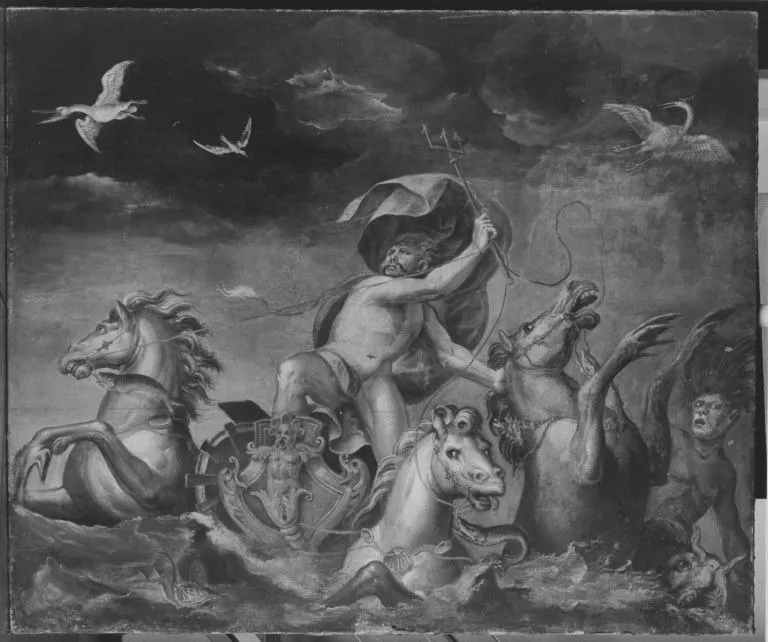
Neptun auf dem Meere (zugeschrieben) is an unspecified painting by the Mannerist artist Melchior Bocksberger. It dates from 1562 and is held in the collection of the Bavarian State Painting Collections.
About this work
Overview
It resides in the Alte Pinakothek in Munich, where it is cataloged as a work from the mid-16th century.
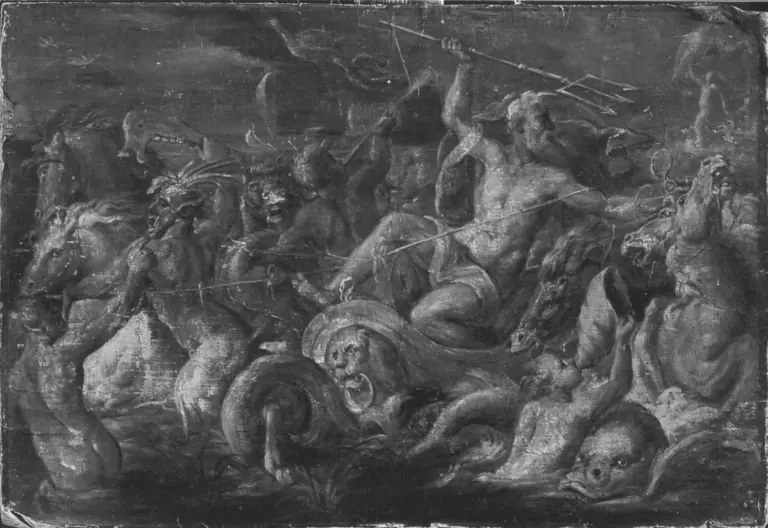
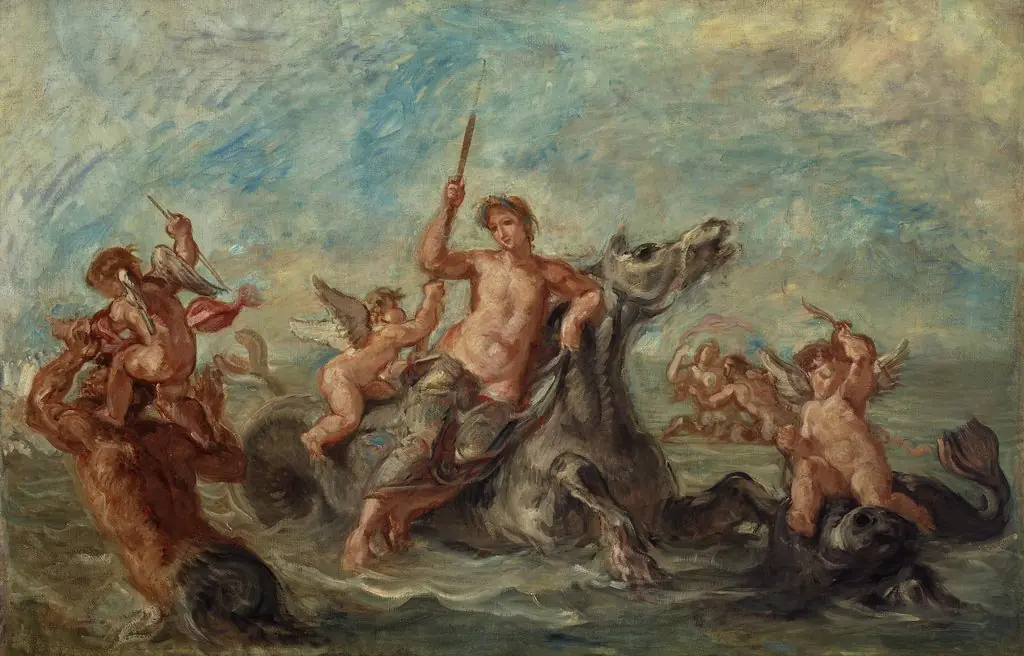
Attributed to Melchior Bocksberger and dated 1562, this oil painting portrays a mythological sea deity in motion, surrounded by fantastical creatures and turbulent natural forces. It resides in the Alte Pinakothek in Munich, where it is cataloged as a work from the mid-16th century. The composition conveys movement through dynamic figures and a storm-lit sky, reflecting the Mannerist fascination with dramatic tension and mythological themes.
Subject & Meaning
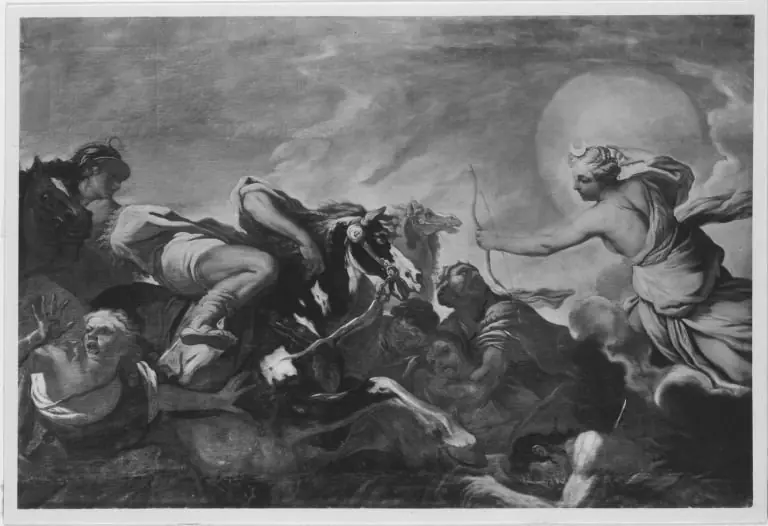
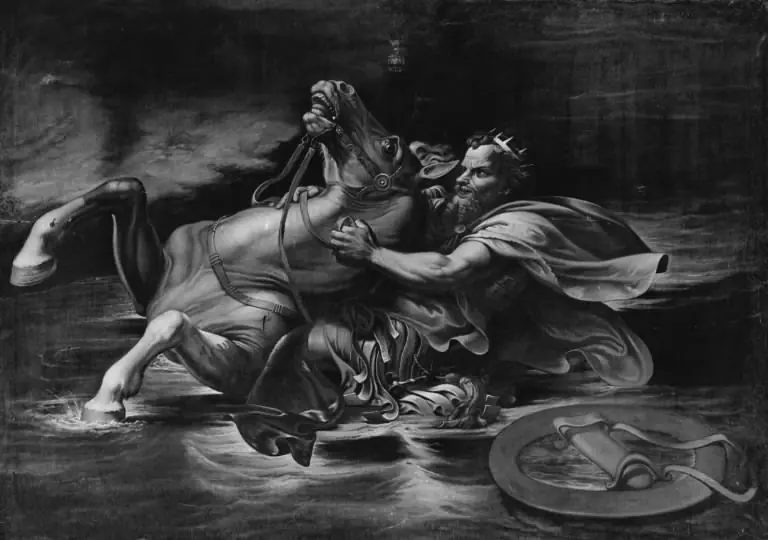
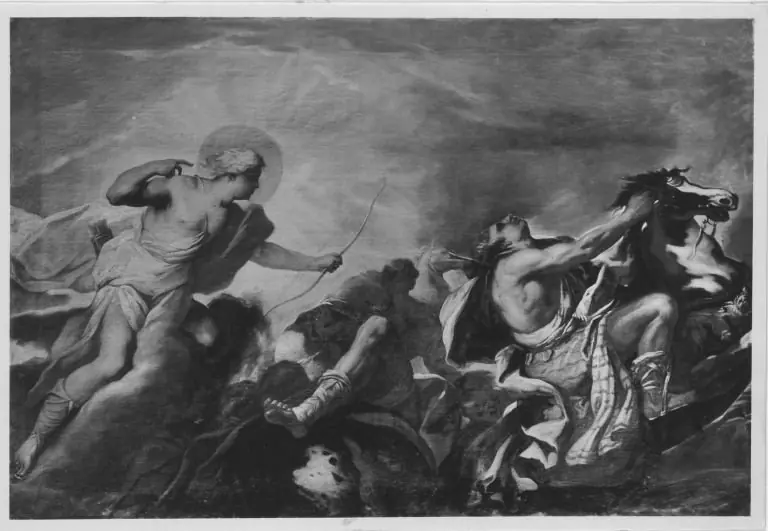
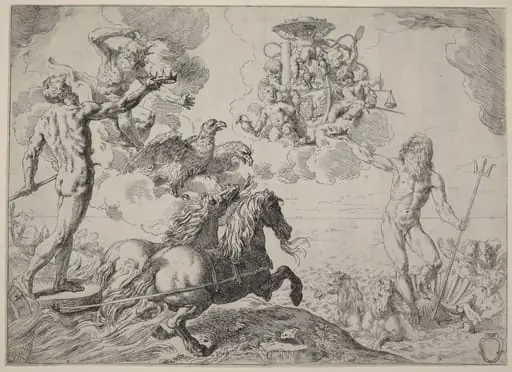
The central figure, likely Neptune, rides a chariot drawn by four horses amid a churning sea, wielding a trident and a banner. Surrounding him are hybrid beings—a fish-tailed figure and a bird-headed form—suggesting a mythic retinue of sea spirits. The chaotic arrangement implies divine control over nature’s fury, aligning with Renaissance interpretations of classical deities as arbiters of elemental forces, though the precise narrative remains ambiguous.
Technique & Style
The painting employs strong chiaroscuro to heighten the sense of motion and depth, with dark, brooding skies contrasting sharply against illuminated figures and foam-laced waves. Brushwork is energetic, emphasizing the contorted postures of horses and figures. The fantastical creatures and exaggerated anatomy reflect Mannerist tendencies, prioritizing expressive distortion over naturalism, while the palette remains muted, dominated by grays, blues, and earth tones.
History & Provenance
The work entered the Bavarian royal collection in the 16th or early 17th century and was later cataloged in the Alte Pinakothek’s holdings. Its attribution to Melchior Bocksberger, a lesser-known court painter active in Munich, stems from stylistic comparisons and archival records linking him to similar mythological commissions. No definitive documentation of its original commission survives, but its presence in the collection suggests imperial or noble patronage.
Context
Created during the height of Mannerism in southern Germany, the painting reflects the era’s interest in complex mythological scenes and theatrical composition. Bocksberger worked under the Wittelsbach court, where classical themes were favored for their intellectual and symbolic resonance. This work aligns with broader trends in Central European art that blended Italian influences with local traditions, often emphasizing drama over clarity.
Legacy
Though not widely reproduced or studied, the painting contributes to understanding the reach of Mannerist aesthetics beyond Italy. Its inclusion in a major public collection preserves an example of regional mythological painting from a period often overshadowed by High Renaissance and Baroque giants. It remains a quiet testament to the courtly appetite for elaborate, enigmatic imagery in 16th-century Germany.
Artist & collection