Artwork
Italian landscape with cows
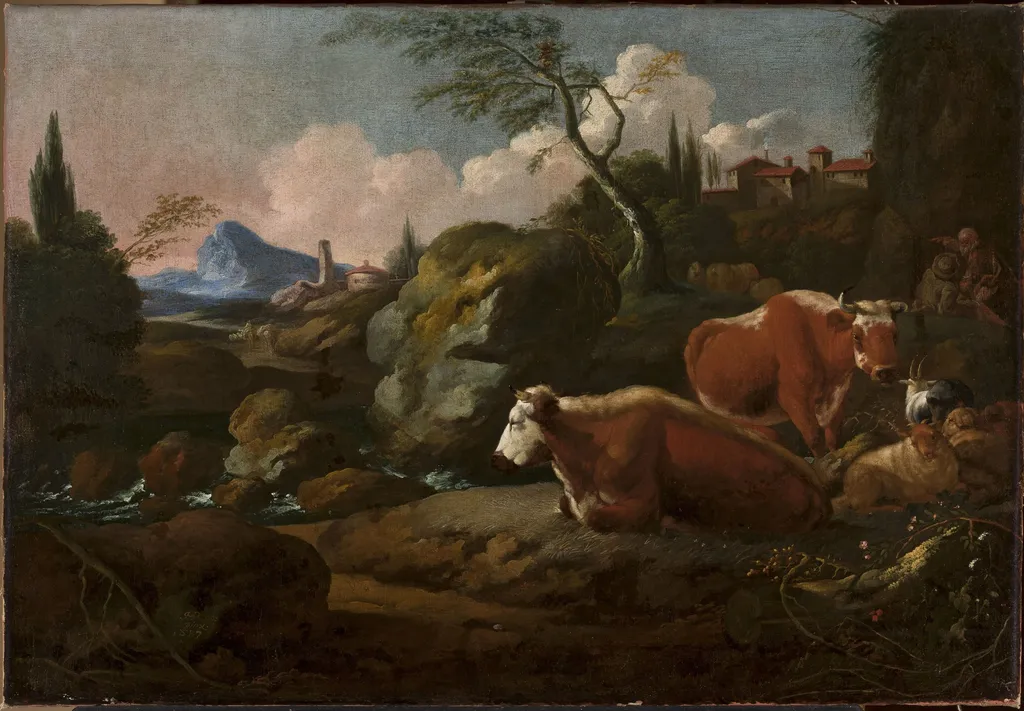
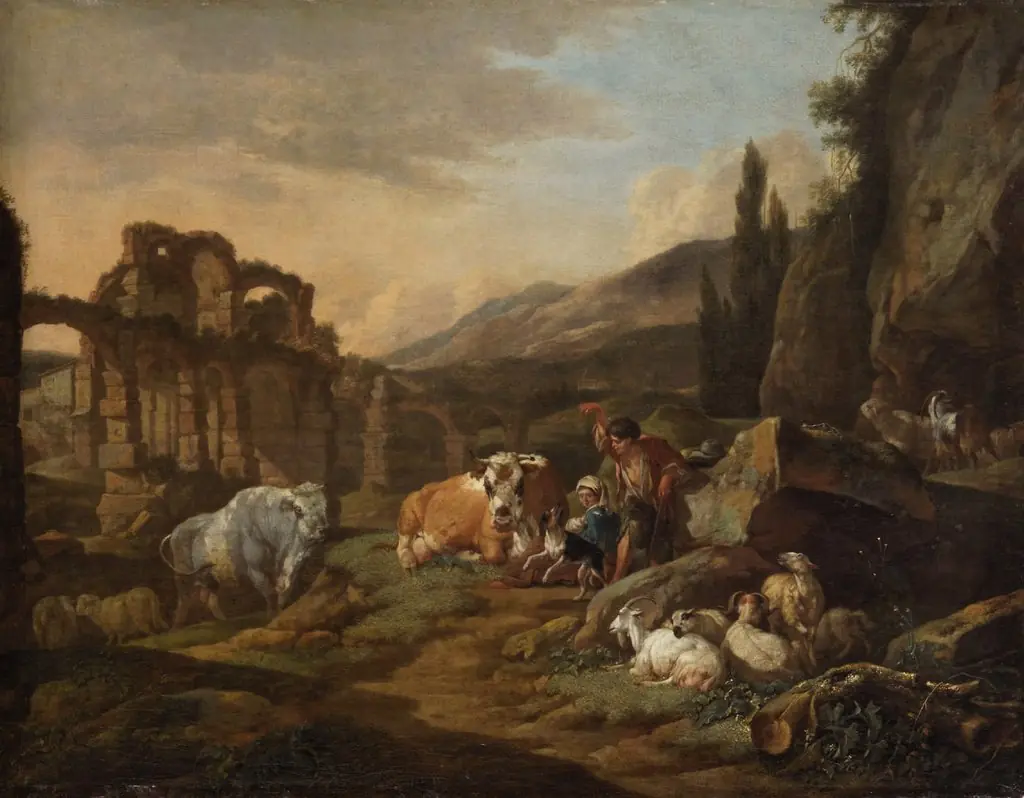
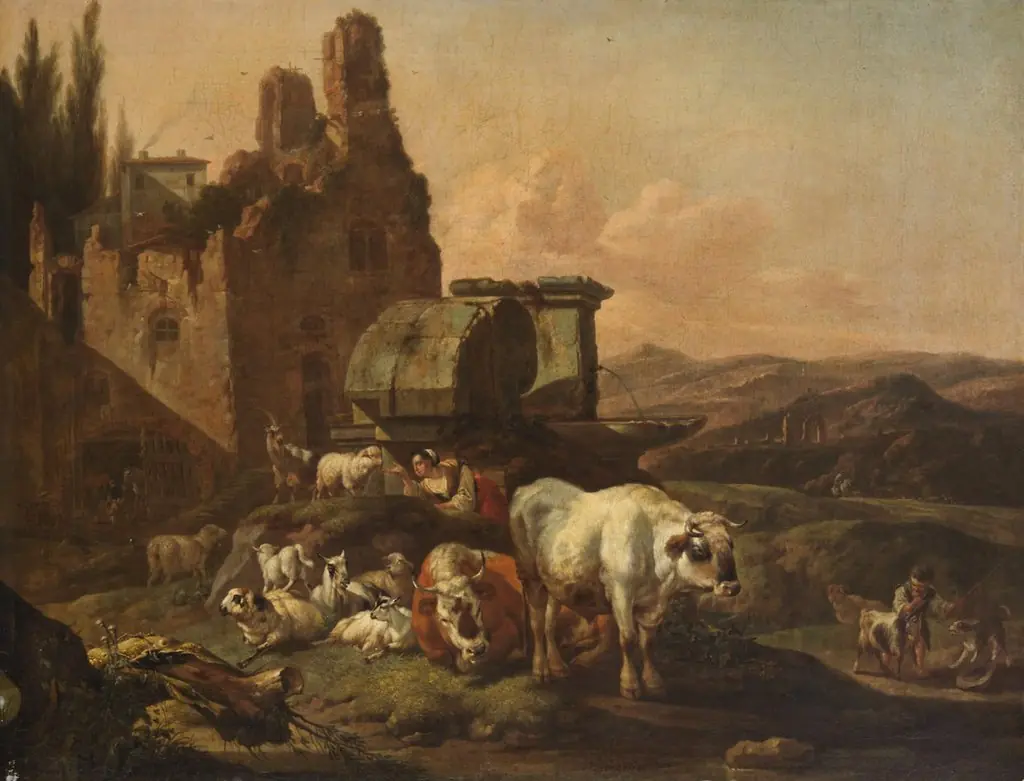
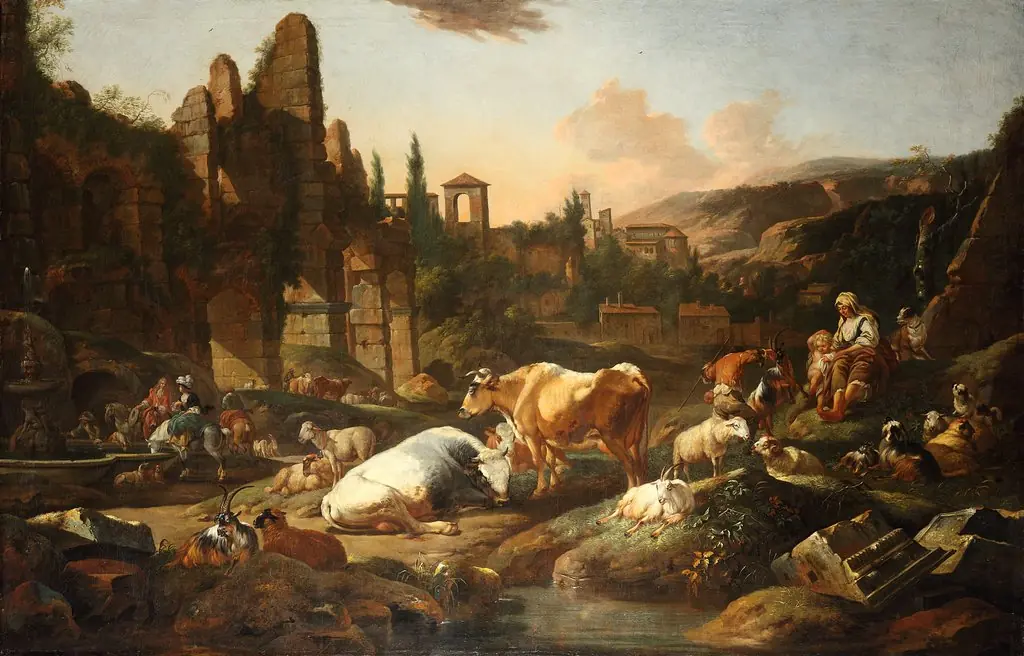
Italian landscape with cows is an oil painting by the Barbizon school artist Johann Heinrich Roos. It is held in the collection of the National Museum in Warsaw.
About this work
Overview
The composition centers on a group of cattle in a naturalistic setting, framed by rolling hills, scattered vegetation, and distant structures.
Painted in 1692, this oil-on-canvas work by Johann Heinrich Roos depicts a tranquil Italian countryside. It belongs to the collection of the National Museum in Warsaw. The composition centers on a group of cattle in a naturalistic setting, framed by rolling hills, scattered vegetation, and distant structures. The palette favors earthy browns, muted greens, and soft blues, reinforcing a quiet, unhurried mood.
Subject & Meaning
Cows are portrayed not as symbols of labor or wealth, but as quiet inhabitants of the landscape. Their presence suggests pastoral harmony rather than human intervention. The scene avoids narrative drama, focusing instead on the calm coexistence of animals and environment. This reflects a 17th-century European ideal of nature as orderly and serene, valued by collectors of Italianate views.
Technique & Style
Roos employs subtle tonal gradations to model forms, using light to define the volume of rocks, trees, and animals without harsh contrasts. Brushwork is precise yet unobtrusive, allowing textures of fur, foliage, and stone to emerge naturally. The sky, rendered with delicate cloud formations, contributes to the painting’s atmospheric depth without dominating the composition.
History & Provenance
The painting entered the National Museum in Warsaw’s collection in the 19th century, likely through acquisitions of Northern European art. Its origins trace to Roos’s time in Italy, where he traveled extensively and produced numerous landscapes. While its exact path to Poland is undocumented, its preservation suggests it was valued as a representative example of German-Italianate landscape painting.
Context
Roos was part of a broader tradition of Northern European artists who traveled to Italy to study its light and topography. His works catered to collectors who favored idealized rural scenes over dramatic history painting. This painting aligns with contemporaneous trends in Dutch and German art that elevated everyday nature as worthy of careful observation and quiet reverence.
Legacy
Though not widely known outside specialist circles, Roos’s landscapes influenced later generations of animal and pastoral painters. His restrained approach to light and composition helped shape the aesthetic of 18th-century landscape art in Central Europe. This work remains a quiet testament to the enduring appeal of unembellished naturalism in European painting.
Artist & collection

 Italian Landscape
 Herd in the mountains
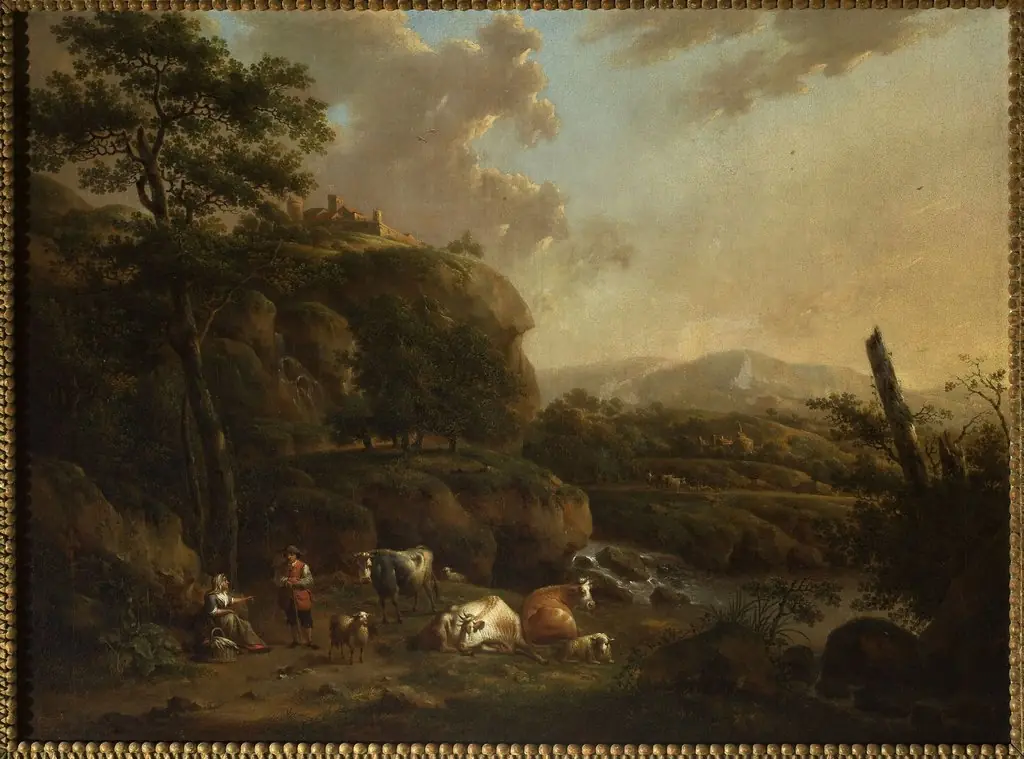 Mountain Landscape with Shepherds
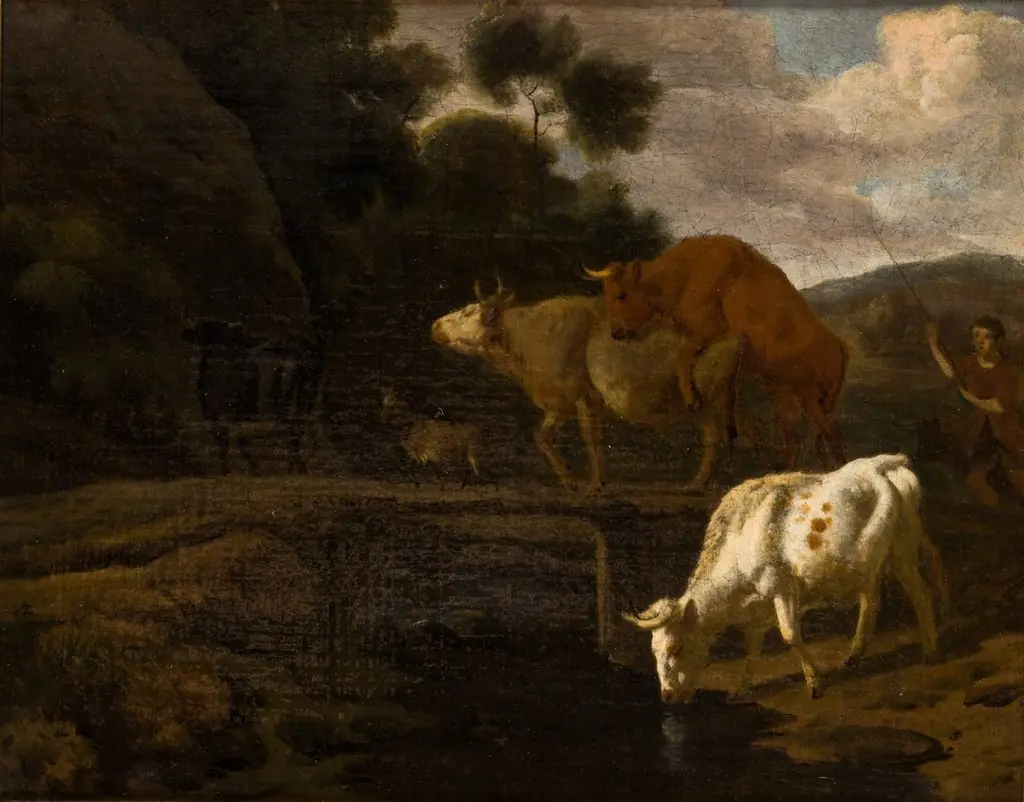 Cows on a Footbridge
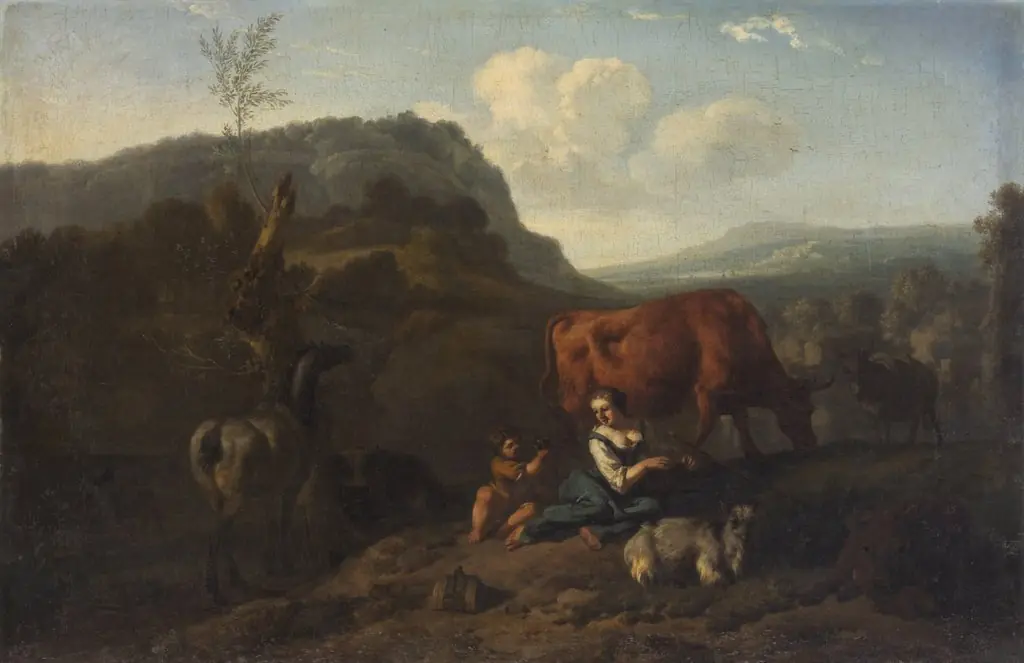 Mountainous landscape with a shepherdess and cows
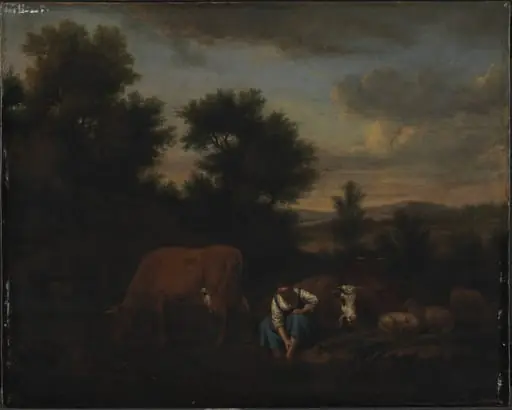 Shepherdess with Cattle
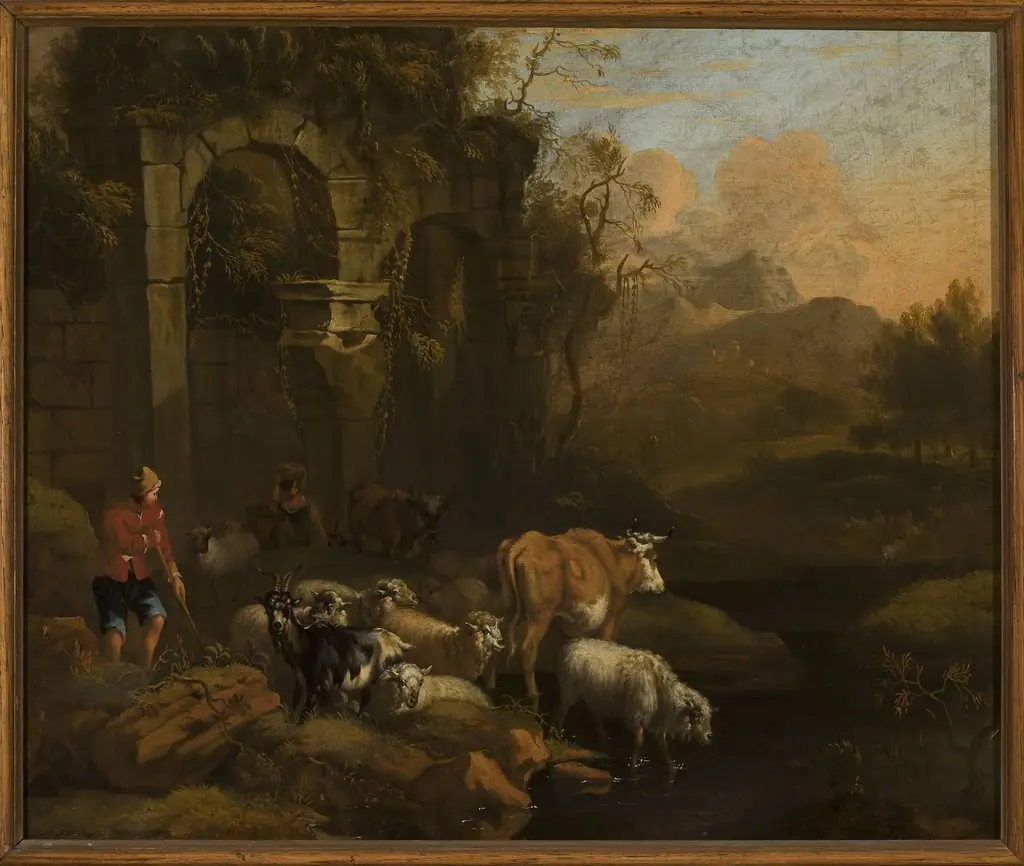 Cattle at the waterhole
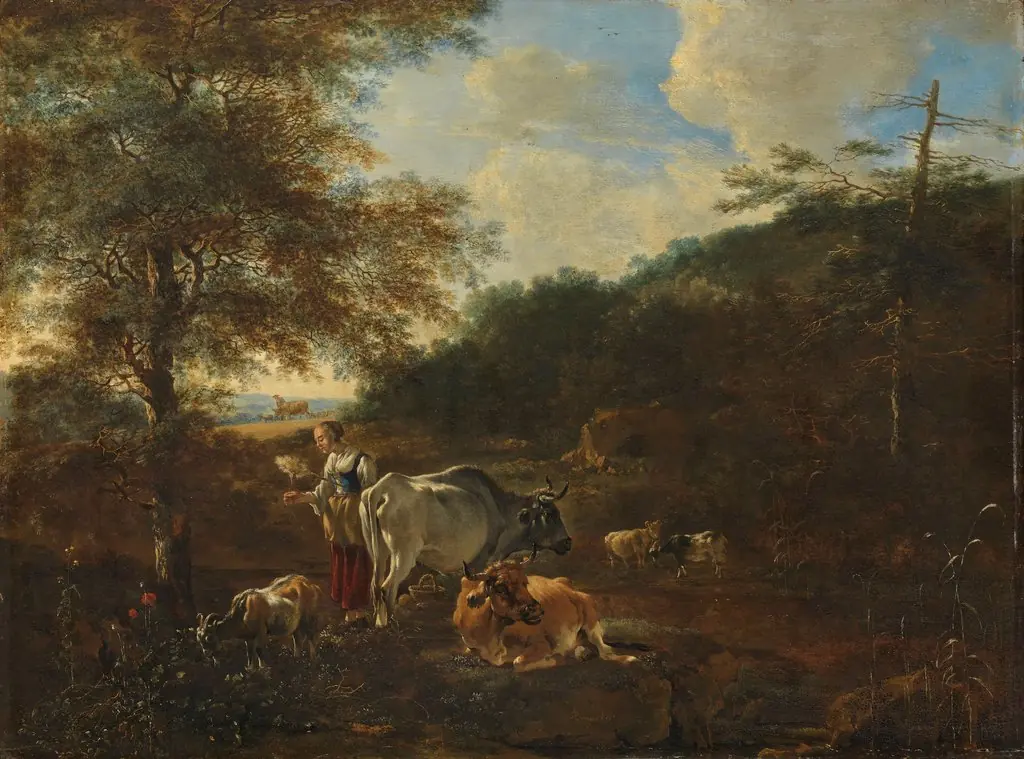 Landscape with cattle
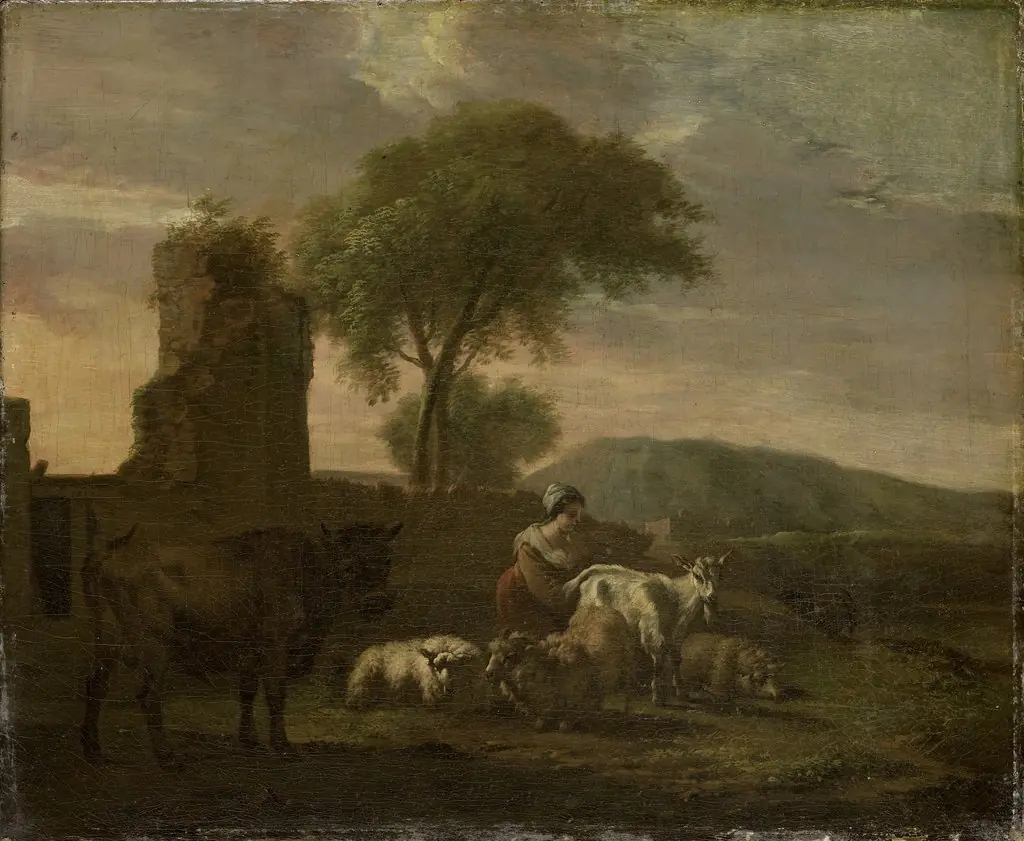 Italian landscape with sheperdess and flocks
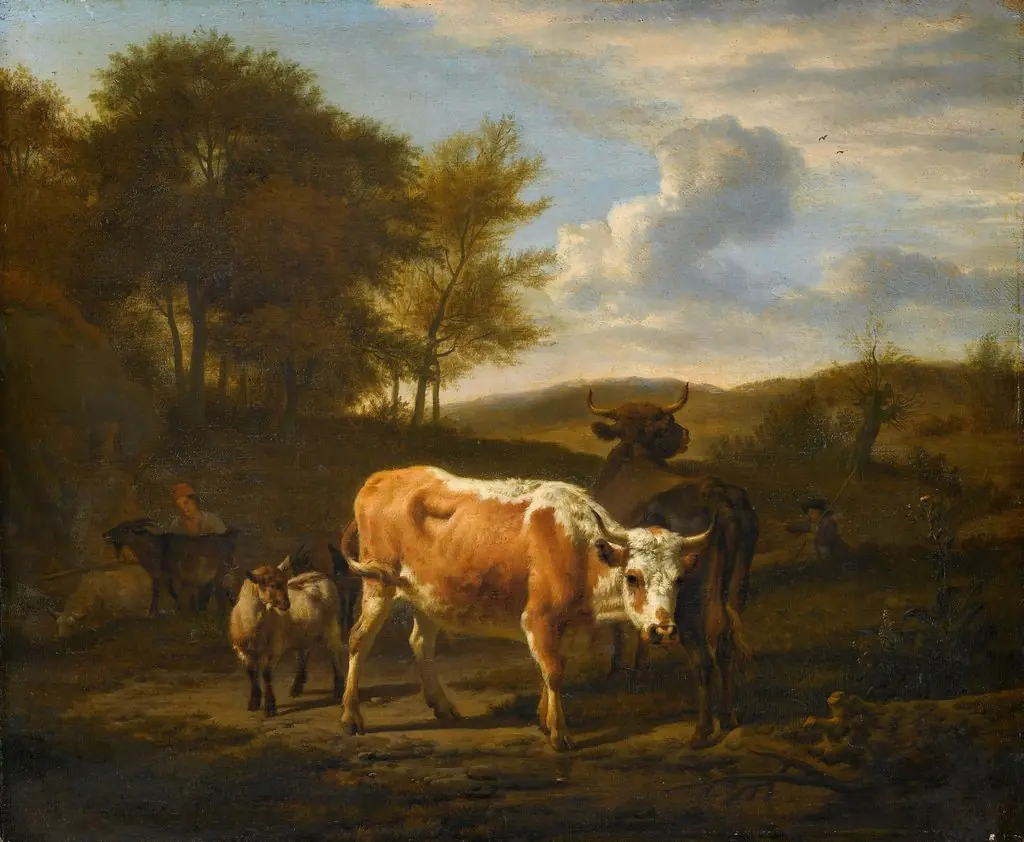 Mountainous landscape with cattle
 An Italian Landscape with Cattle