Artwork
Latona transforming the peasants into frogs
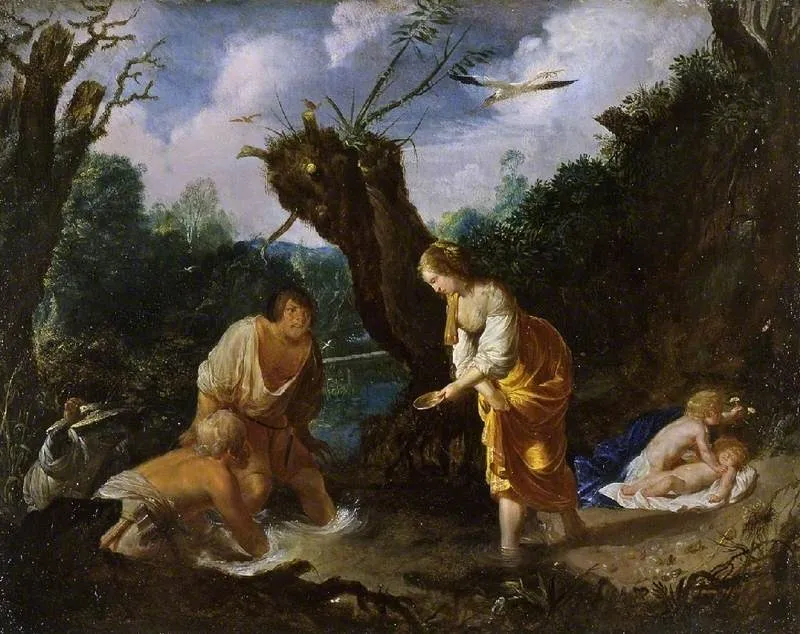
Latona transforming the peasants into frogs is an oil painting by the Northern Renaissance artist Johann Hulsman. It dates from 1641 and is held in the collection of the Fitzwilliam Museum.
About this work
Overview
Johann Hulsman's c. 1641 copper painting, Latona transforming the peasants into frogs, is a mythological scene held in the collection of the Fitzwilliam Museum.
Subject & Meaning
The painting illustrates a mythological narrative where Latona, depicted in a yellow dress, exacts transformation upon peasants, with figures in various stages of metamorphosis into frogs, conveying the myth's themes of divine retribution.
Technique & Style
Executed on copper, a medium conducive to detailed work, the painting features a naturalistic setting with meticulous rendering of textures, from the folds of Latona's dress to the natural environment, suggesting Hulsman's attention to realism.
History & Provenance
Created circa 1641, the work's provenance prior to its acquisition by the Fitzwilliam Museum is not detailed here, highlighting the need for further research into its historical ownership and exhibition history.
Context
Within the broader context of 17th-century European art, this work reflects the ongoing fascination with classical mythology as subject matter, as well as the technical preferences of the time, such as the use of copper for small, intricate compositions.
Legacy
As part of the Fitzwilliam Museum's collection, Latona transforming the peasants into frogs contributes to the institution's holdings of early modern European paintings, offering insights into mythological themes in art and the artistic techniques of its era.
Artist & collection

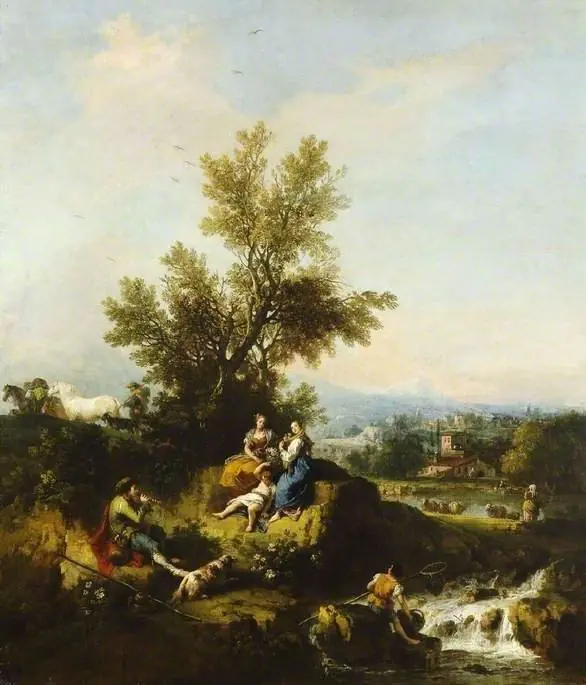 Italianate wooded river landscape with a piping shepherd, two women and a child
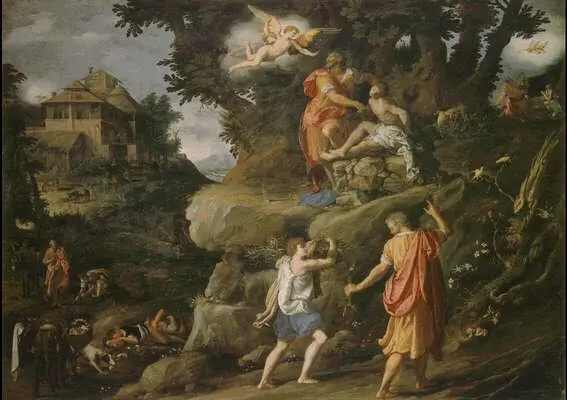 The Sacrifice of Isaac
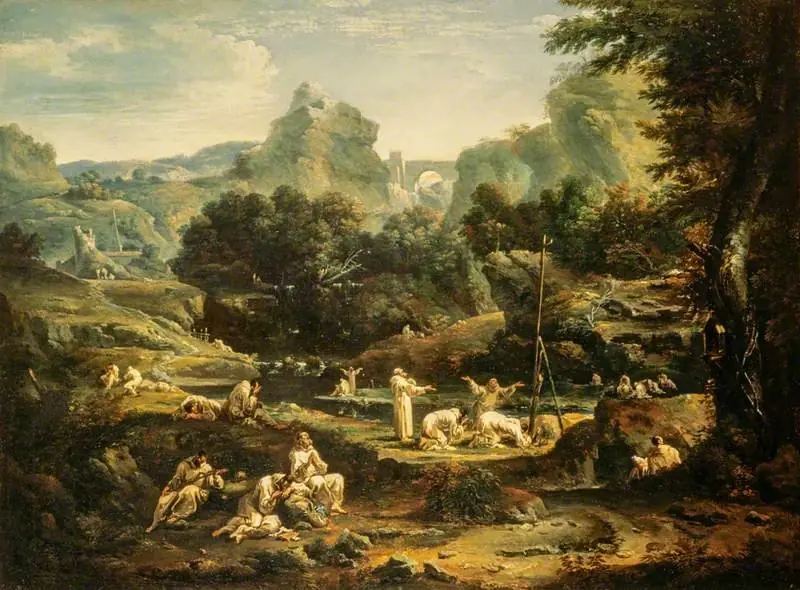 Landscape with Monks
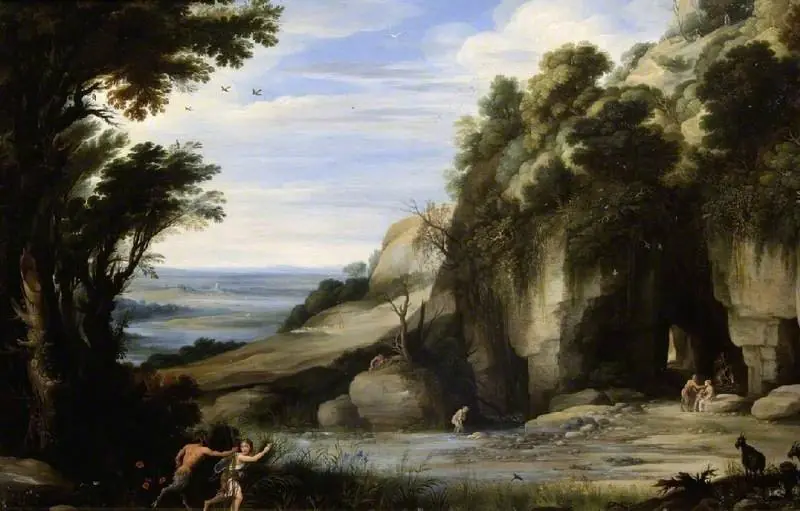 Landscape with Pan and Syrinx, after Paul Bril
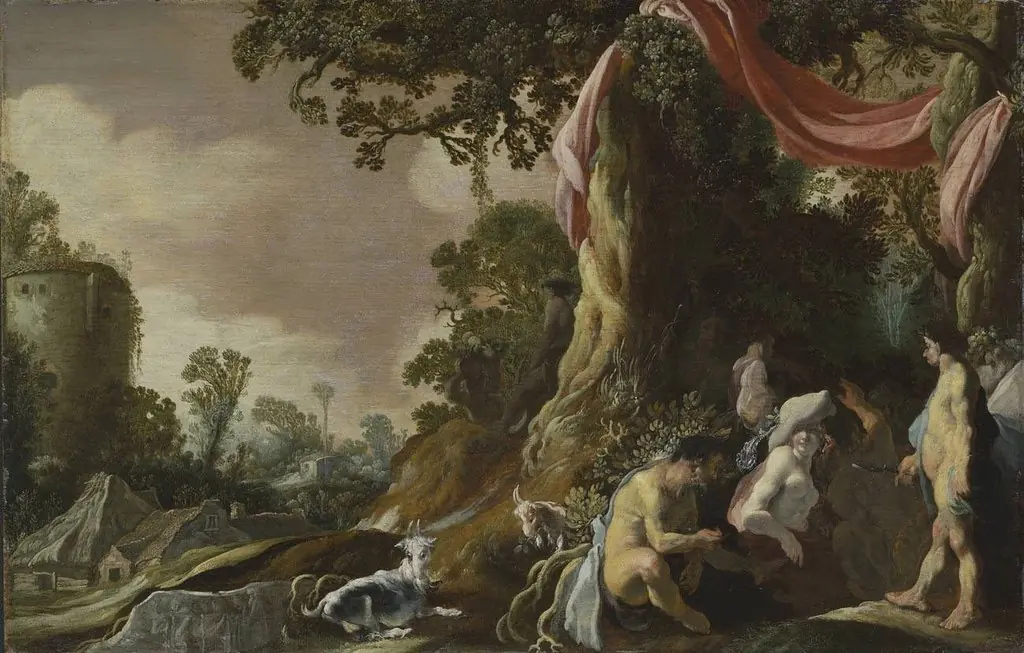 Bucolic scene (shepherd scene ?)
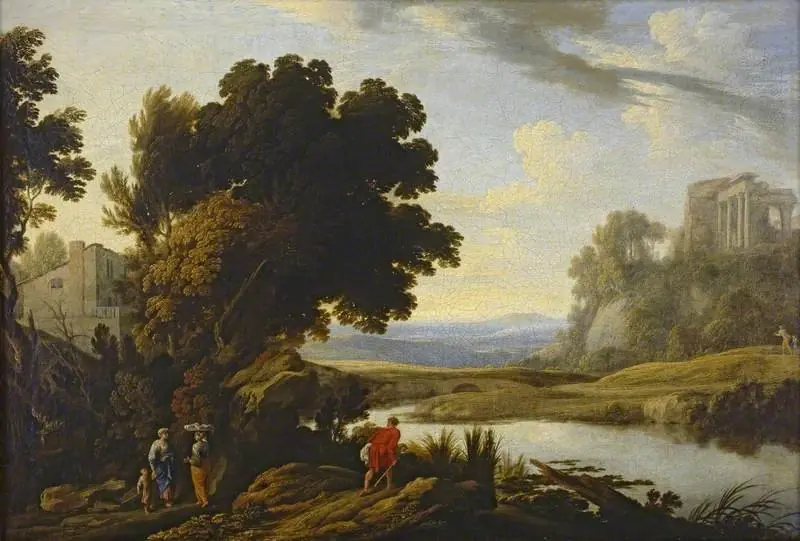 Landscape in the Roman Campagna
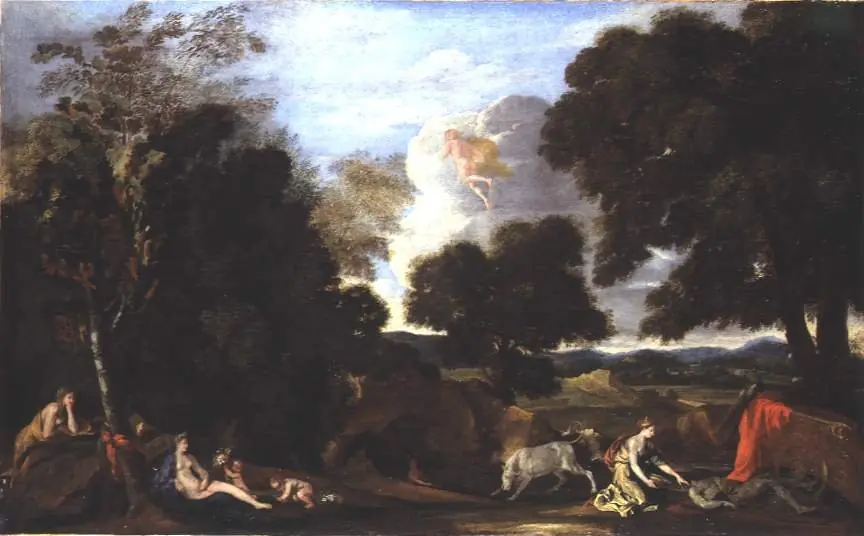 Landschaft mit Juno und dem getöteten Argus
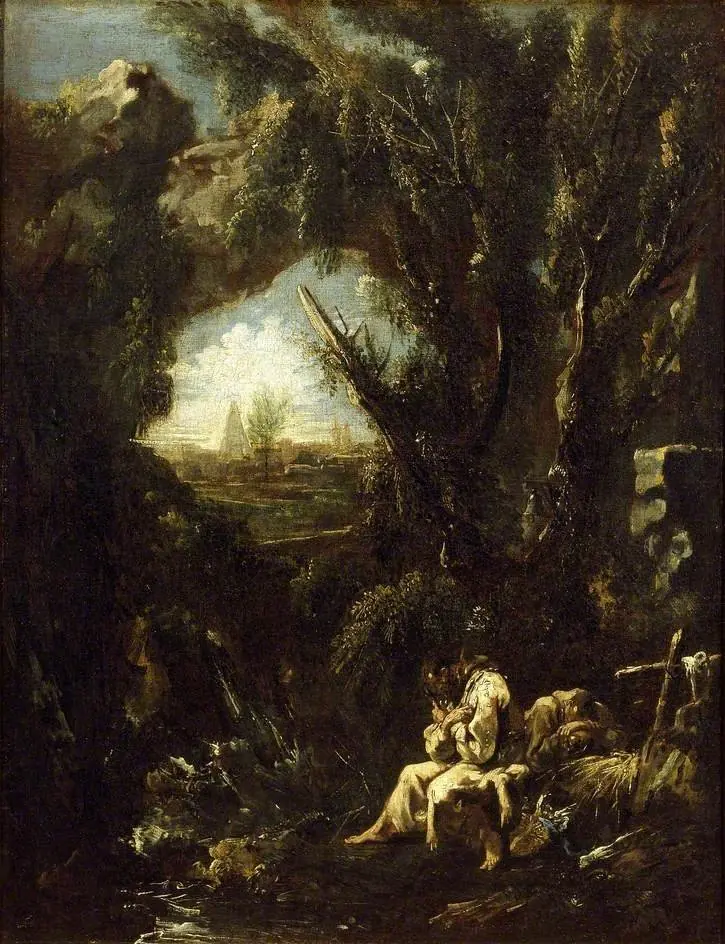 Landscape with two Hermits in meditation
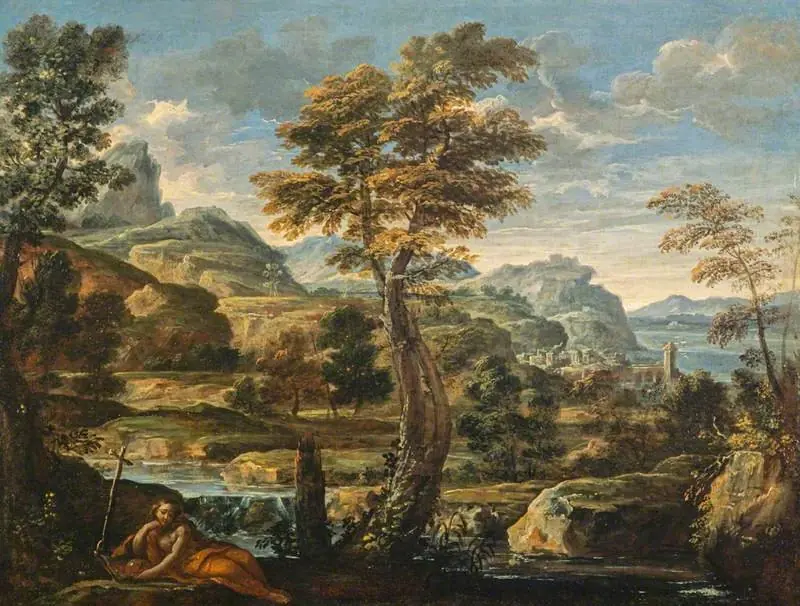 Landscape with Saint Mary Magdalene
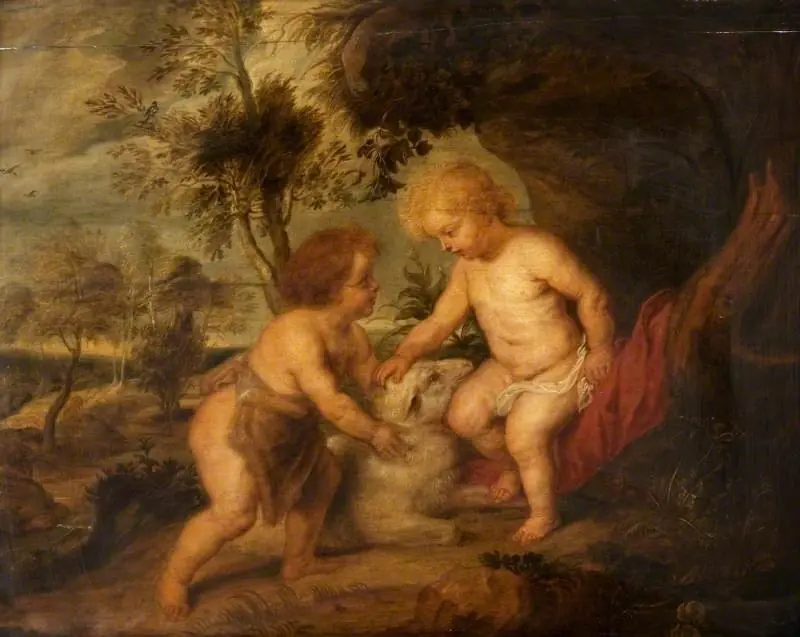 The Infant Christ and Saint John with a Lamb
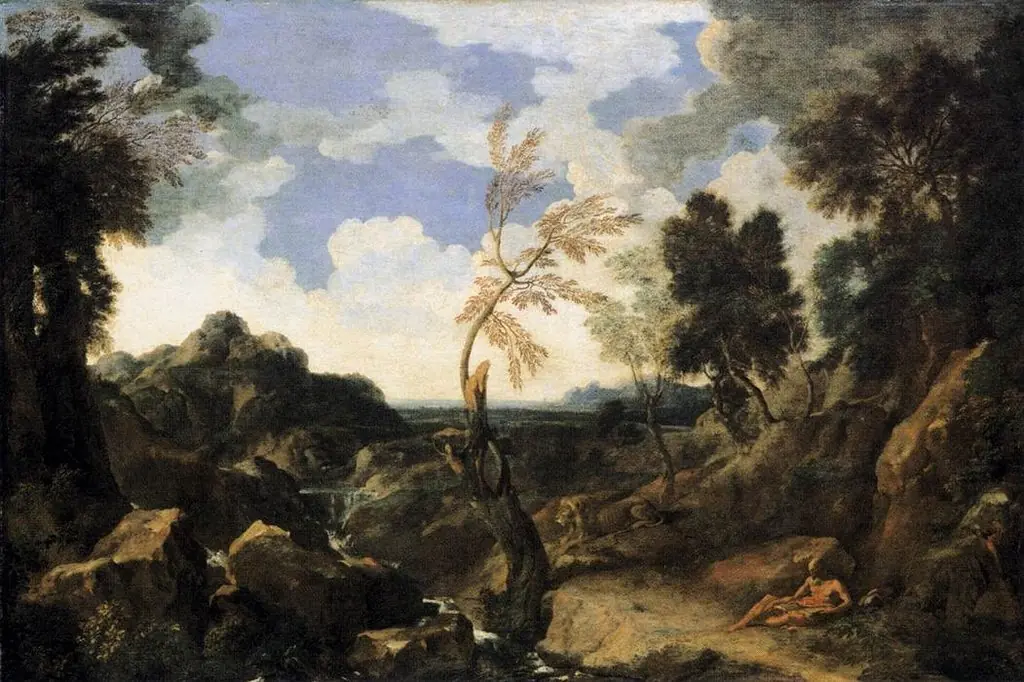 Landscape with Saint Jerome and the Lion
 Landscape with Saint Bruno in Ecstasy