Artwork
The Huaso and the Washerwoman
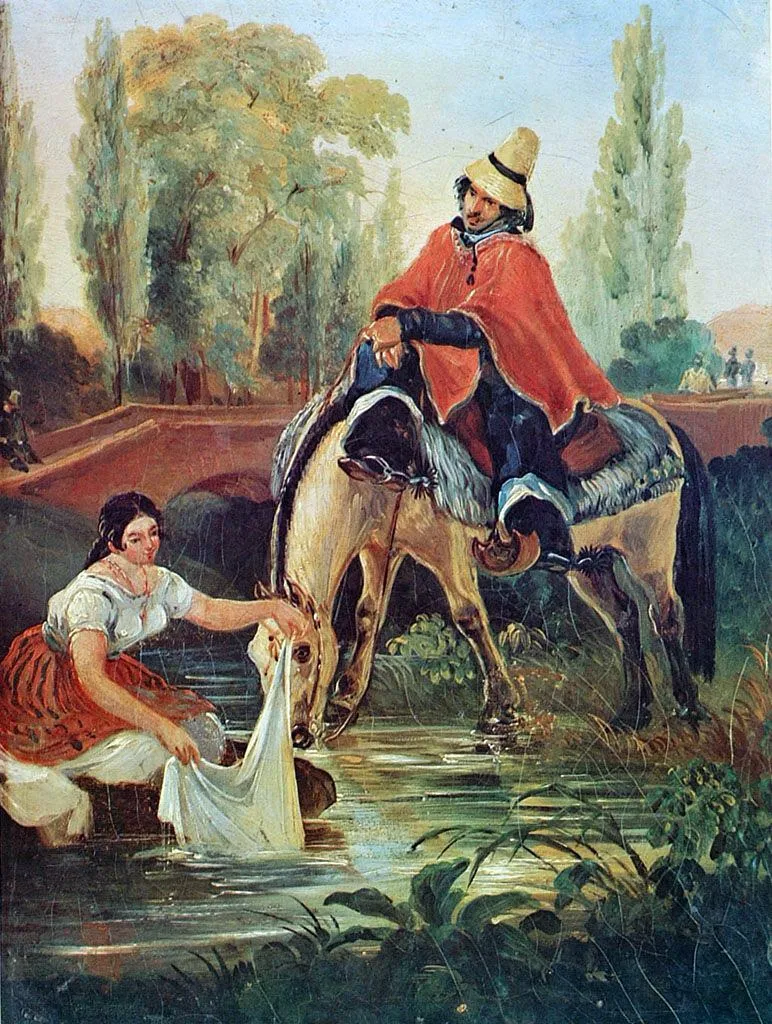
The Huaso and the Washerwoman is an oil painting by Johann Moritz Rugendas. It dates from 1835 and is held in the collection of the Chilean National Museum of Fine Arts. Created in 1835, *The Huero and the Washerwoman* is an oil on canvas that captures a quiet moment in a South American countryside.
About this work
Overview
Created in 1835, *The Huero and the Washerwoman* is an oil on canvas that captures a quiet moment in a South American countryside. A mounted rider in a bright red poncho passes a woman bent over a stream, her white dress and orange apron contrasting with the surrounding foliage. The composition balances figures and landscape, inviting the viewer into a scene of everyday labor and travel.
Subject & Meaning
The work juxtaposes two archetypal rural roles: the huaso, a Chilean horseman akin to the gaucho, and a washerwoman engaged in domestic chores. Their encounter suggests a fleeting intersection of public and private spheres, highlighting the rhythms of agrarian life. The calm interaction, without overt narrative drama, underscores the dignity of ordinary work in the 19th‑century Andes.
Technique & Style
Light falls across the scene, illuminating the water’s surface and casting gentle shadows that define form without disrupting the overall serenity.
Rugendas employs a restrained palette of earth tones punctuated by the rider’s red poncho, rendering depth through subtle chiaroscuro. The brushwork varies from smooth modeling on the figures to looser strokes in the foliage, creating a sense of atmospheric space. Light falls across the scene, illuminating the water’s surface and casting gentle shadows that define form without disrupting the overall serenity.
History & Provenance
German artist Johann Moritz Rugendas painted the scene during his extensive travels in Latin America, where he documented local customs and landscapes. After its completion, the canvas entered private collections before being acquired by the National Museum of Fine Arts in Santiago, where it remains part of the museum’s permanent holdings.
Context
Rugendas’s work reflects the influence of Alexander von Humboldt’s scientific approach to visual observation, merging ethnographic detail with Romantic landscape conventions. The painting belongs to a broader series of images that sought to portray the cultural diversity of the New World for European audiences, positioning the huaso and washerwoman as emblematic figures of Chilean identity.
Artist & collection
Artist
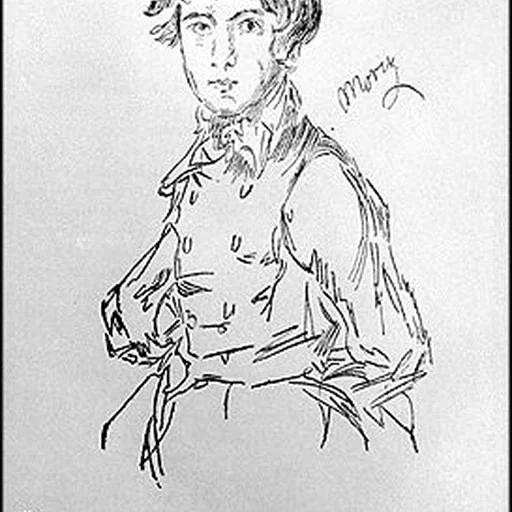
Johann Moritz Rugendas (29 March 1802 – 29 May 1858) was a German painter, famous in the first half of the 19th century for his works depicting landscapes and ethnographic subjects in several countries in the Americas.

 The blind guitarist
 Three horsemen on the road
 Țărani sălișteni la târg
 Scenă la fântână
 Romerske landfolk drager til marked
 La feria de Santiponce
 A Lima cowboy
 The Paseo de las Delicias
 The Pretty Woman and the Masked Men (The Road of Andalusia)
 Roman Peasants Going to Market
 Don Quixote and Dorothea (from Cervantes' novel)
 Troopers Watering Horses