Artwork
Scenă la fântână
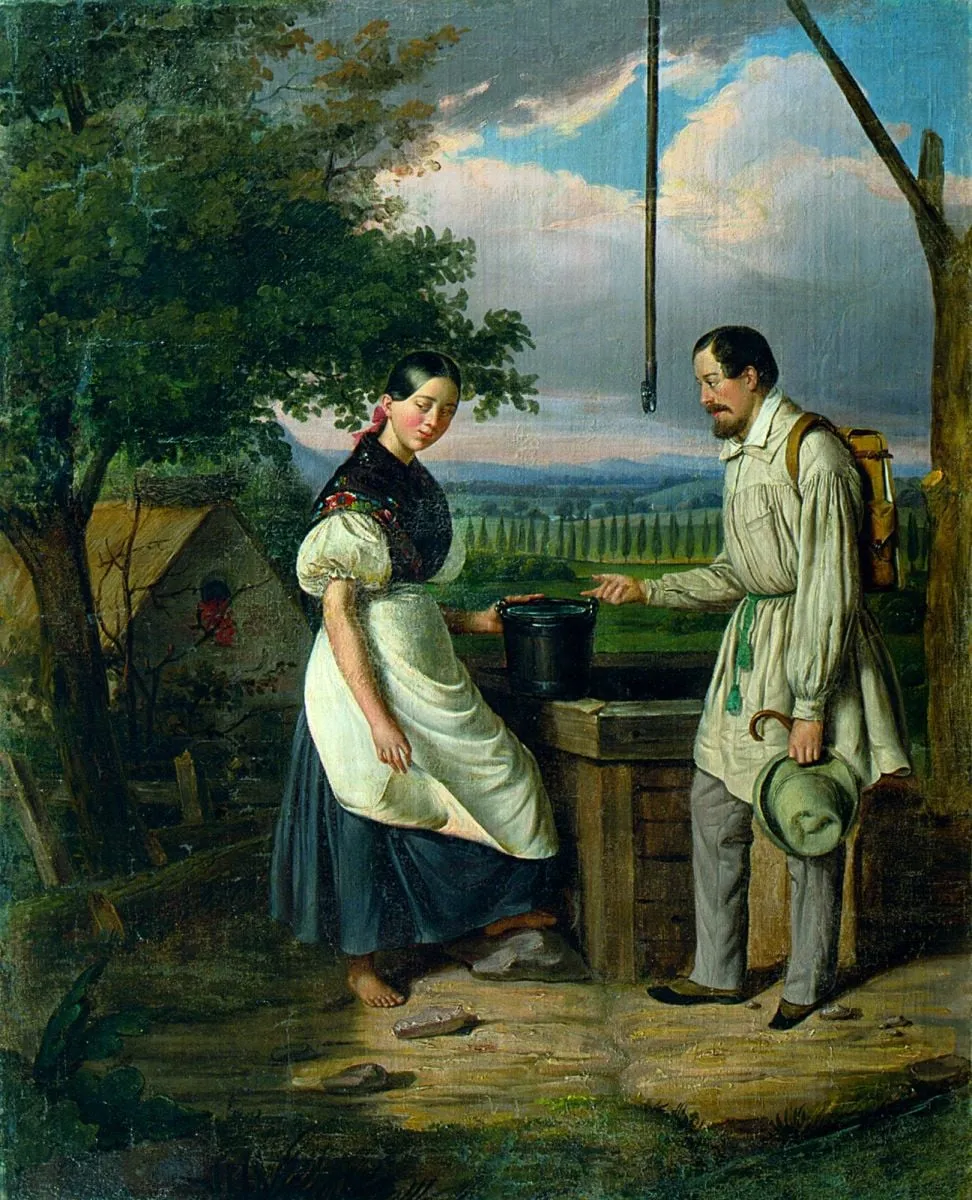
Scenă la fântână is a print by Constantin Daniel Rosenthal. It dates from 1850 and is held in the collection of the National Museum of Art of Romania.
About this work
Overview
The setting is modest, with natural elements framing the figures without overwhelming them, reflecting a focus on ordinary life in mid-19th-century Romania.
Scenă la fântână, dated around 1850, is a quiet genre scene by Romanian artist Constantin Daniel Rosenthal. It captures two figures at a rural well, their postures and attire suggesting everyday labor. The composition avoids dramatic action, instead emphasizing stillness and subtle interaction. The setting is modest, with natural elements framing the figures without overwhelming them, reflecting a focus on ordinary life in mid-19th-century Romania.
Subject & Meaning
The painting depicts a woman and man at a well, their relationship ambiguous but intimate. The woman, leaning on the well with a bucket nearby, appears at rest; the man, holding a hat and gazing at her, suggests quiet attention. The red flower in her hair and the green pocket on his apron introduce small, personal details. Together, they convey a moment of unspoken connection, rooted in the rhythms of rural existence rather than narrative drama.
Technique & Style
Rosenthal employs soft chiaroscuro to model forms and suggest depth, with gentle contrasts between light and shadow defining the figures against the landscape. Brushwork is restrained, favoring smooth transitions over texture. The palette is muted, dominated by earth tones with subtle accents of red and green. The background recedes with atmospheric perspective, enhancing the sense of quiet solitude and spatial depth without theatricality.
History & Provenance
Created during Rosenthal’s early career, the work reflects his engagement with Romanian rural life amid rising national consciousness. It was likely painted in Wallachia, where he lived and worked before his later exile. The painting remained in private hands for much of the 20th century, with limited public exposure until recent scholarly interest in 19th-century Romanian art revived attention to his oeuvre.
Context
In the 1850s, Romania was undergoing cultural and political transformation, with artists increasingly turning to local subjects to define a distinct national identity. Rosenthal’s focus on humble, unidealized figures aligns with this trend, contrasting with academic traditions that favored historical or mythological themes. The scene’s simplicity reflects a broader shift toward realism in Eastern European art during this period.
Legacy
Though not widely exhibited in its time, Scenă la fântână has come to represent an early example of Romanian genre painting grounded in everyday observation. Its understated emotion and attention to detail influenced later artists seeking to portray rural life with dignity. Today, it is recognized as a quiet but significant contribution to the development of national artistic expression in the region.
Artist & collection

Artist
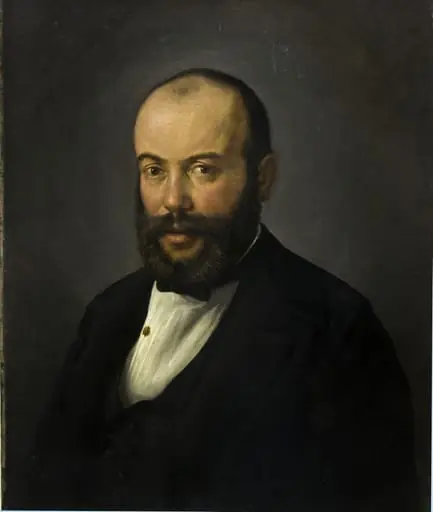
Constantin Daniel Rosenthal (b.Rosenthal Konstantin, 1820 – July 23, 1851) was a painter and sculptor of Austrian birth and a Romanian 1848 revolutionary, best known for his portraits and his choice of Romanian Romantic nationalist…

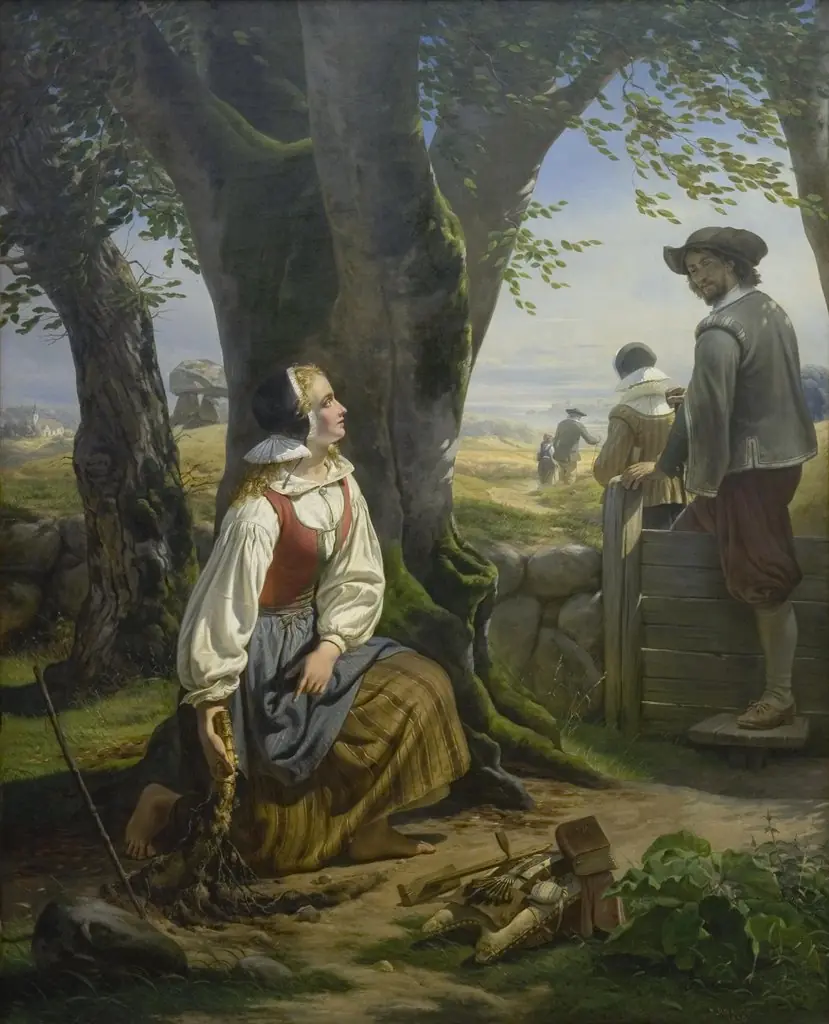 Kirsten Svendsdatter Finds the Gold Horn at Gallehus on 20 July 1639
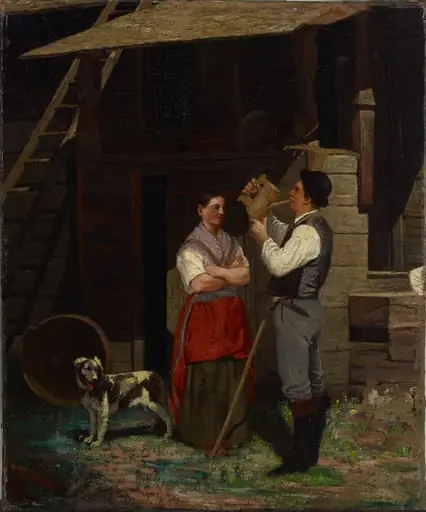 Juomatauko
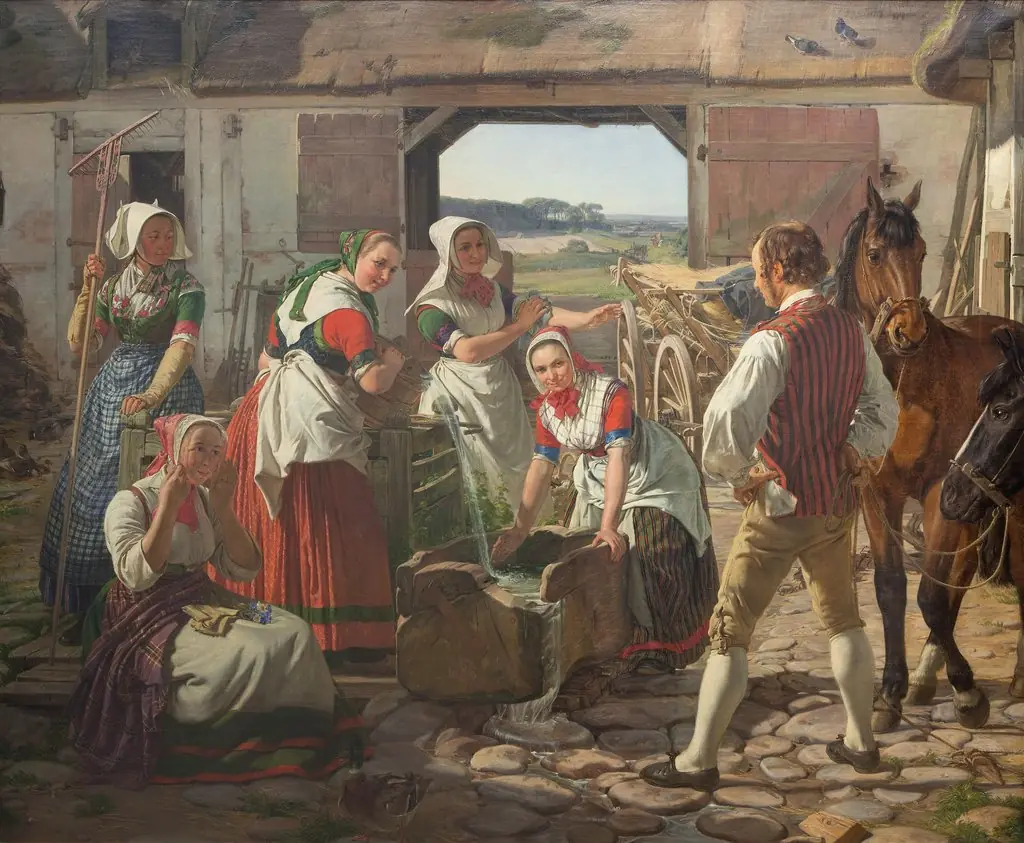 Sjællandske høstpiger ved en brønd
 Lumberjacks
 Dreaming woman at the well
 A Betrothal Scene. Interior with Dutch peasants
 Billede af livet i en sjællandsk bondegård ved middagstid
 The Foundling
 Reservesoldatens afsked med sin familie
 Young woman at a fountain
 Springtime
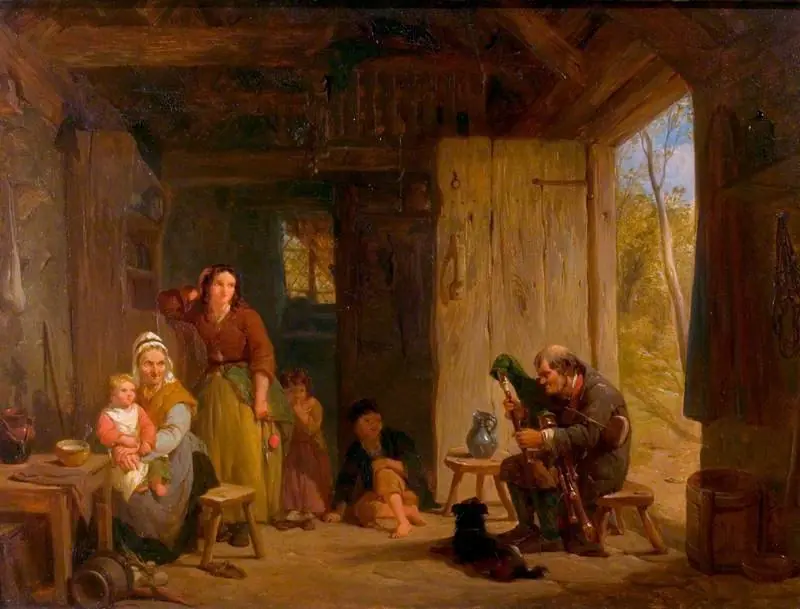 The Irish Piper