Artwork
Italian ideal landscape
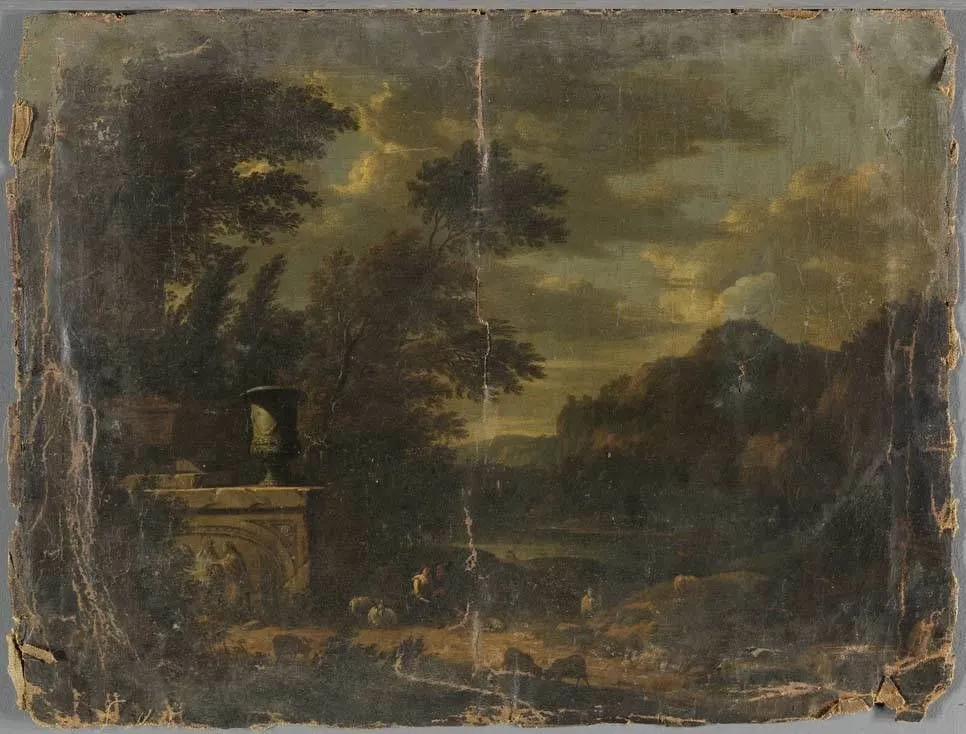
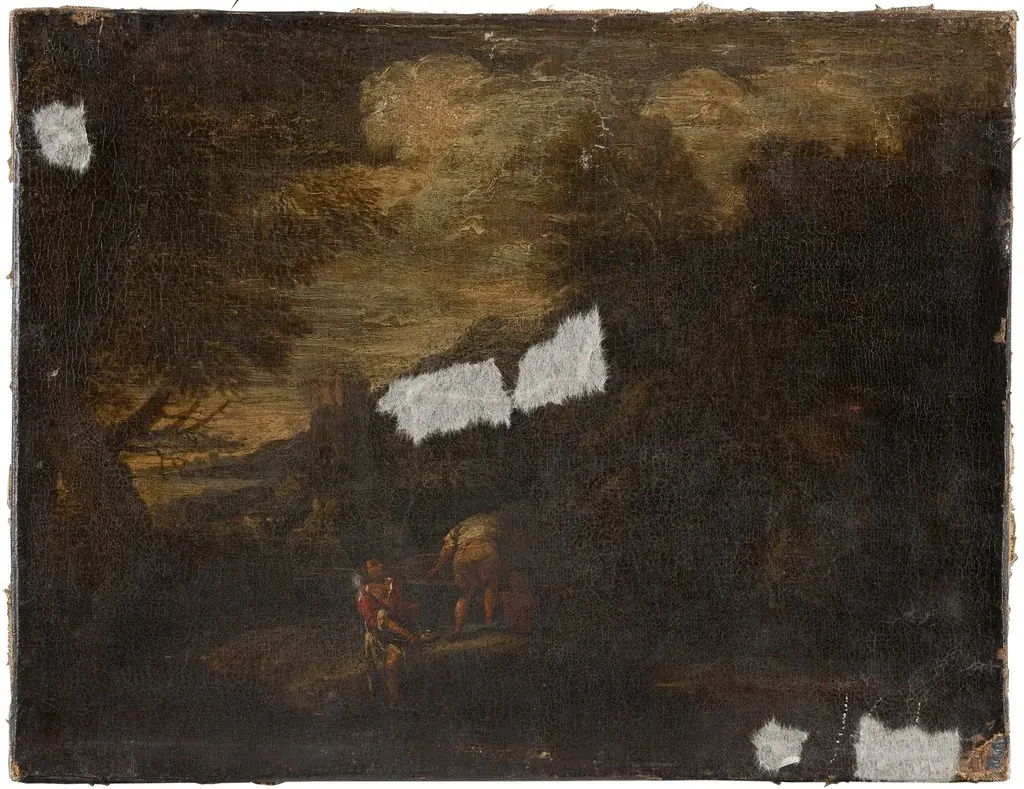
Italian ideal landscape is an unspecified painting by Johannes Glauber. It dates from 1694 and is held in the collection of the Bavarian State Painting Collections.
About this work
Overview
Painted in 1694 by Johannes Glauber, this work presents a composed vision of the Italian countryside, typical of Northern European artists who idealized southern scenery. It belongs to a tradition of imaginary landscapes that blend observed elements with artistic invention. The painting resides in the Alte Pinakothek in Munich, where it is displayed among other 17th-century European works.
Subject & Meaning
The distant hills and hazy mountains reinforce a sense of timeless serenity, reflecting a preference for harmonious nature over dramatic or specific locales.
The scene depicts a tranquil rural setting with scattered figures and animals, suggesting quiet daily life rather than narrative action. A stone structure on the left, possibly a ruin or fountain, anchors the composition and evokes classical antiquity. The distant hills and hazy mountains reinforce a sense of timeless serenity, reflecting a preference for harmonious nature over dramatic or specific locales.
Technique & Style
Glauber employs soft atmospheric perspective to create depth, with cooler tones receding into the distance and warmer hues dominating the foreground. Light filters gently through cloud cover, modeling forms with subtle gradations rather than sharp contrasts. Brushwork is precise yet unobtrusive, emphasizing texture in foliage and stone without drawing attention to the hand of the artist.
History & Provenance
The painting entered the Bavarian royal collection in the late 17th or early 18th century and has remained in state custody since. It was cataloged among Northern European landscape works in the Alte Pinakothek’s early inventories. Its attribution to Glauber, a Dutch painter active in Italy, was confirmed through stylistic comparison and archival records from the period.
Context
Glauber worked within a broader trend among Northern artists who traveled to Italy and returned with idealized visions of its countryside. These works catered to collectors who valued pastoral calm and classical allusion over topographical accuracy. The painting reflects the influence of Claude Lorrain and other Italianate landscapists, filtered through a Dutch sensibility for detail and light.
Legacy
Though not widely known today, Glauber’s work contributes to the understanding of how Northern Europeans interpreted and reimagined the Italian landscape. His paintings, including this one, represent a quiet but persistent strand in 17th-century art that prioritized mood and composition over spectacle. They remain valuable for studying cross-cultural artistic exchange in early modern Europe.
Artist & collection


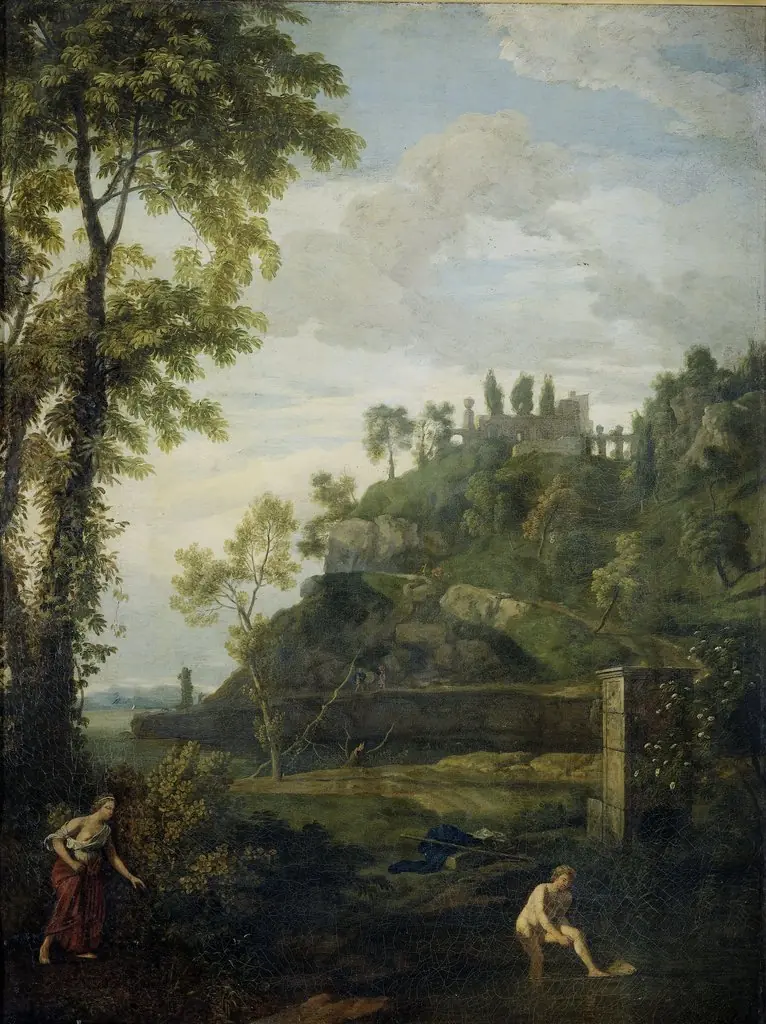 Arcadian landscape with Salmacis and Hermaphroditus
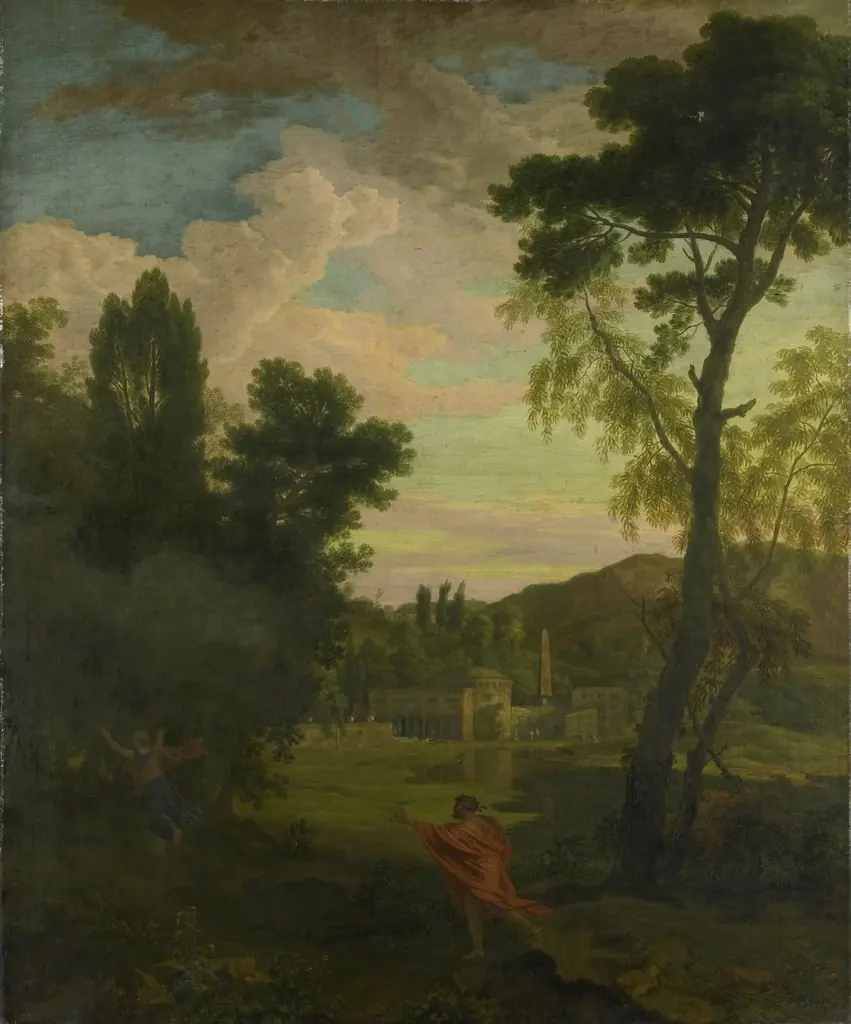 Arcadian landscape with Jupiter and Io
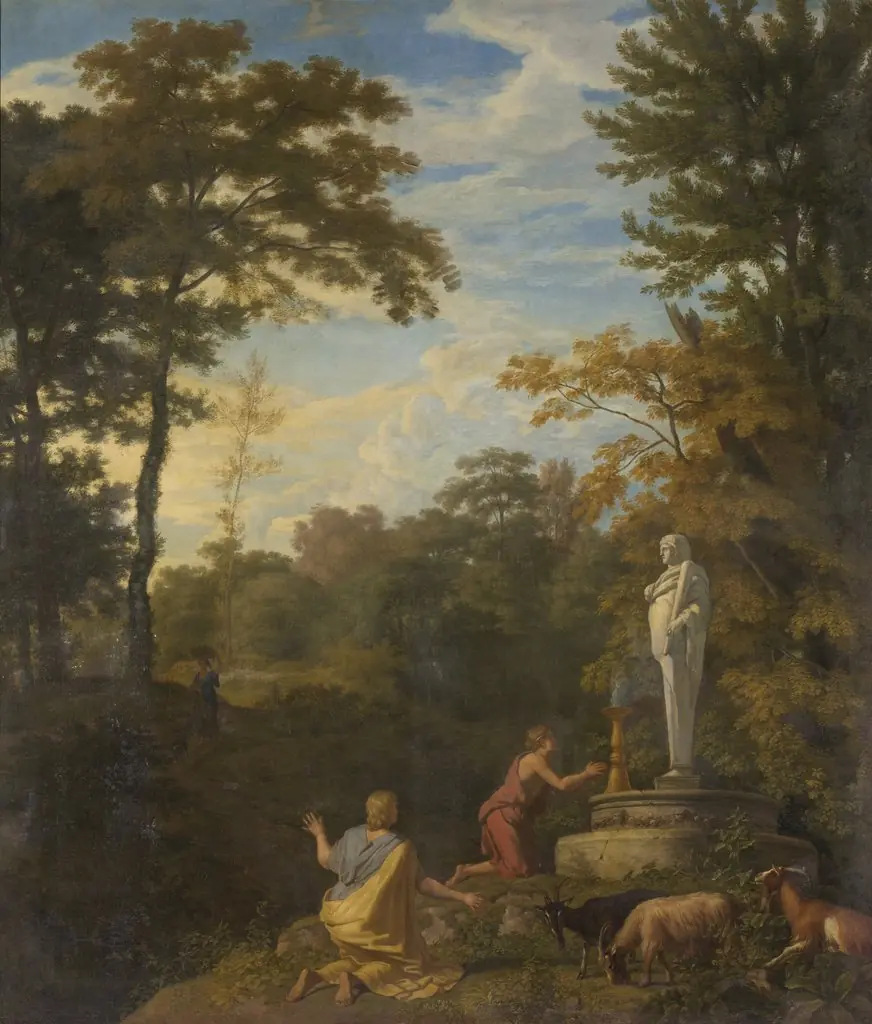 Arcadian landscape
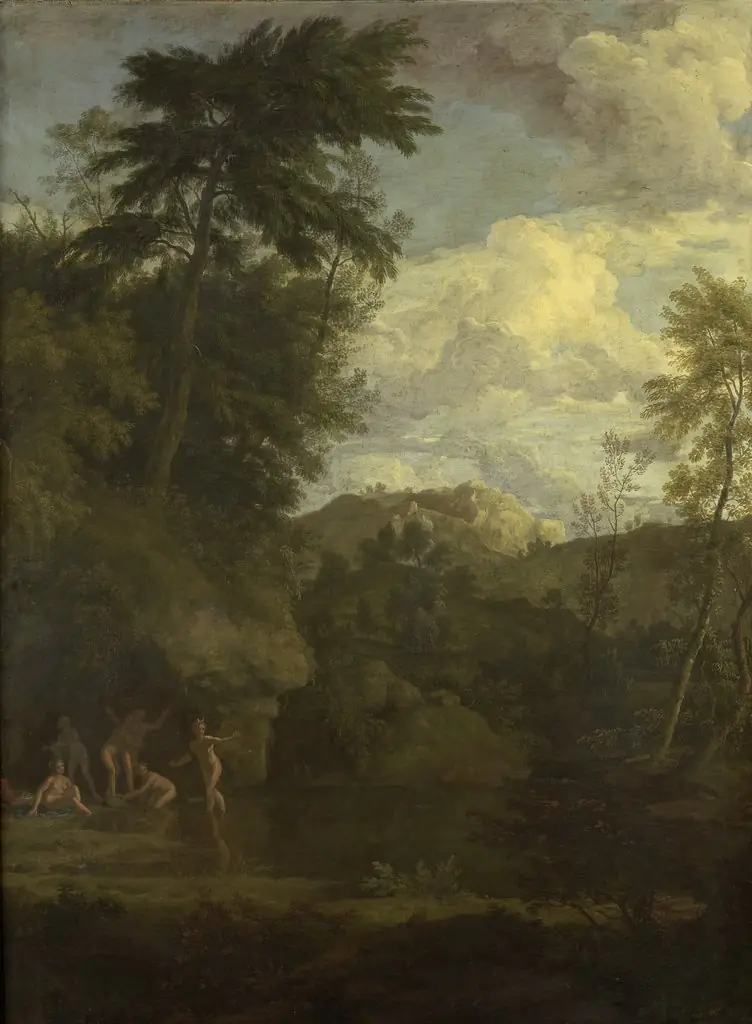 Arcadian landscape with bathing Diana
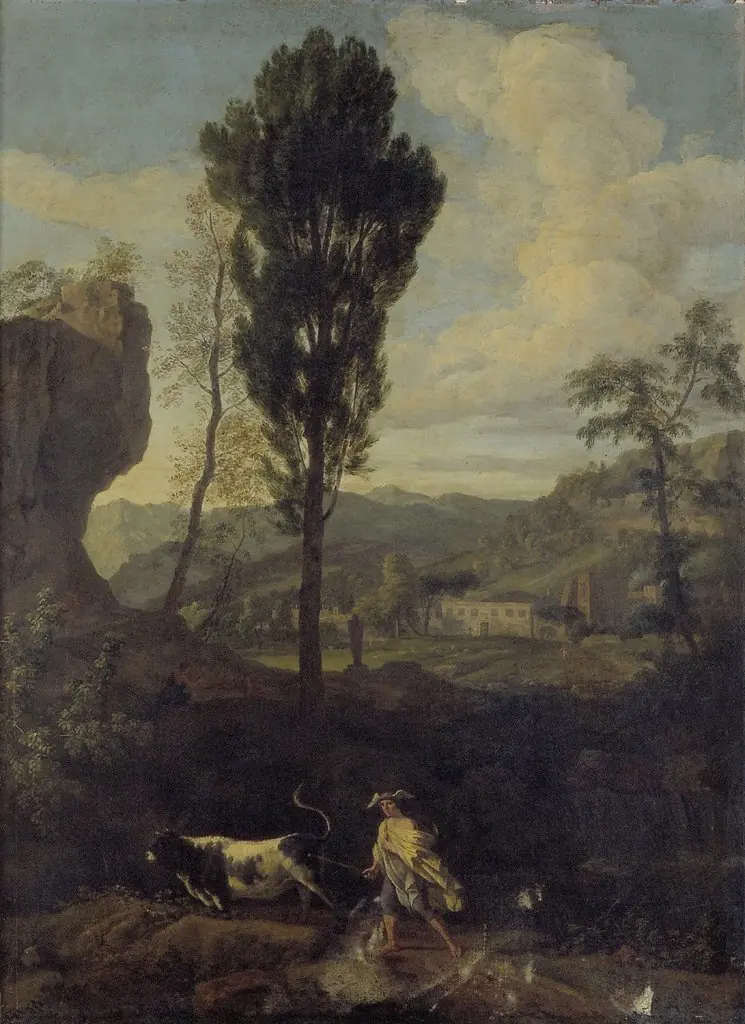 Arcadian landscape with Mercury and Io
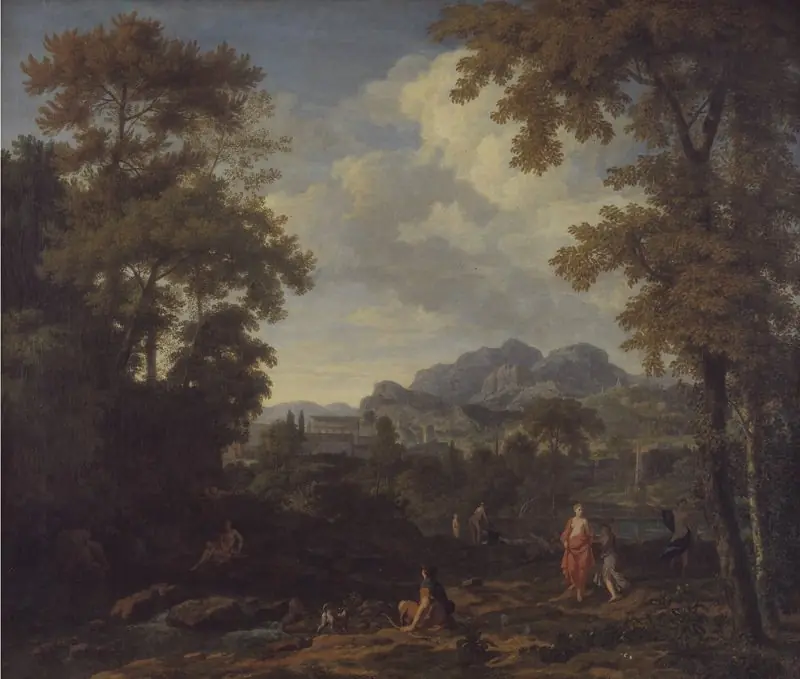 Classical Landscape with Diana (?) and her Nymphs
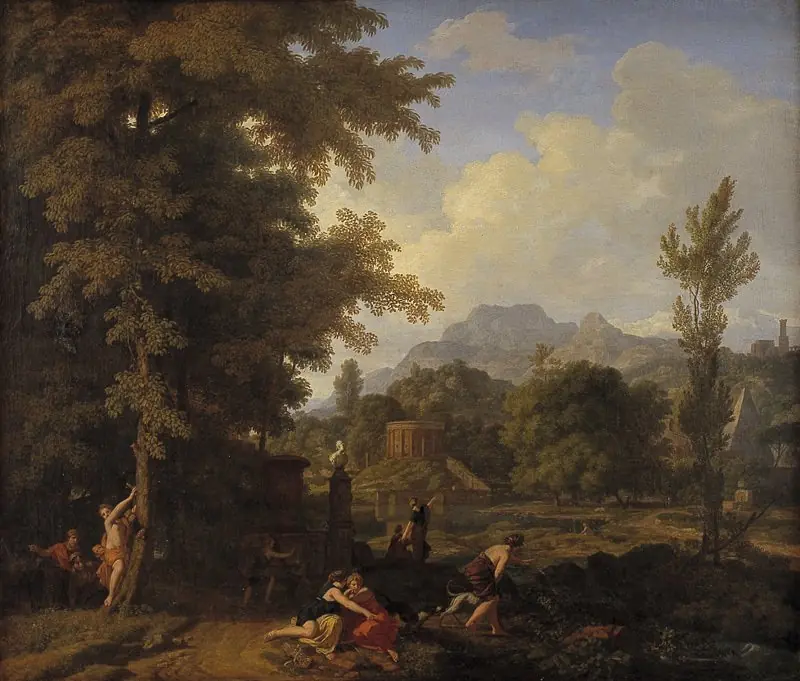 Classical Landscape with Diana (?) and her Nymphs
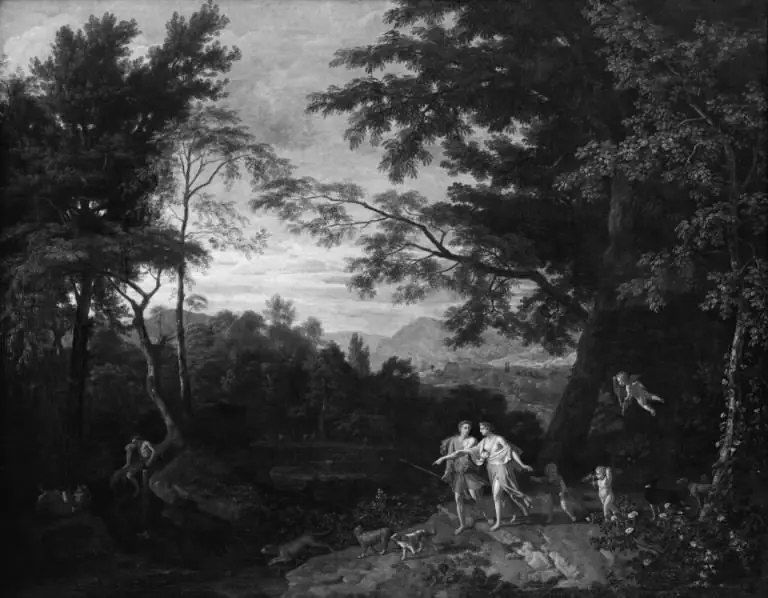 Landscape with Venus and Adonis
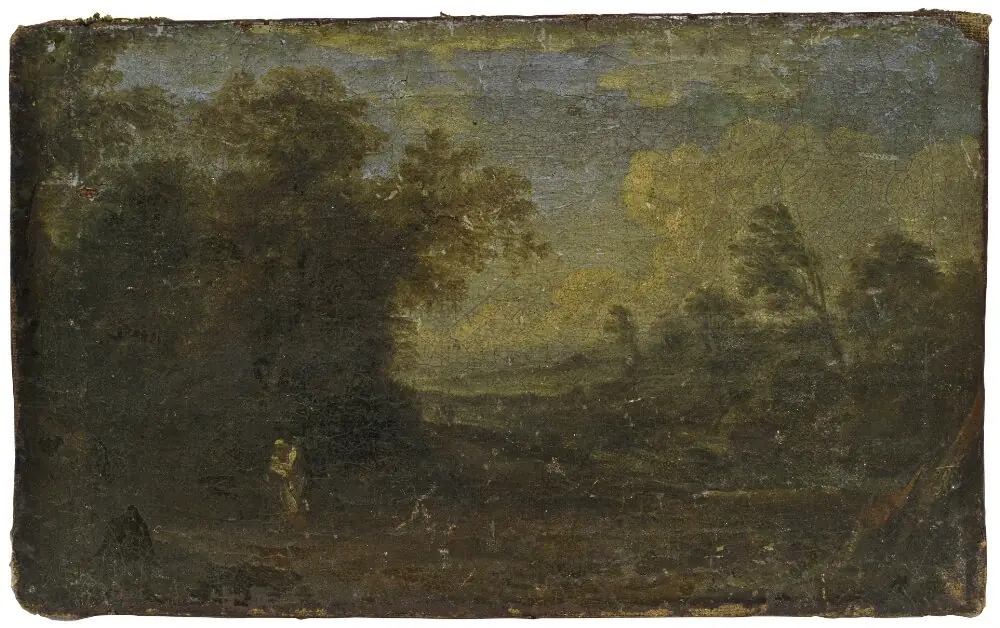 Landscape with rest on flight into Egypt
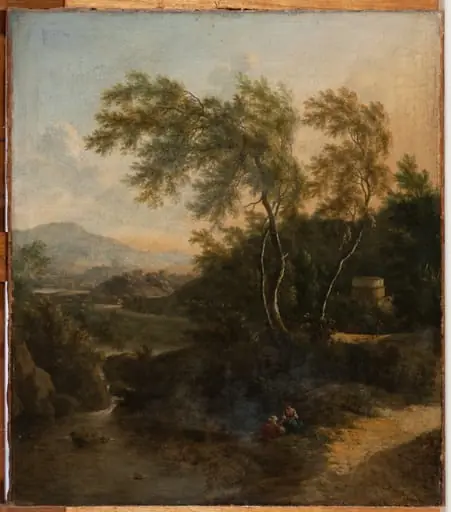 Italienische Landschaft
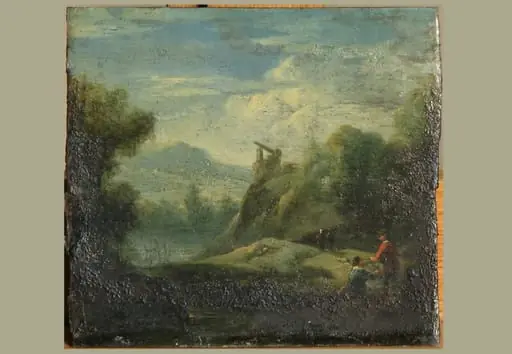 Mic peisaj cu cetate. Pandant: Mic peisaj cu pod
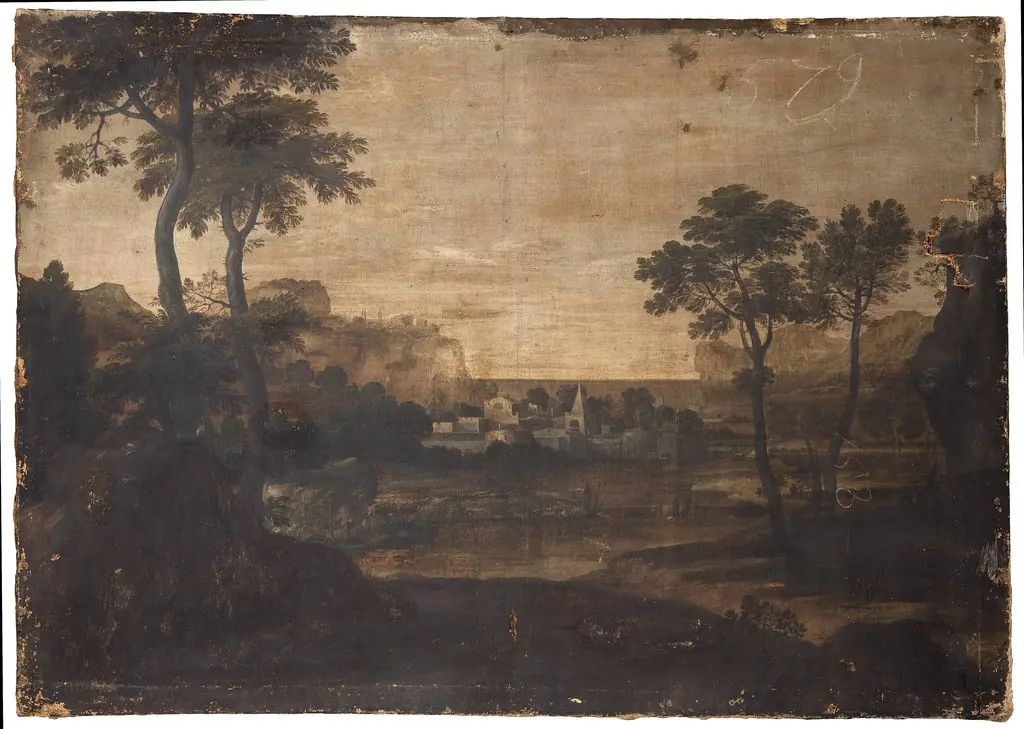 Landskap
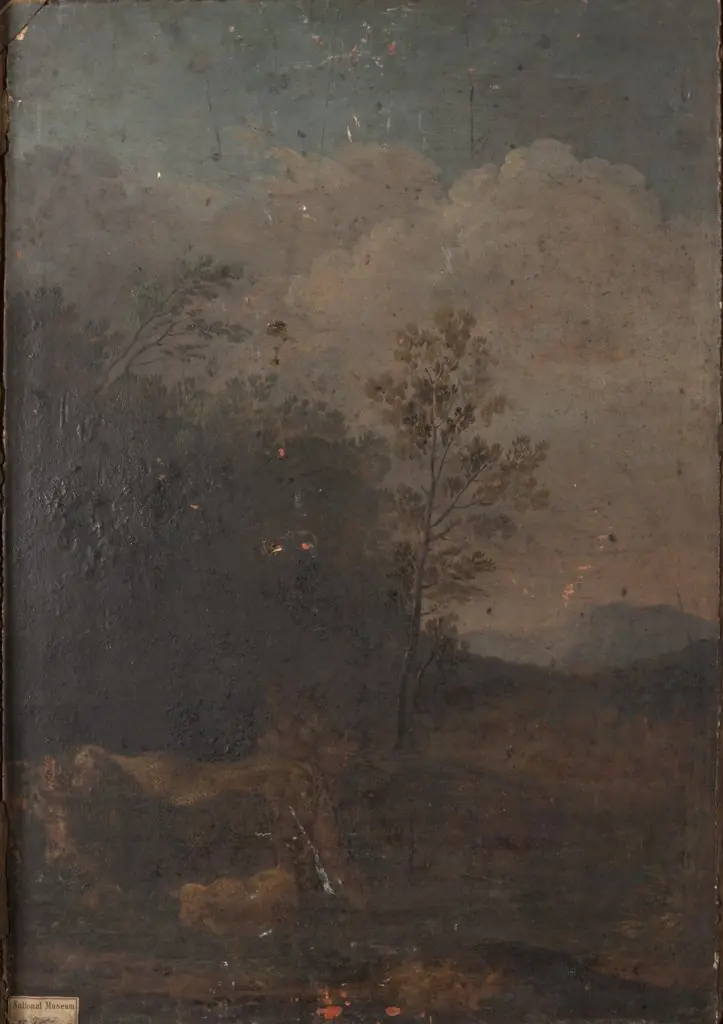 Landscape
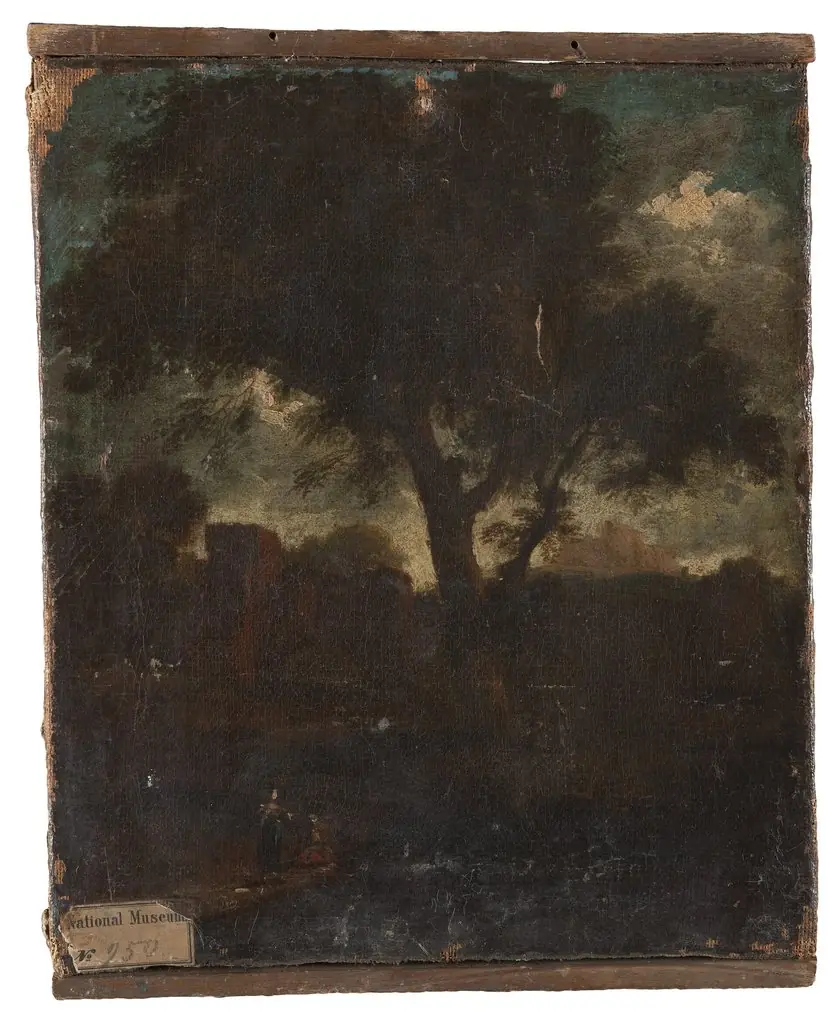 Landscape
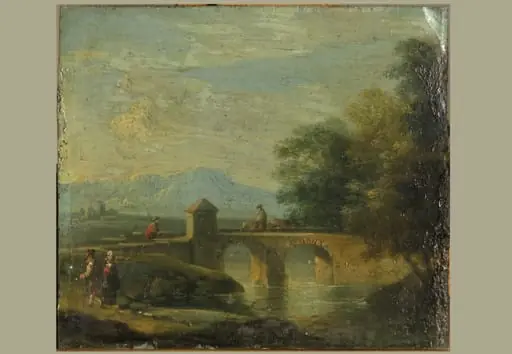 Mic peisaj cu pod. Pandant: Mic peisaj cu cetate
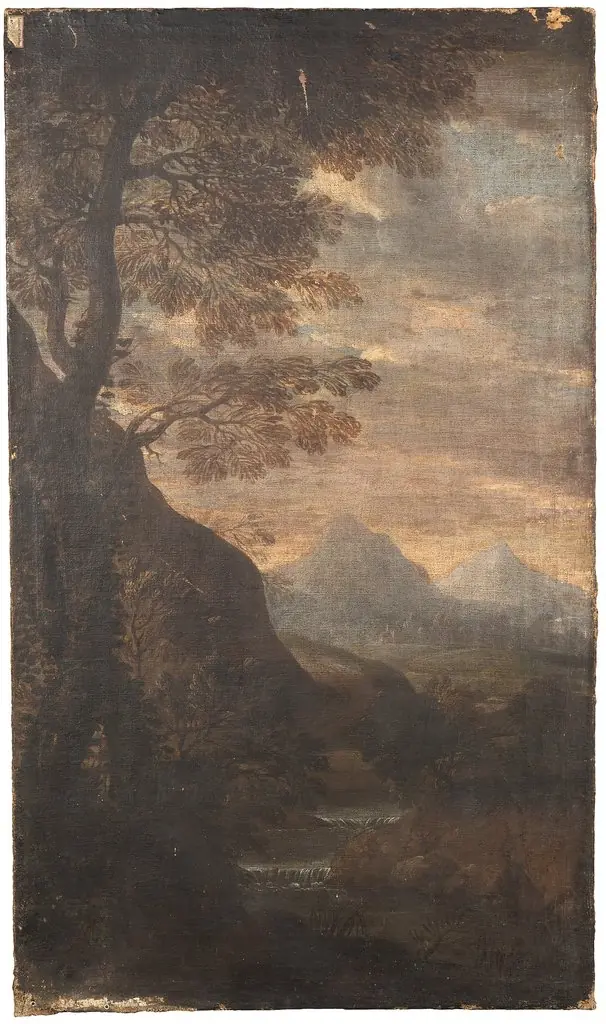 Landskap
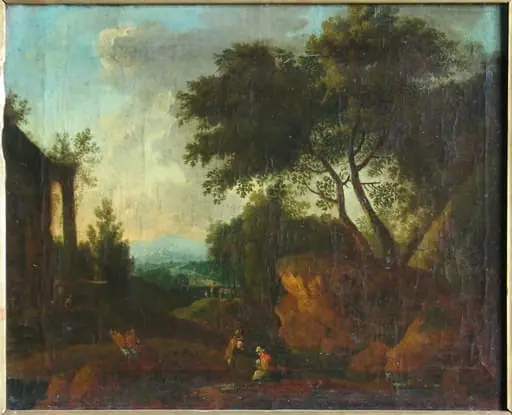 Peisaj cu copaci și ruine antice ; pandant: Peisaj cu copaci și pod
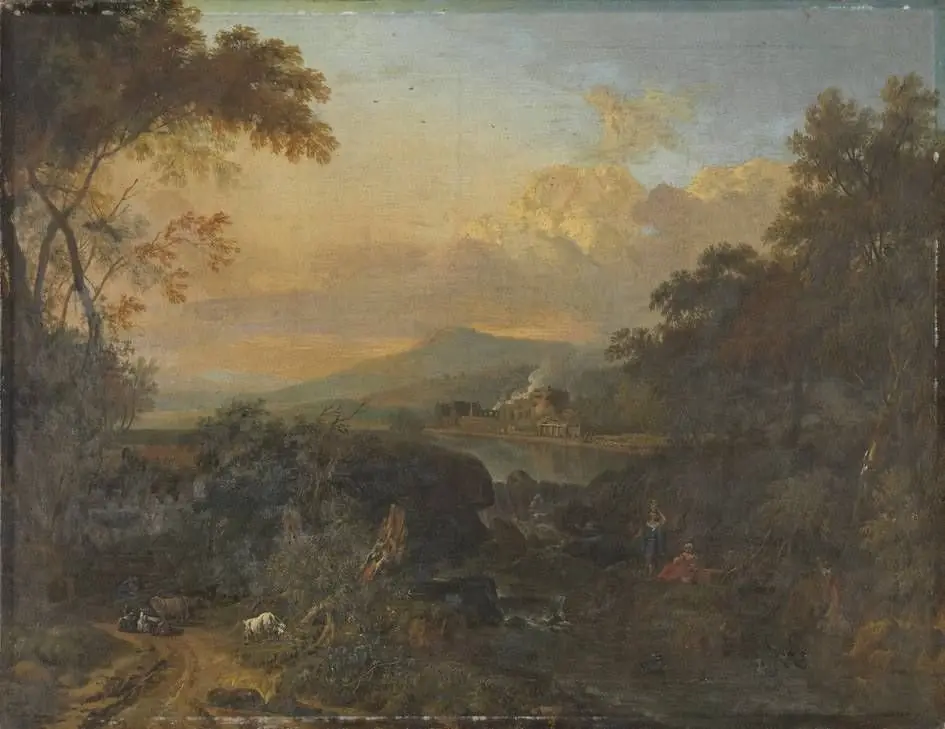 Landschaft italienischen Charakters
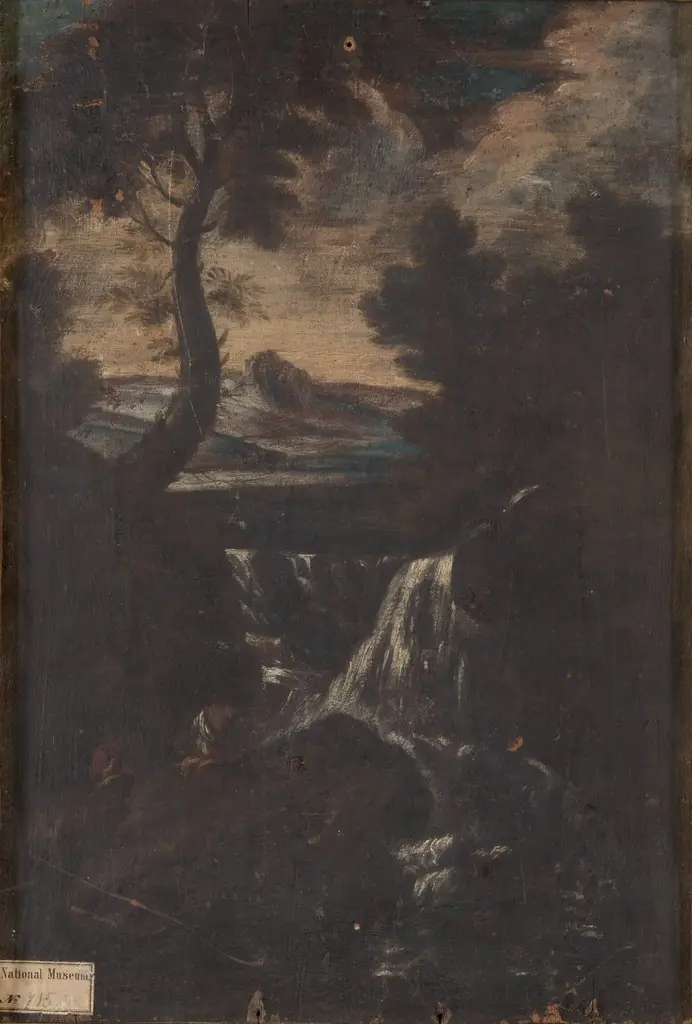 Landscape
 Landscape with a Ruin