Artwork
Jaël met hamer en spijker
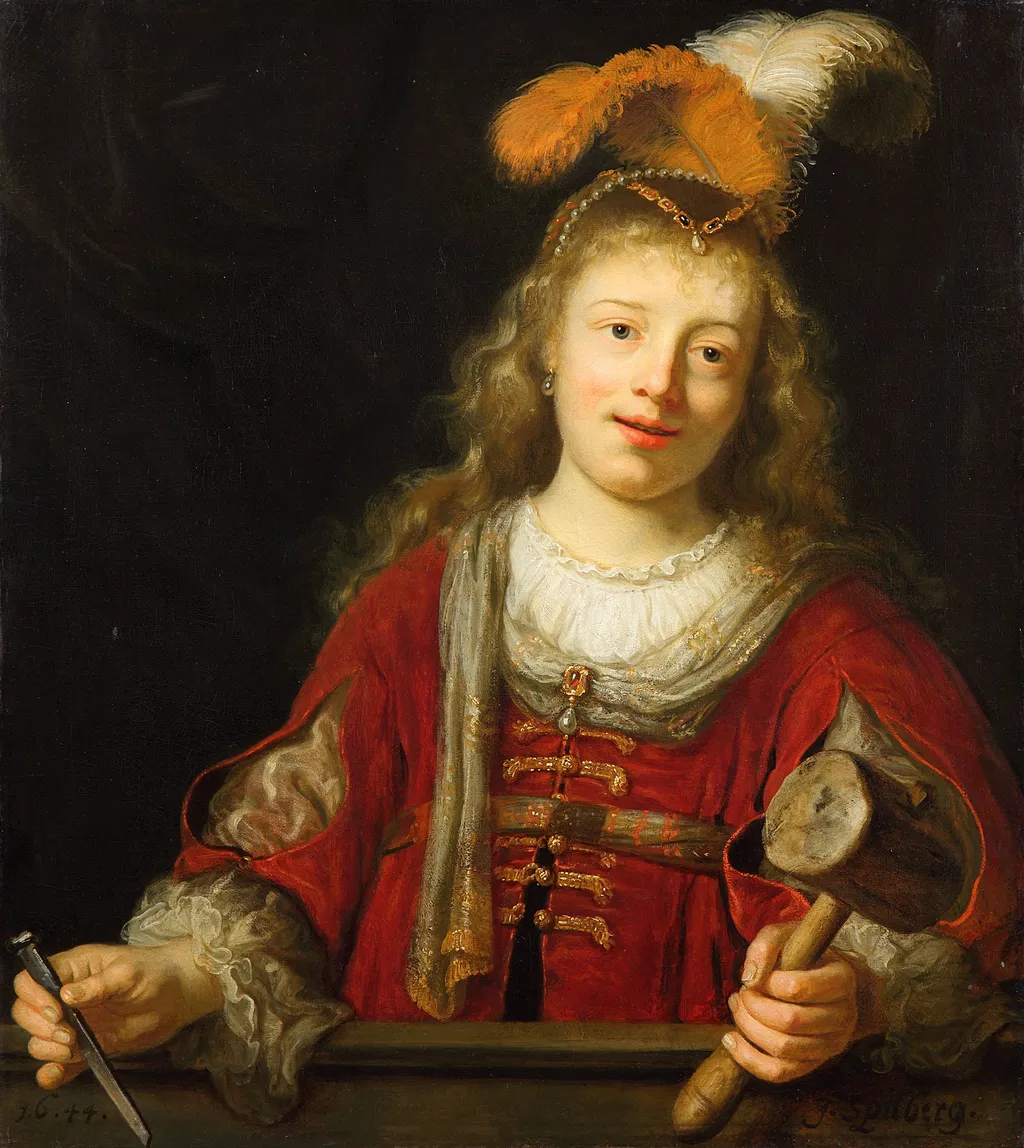
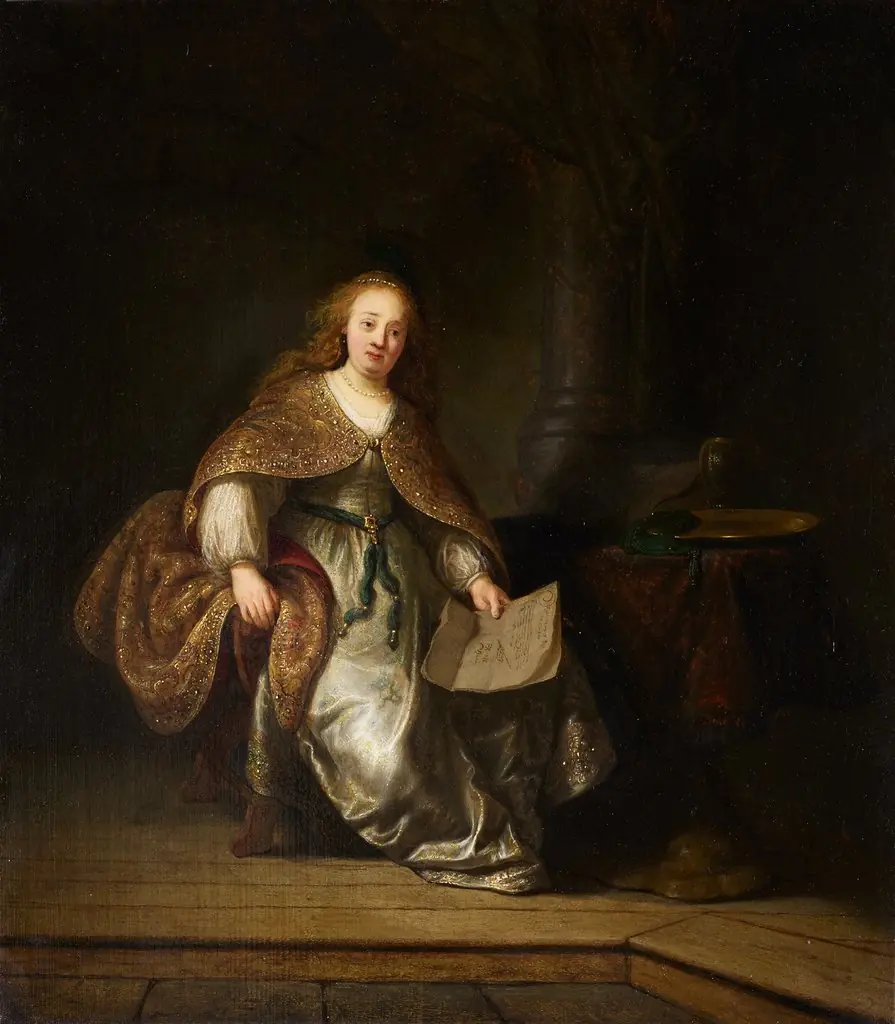
Jaël met hamer en spijker is an oil painting by the Dutch Golden Age artist Johannes Spilberg. It dates from 1644 and is held in the collection of the Gemäldegalerie Berlin.
About this work
Overview
Created in 1644, this oil painting by Johannes Spilberg presents a solitary female figure illuminated against a deep, shadowy backdrop. She is dressed in a vivid red garment, complemented by a white ruffled collar and a gold headpiece adorned with feathers. In her hands she grips a hammer and a nail, poised as if ready to strike, a composition that draws immediate visual focus to her.
Subject & Meaning
The work draws on the biblical narrative of Jaël, the heroine who killed the Canaanite commander Sisera with a hammer and a tent peg. By portraying her in a moment of preparation rather than action, Spilberg emphasizes the tension and moral resolve inherent in the story, inviting contemplation of themes such as courage, divine justice, and the agency of women in scriptural accounts.
Technique & Style
Spilberg employs the chiaroscuro typical of the Baroque, using a dark, almost black background to heighten the contrast with the luminous reds and whites of the figure’s attire. The oil medium allows for rich, layered textures, especially evident in the sheen of the gold headpiece and the delicate rendering of the feather details, while the brushwork remains precise in the depiction of the hammer and nail.
History & Provenance
Although Spilberg was a German-born artist who spent much of his career in Amsterdam during the Dutch Golden Age, this particular canvas entered the collection of the Gemäldegalerie in Berlin, where it remains on view. Its acquisition reflects the museum’s focus on Baroque religious genre paintings, and the work continues to serve as an example of Spilberg’s cross‑cultural artistic activity in the mid‑17th century.
Own this work as a print
Artist & collection
Artist
Johannes Spilberg (30 April 1619 – 10 August 1690) was a German Baroque painter, active in Amsterdam during the period known as the Dutch Golden Age.