Artwork
A House and Figures
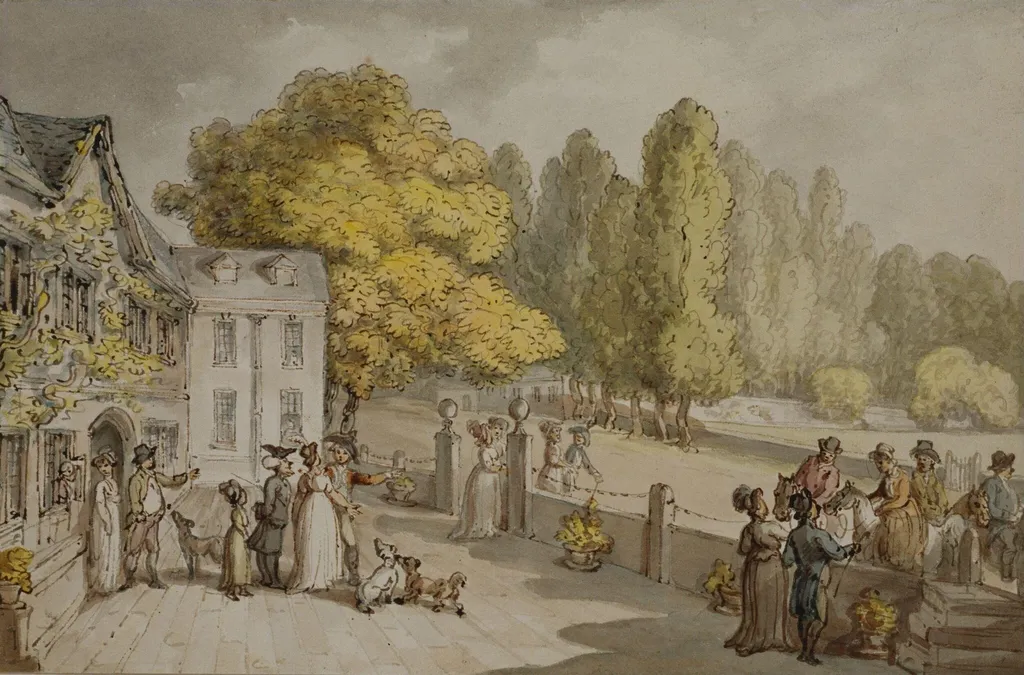
A House and Figures is a watercolor work on paper by the Rococo painting artist Thomas Rowlandson. It dates from 1780 and is held in the collection of the Victoria and Albert Museum.
About this work
Overview
This watercolour by Thomas Rowlandson, dated circa 1780, captures a domestic scene with figures and animals gathered near a modest residence.
This watercolour by Thomas Rowlandson, dated circa 1780, captures a domestic scene with figures and animals gathered near a modest residence. Executed in delicate washes, the work reflects Rowlandson’s interest in everyday life. It was documented as an offset drawing in the collection of A.P. Oppe and later published in M.C. Salaman’s 1920 study of London life, affirming its place in records of 18th-century visual culture.
Subject & Meaning
The scene centers on a house with a shaded porch, surrounded by a small group of individuals in period attire and several dogs moving freely. The figures appear engaged in casual interaction, suggesting a moment of communal life rather than a formal event. The setting, possibly Richmond Green, evokes a quiet, unidealized glimpse into urban leisure during the late 18th century, emphasizing ordinary social rhythms over narrative drama.
Technique & Style
Rowlandson employed transparent watercolour washes to suggest light and texture with subtle gradations. Forms are defined with loose, fluid lines, and the palette remains muted, favoring soft earth tones and pale blues. The absence of sharp detail invites a sense of immediacy, characteristic of his observational sketches. The technique balances spontaneity with control, typical of his approach to genre scenes.
History & Provenance
The work was recorded as an offset drawing in the collection of A.P. Oppe, a noted collector of British watercolours. It was later reproduced in M.C. Salaman’s 1920 publication Londoners Then and Now, which helped preserve its visibility among scholars of Georgian-era life. No further provenance details are widely documented, and the original’s current location remains unconfirmed in public records.
Context
Created during a period when British watercolour was gaining recognition as a serious medium, Rowlandson’s sketch aligns with a growing interest in depicting everyday urban and suburban life. Richmond Green, a known public space, was a popular subject for artists capturing the social fabric of London’s outskirts. This work reflects a shift from grand historical themes to intimate, observational studies of common people.
Legacy
Though not among Rowlandson’s most celebrated works, this watercolour contributes to the broader understanding of his documentary approach to social scenes. Its inclusion in Salaman’s 1920 volume ensured its survival in academic discourse on 18th-century British visual culture. It remains a modest but valuable example of how watercolour was used to record the rhythms of ordinary life during the Georgian era.
Artist & collection
Artist
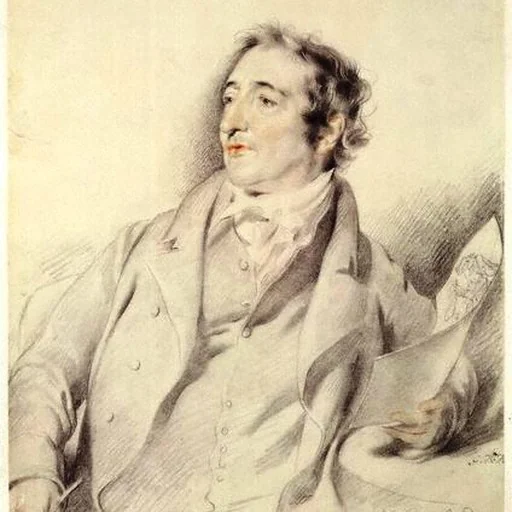
Thomas Rowlandson (; 13 July 1757 – 21 April 1827) was an English artist and caricaturist of the Georgian Era, noted for his political satire and social observation.

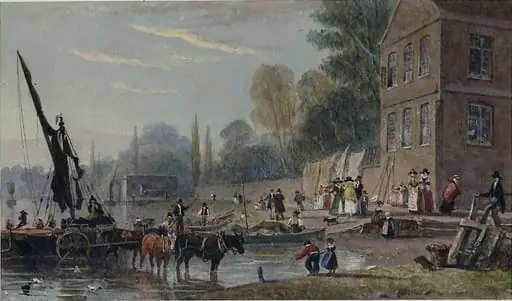 A Landing Place by the Waterside
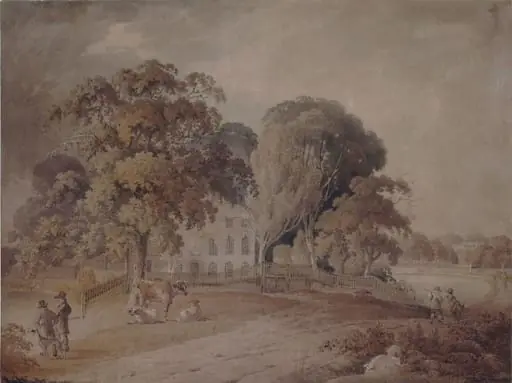 Lake House, Epping
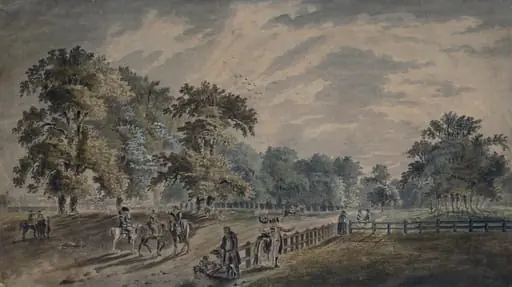 St. James's Park
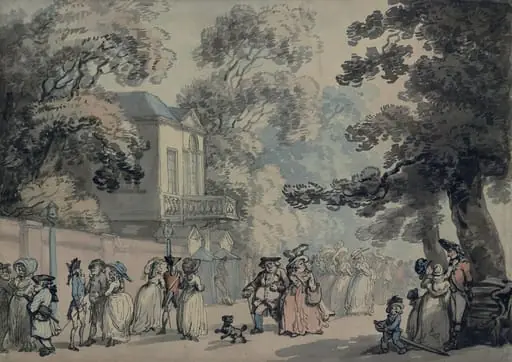 Entrance to the Mall, Spring Gardens
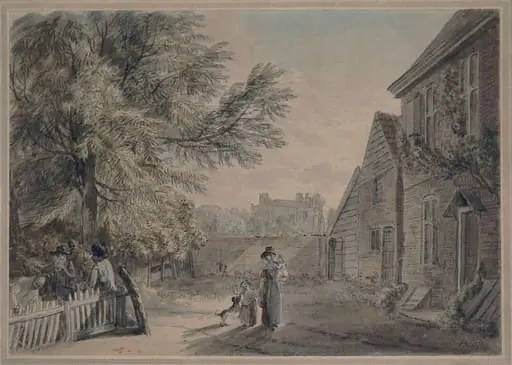 Old Public House, Bayswater
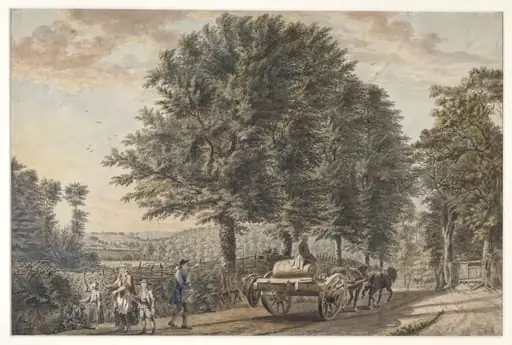 Landscape with Dray and Figures
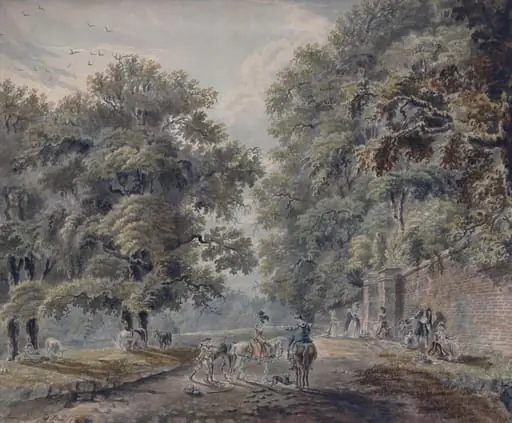 Entrance to Greenwich Park from Blackheath
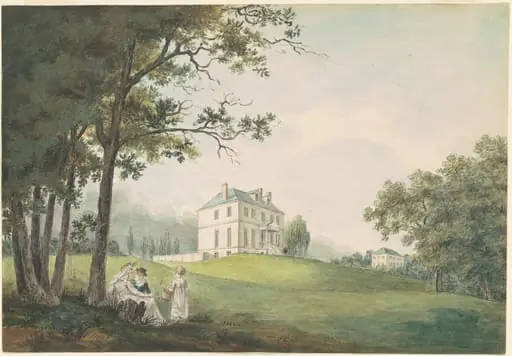 Sweet Briar
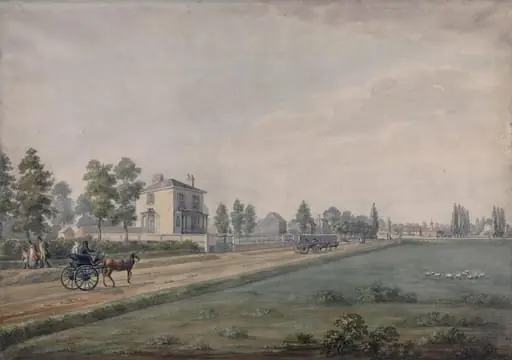 Mitcham Common, Surrey, shewing the road running along the west side
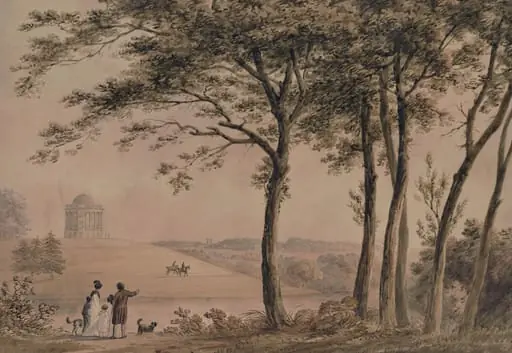 Landscape with trees
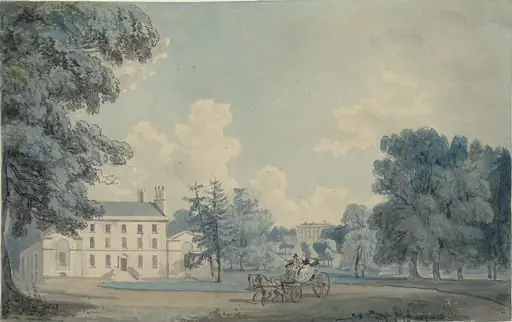 St. Wolstan's near Celbridge, Co. Kildare
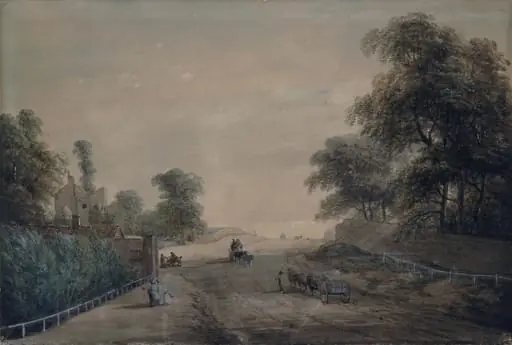 Bayswater Hill