Artwork
The Bell Inn
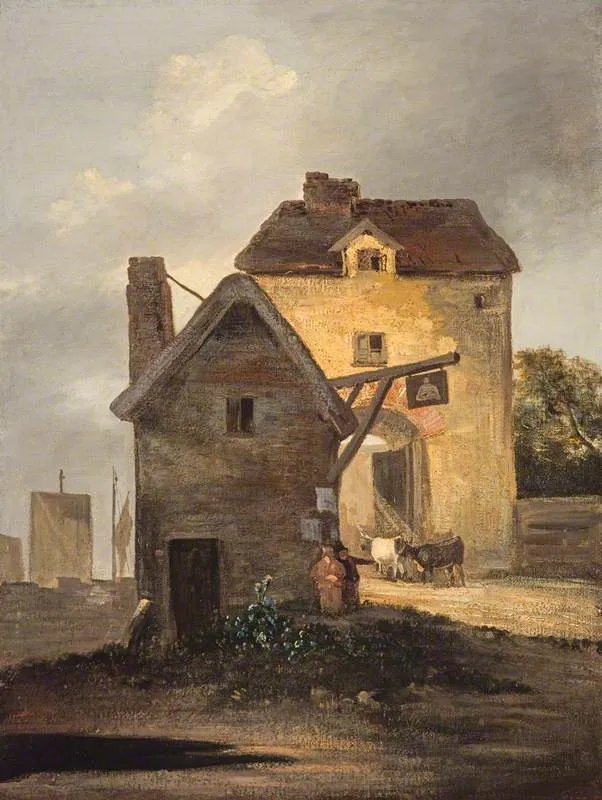
The Bell Inn is an oil painting by John Crome. It dates from 1805 and is held in the collection of the National Galleries Scotland.
About this work
Overview
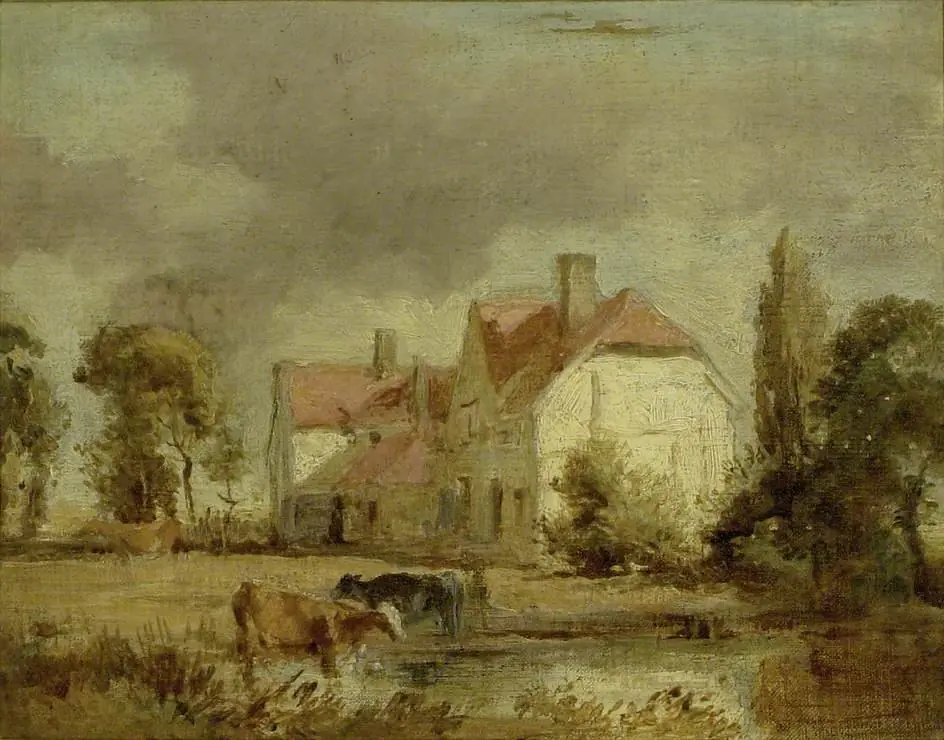
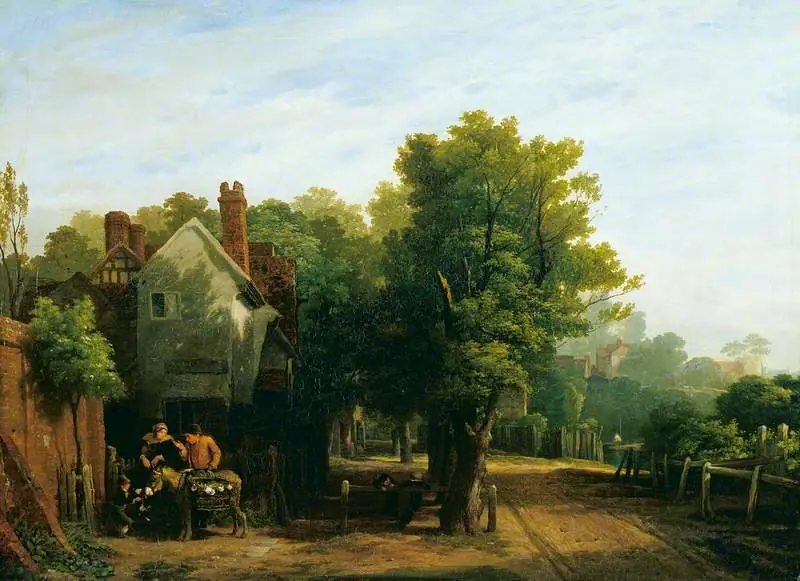
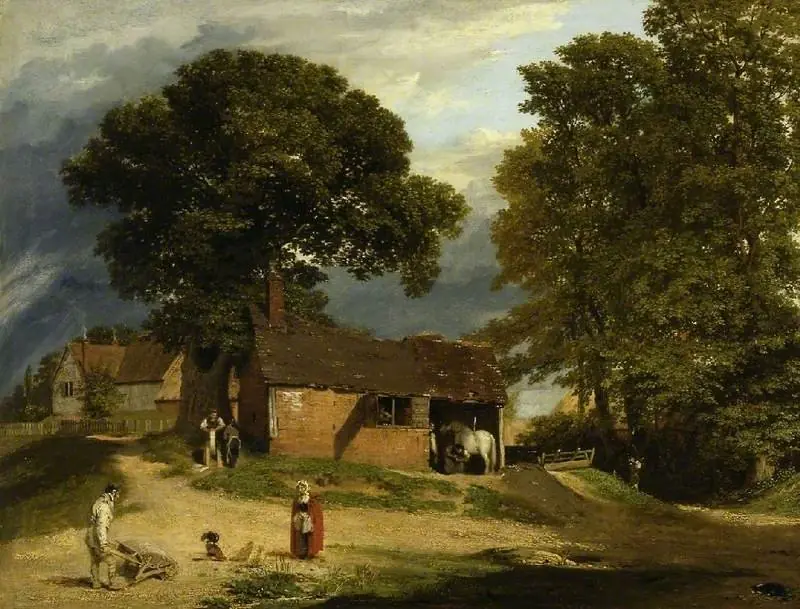
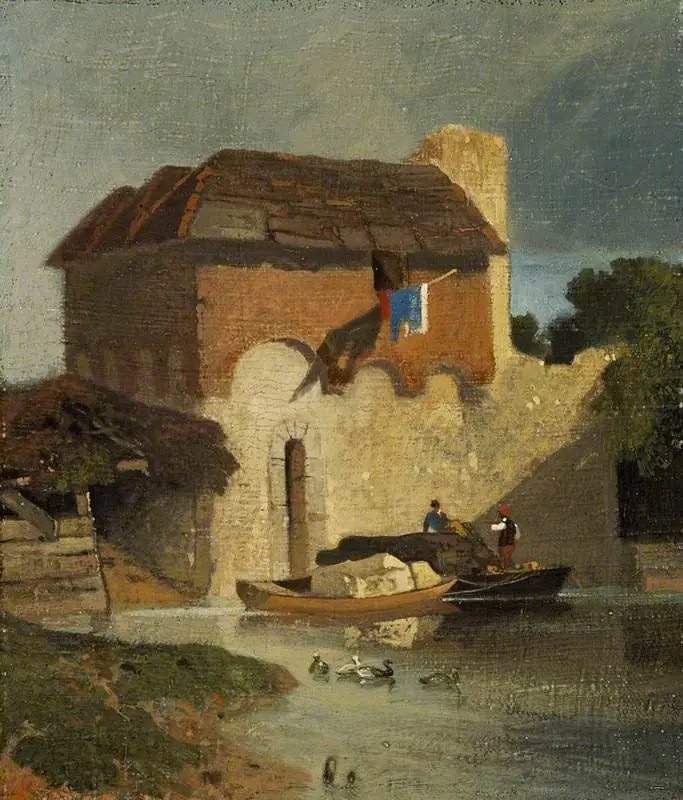
Painted in 1805 by John Crome, The Bell Inn is an oil-on-canvas work depicting a rural English roadside establishment. It is part of the collection at the Scottish National Gallery. The scene captures everyday life in the countryside, centered on a modest inn with a bell-shaped sign, surrounded by figures and livestock, rendered with quiet attention to natural detail.
Subject & Meaning
The bell sign, a common identifier for inns, anchors the composition, hinting at the building’s function as a resting place.
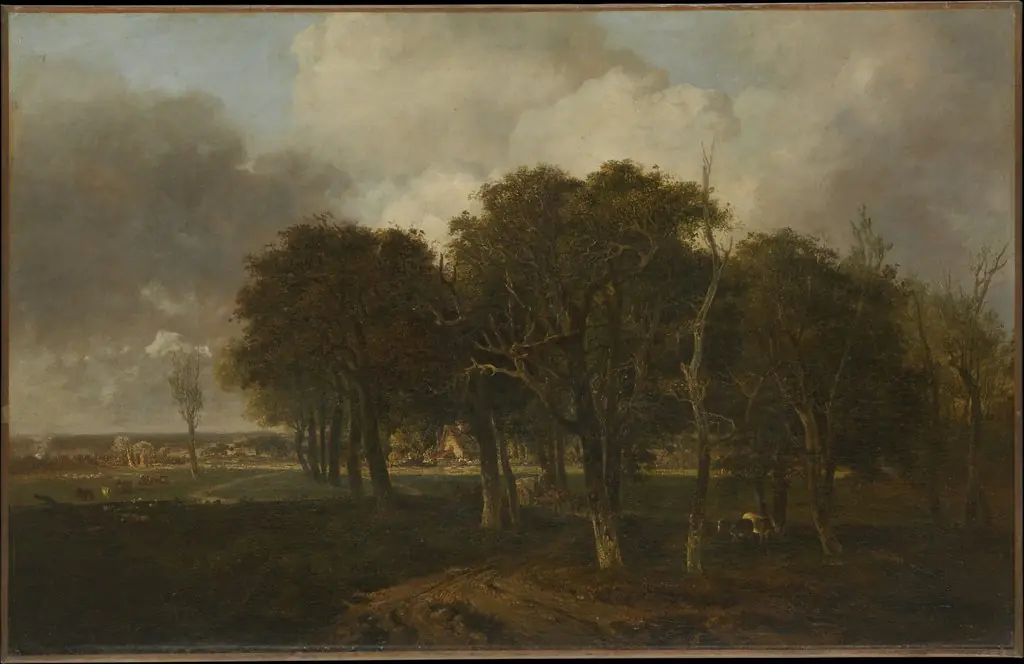
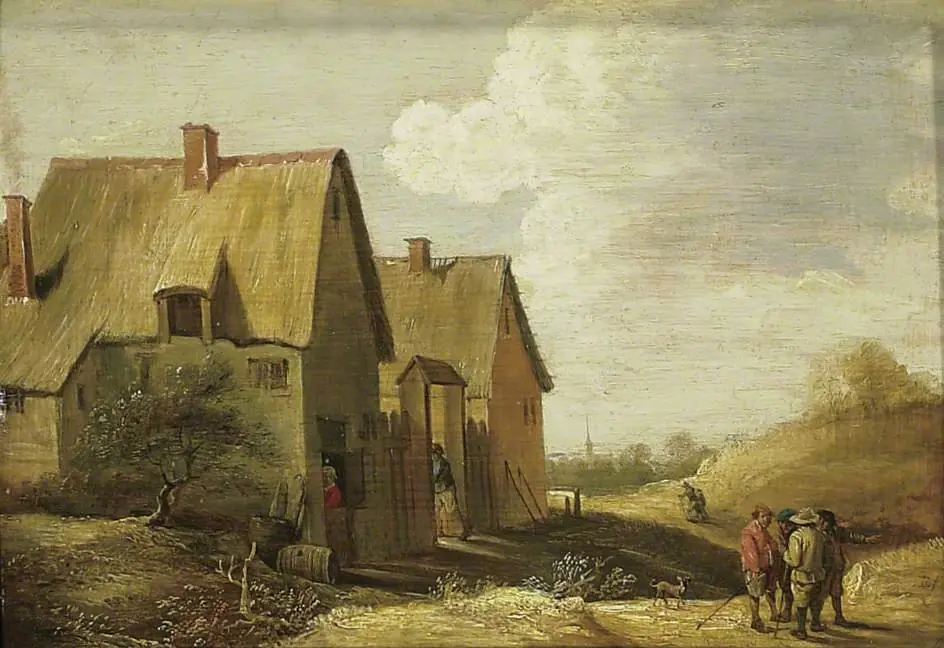
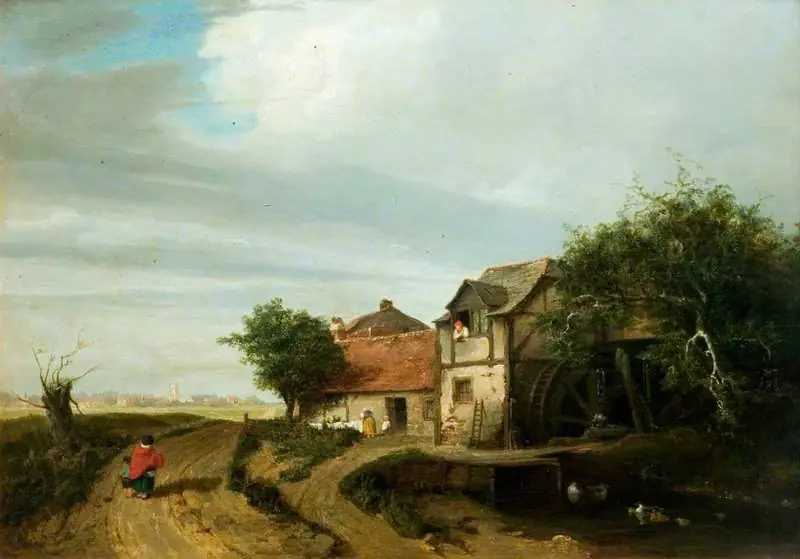
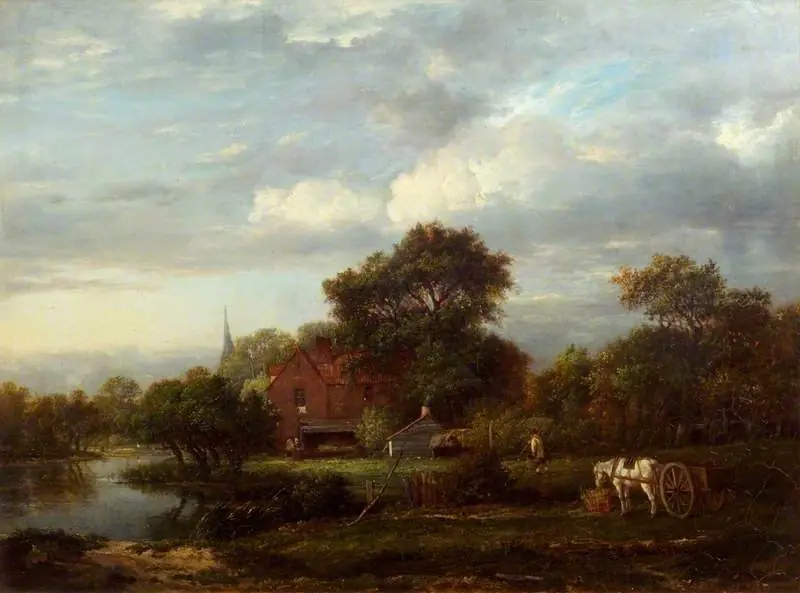
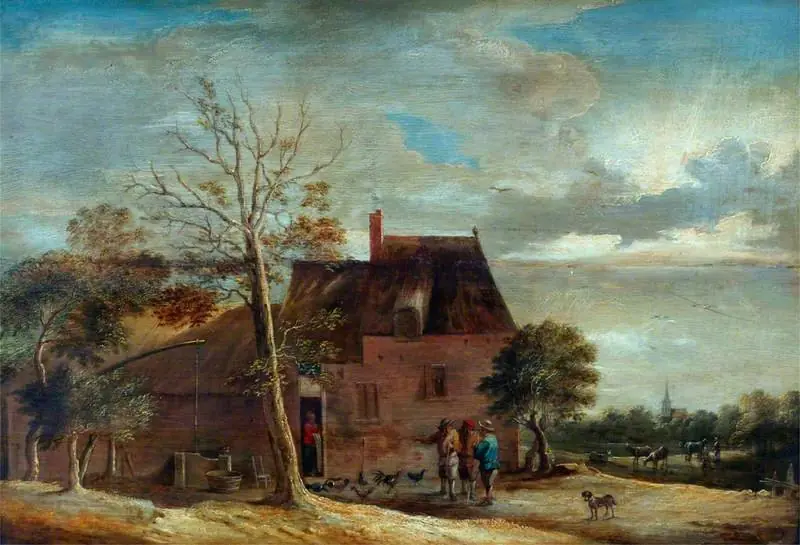
The painting portrays a tranquil moment at a country inn, where travelers and locals intersect. A man stands beside a woman holding a child, while cattle and a wooden cart suggest agricultural activity. The bell sign, a common identifier for inns, anchors the composition, hinting at the building’s function as a resting place. No dramatic event occurs; the meaning lies in the ordinary rhythms of rural existence.
Technique & Style
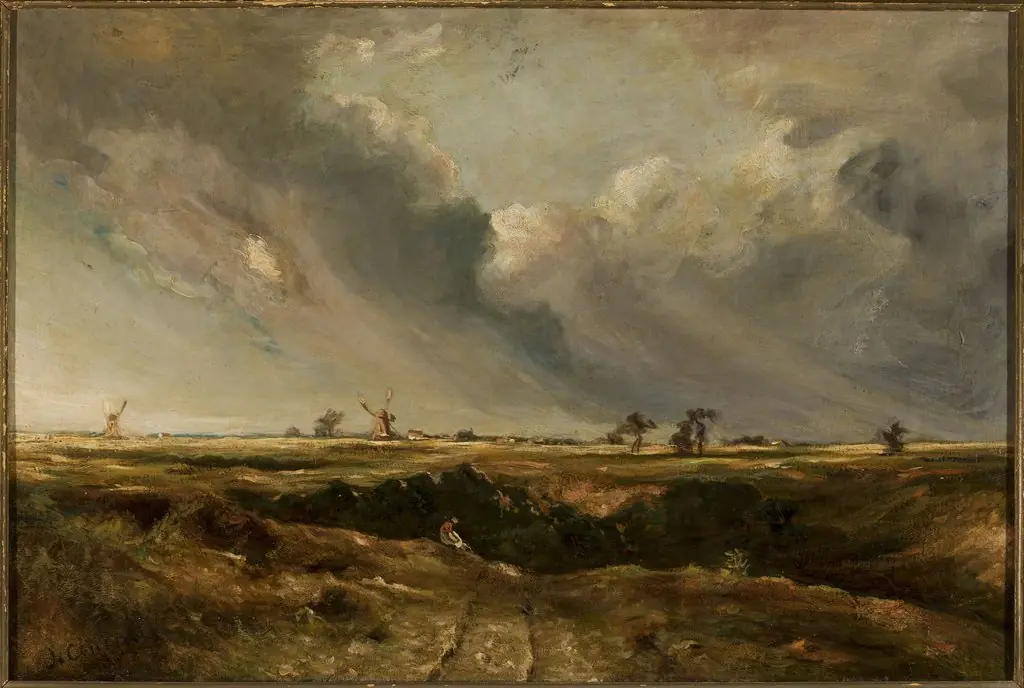
Crome employed loose, observational brushwork to convey texture and light. The stone inn and wooden outbuilding are rendered with solid form, while the background softens into hazy trees and water, creating depth without sharp detail. The palette is muted, dominated by earth tones and grayed greens, reflecting the subdued atmosphere of a late afternoon in the Norfolk countryside.
History & Provenance
Commissioned or acquired shortly after its completion, the painting remained in private hands until entering the Scottish National Gallery’s collection. Its journey reflects the 19th-century interest in regional British landscapes, though it was never widely exhibited during Crome’s lifetime. The work’s preservation suggests early recognition of its documentary value within regional art circles.
Context
Crome, a founding member of the Norwich School, focused on local landscapes and vernacular architecture. The Bell Inn reflects a broader trend among English artists to elevate everyday rural scenes over grand historical or mythological subjects. At the time, such works countered urbanizing trends by celebrating the stability and quiet dignity of country life.
Legacy
The Bell Inn exemplifies Crome’s commitment to truthful observation over idealization. Though not among his most famous works, it contributes to the legacy of the Norwich School by demonstrating how ordinary places could be rendered with emotional resonance. Its quiet realism influenced later generations of British landscape painters seeking authenticity over ornament.
Artist & collection
Artist
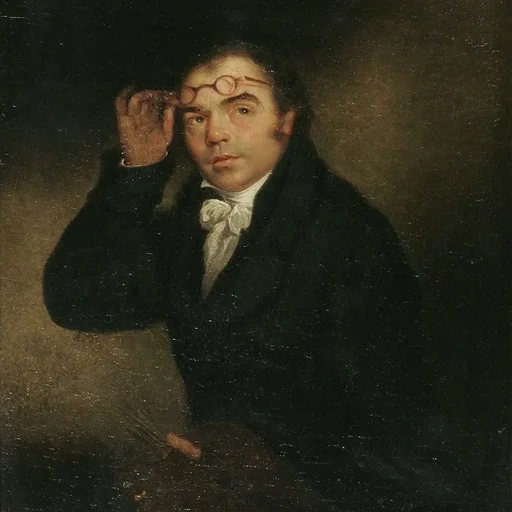
John Crome, once known as Old Crome to distinguish him from his artist son John Berney Crome, was an English landscape painter of the Romantic era, one of the principal artists and founding members of the Norwich School of painters.