Artwork
H Beard Print Collection
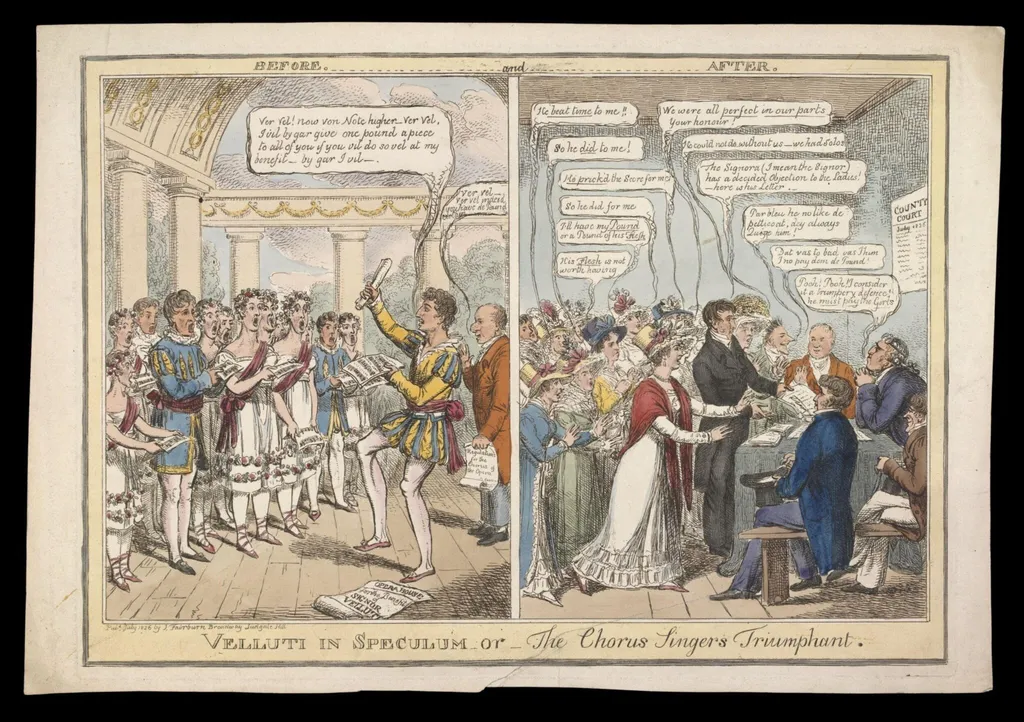
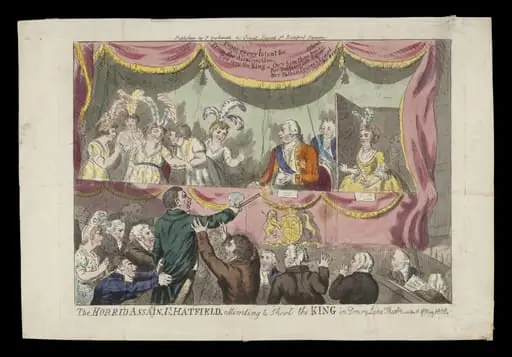
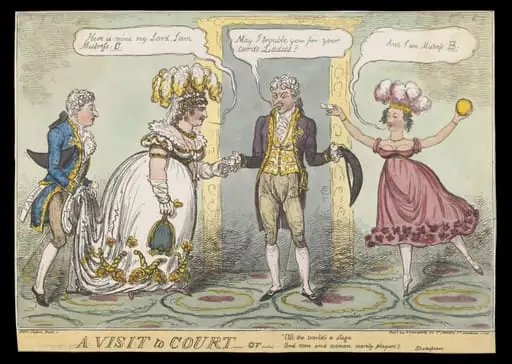
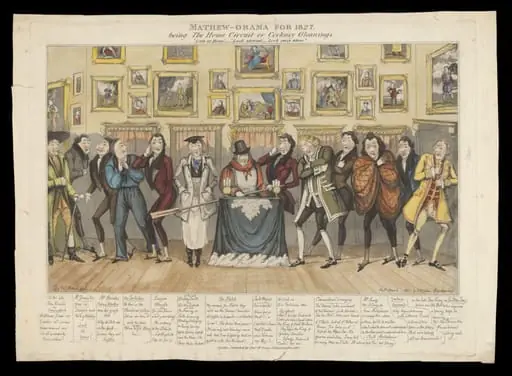
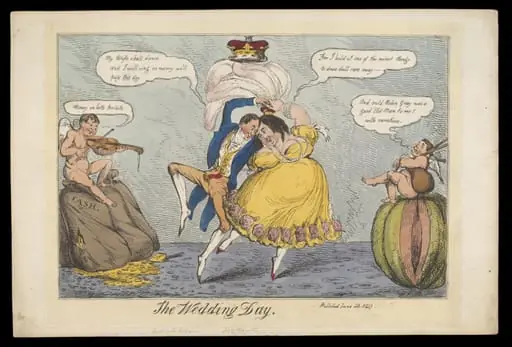
H Beard Print Collection is a print by the Romanticist artist John Fairburn. It dates from 1826 and is held in the collection of the Victoria and Albert Museum. Print entitled 'Velluti in Speculum, or, The Chorus Singers Triumphant' is a humorous print published by J.
About this work
This print from 1826 shows singers at a music stand, made into a bold visual pun. John Fairburn turned sheet music into a stage for a funny title: "The Chorus Singers Triumphant." It’s a small print but packed with a joke only bookish folks would get.
Fairburn published this in July 1826 during the Romantic era, when art loved drama and humor.
Look up Victoria and Albert Museum next.
Overview
Print entitled 'Velluti in Speculum, or, The Chorus Singers Triumphant' is a humorous print published by J. Fairburn in July 1826, featuring a visual pun centered around singers at a music stand.
Subject & Meaning
The print depicts a group of chorus singers gathered around a music stand, which serves as a clever visual play on words, referencing both the musical context and the title's punny twist, appealing to a literate audience.
Technique & Style
Characterized by bold visuals, the small-scale print reflects the Romantic era's penchant for drama and humor, though specific artistic techniques used are not detailed in available information.
History & Provenance
Published in July 1826 by J. Fairburn, the print's current location or full ownership history is not specified here, with a suggested reference to the Victoria and Albert Museum for further context.
Context
Created during the Romantic era, the print aligns with the period's artistic values, emphasizing drama, humor, and intellectual playfulness, targeting an audience familiar with literary and musical references.
Artist & collection
Artist
John Fairburn made mid-1820s prints you’ll find in the H Beard Print Collection: three dated January 21 1825, July 1826, and roughly the same era.