Artwork
H Beard Print Collection
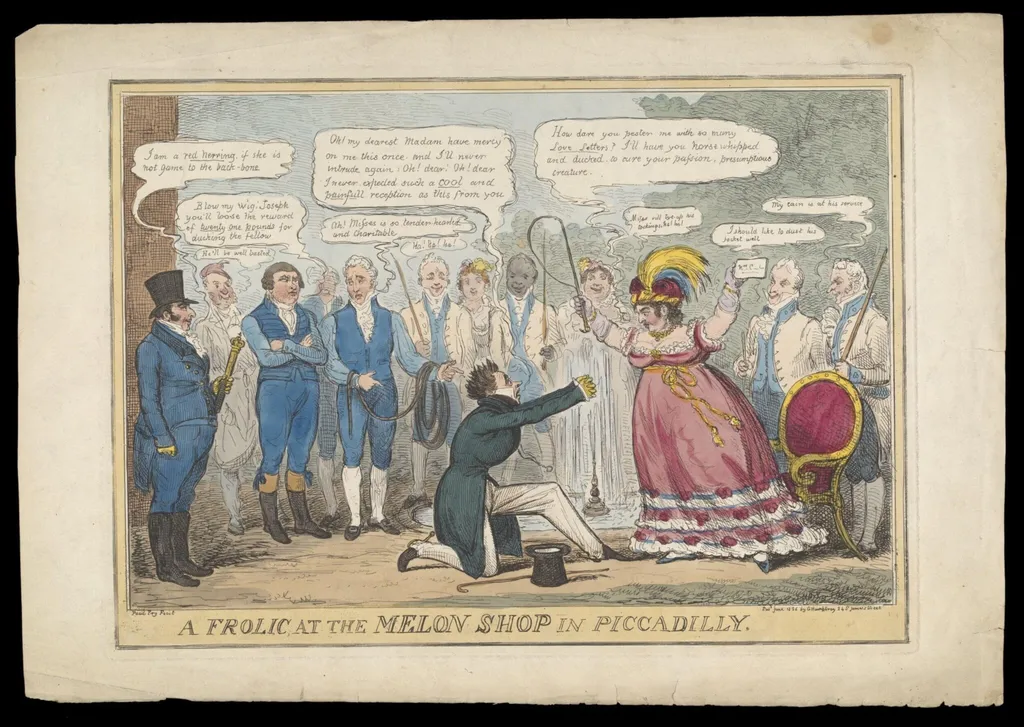
H Beard Print Collection is a print by the Romanticist artist William Heath. It dates from 1826 and is held in the collection of the Victoria and Albert Museum.
About this work
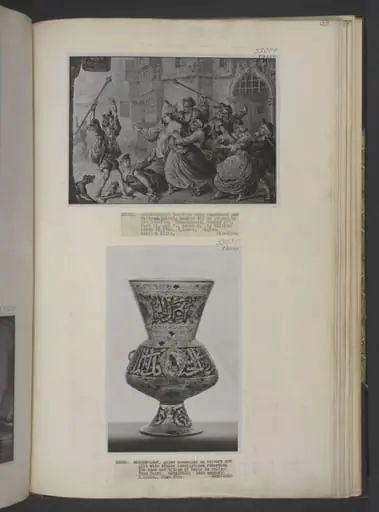
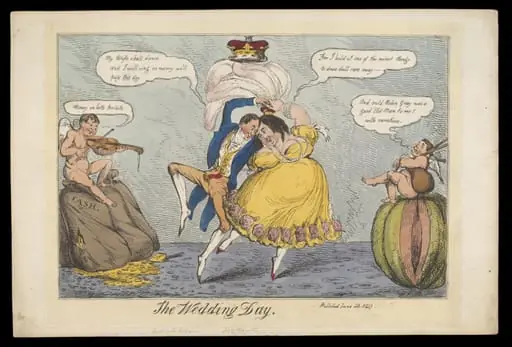
It shows a crowded melon shop in Piccadilly where two people are flirting while others watch.
This print by William Heath pokes fun at high-society dating back in 1826. It shows a crowded melon shop in Piccadilly where two people are flirting while others watch. The print came out the year before their 1827 wedding, published by G. Humphrey.
Romanticism liked to laugh at everyday life and this scene does just that. A playful swipe at titled couples and their public antics.
Check out the Victoria and Albert Museum next time you’re in London.
Overview
This 1826 print by William Heath, titled 'A Frolic at the Melon Shop in Piccadilly,' captures a satirical moment in London society. Published by G. Humphrey, it depicts a bustling melon shop where courtship unfolds amid public scrutiny. The scene mocks the performative nature of elite romance, using humor to reflect social norms of the time. Its timing—released a year before the marriage it portrays—adds a layer of topical relevance.
Subject & Meaning
The print targets the courtship of William Beauclerk, a nobleman, and Harriot Mellon, a former actress who became his wife in 1827. Their union, viewed by some as socially incongruous, became a subject of public fascination. Heath portrays them flirting amid a crowd of onlookers, suggesting their relationship was spectacle as much as sentiment. The scene critiques the blending of aristocracy and commerce in romantic displays.
Technique & Style
Heath employs fine-line etching with subtle tonal shading to render a lively, crowded interior. Figures are rendered with exaggerated gestures and facial expressions, enhancing the comedic tone. The composition directs attention to the central couple while surrounding characters react with curiosity or amusement. The detail in clothing and architecture grounds the satire in recognizable urban life, reinforcing its social commentary.
History & Provenance
Produced by G. Humphrey, a known publisher of satirical prints, the work was released in 1826, shortly before Beauclerk and Mellon’s marriage. It circulated among middle- and upper-class audiences familiar with the couple’s public appearances. The print’s survival in collections like the Victoria and Albert Museum reflects its status as a document of Regency-era social mores and print culture.
Context
In 1820s London, the rise of celebrity culture and shifting class boundaries fueled public interest in aristocratic unions involving commoners. Satirical prints like Heath’s thrived in this climate, offering commentary through humor. Melon shops, once luxury retail spaces, had become social hubs, making them ideal settings for depicting the intersection of commerce, class, and romance in urban life.
Legacy
Heath’s print remains a valuable record of how public opinion was shaped through visual satire in the early 19th century. It exemplifies the role of print media in negotiating social change, particularly around gender and class. While no longer widely known, its preservation in institutional collections ensures its continued relevance as a historical artifact of Regency-era visual culture.
Artist & collection

Artist
William Heath was an American farmer, soldier, and political leader from Massachusetts who served as a major general in the Continental Army during the American Revolutionary War.