Artwork
Napoleon's Logement, Quai Conti
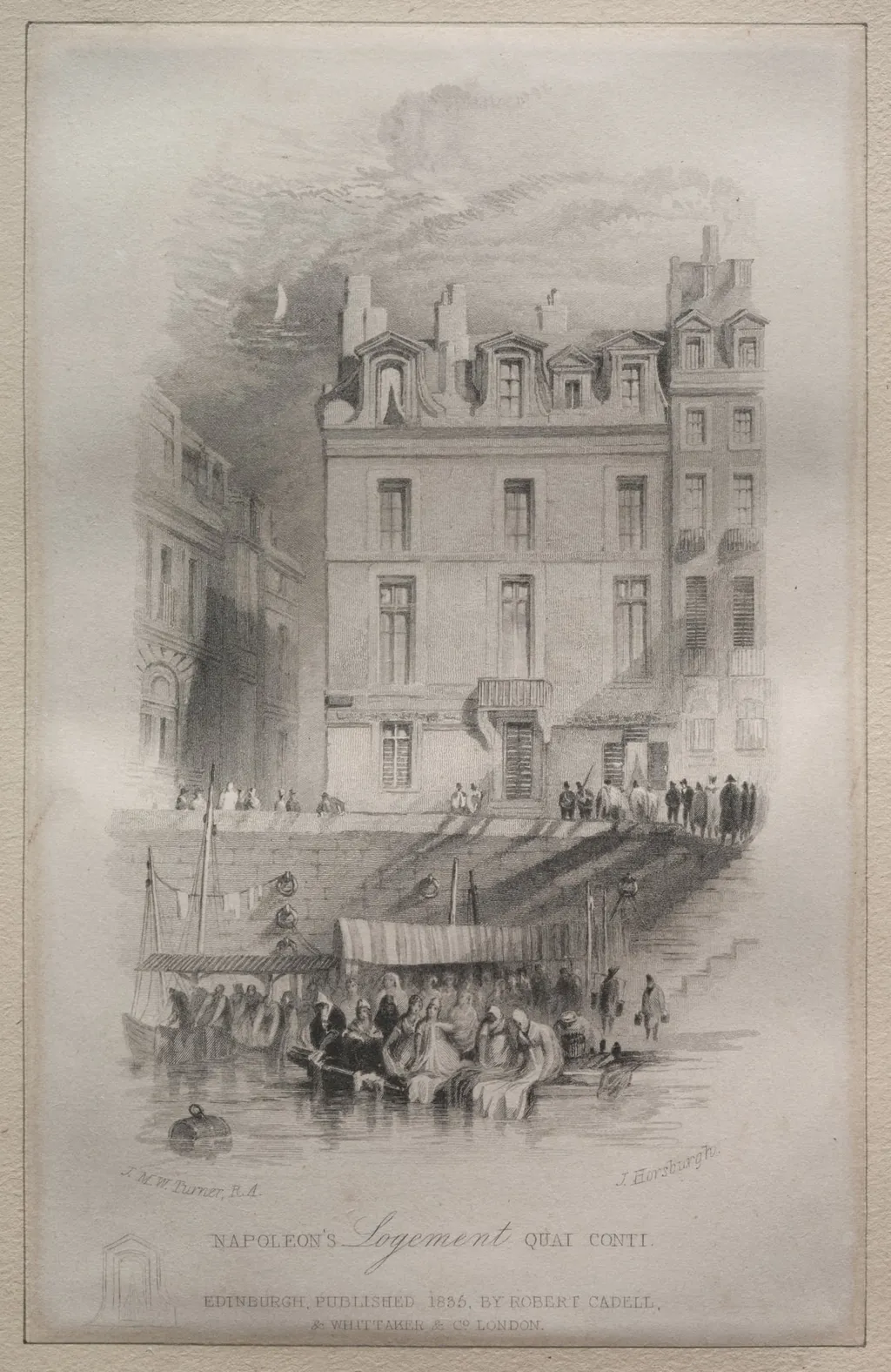
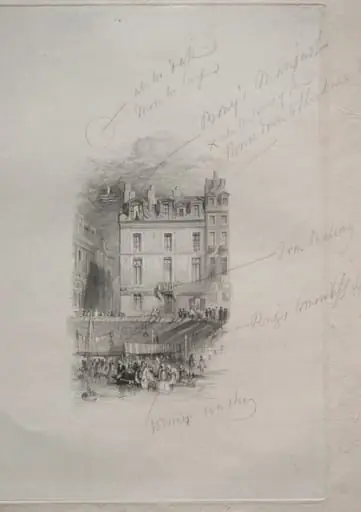
Napoleon's Logement, Quai Conti is a print by the Romanticist artist John Horsburgh. It dates from 1835 and is held in the collection of the Cleveland Museum of Art.
About this work
Overview
The work is part of the collection at The Cleveland Museum of Art, offering a glimpse into post-Napoleonic Paris through the lens of everyday observation.
Created in 1835 by Scottish artist John Horsburgh, this print depicts a quiet riverside scene along the Quai Conti in Paris. Though titled as Napoleon’s former residence, the focus is not on the building or its historical occupant, but on the ordinary life unfolding along the riverbank. The work is part of the collection at The Cleveland Museum of Art, offering a glimpse into post-Napoleonic Paris through the lens of everyday observation.
Subject & Meaning
The scene captures a relaxed, unremarkable moment along the Seine, with civilians seated, standing, and strolling near the water. No military figures or imperial symbols appear, suggesting the artist intentionally shifted attention from grand history to the rhythms of daily life. The title references Napoleon’s past, yet the image reflects a city that has moved on, emphasizing continuity over commemoration.
Technique & Style
Horsburgh employed delicate line work and subtle tonal shading to convey spatial depth and the movement of figures. The composition avoids dramatic contrasts, favoring a quiet realism. Buildings recede into the background with simplified architecture, while the crowd is rendered with loose, suggestive strokes that imply motion without detailed individualization, characteristic of sketch-based printmaking of the period.
History & Provenance
The print was made in 1835, nearly a decade after Napoleon’s death and during the July Monarchy, a time when public memory of the Empire was being reevaluated. Horsburgh, a Scottish engraver active in France, likely produced this as part of a series documenting Parisian sites. Its presence in the Cleveland Museum of Art stems from later acquisitions focused on 19th-century European graphic arts.
Context
This work aligns with Romantic-era interests in ordinary life and atmospheric detail, though it lacks overt emotional intensity. While contemporaries like Delacroix emphasized drama, Horsburgh’s approach reflects a quieter, documentary impulse. The Quai Conti, once associated with imperial power, had become a mundane urban space, and the print captures that transition without commentary or nostalgia.
Legacy
Horsburgh’s print contributes to a broader 19th-century trend of depicting urban landscapes as lived environments rather than monuments. It stands as a modest but deliberate record of how historical sites were absorbed into the fabric of everyday existence. Though not widely known, it remains a valuable example of observational printmaking outside the mainstream of Romantic grandeur.
Artist & collection

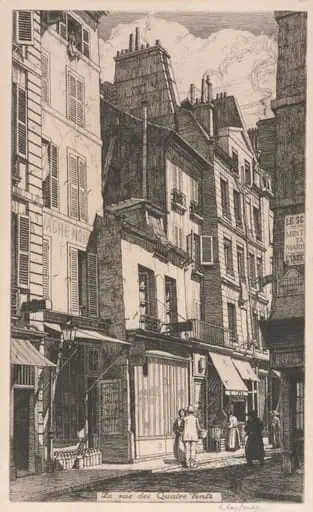 La rue des Quatre Vents
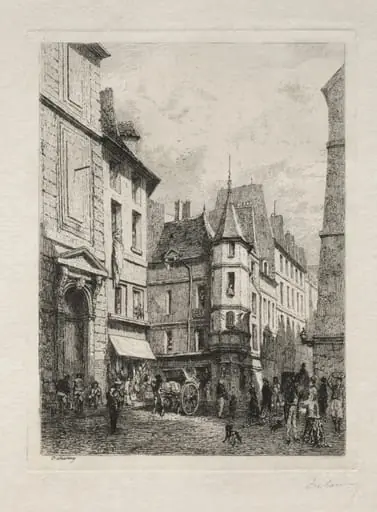 Tourelle en Fontaine Rue d'Ecole de Medicines demolies en 1877
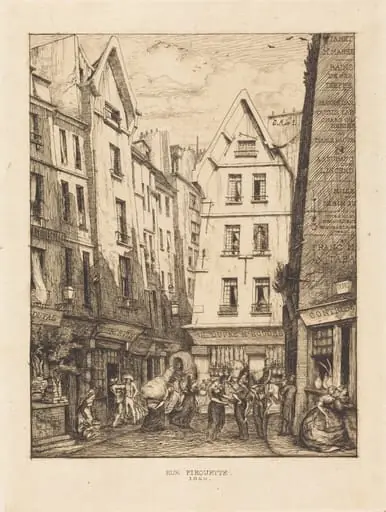 La Rue Pirouette aux halles, Paris (Pirouette Street, Near the Markets, Paris)
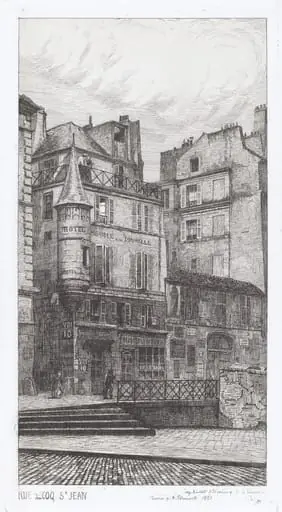 Rue du Coq St. Jean
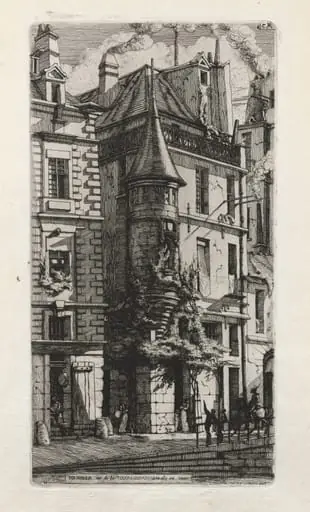 House with a Turret, rue de la Tixéranderie, Paris
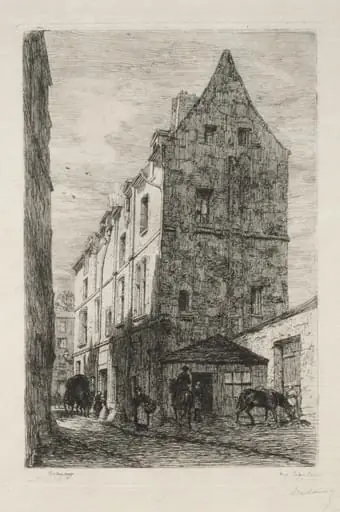 Maison dite de la Reine Blanche, Rue de Marmousets
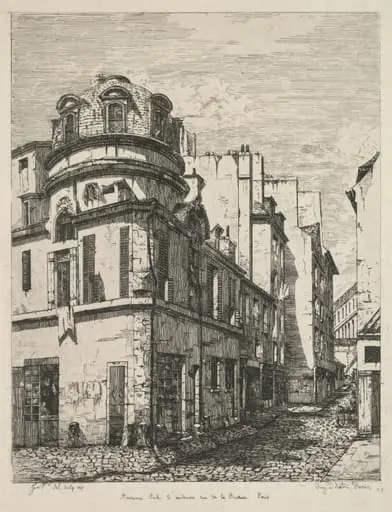 Eaux-Fortes sur le Vieux Paris: Ancienne école de médecine rue de la Bûcherie (Etchings of Old Paris: Former Medical School, rue de la Bucherie)
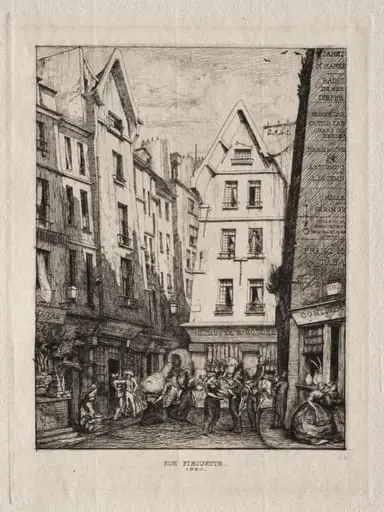 Pirouette Street, near the Markets, Paris
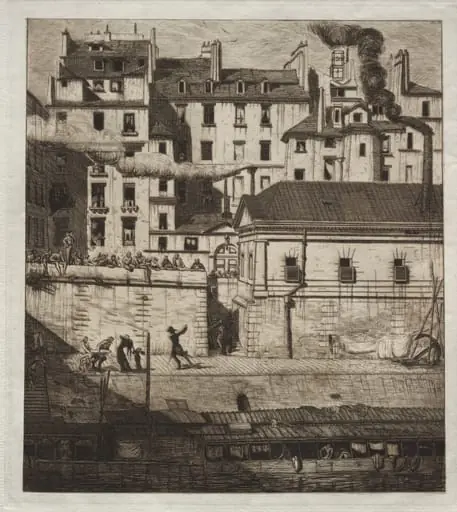 La Morgue
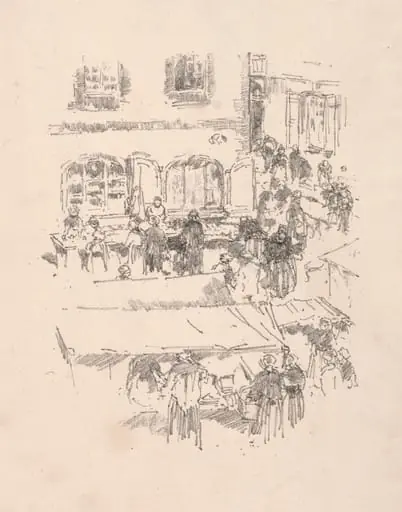 The Market Place, Vitre
 Le Pont-au-change, Paris, vers 1784
 Napoleon's Logement, Quai Conti